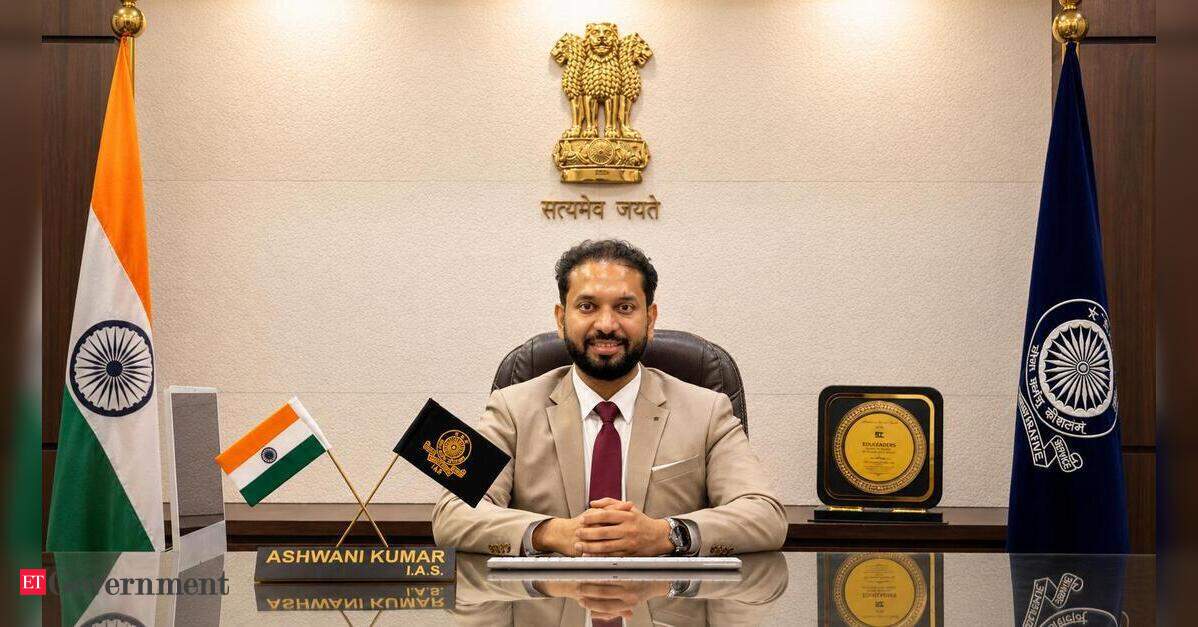
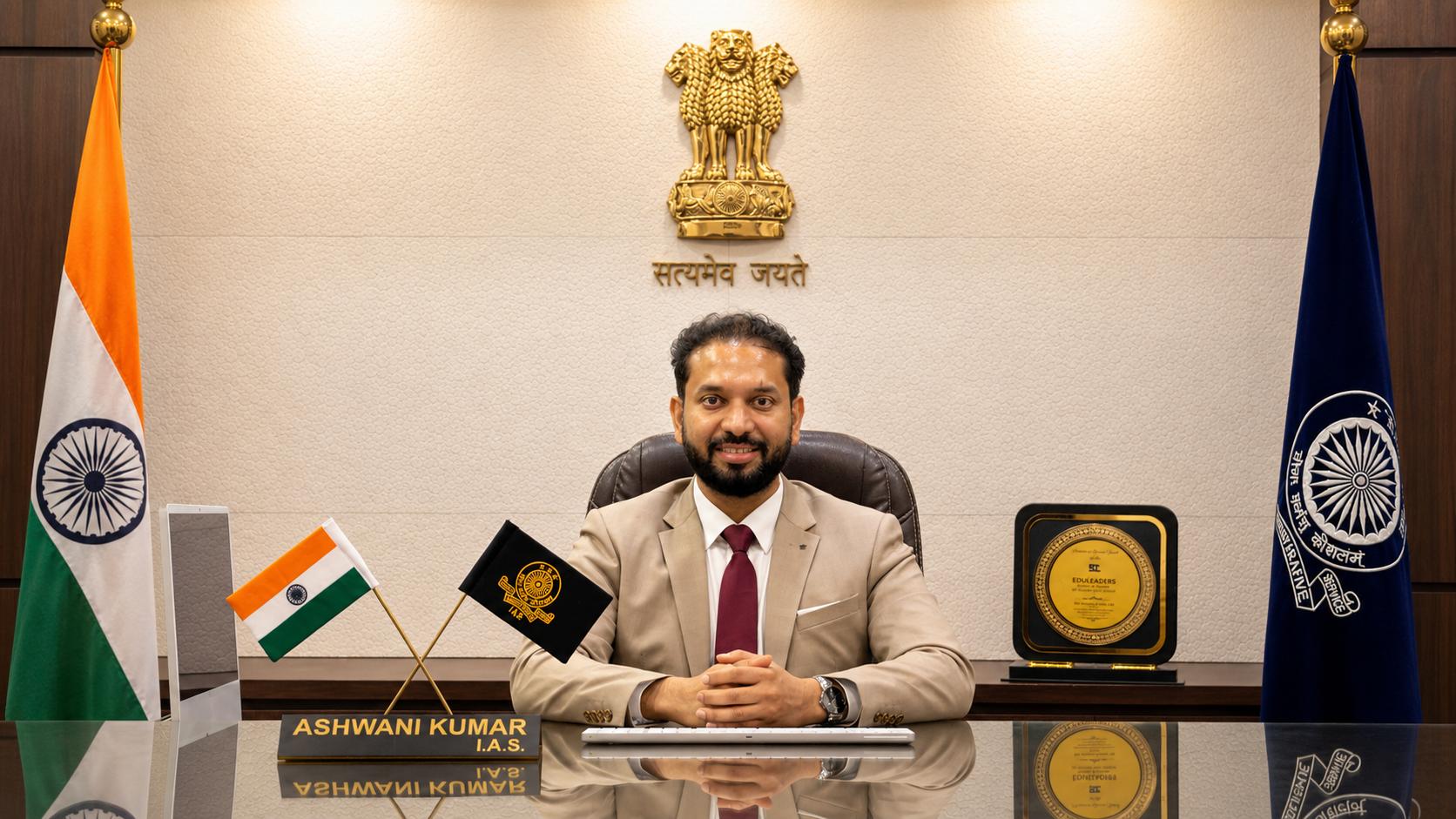
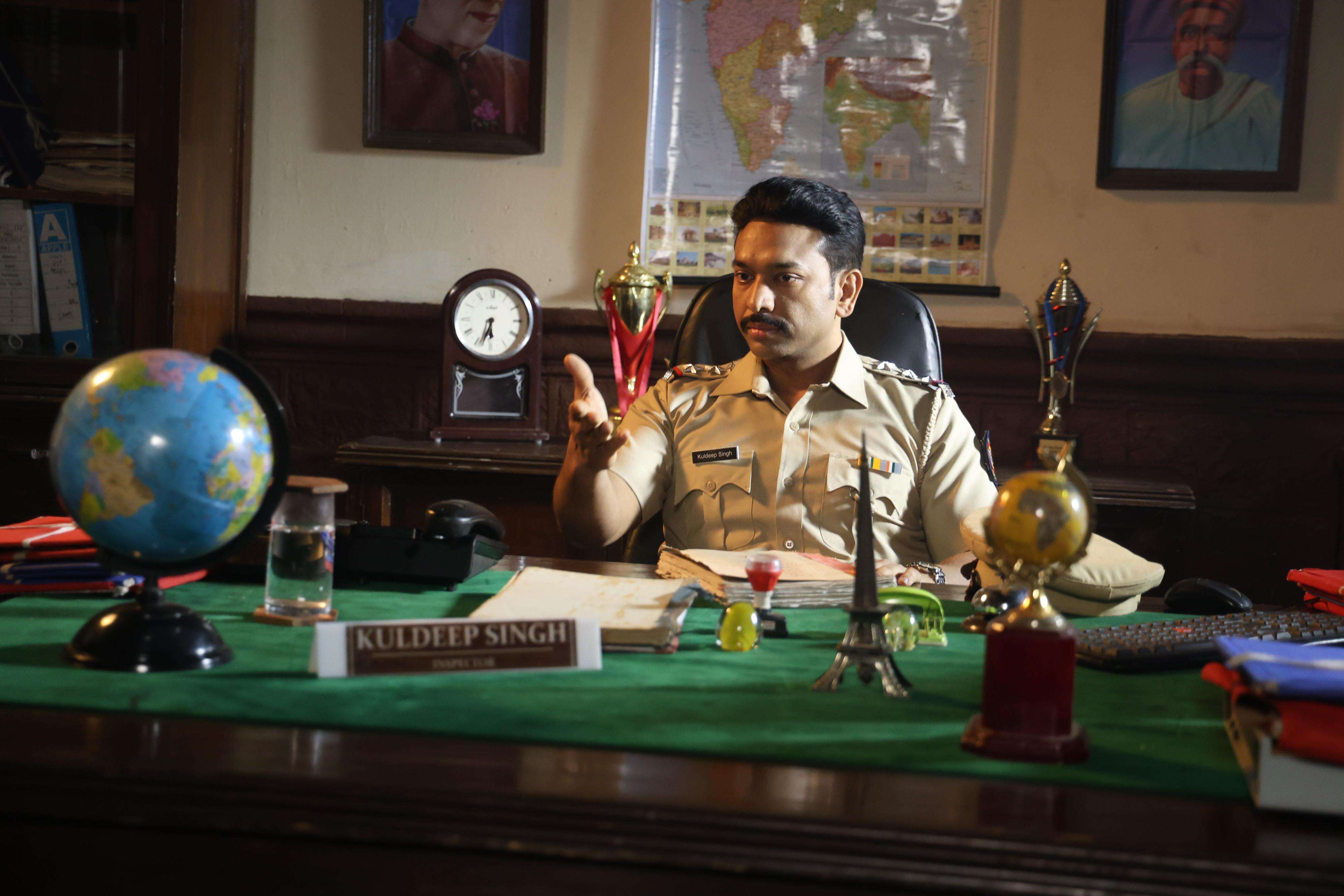
Ashwani Kumar, Secretary, Information Technology Department & Director, DITEC, Government of Assam, has made his acting debut with Devyani, a 20-minute short film that explores issues surrounding the girl child, women’s safety, gender equality and parental concerns. Starring Kumar alongside Archana Gautam, the film uses the relationship between a father and daughter to examine some of the anxieties and attitudes associated with raising and protecting girls.Kumar views the film primarily as an exercise in public communication rather than a move towards an acting career. Drawing on his experience in administration, he believes that while laws and government interventions have an important role in addressing social problems, storytelling can complement these efforts by encouraging wider discussion and reflection.
In conversation with Anoop Verma, Kumar talks about the making and social context of Devyani, his experience of facing the camera for the first time, and the role cinema can play in communicating socially relevant themes. Moving from cinema to governance, he also discusses Assam’s digital transformation agenda, including the use of artificial intelligence in public services, Sewa Setu, data-driven governance, the state’s emerging semiconductor ecosystem and initiatives aimed at giving young people greater exposure to technology and the workplace.
Edited excerpts:
You are a career civil servant, and Devyani marks your acting debut. What persuaded you to step in front of the camera, and why did you choose a socially oriented film for your first role?
As a career civil servant, I have always tried to work at the grassroots and contribute to people’s lives. The government makes policies, programmes and rules, but sometimes citizens feel that something is being imposed upon them. The best form of compliance is when it comes voluntarily—when people understand why something is important and feel that they are part of the process.
Since childhood, I have believed that storytelling is one of the most powerful ways of communicating and remembering ideas. If you look at civilisations across history, stories and mythology were important means of imparting knowledge and values. The Ramayana and Mahabharata, for instance, have transmitted ideas and values across generations through stories.
Cinema has tremendous reach. When people watch a film, they do not feel that they are sitting through an academic lesson. Education does not happen only inside classrooms; it happens everywhere. Cinema can communicate with people across educational and social backgrounds.
This is particularly relevant today, when people consume enormous amounts of content through social and digital media. Sometimes they learn something in 25 seconds, 30 seconds or a minute. I felt that if we could communicate an important social message through a compelling story, it could reach a much wider audience. That is what attracted me to Devyani.
Your performance in the film comes across as natural and composed. Did you have any previous acting experience in school, college or theatre? How did you prepare for the role?
I had no previous stage or acting experience. I did have some exposure to practices involving breathing and self-awareness, but I never received formal acting training.
What helped me enormously was the guidance of the director and my co-star. They told me that I should try to remain natural. Since I was playing the role of an officer, I tried to retain the calmness, posture and demeanor that come naturally to me in my professional life.
I practised the role, and once the director was convinced that I could do it, we went ahead. I did not really know where this journey would take me, but I received very good guidance, and that helped me considerably.
The film has a distinct social message centred on the relationship between a father and daughter. What is the message that you want audiences to take away from Devyani?
At its heart, Devyani explores the relationship between a father and daughter. I have personally observed this relationship within my own family. We are four siblings, and I remember how concerned my father would be about my sister when she was studying away from home. He would remain worried about her safety until he knew that she had reached college safely. That concern made a lasting impression on me.
But the issue goes beyond the relationship between a father and daughter. It is also about a man’s relationship with his sister, niece, mother, colleagues and the other women in his life. We have to understand how the women and girls around us experience the world, and we have to create an environment in which they feel comfortable, respected and secure.
This understanding has influenced me professionally as well. Once, during Raksha Bandhan, my sister could not get leave from work, so I stayed back and invited the women working in my office to tie rakhi if they wished. I told them that I was not merely their boss; they could also regard me as a brother and approach me if they ever needed support. The idea was to create an environment of trust.
My message is that we should not look at girls and women as vulnerable. They can be an extraordinary source of inspiration and strength. If they receive the right environment, respect, care and opportunities, they become a tremendous source of strength for families as well as society. That is essential for building a healthy and sustainable society.
You have spoken about the distinction between gender prejudice and the fears that parents may have about a daughter’s safety. How does Devyani explore this more complex dimension?
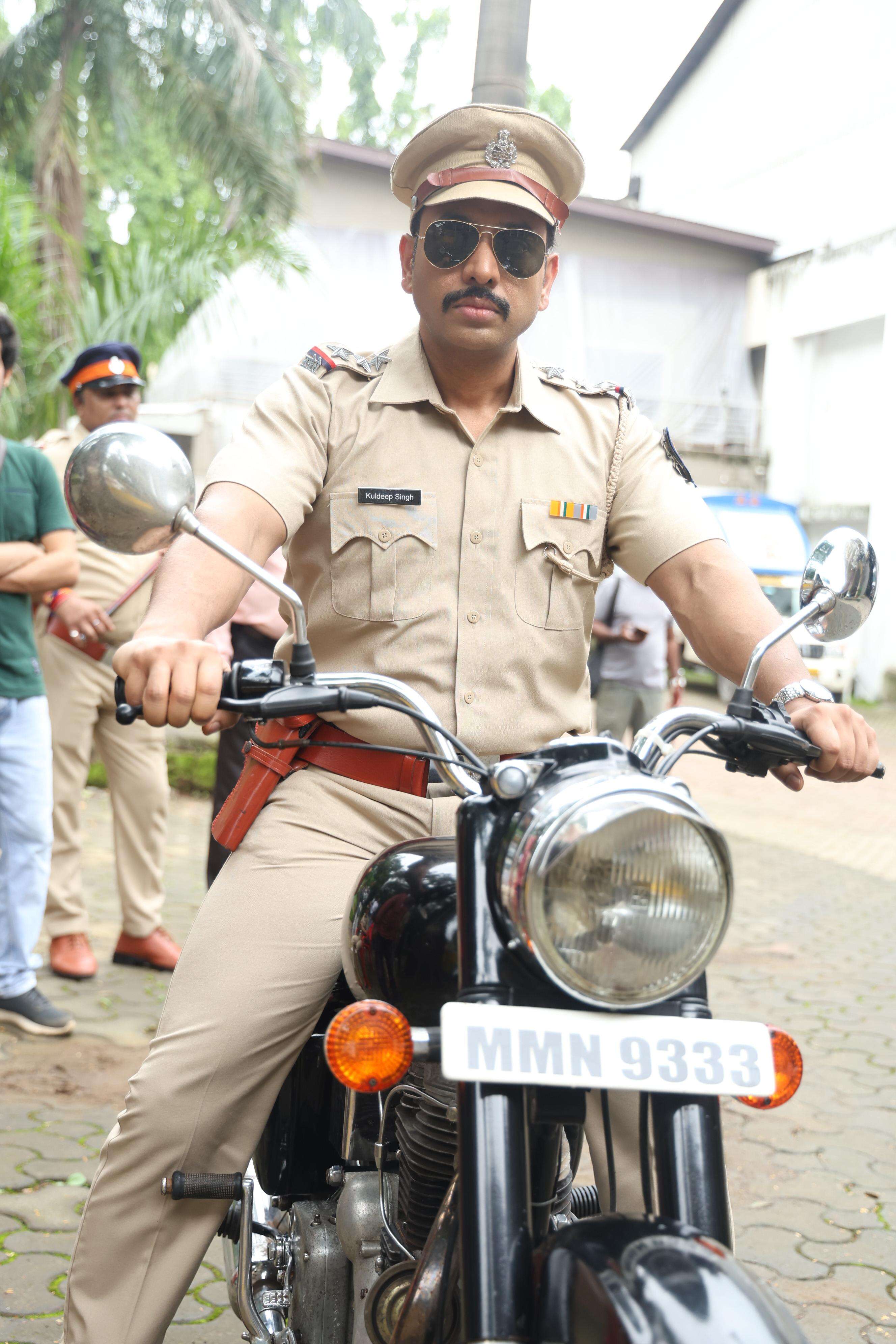
In Devyani, the character I play is himself responsible for protecting society and maintaining law and order. He sees himself as a guardian of the society in which he serves. Yet he also sees incidents involving women and girls around him, including the families of people he knows. That creates a dilemma. If someone who is responsible for protecting society is himself anxious about whether his own family will be safe, how does he reconcile those two realities?
When something happens close to him, he begins to fear that a similar situation could arise in his own life. He starts wondering whether he is adequately prepared to become the father of a daughter. It is this anxiety that leads him to try to convince his wife that perhaps they are not ready. His wife, however, does not agree.
Eventually, something happens that changes his perspective. He realises that he has been worrying excessively about the worst possible outcome. Human beings often assume that the worst will happen, whereas life can unfold very differently. That transformation is important to the film.
Governments have enacted laws and implemented programmes against female foeticide, dowry, violence against women and other forms of discrimination. What can cinema and storytelling achieve that policy interventions sometimes cannot?
We have many laws and regulations prohibiting practices such as female foeticide, infanticide, dowry and other offences against women. But the question is: have these problems disappeared completely? They have not.
The reason is that lasting social change has to come from within people. If you simply tell someone that they must behave in a particular way because the law requires it, they may comply, but some may also try to find ways around the law. If, however, you convince people that a particular change is right and beneficial for them and for society, then participation becomes voluntary. You cannot force someone to love or respect another person. That feeling has to come from within.
This is where cinema becomes powerful. When you watch a moving image and identify with a character, you begin to see yourself in that situation. If the performance and storytelling are meaningful, audiences form an emotional connection with the issue. In a relatively short period, cinema can make people think deeply about a social problem.
The story is important, but the way the story is told is equally important. Even a very good story may fail to create an impact if it is not presented effectively, whereas a relatively simple story, told exceptionally well, can produce extraordinary results.
As an IAS officer, you have spent years observing society through the lens of governance and public policy. Did your experience as a civil servant influence your interpretation of the character?
Civil servants are fortunate because we get opportunities to interact with people from extraordinarily diverse backgrounds. If you approach these interactions with empathy, you begin to understand what is happening in people’s lives.
People generally come to an administrator when they have a problem. You therefore see many different aspects of human behaviour. Someone who appears successful or affluent may still be struggling with serious personal issues. These interactions give you an understanding of people’s emotions and circumstances.
Administration certainly helped me understand the character. But understanding an emotion and portraying it on screen are different things. Portraying it requires practice and the ability to place yourself in that situation.
There is an analogy with administration. Someone may enter your office with good news, and you may share their happiness. Immediately afterwards, another person may come with a tragedy or serious problem. You have to respond empathetically to that person’s situation. You cannot carry the emotion of the previous interaction into the next one.
I try to remind myself that any of us could one day be in a vulnerable situation and require somebody else’s help. If you think from that perspective, empathy becomes natural. I also believe strongly in society and community. There is a tendency today, particularly on social media, to glorify being completely alone as a sign of strength. I do not agree with that. Human beings need society. Communities are formed when people come together and support one another through happiness as well as sorrow.
That is another idea I wanted Devyani to communicate: we need to create a positive environment, particularly for our daughters and sisters, where women are respected and everyone feels that they can contribute to society.
The film is only about 20 minutes long, yet it deals with parental anxiety, women’s safety, gender equality and empowerment. How difficult was it to communicate such a broad message within a short format?
Twenty minutes is a very short period, particularly when you are dealing with a subject of such importance and complexity. We therefore tried to create a situation and an atmosphere in which a meaningful conflict could emerge. Every compelling story needs some form of conflict.
We also have to recognise how audiences consume content today. People’s attention spans are changing, and audiences expect value from the time they invest in content. Even if somebody gives you two or five minutes, there should be a meaningful takeaway. I do not want audiences to feel that their time has been wasted.
Our objective, therefore, was not to answer every question or completely resolve every aspect of the story within 20 minutes. We wanted the conversation to begin after those 20 minutes.
In that sense, the film deliberately leaves audiences thinking about what might happen next. A number of people who watched it subsequently asked me, “What happens now?” That sense of suspense and the fact that people continue discussing the story after the film has ended are, for me, signs that the film has succeeded.
Do you see Devyani as a one-time creative experiment, or are you interested in pursuing acting further? Can public servants use cinema and digital platforms more effectively to communicate with society?
I never approached Devyani as the beginning of another career. As civil servants, we frequently have to communicate through the media because public communication is an important part of governance. Political leaders and other public figures also need to connect with people. Communication is power, and it has always been central to public life. For me, acting in this film was another form of communication.
I have no intention of going to Bollywood. I am very happy in public service. Every day, I have an opportunity to listen to people, contribute something useful and sometimes help them resolve problems in their lives. I consider myself fortunate to have that opportunity. At the same time, I want to communicate, particularly with younger generations. I am very optimistic about Gen Z and Gen Alpha. People sometimes criticise today’s younger generation for lacking patience, but my experience is different. They have tremendous potential and energy. What they demand is authenticity. They do not want to be misled.
I interact extensively with young people through our internship programme. Last year, we had around 18 or 19 interns, and this year we have taken around 22. These interactions have convinced me that if we communicate honestly with young people and take them into confidence, they will respond positively. We cannot solve new problems by remaining trapped in old ways of thinking. New challenges require new perspectives.
As Secretary of the Information Technology Department and Director of DITEC, what are your major priorities for accelerating Assam’s digital transformation and strengthening technology-enabled governance?
I currently have several interconnected responsibilities. Besides serving as Director of DITEC, I have responsibilities relating to information security, data, e-Office and citizen-centric digital services. We are delivering around 913 services through the Sewa Setu platform. We also look after e-Prastuti, covering more than 300 government websites, e-Office and the State Data Centre. I am also associated with academic councils of six universities and advise government departments in Assam on IT-related matters.
My priority is to make Assam technologically competent and enable government departments to use the latest tools, particularly artificial intelligence, to become more productive and efficient. One important initiative is Sewa Setu 2.0. We are developing it as a more citizen-friendly platform where AI agents can handle significant parts of the service-delivery process. We want to simplify forms and eventually enable citizens to fill them using voice in the language of their choice.
We are also working towards automatically fetching information that the government already possesses so that citizens do not have to repeatedly provide the same information. The objective is to reduce duplication and simplify the citizen’s interaction with the government. We are increasing the use of authentication and verification mechanisms to reduce duplicate or bogus beneficiaries and ensure that government services and benefits reach genuine citizens.
Another major initiative is the Centre for Data Management. Assam has a population of around 3.4 crore, and government departments possess enormous amounts of data. We want to use this data responsibly to improve policy targeting and ensure that development programmes are implemented in a focused, time-bound and resource-efficient manner.
Assam is attracting major investments in semiconductors and other emerging technology sectors. Where do you see the state’s strongest opportunities, and how can Assam attract greater investment and high-value technology jobs?
We are developing investment-friendly policies and trying to create an environment in which industry can thrive. One of the most significant developments is the major Tata investment in semiconductor manufacturing. It will create substantial opportunities, and we are already looking ahead at the number and type of skilled professionals that such industries will require.
Under the vision and leadership of the Chief Minister, Assam is witnessing rapid development across sectors. During Advantage Assam 2.0, MoUs involving investments of more than ₹5.5 lakh crore were signed. Investors have repeatedly demonstrated confidence in the state.
Infrastructure is also expanding rapidly. Once you have strong infrastructure combined with effective governance and abundant resources, you create both push and pull factors for investment. Historically, Assam has been strong in sectors such as tea and oil. What is encouraging now is that the state is diversifying into new industries. This is important for resilient economic growth.
We have traditionally seen many skilled people leave Assam in search of employment. As new industries and technology investments come into the state, we hope that this trend will change—that fewer people will need to leave and, eventually, professionals from elsewhere will increasingly come to Assam for opportunities.
What are some of the major citizen-centric and AI-driven initiatives that DITEC is currently implementing?
Different departments of the Assam government provide a large number of services through their respective platforms. Sewa Setu is intended to bring these services together under a unified umbrella.
Broadly, we have end-to-end, integrated and redirection-based services. In an end-to-end service, the entire process takes place online through our platform. In an integrated service, part of the process happens through our interface and part through the concerned department. In redirection-based services, citizens are connected to the relevant departmental platform.
Many of these services come under the Right to Public Services framework and therefore have to be delivered within prescribed timelines. We are simplifying these processes by removing unnecessary steps and reducing dependence on physical certificates through greater use of DigiLocker and other digital mechanisms.
We are also working on an AI-based call centre so that citizens’ problems can be heard and addressed more efficiently.
Data management is another important area. More than 45 schemes involve direct benefit transfers. By bringing together relevant datasets and socio-economic information, while applying appropriate safeguards, governments can better understand where interventions are required and target schemes more effectively. Better data can help reduce duplication and improve the efficiency of development expenditure.
We have also integrated AI-based capabilities into e-Office. Senior officers can use dashboards to identify where files are pending and why. AI can help summarise the history of a file within seconds and assist officers by surfacing relevant information for noting and decision-making. We believe this can significantly accelerate administrative processes.
We are also working towards an Assam unified portal that can bring departmental websites within a more integrated digital architecture.
You have also started an internship initiative for engineering students. What prompted this programme, and what do you think needs to change in the way young people are prepared for employment?
We started offering internships to young computer science, IT and engineering students because I was receiving many requests from students asking why they could not get practical exposure to government technology projects.
Last year, we had around 18 or 19 interns. I initially thought that we would be teaching them, but the experience taught me a great deal as well. It helped me understand how young people think and what is happening inside colleges.
This year, we have taken around 22 interns. I have also conducted career-counselling sessions with them to discuss future opportunities and the skills they are likely to need. They, in turn, become ambassadors who can explain to their peers, colleges and families how government functions. So the learning works both ways.
One of the major employment challenges in India is the gap between academic qualifications and practical experience. Students accumulate degrees, but many do not get enough exposure to actual workplaces. Sometimes they complete their education, join an industry and only then discover that it is not what they wanted to do.
I believe students should begin getting structured exposure to industries after Class 10 or 11. If a student spends even a month every year observing different industries, by the time he or she graduates, that person could have exposure to five or six sectors and a much clearer understanding of the world of work.
Learning without practical experience can become rote learning. We do not merely need degrees; we need skilled people who can produce results. Education has to prepare young people for the opportunities and challenges that are actually emerging in the economy.