The wars of the last few years have produced a powerful new orthodoxy in military commentary: the drone is the defining weapon of the 21st century, and expensive conventional platforms—fighter aircraft, warships, tanks, artillery, ballistic and cruise missiles—are rapidly heading towards obsolescence.
There is enough evidence to make the first half of that proposition persuasive. There is very little to justify the second.
Ukraine has demonstrated extraordinary ingenuity in using inexpensive unmanned systems against a much larger adversary. Drones have destroyed armoured vehicles, attacked logistics nodes, damaged oil installations, threatened naval vessels and carried the war hundreds of kilometres into Russian territory. The current campaign continues to demonstrate that reach: Ukrainian drones have recently struck Russian industrial and energy targets, while Moscow says it is intercepting hundreds of incoming drones during major attacks.
Yet there is an important distinction between hurting an adversary and defeating or coercing one. That distinction is being lost in much of the contemporary debate about warfare.
Tactical success is not strategic victory
Drones have undoubtedly changed the tactical battlefield in Ukraine. They have made movement more dangerous, surveillance more persistent and concentration of forces more difficult. Small FPV drones can threaten vehicles costing hundreds of times more. Long-range unmanned systems allow Ukraine to attack Russian infrastructure without possessing a large strategic bomber force.
But after years of drone warfare, Russia has not been compelled to abandon its military campaign. Moscow continues offensive operations, retains control over substantial Ukrainian territory and insists that any settlement must take account of what it calls the realities on the ground. That does not demonstrate that Ukrainian drone operations have failed. It demonstrates something more important: tactical effectiveness should not be confused with strategic decisiveness.
The same principle applies in the Gulf.
Iran has demonstrated that missiles and drones can impose significant costs on technologically superior opponents and their regional partners. Iranian capabilities have threatened military installations, energy infrastructure and commercial shipping. The vulnerability of the Strait of Hormuz gives Tehran extraordinary geographical leverage: traffic through one of the world’s most important energy arteries has fallen dramatically during periods of attack and disruption.
Indeed, Iranian attacks have exposed vulnerabilities even in heavily defended Gulf infrastructure. That is an important warning against dismissing relatively inexpensive offensive systems. But the conflict also demonstrates the limitations of treating drones and low-cost missiles as substitutes for comprehensive military power.
The United States and Israel have been able to conduct sustained strikes against targets inside Iran using a broader military architecture involving aircraft, naval forces, stand-off weapons, intelligence, surveillance, electronic warfare and layered air and missile defence. Iran can impose pain and disruption; that is not the same as possessing equivalent conventional power. This distinction matters enormously for India.
The seductive economics of the cheap drone
The strongest argument for drone-centric warfare is economic. Why launch a missile costing millions of dollars against a target if an unmanned aircraft costing a fraction of that amount can accomplish the mission? Why risk a fighter aircraft and its pilot when a disposable machine can be sent instead?
At the level of the individual engagement, the logic can be compelling. But war is not fought on the basis of the unit price printed on an invoice. The relevant measure is cost per military effect achieved.
A cheap drone that is jammed, spoofed, intercepted or crashes before reaching its target has produced almost no military effect. If large numbers must be launched to saturate air defences and ensure that a fraction reach their targets, the economics change substantially.
There are additional costs: launch systems, communications networks, satellite connectivity, intelligence, targeting, operators, electronic-warfare protection, replacement inventories and the industrial infrastructure required to manufacture thousands or millions of expendable platforms.
The drone may remain economical—and frequently will—but the simplistic comparison of a $10,000 drone with a multimillion-dollar missile tells us remarkably little about the actual economics of warfare.
There is another side to the equation. Defenders are no longer standing still. Electronic warfare, directed-energy weapons, jammers, interceptor drones, rapid-fire guns and cheaper short-range interceptors are increasingly being developed precisely because militaries cannot afford to fire expensive surface-to-air missiles at every inexpensive UAV.
This is the normal cycle of military technology. Every successful weapon eventually generates a countermeasure. The tank produced the anti-tank gun and guided missile. Aircraft produced increasingly sophisticated air defence. Ballistic missiles produced missile-defence systems. Submarines produced anti-submarine warfare. Drones will be no different.
The defence is already adapting
Ukraine itself provides evidence of this technological contest. Russia has progressively strengthened electronic warfare and air defence against Ukrainian unmanned systems, even as Ukraine continuously modifies navigation, communications, autonomy and attack profiles to penetrate those defences.
It is an evolutionary race rather than a final technological revolution.
Israel provides another example. It would be inaccurate to attribute Israel’s defence against Iranian drones and missiles solely to Iron Dome. Israel operates a layered architecture involving Iron Dome, David’s Sling, Arrow systems, aircraft and other capabilities, often with assistance from allied forces.
The broader lesson is more significant than the performance of any particular system: saturation attacks can stress sophisticated air defences, but sophisticated defenders are simultaneously learning how to detect and destroy massed inexpensive threats.
A military doctrine based on the assumption that today’s drone penetration rates will remain unchanged for the next decade would therefore be dangerously complacent. The offence adapts. The defence adapts. Then the offence adapts again. That cycle is warfare.
Operation Sindoor offers India a particularly relevant lesson
India does not have to study Ukraine or the Gulf in isolation. It has already confronted mass drone and missile attacks.
During Operation Sindoor in May 2025, Pakistan attempted to attack numerous military targets across northern and western India with drones and missiles. According to the Ministry of Defence, the attacks were neutralised by India’s Integrated Counter-UAS Grid and air-defence systems.
Subsequent official accounts highlighted the role of a layered architecture incorporating systems such as Akash, Pechora, OSA-AK and low-level air-defence guns, integrated through command-and-control networks.
The lesson should not be that drones are ineffective. Pakistan’s use of drones demonstrated precisely why India needs large inventories of UAVs, loitering munitions, counter-UAS systems, electronic warfare and inexpensive interceptors. But Operation Sindoor also points towards a broader conclusion.
Modern warfare is becoming more integrated, not more singular. The future battlefield will not belong exclusively to the drone any more than the battlefield of the 1940s belonged exclusively to the tank or the battlefield of the Cold War exclusively to the missile.
It will belong to the force that can combine sensors, satellites, aircraft, drones, missiles, artillery, electronic warfare, cyber capabilities, air defence, naval power and ground forces into a coherent kill chain.
Firepower still matters
There is an uncomfortable reality that technological enthusiasm sometimes obscures: military force ultimately exists to create effects of sufficient magnitude to change an adversary’s calculations.
Those effects need not always involve physical destruction. Blockades, economic pressure, information warfare and the credible threat of escalation can be enormously powerful. And not every war ends because one side has suffered overwhelming physical damage. Nevertheless, coercive power still matters.
A state facing a peer or near-peer adversary needs the ability to destroy hardened command centres, airbases, ammunition depots, bridges, industrial facilities, naval assets and deeply buried strategic installations if circumstances demand it.
A small drone carrying a modest warhead cannot automatically perform the mission of a heavy cruise missile, ballistic missile, strike aircraft or large-calibre artillery system. Payload matters. Range matters. Speed matters. Penetration matters. Survivability matters. Persistence matters. And above all, the scale of destructive power that can be delivered within a compressed period matters.
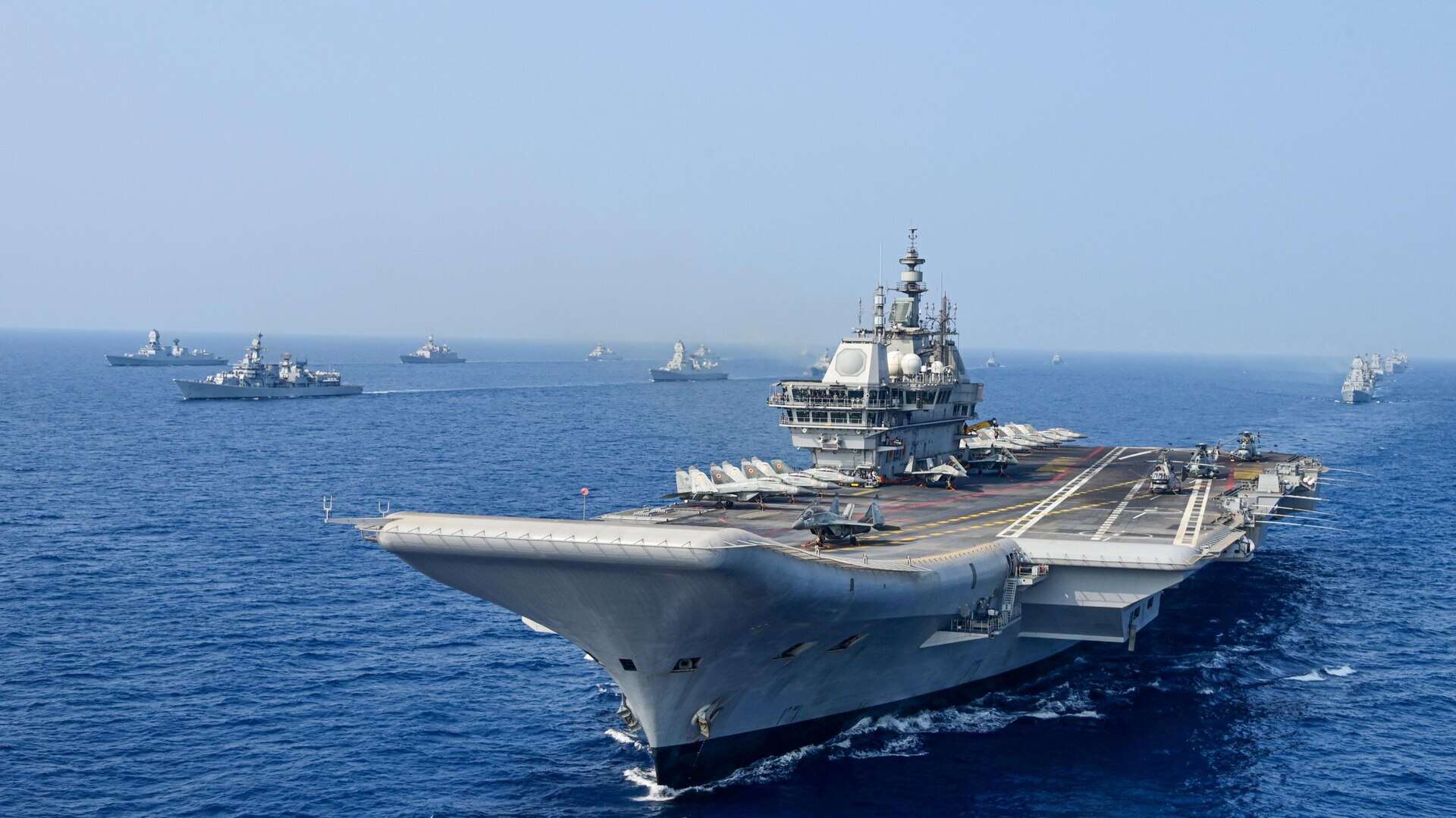
This is why major powers continue investing billions in submarines, aircraft carriers, strategic bombers, advanced fighters, long-range artillery, ballistic missiles and integrated air-defence systems despite simultaneously spending heavily on drones. If inexpensive UAVs had rendered these platforms strategically obsolete, the world’s most sophisticated militaries would already be abandoning them. They are not.
India’s geography makes the argument stronger
India must be particularly careful about importing doctrines from Ukraine or the Middle East without considering its own strategic environment. Ukraine is fighting predominantly across a continental theatre against Russia. Iran enjoys enormous coercive leverage because of its position astride the Strait of Hormuz and its proximity to Gulf energy infrastructure and American military installations.
India faces a very different geography and two nuclear-armed adversaries. The Himalayan frontier demands surveillance drones, logistics UAVs and loitering munitions, but it also requires artillery, helicopters, transport aircraft, air defence, fighters, missiles and resilient logistics.
The maritime theatre demands unmanned surface and underwater vehicles, but India cannot protect an oceanic area stretching from the Arabian Sea to the approaches of the Malacca Strait with drones alone. It requires submarines, surface combatants, maritime patrol aircraft, satellites and increasingly sophisticated long-range weapons.
Against Pakistan, massed drones could overwhelm vulnerable points or force the adversary to expend interceptors. Against a technologically capable China, however, India must assume that its opponent will possess some of the world’s most sophisticated electronic warfare, air-defence and counter-UAS capabilities.
India therefore cannot build its future force around what worked against yesterday’s defences. It must build against the defences it expects to encounter in the 2030s and 2040s.
The answer is not drones versus conventional weapons
This is where the debate frequently becomes intellectually lazy. The choice is presented as a binary one: either spend billions on conventional platforms or embrace thousands of inexpensive drones. India needs both.
It needs enormous numbers of relatively inexpensive reconnaissance and attack drones. It needs autonomous systems operating in the air, on land, on the surface of the sea and underwater. It needs AI-enabled swarming technologies, secure communications, resilient navigation and an indigenous supply chain for motors, sensors, seekers, chips, batteries and explosives. It also needs an equally aggressive counter-drone programme.
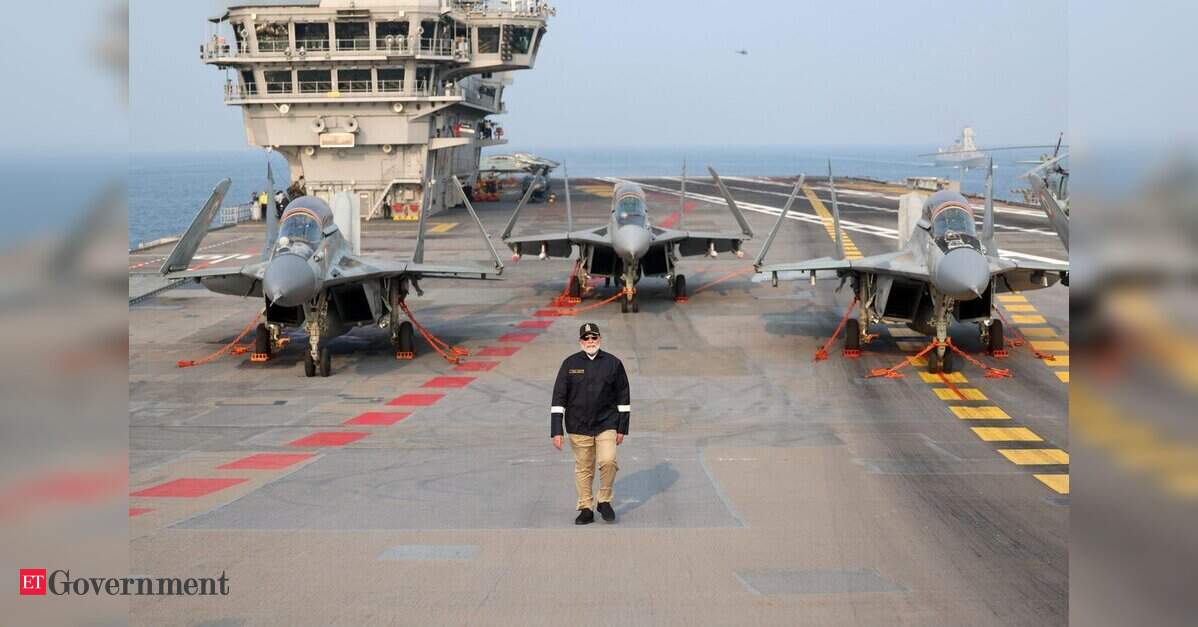
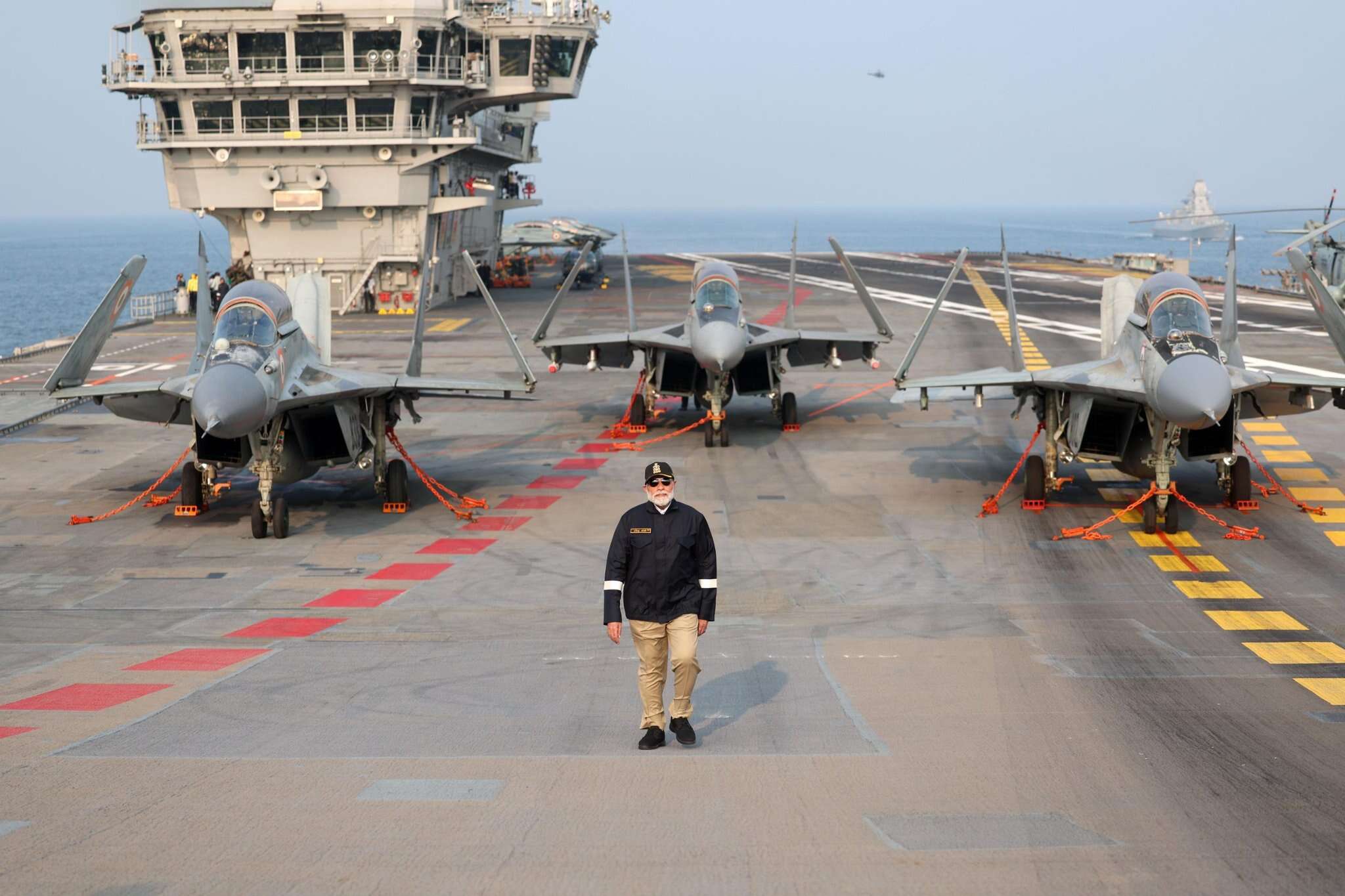
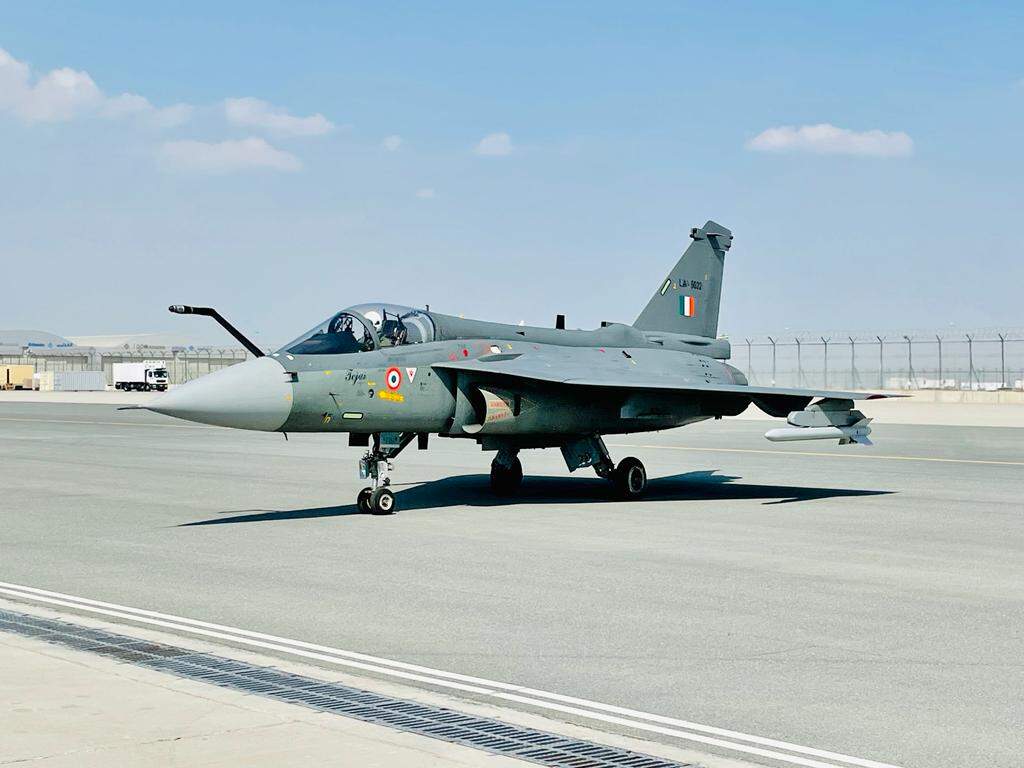
But none of this eliminates the requirement for fighters, submarines, warships, artillery, ballistic and cruise missiles, long-range air defence, airborne early-warning aircraft, satellites and hardened command-and-control infrastructure. In fact, drones can make these expensive platforms more effective.
A cheap UAV can locate a target. A satellite can confirm it. An AI-enabled command network can classify it. Electronic warfare can disrupt its defences. A fighter, artillery battery or long-range missile can then destroy it. That is modern warfare. The drone is one component of the kill chain—not necessarily the entire kill chain.
Don’t prepare for the last viral video
There is a tendency in military debate to extrapolate from the most visually dramatic weapon of the current conflict. Today that weapon is the drone. Thousands of battlefield videos showing inexpensive UAVs striking tanks, bunkers, soldiers and infrastructure have understandably shaped public perceptions of warfare. But viral footage is not military doctrine.
The correct lesson from Ukraine, the Gulf and Operation Sindoor is not that large military platforms have become obsolete. It is that the modern battlefield has become dramatically more transparent, saturated and lethal—and that expensive platforms must operate differently because inexpensive sensors and weapons are everywhere.
India should therefore invest aggressively in drones. It should probably manufacture them on a scale far greater than it does today. It should create massive reserves of expendable UAVs and loitering munitions and build one of the world’s most sophisticated counter-drone architectures. But India should be equally wary of allowing enthusiasm for inexpensive unmanned systems to become an excuse for underinvesting in conventional combat power.
Wars are rarely decided by whichever side possesses the fashionable weapon of the decade. They are decided by states that can integrate technology, industrial capacity, intelligence, logistics, manpower and firepower—and sustain them longer than the adversary. Drones are rewriting the tactics of war.
They are not abolishing the fundamentals of military power. For India, therefore, the objective should not be to choose between the cheap drone and the expensive platform. It should be to create a military in which thousands of inexpensive autonomous systems operate alongside—and multiply the effectiveness of—powerful conventional platforms.
The future belongs not to the military with the most drones, but to the military that can combine mass with firepower, autonomy with heavy strike capability, and technological innovation with the ability to impose strategically decisive costs on an adversary. That is a far more demanding—and far more realistic—lesson from the wars of the 21st century.
(Anoop Verma is Editor-News, ETGovernment)