India’s next big tourism destination may not be another overcrowded hill station or celebrated heritage city. It could be a village homestay, an unfamiliar coastal town, a regional pilgrimage centre or a local experience that has so far remained almost invisible to the digital traveller.
That is the proposition behind the government’s latest attempt to expand and diversify the country’s tourism economy. The Ministry of Tourism has launched the National Digital Tourism Stack, being developed with the Open Network for Digital Commerce (ONDC), alongside Dekho Apna Desh 2.0, a programme designed to direct travellers towards tourism-ready but relatively lesser-known destinations.
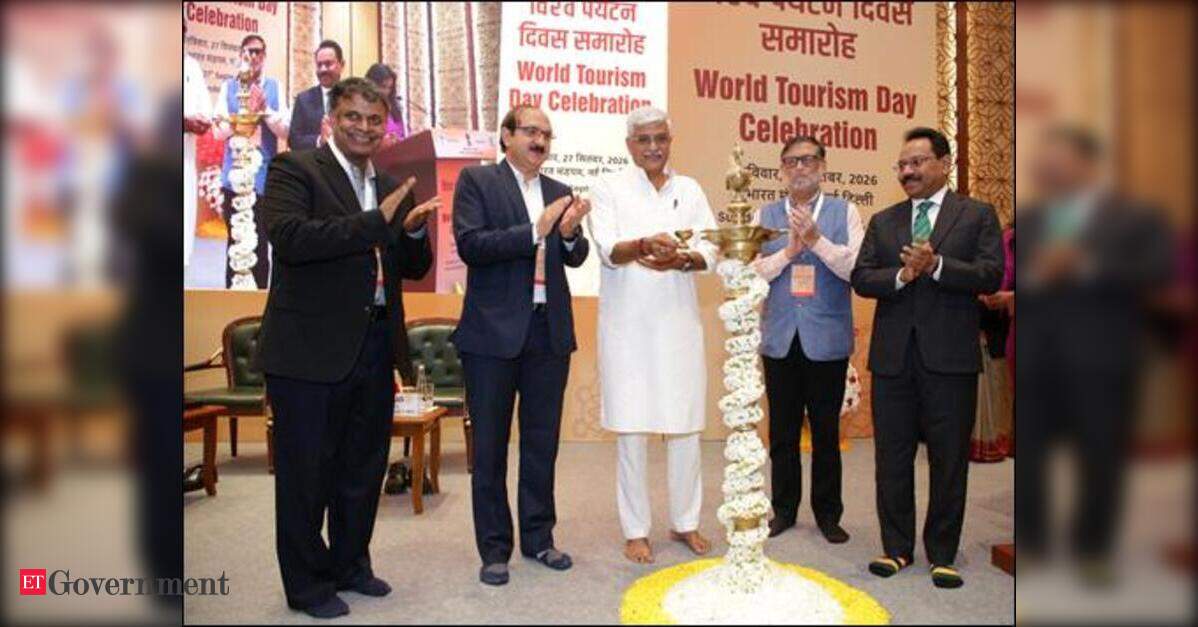
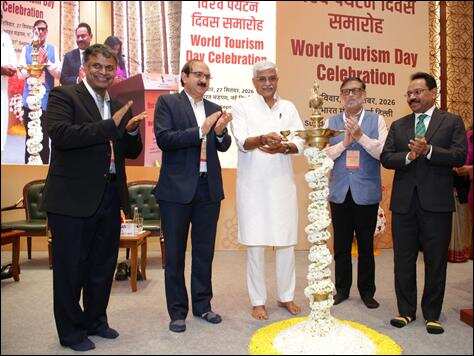
Launched by Union Tourism and Culture Minister Gajendra Singh Shekhawat on World Tourism Day on September 27 at Bharat Mandapam in New Delhi, the initiatives indicate an effort to apply India’s digital public infrastructure experience to one of its largest employment-generating service sectors. The government is seeking to combine digital discovery with destination development, private-sector partnerships and greater participation by local communities.
“Tourism is no longer just about visiting places; today’s travellers seek authentic experiences—local cuisine, local art, local traditions and meaningful connections that create memories, not merely photographs,” Shekhawat said.
He argued that the benefits of tourism need to spread beyond established destinations. “The next phase of India’s tourism journey must ensure that growth reaches beyond popular destinations, creating opportunities for local communities, entrepreneurs, women and youth while making tourism more balanced, inclusive and sustainable.”
The economic stakes are considerable. Ministry of Tourism data show that tourism accounted for an estimated 5.22% of India’s GDP in 2023-24 and supported 84.63 million, or 8.46 crore, direct and indirect jobs. Domestic tourism has expanded particularly rapidly: the Ministry’s latest dashboard reports about 4.29 billion domestic tourist visits in 2025. Foreign tourist arrivals, however, stood at 9.15 million in 2025, indicating that the international segment has yet to match the momentum seen in domestic travel.
Against this backdrop, the National Digital Tourism Stack could become an important part of the government’s tourism strategy. Developed in collaboration with ONDC and with support from the International Centre for DPI Innovation and Advancement, it is envisaged as shared digital infrastructure rather than a single government booking portal.
The objective is to allow tourism providers to make their services available across participating digital platforms. The proposed capabilities include verified identities and supplier credentials, search and discovery, payments, ratings and grievance redressal. The programme will involve the Centre, states, Union Territories and industry and is expected to be implemented in phases, with a pilot planned for January 2027.
For small tourism businesses, the architecture could be significant. A homestay owner, guide, transport provider or local experience operator who lacks the marketing resources of a large hotel or travel company could potentially become discoverable across multiple participating applications rather than depending upon a single platform.
Tourism Secretary Bhuvnesh Kumar linked the initiative directly to India’s experience with DPI. “Artificial Intelligence, digital platforms and data-driven destination management can make tourism more accessible, responsive and personalised,” he said. “India has considerable experience in Digital Public Infrastructure, and we are now looking at how these capabilities can be brought together for tourism.”
But expanding digital discovery addresses only one side of the tourism equation. India also faces the challenge of distributing enormous tourist volumes more evenly instead of concentrating visitors at a relatively small number of famous destinations.
That is where Dekho Apna Desh 2.0, formally described as the National Mission for Alternative Destinations, comes in. Working with states and Union Territories, the programme will identify lesser-known destinations that possess adequate infrastructure, accommodation and the capacity to receive additional tourists sustainably. The initial focus covers hill and mountain locations, coastal and waterfront destinations, heritage and cultural towns, and regional pilgrimage centres.
The intention goes beyond advertising new places. Tourism authorities and industry partners are expected to create bookable itineraries combining accommodation, transport, meals and local experiences. Artisans, guides, self-help groups and other community-level participants are intended to become part of this tourism value chain. Visitor data and feedback are also expected to help authorities assess footfall against destination carrying capacity.
The government is simultaneously bringing large private platforms and mobility companies into its tourism push. The Ministry exchanged five MoUs with Airbnb India, FlixBus India, Glance Digital Experience of the InMobi Group, Eicher Group Foundation and MakeMyTrip. The partnerships cover areas ranging from homestay development and host skilling to intercity mobility, digital tourism content, Himalayan heritage tourism and promotion of unexplored villages and local shopping. The Ministry says the five arrangements are non-commercial, non-financial, non-binding and non-exclusive.
The larger challenge will be execution. An interoperable tourism network involving government agencies, states and private platforms will require reliable verification of suppliers, transparent pricing, effective grievance resolution and clear rules for data sharing and consent. The quality of the physical experience—roads, sanitation, safety, connectivity, accommodation and last-mile transport—will remain as important as digital discovery.
The new initiatives nevertheless represent an attempt to address two structural questions simultaneously: how can millions of small tourism providers participate more effectively in the digital economy, and how can India distribute tourism growth beyond a limited number of saturated destinations?
If the digital stack can widen market access while Dekho Apna Desh 2.0 builds viable destinations around local communities, India’s tourism expansion could increasingly move beyond simply generating more trips. The next stage would be about creating a wider network of destinations, businesses and experiences capable of converting the country’s cultural and geographical diversity into sustainable economic opportunity.