Estonia may be best known in India for its pioneering digital governance ecosystem, but the relationship between the two countries is increasingly moving into a much wider arena. From artificial intelligence, cybersecurity and clean energy to defence technologies, advanced manufacturing, education and research, new areas of cooperation are beginning to emerge.
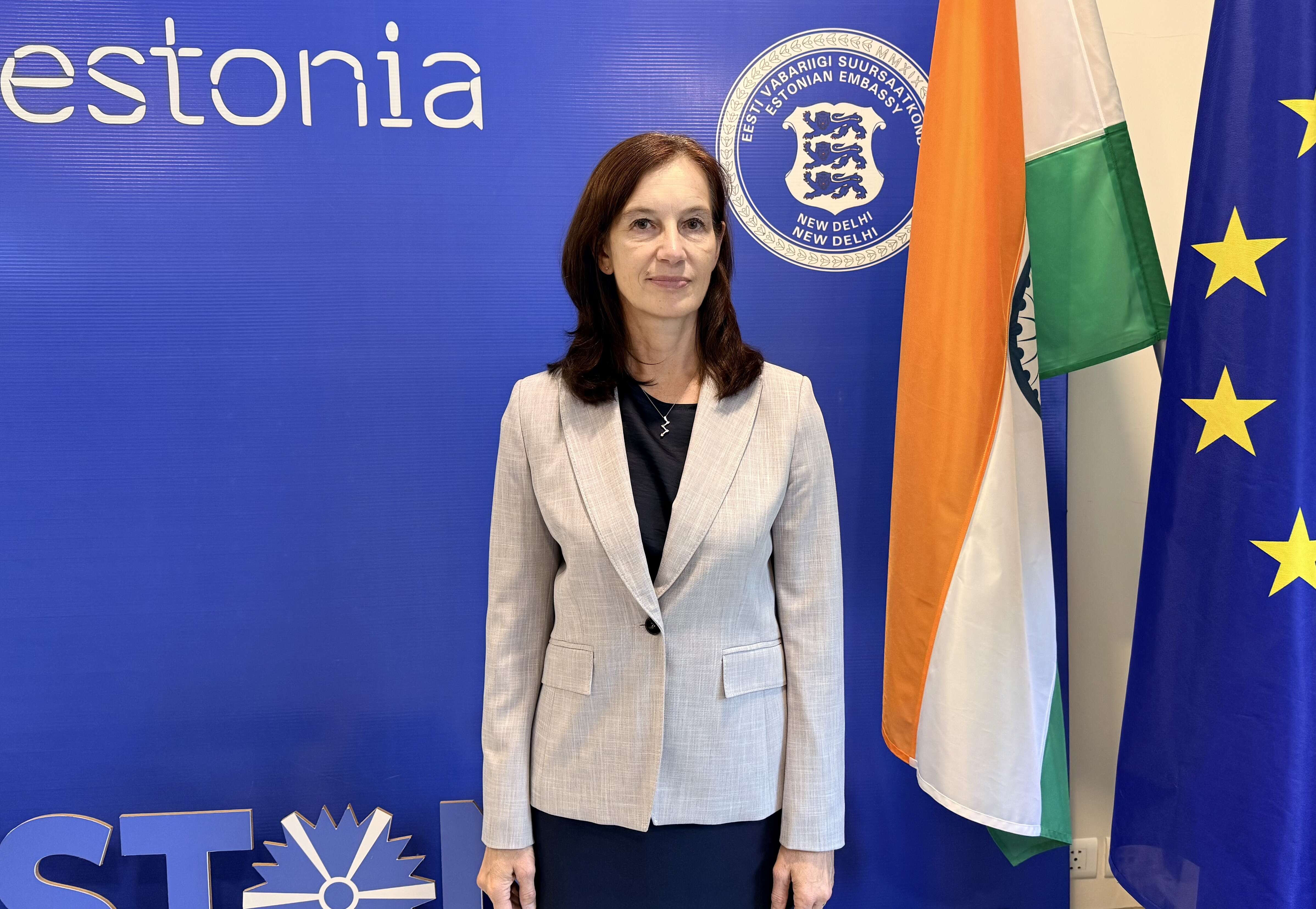
In conversation with Anoop Verma, Kristi Karelsohn, Ambassador of Estonia to India, outlines her priorities as she begins her tenure in New Delhi. She talks about leveraging India’s scale and Estonia’s specialised technological expertise, expanding bilateral trade and investment, and building stronger links between companies, universities and researchers.
Karelsohn also offers Estonia’s perspective on the changing European security environment, the war in Ukraine, multilateralism and India’s growing role in the global order.
Edited excerpts:
You recently took charge as Estonia’s Ambassador to India. What are the key priorities for your tenure, and where do you see the greatest untapped potential in India–Estonia relations?
First of all, I would say that Estonia–India relations are very good and in very good shape. I find the current moment, as I begin my tenure in India, extremely exciting, particularly because of the new momentum in India–EU relations. Estonia, as a member of the European Union, is naturally part of this broader development.
I would not necessarily say that there are areas that have remained completely untapped. My objective is to continue developing the areas of cooperation where considerable work has already been done by my predecessors.
Business relations are certainly a priority. India is a huge market with great potential for Estonia. By the end of my tenure, I would like to see more Estonian companies established in India and, equally, more Indian companies establishing themselves in Estonia.
Besides that, I see my role in raising mutual awareness and understanding about each other’s foreign and security policy resolve in today’s fragmented geopolitical environment.
Bilateral trade and investment remain relatively modest. Which sectors offer the strongest opportunities for Estonian companies in India and Indian companies looking at Estonia and the wider European market?
Our bilateral trade in 2025 was roughly €200 million, so the potential is definitely much greater than the current level suggests.
Entering the Indian market requires patience from Estonian companies. There are challenges such as freight and insurance costs, high duties in certain product categories, certification requirements and strong price competition. Estonian companies are generally relatively small and often develop high-quality niche products rather than products aimed at a very large customer base and competing primarily on price.
I therefore see stronger opportunities for Estonian companies not in trade of goods but areas like cybersecurity, artificial intelligence, industrial digitalisation, clean energy, energy efficiency, but also in specialized defence and dual-use technologies, as well as wooden products where we already have some presence in Indian market but there is potential for further growth.
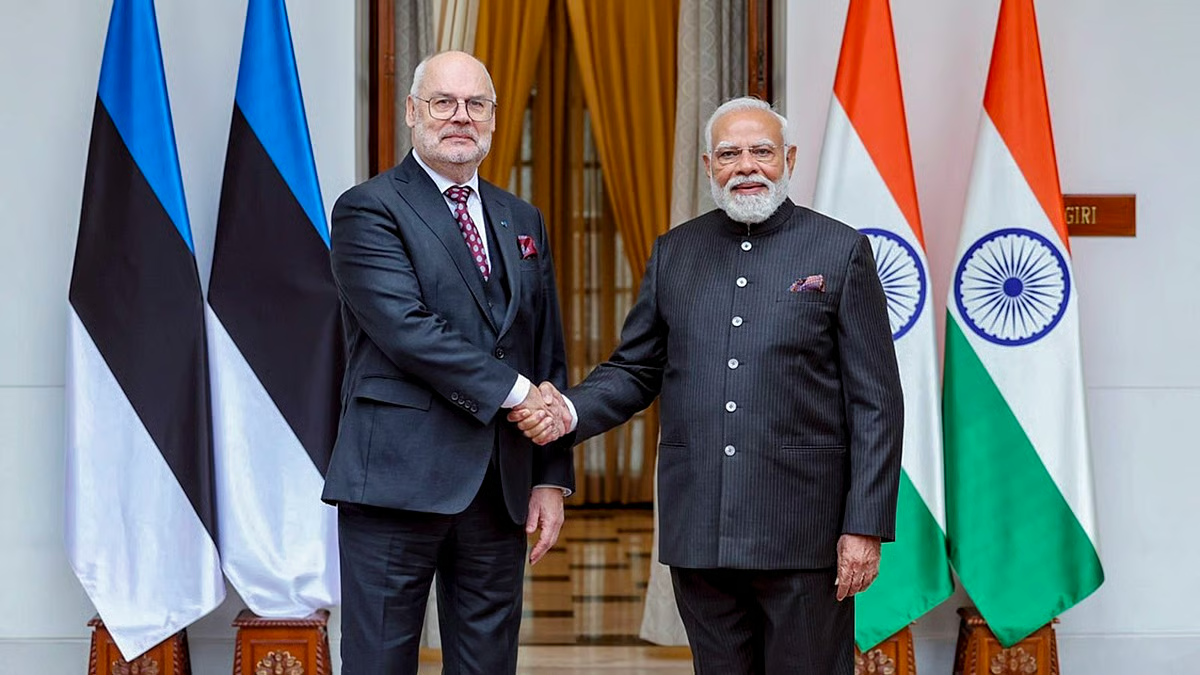
Artificial intelligence is an especially important emerging area and both our governments have their own AI-related initiatives. Estonian President Alar Karis participated in the AI Impact Summit hosted by the Indian government earlier this year where he also had good discussions with the Indian President and Prime Minister on the future of AI. Since AI is a rapidly evolving area for the world at large, I believe companies and organizations from our two countries can find new ways to cooperate.
For Indian entrepreneurs, the Estonian e-Residency programme offers a good opportunity to establish themselves in the European market. India is already one of our largest e-residency communities with over 5500 Indian citizens as e-residents. They have established more than 1300 companies in Estonia and can also manage their European operations from there.
India has developed digital public infrastructure at population scale, while Estonia has extensive experience in digital governance. How can the two countries move from exchanging experiences to developing commercially viable technologies together?
One of the most promising approaches is to combine the strengths of both countries. Estonian companies are often small, but they may have developed highly sophisticated products. Cooperation with Indian companies gives them an opportunity to scale these products and test solutions originally designed for a much smaller market in a larger and far more diverse environment.
Estonia has strong experience in areas such as digital identity, interoperable registries, secure data exchange, public-service design and cyber resilience. India, on the other hand, has demonstrated how digital services can operate across a vast population. India also has significant engineering talent, large enterprise customers and complex problems that can provide an excellent testing environment for Estonian technologies.
We already have some examples. CybExer Technologies has delivered a national cyber exercise for India and subsequently announced a partnership with an Indian company to expand cyber-range capabilities here. Another example is LEI Register, which developed a faster and less costly way of providing Legal Entity Identifier services. Estonia itself is a small market, but the company has been able to scale and test its services in India. Wise, founded by Estonian entrepreneurs, has expanded its payments offering in India.
There are examples in the other direction as well. Jio Estonia, established within the Reliance Jio Group, illustrates an Indian company choosing Estonia for their innovation and research hub.
We had an opportunity to discuss further cooperation perspectives during the visit by Commerce and Industry minister Piyush Goyal to Estonia in July this year. The interest was demonstrated by around 30 Indian companies and more than 30 Estonian companies who showed up for the business seminar during the visit. Minister Goyal proposed a strategic partnership to co-develop digital public infrastructure (DPI) and payment systems that are developed in Estonia, scaled in India, and offered globally.
Beyond digital technologies, where do you see opportunities in clean energy, advanced manufacturing, defence, dual-use technologies and logistics?
Clean energy is a strong area for cooperation. Estonian companies can contribute specialised solutions in energy efficiency, hydrogen and fuel-cell technologies, battery materials, grid monitoring and the decarbonisation of industrial processes.
Indian companies, in turn, can provide scale, project-execution capabilities and potential manufacturing partnerships. Estonia is a small country and does not have the capacity to build very large industries or manufacturing facilities on the scale you can do in India. In defence and dual-use technologies, opportunities include unmanned aerial and ground systems, sensors, electronic systems, cyber training and operational simulation.
Advanced manufacturing also offers possibilities in areas such as engineered timber, modular construction and industrial automation. Incap Electronics is a good example. The company operates in both Estonia and India, and its Indian operations have expanded to three factories in Tumakuru, Karnataka. These facilities provide printed circuit board assembly, power-electronics manufacturing and complete product assembly, from prototypes to high-volume production.
Logistics and port-related partnerships are another promising area. Estonian maritime companies are looking for opportunities in the Indian market, including smart-port solutions.
Education and research can create relationships that endure beyond diplomatic and commercial cycles. What scope do you see for stronger collaboration between universities, research institutions and young professionals?
Estonia has a very strong education system. Our general education system has performed extremely well internationally. In the OECD PISA tests, Estonia has consistently been among the strongest performers in Europe and globally.
We have around 200 Indian students studying at Estonian universities subjects such as information technology, engineering, mechatronics and business. Unfortunately, not many Estonian students have found their way to India.
What I would like to see, however, is cooperation going beyond simply hosting students from each other’s countries. We should find opportunities for universities to cooperate in research and development, build stronger links and increase exchanges involving researchers between academic research communities and professors.
There are several areas where Estonia has high-quality research capabilities, including biotechnology and medical technology. These could provide additional opportunities for institutional collaboration.
But we have to recognize Estonia’s scale. We have a population of around 1.36 million, so our number of universities and available resources are naturally limited. That makes focused collaboration in research, technologies and specialised areas particularly important.
There are significant expectations from closer India–EU economic integration. How could a free trade agreement affect Estonia’s economic engagement with India, particularly for startups, technology companies and SMEs?
Closer India–EU economic integration can significantly improve market access in both directions. Lower tariffs would benefit many products traded between Indian and European markets.
For Estonian companies exporting to India, sectors such as food and beverages, wooden products, machinery and mechanical products could benefit considerably. Some products currently face very high tariffs in India, so reductions would make a meaningful difference. But trade agreements are not only about tariffs. Non-tariff barriers can sometimes be even more significant, particularly for SMEs. Estonian companies are generally small and can be disproportionately affected by regulatory requirements and customs procedures.
Simplification of customs procedures, greater transparency and stronger protection of intellectual property rights would therefore be important. Estonian companies are also highly active in services, particularly IT services. For them, provisions ensuring non-discriminatory market access, protection of software source code, consumer protection in online trade and measures against fraud can be valuable.
Greater mobility for professionals, including IT and healthcare specialists moving between the EU and India, can also contribute to stronger cooperation.
Estonia’s geography gives it a distinctive perspective on European security. As an EU and NATO member, how does Estonia view the transformation of Europe’s security environment?
Russia has historically been viewed as a threat in Estonia, and for us this is not simply theoretical. Our history has shaped our understanding of security. Estonia was occupied by the Soviet Union in 1940 and remained under Soviet rule for decades. This historical experience is one of the reasons Estonia joined NATO as a defence alliance and the European Union.
Our security environment transformed dramatically in 2022 with Russia’s full-scale invasion of Ukraine. The deterioration had already begun earlier, including developments in Georgia (2008) and Crimea (2014) but the full-scale war fundamentally changed the security situation. We understand that the way the war in Ukraine eventually ends has important implications for the future European and global security order. Our position is that aggression cannot be allowed to succeed without consequences.
There have been recent reports and discussions about potential future risks to other European countries. At this particular moment we do not see an immediate military threat to Estonia. Nevertheless, we believe it is important to support Ukraine and to prevent a situation in which military aggression becomes an accepted means of changing borders. We have also called upon influential global partners, including India, to use their leverage to help bring about a just end to the war.
India has traditionally emphasised strategic autonomy and increasingly speaks of multi-alignment. How does Estonia view India’s role in an increasingly multipolar international system?
When we talk about multilateralism and a multipolar international system, Estonia and India may sometimes approach these concepts from somewhat different perspectives.
India has a long tradition of non-alignment and, more recently, multi-alignment, which means that it does not want to be confined to particular blocs. For Estonia, because of our history and security circumstances, belonging to the transatlantic alliance is existentially important. But there are also significant similarities between our countries. Both Estonia and India are strong supporters of multilateralism and a rules-based international order. We believe that commonly agreed rules need to be implemented and followed by all countries.
We also understand India’s ambition to become a stronger player in international institutions, as well as the aspirations of other countries of the Global South to have a greater role. Many international institutions were created in a very different era and under very different circumstances. The world has changed, countries such as India have become much stronger, and we support these countries having a greater role in the international system.
At the same time, Estonia believes that the international order comes under pressure when a permanent member of the UN Security Council attacks a smaller neighbouring country. That is why preserving the international system and its basic principles is so important, particularly for smaller countries.
People-to-people ties and tourism remain relatively underdeveloped. What would you like to see change during your tenure?
People-to-people contacts and tourism are definitely areas where we have not yet achieved their full potential. In particular, we would like to attract more Indian visitors to Estonia. We can offer clean air, pristine nature, a colder climate—which itself can be attractive for visitors from India—and the experience of a small and peaceful but at the same time smart and innovative country. Estonia is a destination worth discovering, and I would like to see more Indians experiencing the country directly.
When you look back at your tenure in India, what would you like to have achieved in the bilateral relationship?
My predecessors have already built a strong foundation across several areas, and I would like to continue that work while deepening cooperation further. I would like to see more companies from both countries establishing themselves in each other’s markets, stronger collaboration in artificial intelligence and cybersecurity, greater cooperation in clean energy, advanced technologies, research and education. All in all, I would like to see increased awareness of Estonia in India. I would like the relationship to become broader, deeper and more visible in both countries.