

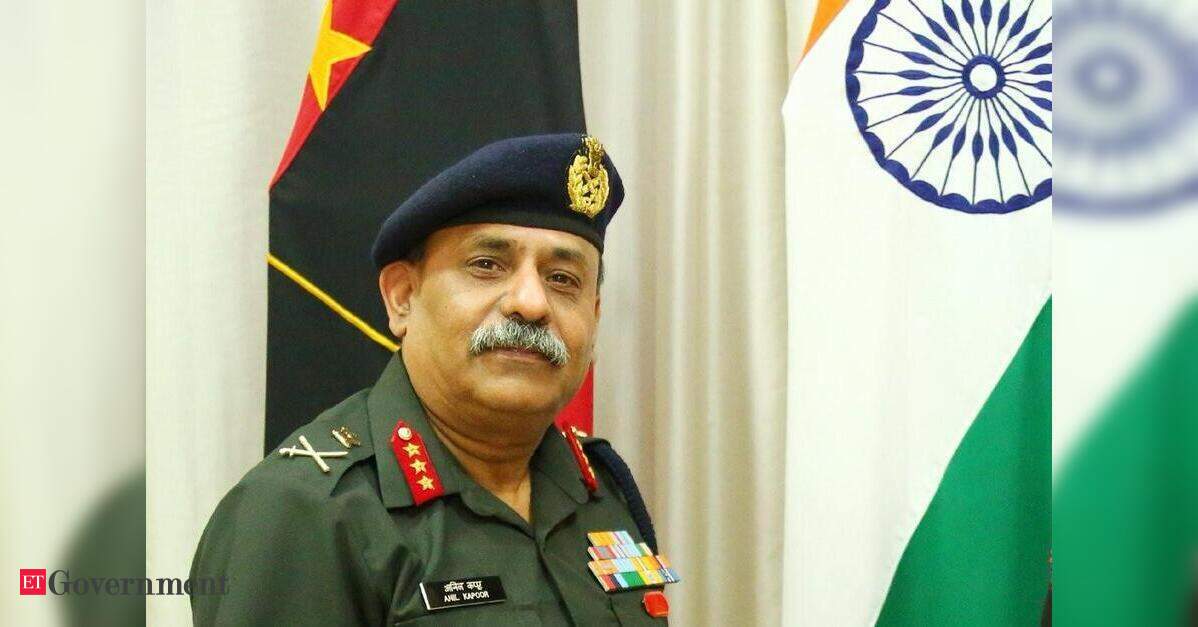
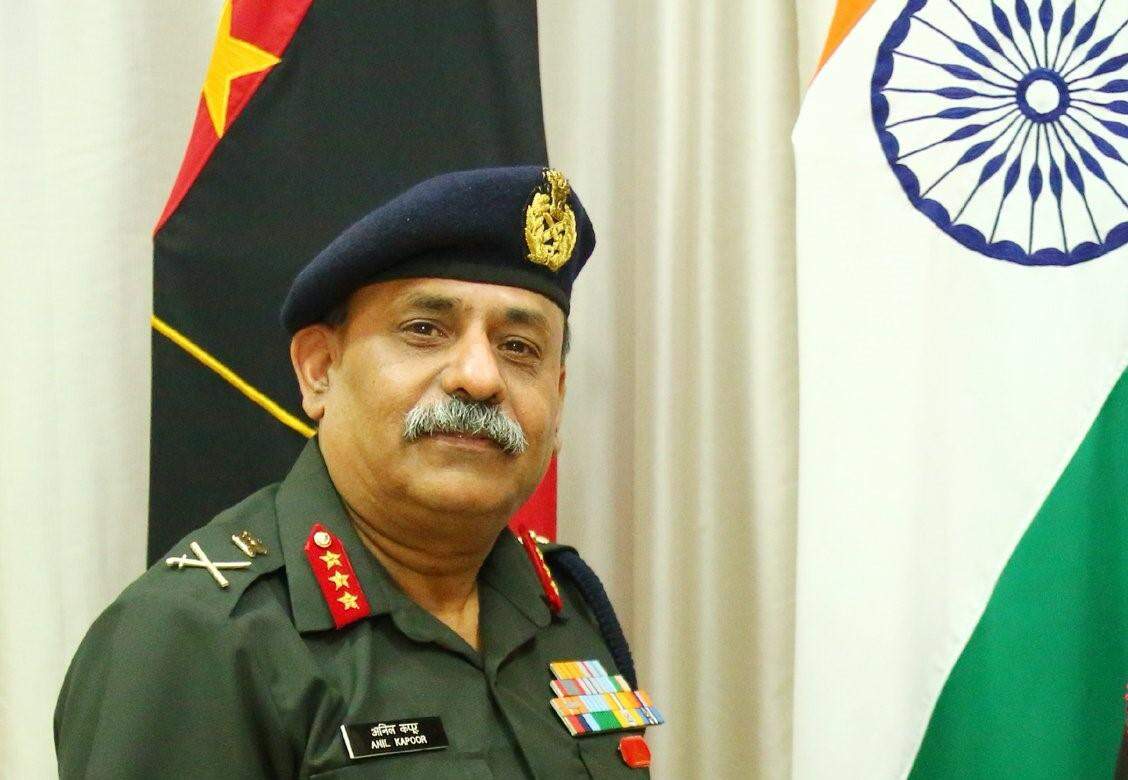
Military Maintenance, Repair and Overhaul (MRO) is emerging as a strategic pillar of India’s defence modernisation, linking operational readiness with indigenous manufacturing, technological innovation and defence exports.As the Indian Army adapts to an increasingly technology-driven battlefield, the Corps of Electronics and Mechanical Engineers (EME) has an important role to play in integrating artificial intelligence, predictive maintenance, autonomous systems and advanced manufacturing into military equipment management.In an interview with Anoop Verma, Lt Gen Dr Anil Kapoor, AVSM, VSM (Retd.) shares his perspective on transforming military MRO into a strategic industrial capability.Drawing on his experience in military technology management and innovation, he discusses the potential of India’s startup ecosystem, the importance of developing global MRO hubs, and the need for a national technology strategy. He also outlines a vision for Viksit Bharat 2047, in which technological sovereignty, civil-military collaboration and indigenous innovation become central to India’s defence preparedness and global competitiveness.Edited excerpts:Military Maintenance, Repair and Overhaul (MRO) is increasingly being recognised not merely as a sustainment function but as a strategic capability contributing to operational readiness, technological self-reliance and defence industrial development. How do you envision the evolving role of the Corps of EME in making military MRO a major pillar of Atmanirbhar Bharat?
Atmanirbhar Bharat is a clarion call given by the Prime Minister, which has provided tremendous impetus to India’s longstanding pursuit of self-reliance since Independence. Over the last two decades, we have witnessed a paradigm shift in defence equipment manufacturing, and this transformation has accelerated significantly during the past decade. The improvements in combat capability and operational effectiveness of the Indian Army have been substantial, as demonstrated during Operation Sindoor. India is also increasingly being recognised as an important exporter of technology-intensive defence equipment.The Corps of EME plays a stellar role not only in MRO, which remains fundamental to operational readiness, but also in technology management and innovation. Technology is advancing at an unprecedented pace, and equipment is becoming technologically obsolete much faster than before. Consequently, continuous technological upgrades have become essential. I believe the Corps of EME is ideally positioned to evolve into a single-window technology and innovation organisation for the Indian Army.The ongoing conflicts in Ukraine and the Middle East demonstrate how technological innovations are being developed and adapted rapidly in response to battlefield requirements. The Corps of EME has an advantage because it is deeply embedded in the organisational structure of the Army, from unit-level repair echelons and field workshops to higher-echelon workshops and army base workshops.This extensive institutional presence provides an opportunity to establish a comprehensive ecosystem for technological innovation and its integration into military equipment. The Corps can become an important channel for introducing emerging technologies into the Army, both during peacetime and in combat situations.The future of military MRO is expected to move beyond conventional repair and replacement towards predictive diagnostics, condition-based maintenance, intelligent upgrades and remanufacturing. How is the Corps of EME integrating AI, IoT, digital twins, robotics and additive manufacturing to improve equipment availability, reduce lifecycle costs and enhance combat readiness?
The Corps of EME is positioning itself to provide reliability-centred, condition-based maintenance and monitoring. One of our major challenges is that the Army operates a large inventory of legacy equipment alongside state-of-the-art platforms. Integrating these different generations of equipment into a common technological and digital ecosystem requires considerable innovation.We need to design and develop technologies that can be integrated into existing equipment. This includes sensors, Internet of Things (IoT) systems, software and digital networks. The Corps of EME is actively engaged in this transition, working closely with startups and technology professionals to introduce condition-based monitoring and intelligent maintenance solutions.Our objective is to move from periodic preventive maintenance towards predictive and prescriptive maintenance. Conventional maintenance schedules can be expensive because they require frequent interventions and substantial inventories of spare parts, irrespective of the actual condition of the equipment.We are now exploring technologies that can predict failures before they occur and prescribe the appropriate maintenance intervention. Artificial intelligence, sensors, IoT and digital twins will play an important role in this transformation. We have a concept that I describe as Humanising Assets – Let the tanks talk”. The idea is to enable a tank or another military platform to communicate its own technical condition through sensors and intelligent diagnostic systems. Instead of relying entirely on predetermined maintenance schedules, the equipment should be able to indicate which component is likely to fail, when it might fail and what intervention is required.This would allow maintenance teams to plan interventions within a specific time window, minimising downtime while maintaining high operational availability. I believe this will represent a major departure from traditional maintenance practices and significantly enhance equipment reliability and mission readiness. Innovation and technology are increasingly becoming integral to the MRO philosophy of the Corps of EME.India’s defence exports reached ₹38,424 crore in FY 2025–26, reflecting the country’s expanding presence in international defence markets. How can India develop a globally competitive military MRO ecosystem that strengthens the credibility of Indian defence exports and creates opportunities for exporting maintenance technologies, spare parts, upgrade packages and technical services?
One of the important dimensions of India’s defence export ambitions must be the development of a strong international MRO footprint. To my mind, this is an area where considerable opportunities remain untapped. The global MRO market is expected to become enormous over the coming years, with defence equipment accounting for a substantial share. If India is exporting military platforms and equipment to other countries, we should simultaneously examine the possibility of establishing MRO hubs in those countries.Such facilities would provide lifecycle maintenance, technical support, spare parts, upgrades and other essential services. This would enhance the value proposition of Indian defence equipment and strengthen the confidence of international customers. The Corps of EME is well positioned to contribute to the design and development of these MRO support packages. We also have a large community of highly qualified veterans with extensive technical and operational experience. Their expertise could be effectively utilised in establishing and operating international MRO facilities.Atmanirbhar Bharat should not be viewed only in terms of indigenous manufacturing or exports of finished defence equipment. It should also incorporate MRO as a deliberate strategic component of India’s defence industrial policy. NITI Aayog has previously examined opportunities in aviation MRO. However, I believe we need to look beyond aviation and develop an integrated approach covering the entire spectrum of defence equipment with export potential.India also has the advantage of a large young population, which represents a demographic dividend. Through initiatives such as the Skill India Mission, we can develop a skilled workforce capable of supporting MRO facilities both within India and overseas. This would give India a stronger international presence, not merely as a supplier of defence technologies and equipment but also as a dependable provider of lifecycle support. Such capabilities will become increasingly important as we advance towards the vision of Viksit Bharat.Modern warfare is increasingly characterised by autonomous systems, unmanned platforms, electronic warfare and rapidly evolving technologies that demand continuous innovation. What opportunities do you see for the Corps of EME to collaborate with India’s defence startup ecosystem, particularly through initiatives such as iDEX? Can you share examples of innovations that have demonstrated operational potential?
Ideation and innovation have always been inherent in the MRO responsibilities of the Corps of EME. We have been pursuing innovations for more than four decades. However, in recent years, these efforts have acquired a new dimension because of structured collaboration with startups, academic institutions and research organisations.Let me give you a few examples. During 2015–16, we were facing several sniper-related incidents along the Line of Control. There was an urgent operational requirement for a sniper detection system. The Corps of EME collaborated with startups, IIT Delhi and the Laser Science and Technology Centre (LASTEC), then a DRDO laboratory, to develop a laser-based sniper detection system.This was a significant technological challenge because such equipment was not available in the Army’s inventory. We had to define the operational problem, design the equipment, develop the technology and make it suitable for field deployment. Through this collaborative effort, we were able to develop and deploy the system within one year.Interestingly, the innovation process also opened possibilities for other applications of laser technology, including laser-based fencing and data communication. This illustrates how an innovation undertaken to address one operational requirement can generate additional technological capabilities.Another example relates to unmanned aerial systems. Around the same period, we recognised the growing operational requirement for drones. Working with startups and IIT Kanpur, we developed an indigenous drone system and experimented with coordinated flying configurations. We developed what we then called coordinated tandem flying, involving a seeker drone and a shooter drone. Today, similar concepts are discussed in the context of coordinated unmanned systems and swarm technologies.The seeker platform was intended to identify suspicious movement along the Line of Control. Once a potential threat was identified, the shooter platform could be employed against the target before the quick reaction force reached the location to undertake further combat operations. These examples demonstrate that the Corps of EME has a longstanding culture of innovation. By combining operational experience with the technological capabilities of startups and research institutions, we can develop solutions that respond directly to battlefield requirements.India’s young population and expanding technical workforce offer an opportunity to build a globally competitive defence maintenance and engineering industry. What institutional reforms, specialised training programmes and academic partnerships are needed to create a new generation of military MRO specialists? Could India emerge as an international hub for defence MRO training, technical certification and lifecycle-support services?
I believe this presents another major opportunity for India. Recently, we launched a credit course on Next-Generation Smart Asset Management at IIT Tirupati. This is an important initiative because MRO is essentially part of the larger discipline of asset management.Every piece of equipment, assembly, subassembly and component is an asset. In today’s digital environment, every asset can have a digital footprint that enables its condition, performance and lifecycle to be monitored and managed. I believe Next-Generation Smart Asset Management should become a structured academic discipline, not only at IITs but across engineering institutions and other universities. Such programmes would equip young engineers with the technological knowledge and practical capabilities required by tomorrow’s industries.India has already made considerable progress in developing digital infrastructure through Digital India. We should now leverage that infrastructure to build expertise in intelligent asset management. This requires an understanding of the complete lifecycle of an asset, from conception and design to development, deployment, maintenance, upgrading and eventual retirement. It also involves translating ideas into practical applications and taking innovations from incubation to acceleration.There is a need for the Ministry of Higher Education, All India Council for Technical Education (AICTE) along with Asset Management Society India, to examine how such courses can be incorporated into engineering, science and even general undergraduate programs. This would make our graduates more industry-ready and give them the technical capabilities required in an increasingly digital and technology-driven economy.More importantly, it could position India as a major international centre for asset management in general and MRO, in particular. As India advances towards Viksit Bharat, we must develop a workforce that combines traditional engineering knowledge with digital technologies, intelligent diagnostics and advanced asset management practices.Looking towards Viksit Bharat 2047, what should be India’s key priorities in indigenous technological development, civil-military industrial integration, advanced manufacturing and international partnerships? What structural and policy changes are required to achieve technological sovereignty?
When we talk about 2047, one of the biggest challenges is predicting what technology will look like two decades from now. Technology is evolving so rapidly that even anticipating developments over the next few years has become difficult. Therefore, rather than attempting to predict every technological development, we must create institutional structures capable of converting emerging ideas into future ready technology based capabilities and products.Today, the distinction between civilian and military technologies is becoming increasingly blurred. Developments in cybersecurity, electronic warfare, artificial intelligence, unmanned autonomy, communications and other advanced technologies have implications for both commercial and defence applications.This makes a comprehensive national approach to technological development essential.My first recommendation would be the formulation of a National Technology Strategy, with the Ministry of Science and Technology playing a central coordinating role. India celebrates National Technology Day on May 11. I believe this occasion could become an important platform for announcing the country’s technological priorities, programs and future roadmap.Just as the Union Budget sets out the government’s economic priorities, a national technology roadmap could communicate India’s technological ambitions and the commitments required to achieve them. My second recommendation is to adopt a mission-oriented, program-based approach to technological development.The Integrated Guided Missile Development Programme (IGMDP), launched in 1984-85, provides an excellent example. It brought together scientific institutions, industry, government and the armed forces around clearly defined technological objectives. The programme helped India develop indigenous missile capabilities and contributed to the technological foundation that now supports the country’s defence export ambitions.We need similar integrated programmes in semiconductors, quantum technologies, artificial intelligence, space technologies, cybersecurity, advanced critical materials and other critical sectors. These programmes should have clearly defined objectives, institutional responsibilities, development milestones and mechanisms for integrating research with industrial production. This requires a whole-of-nation approach involving the government, armed forces, academia, research institutions and industry.We have already established several important institutions and mechanisms, including the Office of the Principal Scientific Adviser and the Anusandhan National Research Foundation. We have also opened new opportunities for private participation in sectors such as space.What is needed now is greater consolidation and coordination through mission-oriented programmes.The R&D funds and human resources are scarce and need to be regulated for resilient technology development. In our endeavour to achieve technology sovereignty, there is a dire need to enact a National Technology Act (NTA) for regulation and governance in consolidating technology development. Recall how a real estate proliferation, resulting in a number of scams, was regulated by RERA. NTA is a compulsion and no longer a choice in this journey of technology forecasting, planning and development. We should create integrated networks of institutions and industries around specific technological objectives, supported by measurable milestones and clearly defined responsibilities.Such an approach would enable India to move from isolated technological achievements towards sustained capability development and genuine technological sovereignty.How can the Corps of EME contribute to the transformation of India’s military MRO ecosystem by 2047, particularly through additive manufacturing, industrial autonomy, civil-military integration and collaboration with startups? What new organisational models could strengthen India’s technological and operational superiority?
Additive manufacturing will be an important part of the future military MRO ecosystem. India has already made considerable progress in this field, and industry is undergoing a major technological transition. Industry 4.0 brought significant advances in automation, digitalisation and interconnected manufacturing systems. We must now move towards the next stage, where industrial systems acquire greater levels of autonomy.I believe we need a deliberate policy-driven transition from industrial automation towards industrial autonomy. This will have major implications for advanced manufacturing, additive manufacturing and the ability to respond rapidly to operational requirements. For the Corps of EME, one particularly promising possibility is the creation of new organisational structures that integrate technological innovators and startups more directly with the armed forces.Let me explain this through an example. The Indian Army established Ecological Territorial Army battalions to contribute to environmental restoration and afforestation. These units have undertaken valuable work in different parts of the country. I believe we should consider a similar model for technological innovation. We have a large number of startups, skilled professionals, engineers and technology entrepreneurs who are eager to contribute to national defence capabilities. If we could bring them together in a Territorial Army- Technology Battalions, as an organisational framework and integrate them with the Corps of EME, it could create substantial benefits for both the armed forces and the innovation ecosystem.Such a structure would allow civilian technology professionals to contribute their expertise to military innovation while gaining a deeper understanding of operational requirements. We have seen how countries such as Israel and Ukraine have benefited from close interaction between defence institutions, technology companies and innovators. Israel, in particular, has developed a strong reputation as a startup nation, with significant connections between its technological and defence ecosystems. India has also recognised distinguished individuals from different professional fields through honorary military appointments and associations with the Territorial Army. We should explore ways to extend a similar sense of institutional belonging and national service to our technology professionals.Giving innovators an opportunity to work within a structured military framework could accelerate the development of new technologies and help address operational challenges more effectively.Ultimately, I believe that concerted structural and policy initiatives, driven by qualified subject matter experts, can help India build a formidable technological and industrial ecosystem by 2047. Atmanirbharta must become the backbone of this transformation, while Make in India and Made by India should provide the industrial and technological strength needed to realise the vision of Viksit Bharat.
