

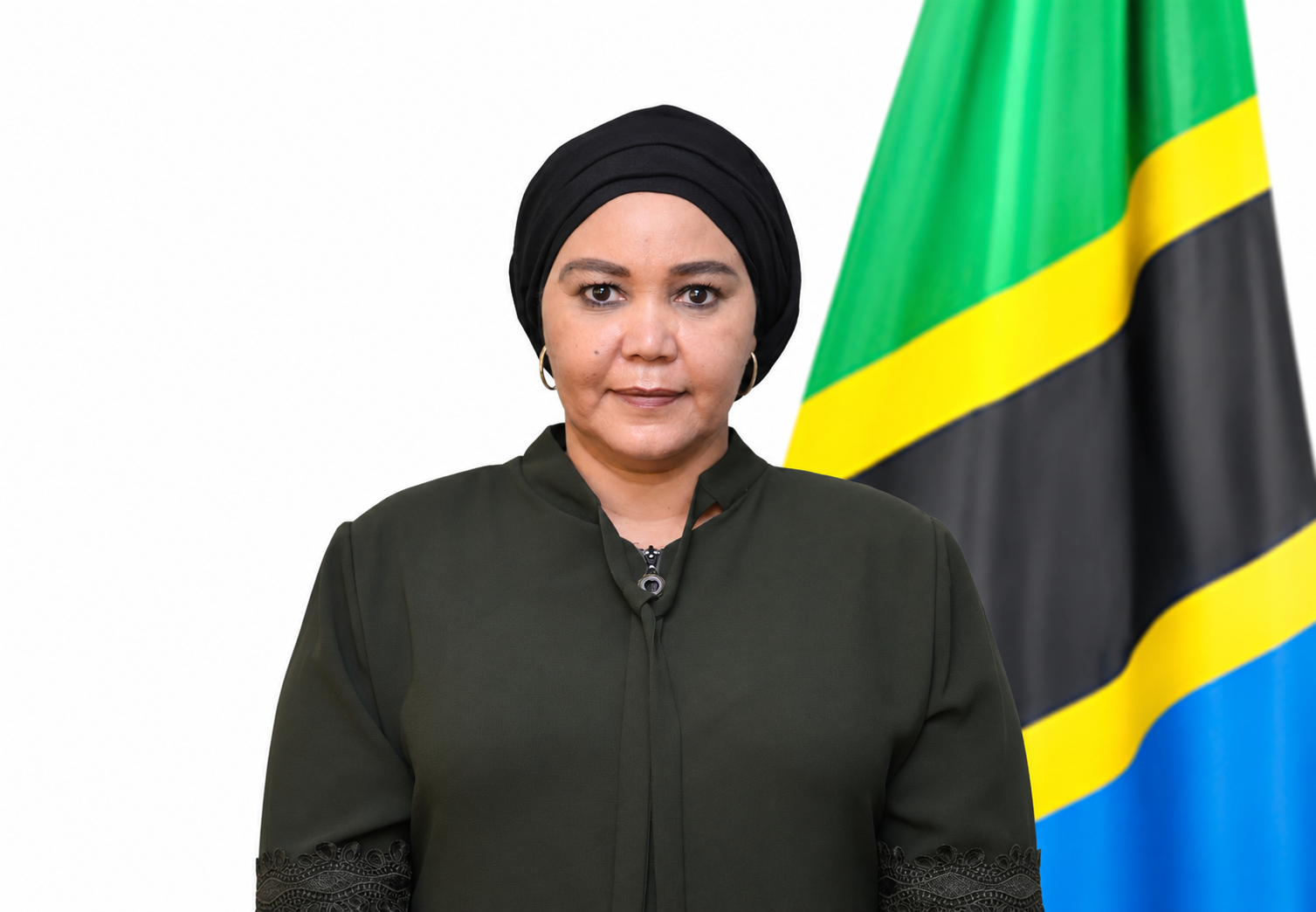
India and Tanzania have witnessed a significant expansion of bilateral relations following their elevation to a Strategic Partnership in October 2023. With bilateral trade reaching approximately $9 billion, growing Indian investment in Tanzania, and expanding cooperation in defence, education, agriculture and infrastructure, the two countries are exploring new opportunities for economic engagement.In this conversation with Anoop Verma, Anisa Kapufi Mbega, High Commissioner of Tanzania to India, discusses the progress of the strategic partnership, the prospects for Indian investment, and Tanzania’s efforts to strengthen its manufacturing and agricultural sectors. She highlights the proposed investment of approximately ₹7,000 crore by India’s BL Agro Group, the role of IIT Madras Zanzibar in developing technical capabilities, and the importance of maritime security cooperation in the Indian Ocean.The High Commissioner, who studied economics at Aligarh Muslim University before beginning her diplomatic career, also reflects on her personal connection with India and her ambition to see the bilateral relationship eventually elevated to a Comprehensive Strategic Partnership.Edited excerpts:
India and Tanzania elevated their bilateral relationship to a Strategic Partnership in October 2023. How do you assess the progress made since then, and what are your principal priorities for taking this partnership forward?
The elevation of our bilateral relationship to a Strategic Partnership during the state visit of our President, Her Excellency Dr Samia Suluhu Hassan, to India in October 2023 was a major milestone in the history of our diplomatic relations. It demonstrated the commitment of President Hassan and Prime Minister Narendra Modi to strengthening cooperation between our two countries.Since then, we have made considerable progress across several sectors. Our economic, political and socio-cultural relations have continued to deepen, and both countries have been working towards implementing the commitments made during the presidential visit.One of the most significant achievements has been the establishment of the IIT Madras campus in Zanzibar. This represents an important milestone in educational cooperation. In July 2026, the President of Zanzibar, Dr Hussein Ali Mwinyi, visited India, including IIT Madras in Chennai. Such engagements demonstrate the commitment of our political leadership to advancing bilateral cooperation.We have also witnessed encouraging growth in trade and investment. Bilateral trade has increased from approximately $8.6 billion to around $9 billion. Indian investment in Tanzania has also grown, from approximately $3.6 billion to $4.7 billion. These developments demonstrate that our Strategic Partnership is producing tangible results. Our priority is to build on this momentum, deepen economic cooperation and ensure that the relationship benefits the people of both countries.India is among Tanzania’s major trading and investment partners. Which sectors offer the greatest opportunities for expanding bilateral trade and creating a more diversified economic partnership?
India is one of Tanzania’s leading trading partners, and our bilateral trade has continued to grow. We have reached approximately $9 billion in trade, but there is considerable potential for further expansion. During our recent Joint Trade Committee discussions in Dar es Salaam, considerable attention was given to improving the business environment and identifying opportunities to deepen trade and investment cooperation.Tanzania offers significant opportunities across several sectors, including pharmaceuticals, manufacturing, healthcare, real estate, mining and agriculture. We are particularly interested in investments that support local manufacturing and value addition. Traditionally, Tanzania has exported substantial quantities of agricultural raw materials. Our government now wants to move beyond exporting raw commodities and develop industries that process these products domestically.We want Indian companies to invest in Tanzania, establish manufacturing facilities and contribute to the development of local value chains. This will create employment, strengthen our industrial capabilities and help us achieve a more balanced trading relationship. Agriculture and agro-processing are especially important because they can directly improve the livelihoods of a large section of our population.BL Agro Group has announced plans for a major investment in Tanzania. How does your government view this development, and what opportunities could it create in agriculture, food processing, technology transfer and employment?
The Government of Tanzania warmly welcomes and commends BL Agro’s decision to invest in our country. This is precisely the kind of investment we are seeking because it translates the strong diplomatic relationship between India and Tanzania into tangible economic benefits for our people. BL Agro is planning an investment of approximately ₹7,000 crore in Tanzania. This is a substantial commitment, particularly in a sector that is central to our economy.Agriculture is the backbone of Tanzania. A large proportion of our population depends on agriculture for employment, income and food security. Our government is therefore focusing on increasing agricultural productivity, improving technology and developing value-added industries. BL Agro’s investment can contribute to these objectives. We expect it to create employment opportunities, particularly for young people and women, while introducing agricultural technologies and modern production practices.India has considerable experience in agricultural transformation, including the Green Revolution. Tanzania can benefit from this expertise through investments that combine modern technology, agricultural productivity and local processing. The investment also has considerable potential in the livestock and dairy sectors. Tanzania has a large livestock population, but we need better technologies to improve milk productivity, animal health and nutritional outcomes.I have personally visited BL Agro’s facilities in Uttar Pradesh several times, perhaps four or five times. These visits gave me an opportunity to understand the company’s operations, its technological capabilities and its approach to agricultural production. We are particularly interested in improving edible oil production. Tanzania currently faces a deficit in domestic edible oil production, and this investment could help reduce that deficit considerably.The government has already provided land for the project, and the initial stages of investment have commenced. We are also looking at opportunities to develop high-yielding seeds and strengthen agricultural production.There is a programme called Building a Better Tomorrow, which focuses on engaging women and young people in agriculture. We see opportunities for farmers participating in this programme to produce seeds and supply agricultural produce to the proposed processing facilities.This could create an integrated agricultural value chain, generating employment, improving incomes and empowering women and young people. We hope the project will progress successfully and encourage other Indian investors to explore the opportunities available in Tanzania.You have visited BL Agro’s facilities in Uttar Pradesh several times. What impressed you most about its operations, and which practices would you like to see replicated in Tanzania?
The first and most important aspect was trust. BL Agro demonstrated confidence in Tanzania as a safe and attractive investment destination. That confidence is extremely important to us because attracting investment requires more than simply presenting opportunities. Investors must believe in the country, its institutions and its future.I was also impressed by the company’s technological capabilities, particularly in edible oil production, agricultural systems and livestock management. We had detailed discussions with the company’s technical teams and learned about their production systems, scientific approaches and operational practices. Their capabilities convinced us that this investment could deliver substantial benefits to Tanzania.Another aspect that impressed me was the working environment. The company’s Managing Director, Mr Ashish Khandelwal, maintains a very simple and approachable style of leadership. He works closely with employees, and there is a strong sense of equality and cooperation within the organisation.I was particularly impressed by the livestock operations. The company uses modern technologies for animal care, feeding and waste management. There is an emphasis on ensuring that resources are utilised efficiently and that very little goes to waste. Tanzania has extensive ranching areas, including government-managed ranches covering thousands of hectares. I could immediately imagine the benefits of introducing similar technologies and management practices in our livestock sector.For me, the most important consideration is always the welfare of the Tanzanian people. As High Commissioner I represent my President, Her Excellency Dr. Samia Suluhu Hassan, President of the United Republic of Tanzania and I also have the duty to oversee the welfare of Tanzanians. I must therefore be confident that an investment will benefit our people. After visiting BL Agro’s facilities and interacting with its leadership, I became convinced that the company could be a valuable partner in Tanzania’s agricultural transformation.There is also a personal connection. I studied at Aligarh Muslim University in Uttar Pradesh, and it gives me particular satisfaction to see a major investor from that state entering Tanzania. Traditionally, many of the Indian investors in Tanzania have come from Gujarat. It is encouraging to see investors from other Indian states also recognising the opportunities available in our country.The India–Tanzania Joint Trade Committee meeting in April 2026 discussed local-currency settlements, market access and business mobility. What concrete measures are being considered to facilitate trade and address the challenges faced by businesses?
The Joint Trade Committee meeting held in Tanzania in April 2026 provided an important platform for discussing bilateral trade and investment issues and identifying practical measures to strengthen economic cooperation. One of the areas discussed was the possibility of conducting trade settlements in local currencies. Efforts are continuing to examine how such an arrangement could be operationalised, including the necessary regulatory mechanisms and financial infrastructure.Market access was another important subject. We want to ensure that businesses in both countries have better opportunities to access each other’s markets. India has a strong export position in our bilateral trade. From Tanzania’s perspective, we would like to expand our exports and improve access to the Indian market.This requires strengthening our domestic production capabilities and developing industries that can add value to our agricultural and other products before export. We are therefore focusing not only on increasing trade volumes but also on encouraging investments that enable Tanzania to manufacture and process products locally.Different institutions responsible for business and investment facilitation have been encouraged to improve the investment environment and address the challenges faced by investors. Our objective is to create an environment in which Indian and Tanzanian businesses can expand their operations with greater confidence.India and Tanzania held Foreign Office Consultations in Dar es Salaam in July 2026, while the President of Zanzibar also visited India. What were the principal outcomes of these engagements, and what new initiatives can be expected?
The Foreign Office Consultations are an important institutional mechanism for reviewing our bilateral relationship. These consultations are held alternately in India and Tanzania and provide an opportunity for officials from our foreign ministries to assess progress, exchange views and identify areas requiring further attention.During the consultations in July 2026, the two sides discussed cooperation across several sectors, including education, healthcare and other areas of mutual interest. The discussions also focused on the challenges encountered in implementing bilateral initiatives and the measures needed to address them.These consultations are important because diplomatic relations require continuous engagement, not only at the level of heads of government but also between ministries, departments and technical institutions. The visit of the President of Zanzibar to India was another significant engagement, particularly in the context of educational cooperation and the IIT Madras Zanzibar campus.Such visits help maintain momentum in the relationship and demonstrate that both countries are committed to implementing the agreements and commitments made by their leaders.India and Tanzania have expanded defence cooperation through joint exercises, training and maritime engagements, including the Africa–India Key Maritime Engagement. What opportunities do you see for deeper collaboration in Indian Ocean security?
India and Tanzania enjoy very good relations in the defence sector. Our cooperation covers military training, joint exercises and other areas of defence engagement. One important initiative has been the Africa–India Key Maritime Engagement, or AIKEYME, which took place in Tanzania.Training is another important component of our defence relationship. Tanzanian defence personnel receive training in India, including at the National Defence College. There are also opportunities for exchanges involving our defence training institutions.I believe there is considerable scope for expanding cooperation, particularly because India and Tanzania share the Indian Ocean. The Indian Ocean is extremely important for the economic development of countries along its coastline. It supports trade, transport, fisheries and many other economic activities.However, the region also faces security challenges, including piracy and transnational organised crime. These challenges cannot be addressed effectively by individual countries acting alone. We should therefore strengthen cooperation in maritime information-sharing, coastal security, maritime patrols and hydrographic activities.There is also a need for closer coordination among Indian Ocean countries to combat piracy and other forms of maritime crime. These are areas where India and Tanzania can build on their existing defence cooperation and contribute to greater security and stability in the region.The establishment of IIT Madras Zanzibar was a major milestone in India–Africa educational cooperation. How do you assess its contribution, and what opportunities exist for expanding collaboration in technical education, research and innovation?
IIT Madras Zanzibar has become an important symbol of the relationship between Tanzania and India. We are extremely proud that Tanzania was selected as the location for the first IIT campus established outside India. We appreciate the confidence that the Government of India has demonstrated in Tanzania by choosing Zanzibar for this institution.I have personally visited IIT Madras in Chennai and observed the quality of education and training it provides. What impressed me is that students receive not only academic knowledge but also practical skills in innovation, entrepreneurship and technology. These capabilities are extremely important for young people entering the modern economy.The first cohort of students at IIT Madras Zanzibar completed their studies in 2025. The institution offers programmes in emerging technological fields, including data science and other areas relevant to the future economy. The campus is also attracting international students, including students from other African countries and beyond. This gives it significance not only for Tanzania but also for regional and international educational cooperation.As more students graduate, we expect the institution to contribute to technological innovation, entrepreneurship and the development of new businesses. Artificial intelligence and other emerging technologies are transforming economies around the world. We want Tanzanian students to acquire the knowledge and capabilities needed to participate in these developments.I believe IIT Madras Zanzibar will make an increasingly important contribution to Tanzania’s economic transformation and to the development of a skilled workforce.You first came to India in 1994 as a student at Aligarh Muslim University and have served as High Commissioner since 2021. How has your personal connection with India shaped your diplomatic approach, and what do you consider the major achievements of your tenure?
I first came to India in 1994 as a young student. I enrolled at Aligarh Muslim University, where I completed my Bachelor of Arts degree in Economics with Honours. I graduated with first-class results, something of which I remain very proud.My years at Aligarh were a wonderful experience. I made many Indian friends, interacted with local communities and learned about India’s diverse cultures and traditions. As a student, my main focus was on academics and social life. I attended cultural celebrations, interacted with fellow students and developed friendships that helped me understand Indian society.I also learned some Hindi and Urdu. At Aligarh, we had to study Urdu as a subject, and I still remember one sentence from those days: “Qalam mez par hai” — the pen is on the table. I used that sentence in an examination, and it has remained in my memory all these years. When I returned to Tanzania, I carried those experiences and friendships with me.Many years later, when I was appointed High Commissioner to India, I was extremely happy. I felt that God had given me another opportunity to return to a country with which I already had such a strong personal connection.During my student years, my relationship with India was primarily social and cultural. As High Commissioner, I was given the opportunity to take that relationship to another level by working to strengthen cooperation between our two countries. I consider this a great honour and responsibility.One of the most important achievements during my tenure has been the elevation of India–Tanzania relations to a Strategic Partnership. I also had the honour of facilitating the state visit of our President, Her Excellency Dr Samia Suluhu Hassan, to India in October 2023.Another milestone achievement has been the establishment of the IIT Madras Zanzibar campus, the first IIT campus outside India. This is a landmark development in our educational cooperation and an important symbol of the growing partnership between our countries. We are proud that Tanzania was chosen as the first international destination for an IIT campus.The institution is creating opportunities for young people to acquire advanced technical knowledge, develop skills in emerging technologies and contribute to innovation and entrepreneurship. Its significance extends beyond Tanzania because it also welcomes students from other African countries and across the world. I believe IIT Madras Zanzibar will make an important contribution to developing the skilled workforce needed for our country’s economic transformation.A visit by the head of state is not something that necessarily happens during every ambassador’s tenure. I therefore regard the President’s visit, the elevation of our relations to a Strategic Partnership and the establishment of IIT Madras Zanzibar as significant achievements. They demonstrate how our bilateral relationship has progressed from traditional diplomatic cooperation towards deeper engagement in education, technology, trade and investment.My fundamental objective has been to bring the two countries closer together through stronger economic, political, cultural and social cooperation. I want the relationship to produce tangible results that improve the lives of ordinary people. For me, that is the true measure of successful diplomacy.Looking ahead, what is your vision for India–Tanzania relations over the next five years? Do you see the possibility of elevating the relationship to a Comprehensive Strategic Partnership?
I would like to see India and Tanzania deepen their cooperation considerably over the next five years, particularly in trade, investment, healthcare, education and technology.We have already achieved the level of Strategic Partnership. My ambition is that, in the future, we should move towards a Comprehensive Strategic Partnership. However, the most important objective is not simply the designation of the relationship. What matters is whether our cooperation produces tangible benefits for the people of both countries.Trade and investment are essential because they generate employment, increase incomes and improve livelihoods. We also want a more balanced trading relationship in which businesses and producers from both countries benefit. Our leaders have ambitious visions for national development. Prime Minister Narendra Modi has articulated the vision of Viksit Bharat 2047, while President, Her Excellency Dr. Samia Suluhu Hassan is advancing Tanzania’s National Development Vision 2050.These visions reflect a shared commitment to economic transformation and improving the lives of our people. Tanzania is undertaking major infrastructure development, including investments in electricity generation, railways, ports and industrial facilities.We have developed major hydropower infrastructure and are expanding our standard-gauge railway network to improve domestic and regional connectivity. Our ports, including Dar es Salaam, are being modernised, and there are plans for further port development at Bagamoyo.Tanzania’s strategic location gives it an important role as a gateway to markets in East and Central Africa. We are also creating new opportunities for Indian investors. Our government has identified land for a dedicated industrial park for Indian businesses, and we encourage companies to explore investment opportunities in Tanzania.I would like to invite more Indian companies to come to Tanzania, examine the opportunities available and establish manufacturing and other productive enterprises. President Hassan has been strongly committed to attracting investment and accelerating infrastructure development. I believe these initiatives will create significant opportunities for international partners, including India.Ultimately, my vision is for a relationship that is not only strong at the diplomatic level but also delivers measurable improvements in trade, investment, employment, education and the welfare of our people. That, to me, is the true measure of successful economic diplomacy.
