

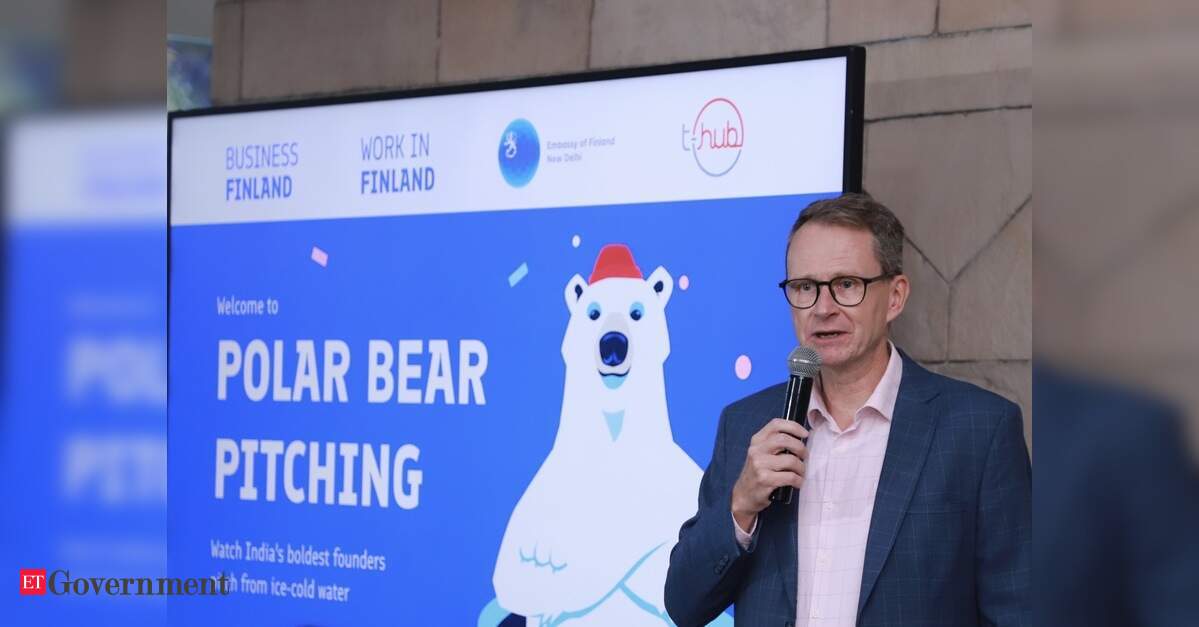
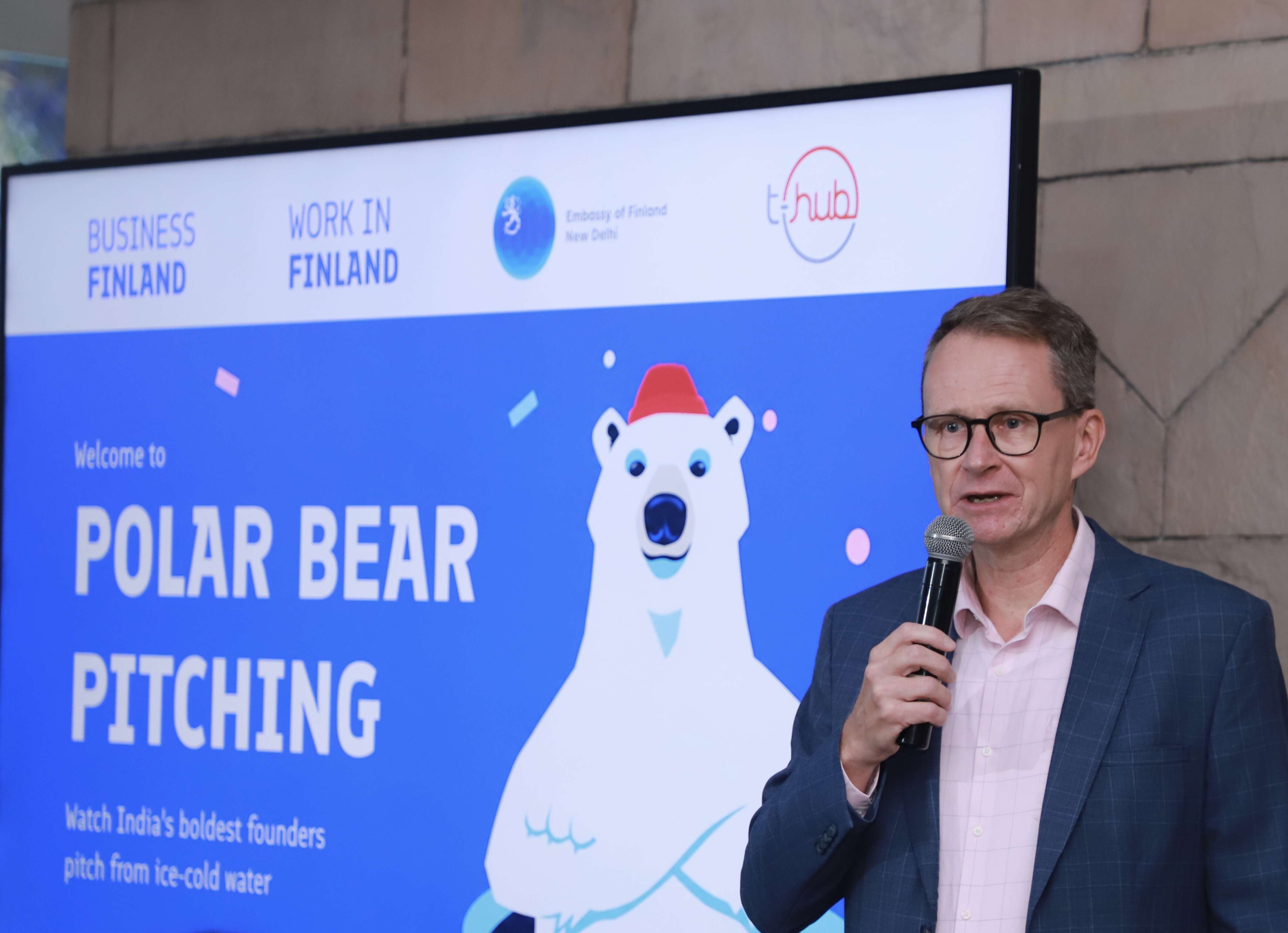
Finland sees startups and small and medium enterprises as important drivers of innovation, employment and future economic growth, with considerable scope for expanding their collaboration with India.Speaking to Anoop Verma on the sidelines of the third edition of Polar Bear Pitching India, held at the Embassy of Finland in New Delhi, Mikko Kivikoski, Ambassador of Finland to India, discusses the role of entrepreneurial ecosystems in transforming innovative ideas into commercially successful businesses. He highlights emerging opportunities for bilateral cooperation in gaming, satellite technology and other innovation-driven sectors, while emphasising the importance of connecting startups with investors and international markets.Ambassador Kivikoski also speaks about the potential of the proposed India–EU trade and investment agreements to strengthen the framework for business collaboration. He shares his perspectives on Finland’s startup culture, the growing India–Finland technology partnership and the role of initiatives such as Polar Bear Pitching in building stronger entrepreneurial networks.Edited excerpts:Polar Bear Pitching is a distinctive initiative organised by the Embassy of Finland. Does this competition reflect Finland’s entrepreneurial culture and its approach to encouraging startups to develop innovative business ideas?
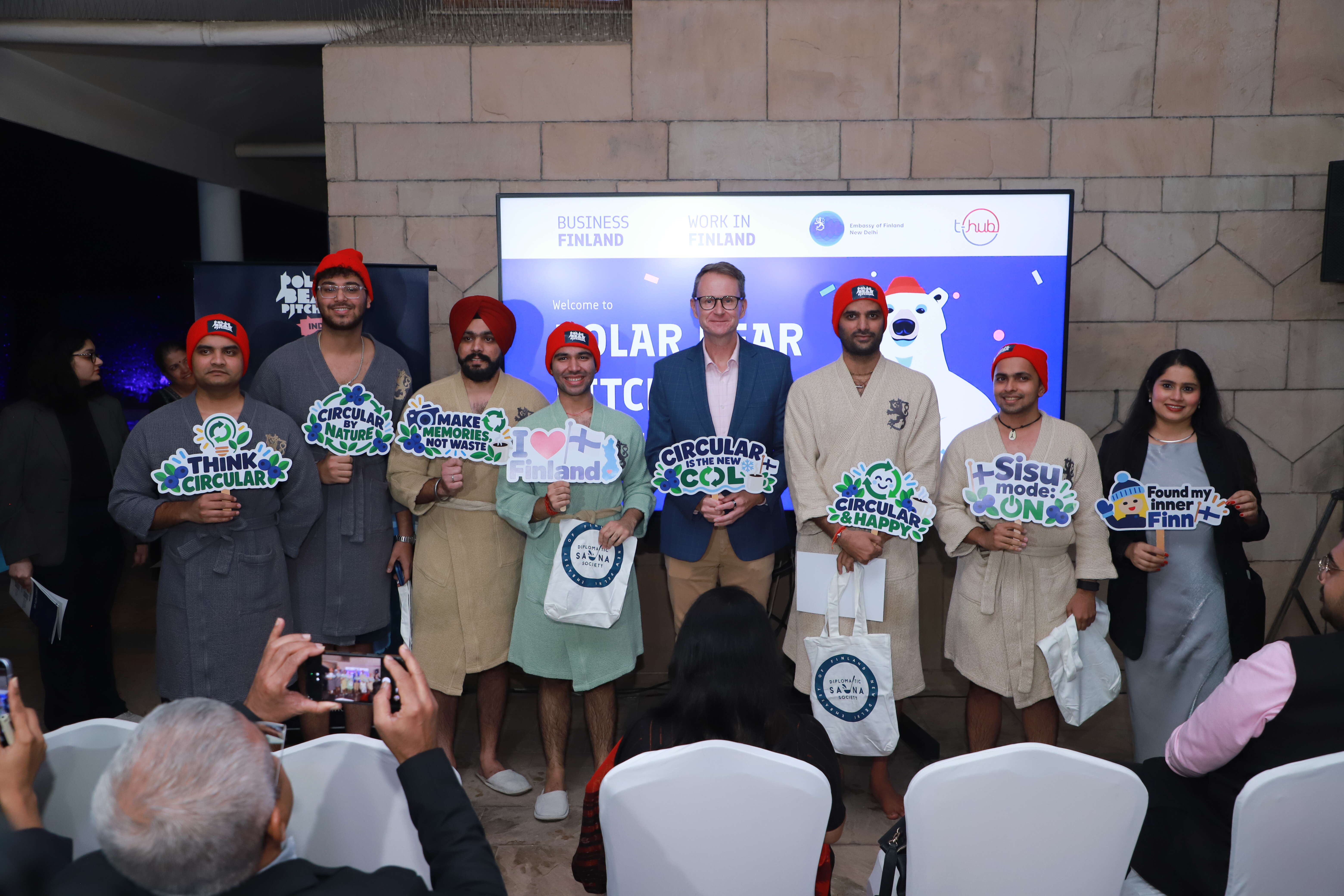
Finland has been developing its startup ecosystem for a long time, and over the years we have established certain practices to encourage entrepreneurship and innovation. Polar Bear Pitching originated in Oulu, in northern Finland, close to the Arctic Circle. The idea is to bring startups and potential investors together in an unconventional setting. In Finland, participants pitch their business ideas while standing in a hole cut into the ice. It is freezing cold.What we are witnessing here is the Indian edition of that competition. At the Embassy, we have a sauna and a cold pool. The Indian participants stand in the pool and present their business ideas. When the water temperature is around six degrees Celsius, you have to remain focused and think carefully about your message. But beyond the unusual format, the larger objective is to deepen cooperation between the startup ecosystems of Finland and India. Our experience in Finland is that many successful innovations originate in startups. However, to take these innovations forward, entrepreneurs need investors and business partners.Events such as Polar Bear Pitching help establish these connections. Hopefully, some of the ideas presented here will eventually develop into successful businesses operating at a much larger scale.India and Finland already have significant business cooperation, particularly through large companies such as Nokia, which has a substantial presence in India. How can startups and SMEs contribute to expanding this partnership?
I would argue that much of the growth and future economic dynamism will come from small and medium-sized enterprises. This is not to diminish the importance of large companies. Every economy needs a healthy combination of large corporations and smaller businesses.
However, startups and SMEs are particularly important because they bring innovation, flexibility and dynamism into the economy. Some of these enterprises will eventually grow into the unicorns that we all want to see. Therefore, it is important for both Finland and India to nurture and support their startup ecosystems. We see startups as one of the important new areas of cooperation between our countries.There is also a broader dimension to this partnership. It is not only about technological innovation or business development. It is also about people-to-people connections and bringing entrepreneurial communities together. The more interaction we create between these communities, the greater the opportunities for productive collaboration.The competition involved an independent jury evaluating the participating startups. Could you explain how the Indian edition was organised, how the finalists were selected, and what opportunities are available to the winner?
The Indian edition is part of the larger international Polar Bear Pitching initiative. The winner of the competition here will travel to Oulu, Finland, to participate in the main global event. Last year, the winner of the Indian edition secured third place in the international competition, which was a very good achievement.For this year’s Indian edition, we invited open applications from startups. These applications were evaluated, and a shortlist was prepared. We had six participants competing here today, and one winner was selected to represent India in Finland. That is the formal competition process. However, I would emphasise that the competition itself is only one aspect of the event.Equally important are the informal discussions, connections and networking opportunities that take place around it. We are building relationships between entrepreneurs, investors and other stakeholders. In that sense, we are strengthening the wider startup ecosystem and entrepreneurial community.Successful startups can eventually become unicorns, create employment and drive technological innovation. How do competitions such as Polar Bear Pitching help promising startups gain recognition, attract investment and develop into larger enterprises?
The beauty of events like this is that they provide an opportunity for promising ideas to gain visibility. There may be excellent startups with innovative products or technologies, but they remain undiscovered because they have not attracted sufficient attention. Their ideas may simply remain below the radar of investors and potential business partners.These competitions give entrepreneurs a platform to present their ideas and gain the recognition they need. Visibility and attention can make a significant difference in helping a startup progress. One interesting example is the Finnish satellite technology company ICEYE, which we have discussed earlier. The company is already operating in Finland and other European markets and is now entering the Indian market.Several years ago, ICEYE was a startup. Since then, it has made impressive progress, and we hope it will become one of the new unicorns. It is an example of how a company can begin with an innovative idea and gradually develop into a significant international business. Every successful company has to start somewhere. Initiatives such as Polar Bear Pitching can help promising entrepreneurs take those initial steps.Finland has established a strong position in the global gaming industry, while Indian companies are also expanding in this sector. What opportunities do you see for collaboration between Finnish and Indian gaming companies? How important is the policy and regulatory environment for the industry’s future growth?
Gaming is a very interesting sector with considerable potential for cooperation between Finland and India. I returned from Bengaluru yesterday, where I attended the Bengaluru Tech Summit. We already have cooperation developing between the Finnish and Indian gaming industries, and memorandums of understanding have been signed.Collaboration has started, and we see gaming as another promising area of bilateral economic engagement. More Finnish companies are becoming interested in working with Indian partners. Regarding Indian policies and regulations, as the Ambassador of Finland, I would not make recommendations to the Government of India.However, I am a strong believer in market economies and open economic systems. In Finland, we believe that when businesses have reliable partners, mutual trust and a common vision, market forces can help create opportunities for growth. The free trade agreement being negotiated between the European Union and India, and hopefully an investment protection agreement at a later stage, will also help shape a positive framework for business cooperation.I am confident that the gaming industry will benefit from these developments. From Finland’s perspective, we would like to see more Finnish companies becoming interested in the Indian market and establishing partnerships here. This is already happening, but encouraging greater business engagement remains one of our important priorities.During the event, you also entered the cold pool and made a pitch yourself. What was your message, and what were you seeking to promote?
Yes, I went into the pool and made my pitch. You will see some content from that on social media. I was not pitching a startup. I was pitching the event itself. And you will be able to judge how successful I was!
