 “>
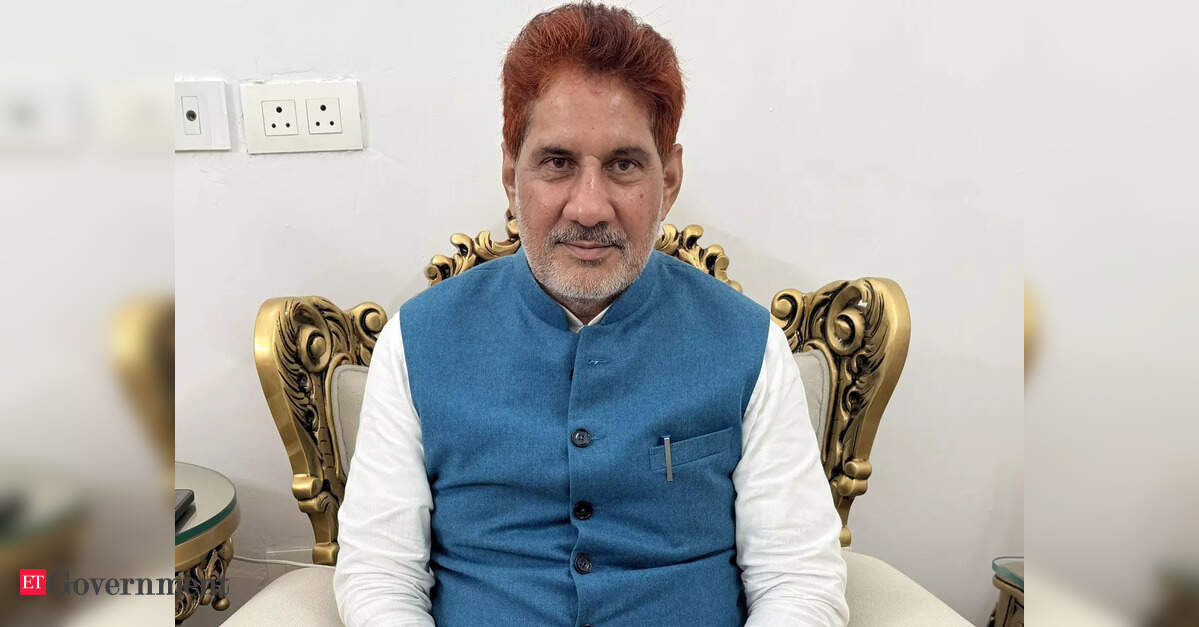
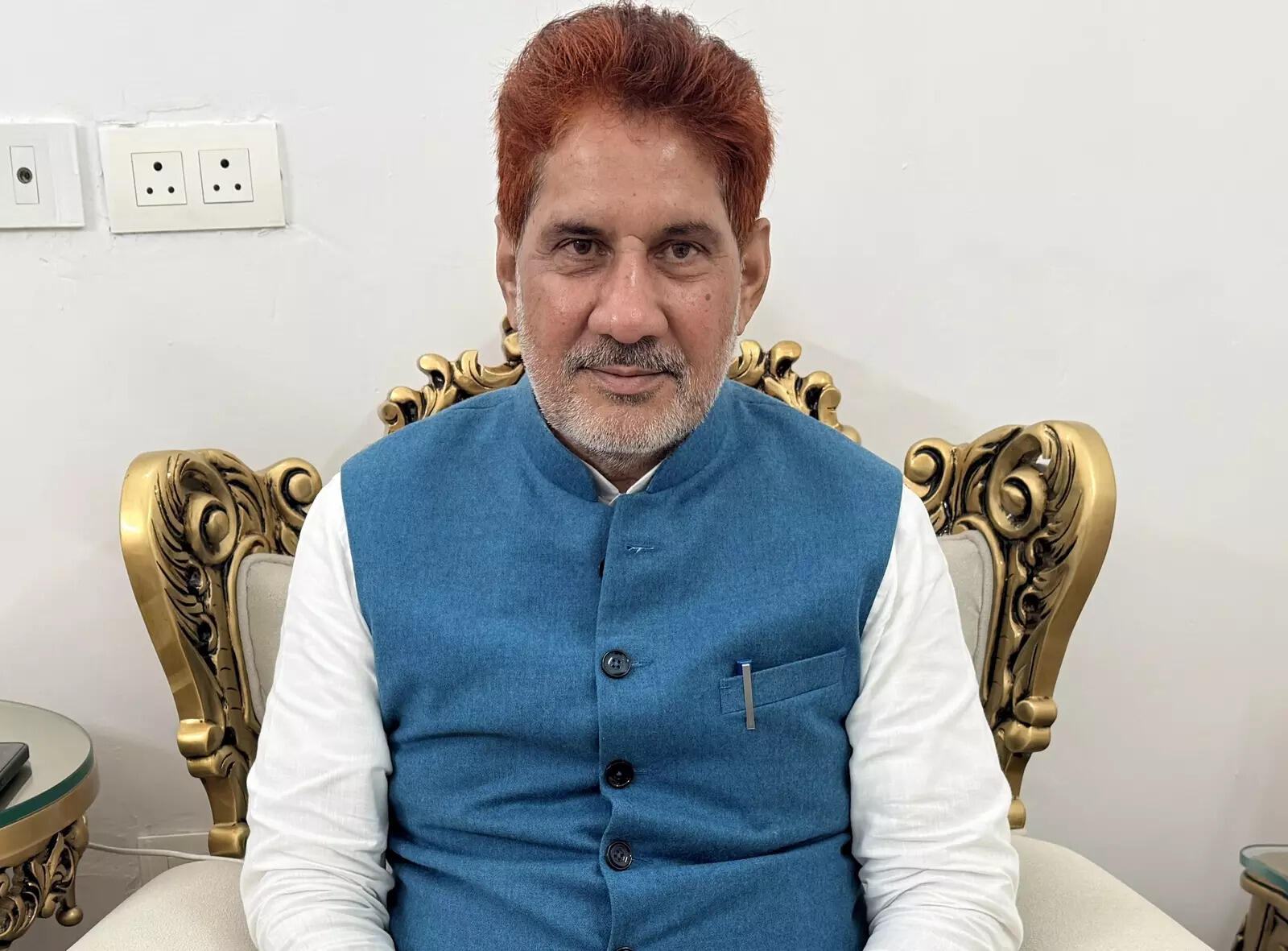
“>Subhash Barala’s political journey is a study in organisational perseverance, grassroots engagement, and institutional leadership.
From his early involvement in cooperative institutions and youth politics to serving as BJP Haryana State President for two consecutive terms, and now as a Member of Parliament in the Rajya Sabha, Barala has traversed the full spectrum of party organisation and governance. With an academic grounding in engineering, agriculture, political science, and public administration, his approach to public life blends administrative insight with on-ground political experience.
In this conversation with Anoop Verma, Barala reflects on his transition from state to national politics, the evolving responsibilities of a Rajya Sabha MP, and the structural challenges facing Haryana’s agriculture sector—particularly water scarcity—while outlining how policy, technology, and social participation must converge to ensure sustainable development.
Edited excerpts:
You have made a significant transition—from working at the grassroots, to becoming an MLA, then BJP State President in Haryana, and now a Rajya Sabha MP. Could you take us through your political journey?
My political journey began in 1996, but even before formally joining politics, I was involved in cooperative institutions. In 1995–96, I became a Director of a sugar mill in the Fatehabad district. From among the elected directors, I was chosen as Vice Chairman. Around the same time, I was also elected as a Director of the Haryana Sugar Federation, which is a state-level cooperative body.
It was during this period that Atal Bihari Vajpayee’s leadership deeply influenced me. I admired his personality and vision, and in 1996, of my own conviction, I formally joined the Bharatiya Janata Party. I worked at the organisational level for two years, and in 1998, I was appointed District Secretary of the Bharatiya Janata Yuva Morcha in Fatehabad. I served in that role until 2000. Thereafter, from 2000 to 2003, I was the State President of the Yuva Morcha in Haryana.
At that time, Manohar Lal was a Sangathan Mantri, Rattan Lal Kataria was the BJP State President, and Narendra Modi was the BJP Prabhari for Haryana. Working with such leaders gave me deep organisational exposure. Later, I served as District BJP President in Fatehabad, then as State President of the Kisan Morcha for three terms. In 2008, I organised two major programmes at the state level—one was a conference of active party workers, and the other was a rally led by senior leaders.
In 2012, I became the State General Secretary of the BJP. I contested elections multiple times—some were organisationally important, others were decisive. In 2014, I won the assembly election, and within a month, on 25 November 2014, I was appointed State President of BJP Haryana. I served two full terms of three years each. Since 2024, I have been serving as a Member of Parliament in the Rajya Sabha.
After moving from state politics to the Rajya Sabha, has your perspective on politics or governance changed?
Politically, there is no fundamental change in thinking. When you work in an organisation like the BJP—whether as an MLA, a Morcha leader, or a state office-bearer—you are already connected to national issues. As a state-level leader, you interact with workers and leaders across the country, and the party often sends you to different states during elections.
However, the nature of responsibility does change. As an MLA, the focus is largely on local and constituency-specific issues. As a Rajya Sabha MP, the focus shifts more toward legislation, policy formulation, and national-level governance. The exposure and responsibilities are different, and that naturally brings a broader outlook.
Your academic background includes engineering, agriculture, and public administration. How does this shape your role as a legislator?
I am a civil engineer by training and have an agricultural background as well. Later, I completed my post-graduation in Political Science, and currently, I am pursuing a PhD in Public Administration from Kurukshetra University.
This academic grounding helps me understand policy not just politically, but also technically and administratively. Whether it is infrastructure, agriculture, water management, or governance systems, my education allows me to approach issues with both practical and policy perspectives.
From Haryana’s perspective, what do you see as the biggest unresolved challenge in the agriculture sector?
The single biggest challenge in agriculture today is water. Water scarcity is a serious issue across Haryana. While farmers are advanced and adaptive, water availability remains a structural constraint that we have not fully resolved.
What steps have been taken to address water scarcity and agricultural sustainability in Haryana?
Under the leadership of the Prime Minister, initiatives such as strengthening Farmer Producer Organisations (FPOs) and cooperatives were introduced. Three agricultural reform laws were brought to improve implementation, though they were later repealed. Despite that, Haryana’s farmers are progressive and continue to move forward.
The government is supporting food processing plants under the “One District, One Product” initiative. In districts like Fatehabad, Sirsa, and Hisar, horticulture-based processing units are being promoted by both the state and central governments. In regions such as Karnal, Panipat, Sonipat, Kaithal, and parts of Fatehabad, farmers have shifted toward vegetable cultivation and value addition.
The government has invested heavily in cold-chain infrastructure. In districts like Sonipat, you can see large modern warehouses equipped to preserve agricultural produce. Haryana’s farmers are now also connected to Delhi’s online markets, supplying fruits and vegetables based on real-time demand. Even though water scarcity persists, farmers are managing it through government support and improved farming techniques. Many farmers have also begun direct exports through cooperatives and FPOs.
Water conservation is clearly a long-term challenge. Can this be addressed through political will alone?
Political will alone is not enough. Social will is equally important. Everyone—politically and socially—must be involved.
I will give you an example. After the COVID period, former Chief Minister Manohar Lal visited water-stressed areas in Fatehabad district. This led to the strengthening of the “Mera Pani, Meri Virasat” scheme. The idea behind the scheme is that land is our heritage, passed on by our ancestors, and it is our duty to preserve its fertility and water balance.
Under this scheme, a large number of farmers shifted away from water-intensive paddy cultivation to alternative crops. I myself adopted horticulture and planted a guava orchard, which requires much less water.
How is technology helping farmers save water in Haryana today?
The government has promoted drip irrigation and sprinkler systems extensively, especially for horticulture and vegetable crops. Farmers are receiving financial support to adopt these technologies.
In southern Haryana in particular, sprinkler irrigation is widely visible. If you visit areas like Rewari, Jhajjar, Narnaul, Mahendragarh, Dadri, and Bhiwani, you will see mustard and wheat fields irrigated through sprinklers. It is both efficient and visually striking.
We are also learning from global best practices, including Israeli water-saving technologies. The use of modern irrigation techniques is being actively promoted to ensure sustainability.
With rapid urbanisation in Haryana, how do you balance development with environmental and cultural preservation?
Urbanisation has expanded rapidly, especially around Gurugram and along the Delhi–Jaipur corridor. Industrial townships have grown not only in Haryana but beyond.
In this context, it becomes extremely important to preserve both nature and culture. Development must not come at the cost of environmental degradation or loss of cultural heritage. The challenge before us is to ensure balanced growth—where economic expansion, environmental protection, and cultural values coexist.