

As 2025 draws to a close, the Union Public Service Commission (UPSC) once again stands at the centre of India’s administrative and academic discourse. From the release of examination calendars and major results to policy changes, controversies, and inspiring success stories, the year was packed with developments that shaped the journey of crores of aspirants. This year-end takes a look back at the UPSC in 2025, recapturing some of the important news and updates that mattered to the students.
This year also saw the Union Public Service Commission (UPSC) chairperson, Dr Ajay Kumar, hold a live interaction session with civil services aspirants on October 1. In the open interaction, Dr Kumar addressed long-standing questions related to eligibility, CSAT, evaluation, reforms, and fairness in the examination system.

Highlights of the conversation
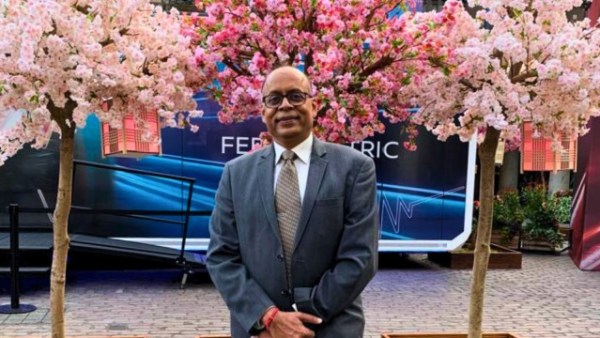
In the interaction, many aspirants felt that the CSAT (Paper II in prelims) gives an edge to candidates with engineering or quantitative backgrounds. Answering the queries, the chairperson said, CSAT is only a qualifying paper, requiring 33% marks and not contributing to the merit list. The paper is structured with three balanced sections—language, quantitative ability, and logical reasoning—ensuring that every candidate has the opportunity to clear it based on their individual strengths.
The Commission, established on 1 October 1926, enters its centenary in 2025–2026. Marking 100 years of its legacy, the Commission has announced year-long celebrations that will run from 1 October 2025 to 1 October 2026.
Pooja Khedkar controversy
The probationary Indian Administrative Service (IAS) officer, Pooja Khedkar, has been embroiled in controversy over allegations of misusing her official position and submitting fraudulent disability and caste certificates to qualify for the civil services examination.
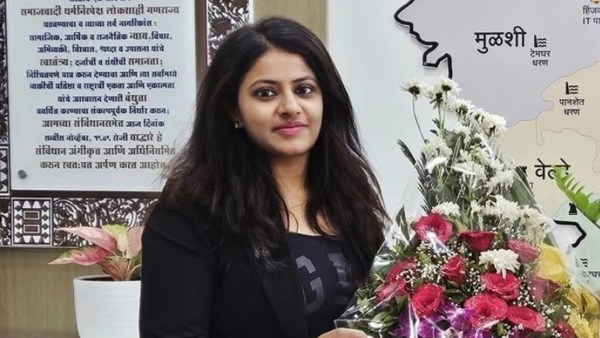 Dr Puja Khedkar. (Instagram/ dr_pujamdk_ias)
A 2023 batch officer from the Maharashtra cadre, she drew public attention after Pune Collector Suhas Diwase accused her of misconduct, which included using a private car fitted with a beacon light and demanding a separate office, official vehicle, and staff facilities that are not ordinarily extended to trainee officers.
Following the Pune Collector’s report, questions emerged regarding the validity of the disability and Other Backward Class (OBC) certificates submitted by Pooja Khedkar to qualify for the Civil Services Examination.
Story continues below this ad
New portal to register for exams
The Union Public Service Commission launched a new portal and the applicants will have the option of using Aadhaar authentication to register. The UPSC has included the option of Aadhaar verification and authentication, saying: “Applicants are strongly advised to use their Aadhaar Card as ID document in the Universal Application for easy, effortless and seamless verification and authentication of ID and other details after which it serves as a permanent and common record for all examinations.” Apart from the identity profile, the applicants have to furnish either Aadhaar or another valid photo identity document, it said.
Centre tightens rules on scribes for disabled candidates
The Centre has tightened the rules on the use of scribes in competitive examinations for persons with disabilities (PwDs), making it mandatory for examining bodies to prepare their own vetted scribe pools within two years and phasing out the widely used “own scribe” system flagged for malpractice.
The revised guidelines, issued by the Ministry of Social Justice and Empowerment, aim to ensure fairness, transparency, and integrity in exams while aligning them with the Rights of Persons with Disabilities Act, 2016, and the Public Examination (Prevention of Unfair Means) Act, 2024.
Rebranding of Public Disclosure Scheme
The Union Public Service Commission introduced the Pratibha Setu feature, aimed at opening up new opportunities for civil services aspirants who reach the final interview stage but do not make it to the final merit list.
Story continues below this ad
The initiative, launched as part of the Civil Services Examination (CSE) 2023 result process, enables verified employers — ranging from government ministries and public sector undertakings (PSUs) to autonomous bodies and private organisations — to access the profiles of such non-recommended yet qualified candidates. The initiative is designed to facilitate alternate career pathways by connecting these aspirants with organisations seeking top-tier talent.
UPSC CSE: Steady rise in female participation, but still below 40%
The Union Public Service Commission (UPSC) Civil Services Examination, often seen as a ladder to power and influence, has recorded less than 40 per cent female participation in the 2010-2021 period, along with abysmally low participation of transgender candidates, as reflected in the Commission’s annual reports.
According to the 2021 UPSC annual report, only 32.98 per cent of candidates appearing for the CSE Prelims examination were women. Of these, just 14.75 per cent qualified in the preliminary round.
In the second and final stages of the CSE, the mains and interview, only 26.87 per cent (408) of the candidates were women. In the final list for 2021, only 15.66 per cent, or 201 women, cleared the exam.
Story continues below this ad
UPSC CSE results 2024 topper list
UPSC on April 22 announced the results for the Civil Service Examination 2024 cycle. This year, Shakti Dubey topped the CSE with rank one, followed by Harshita Goyal. For the Indian Administrative Service (IAS), there were 180 vacancies, which included 73 for General, 18 for EWS, 52 for OBC, 24 for SC, and 13 for ST.
