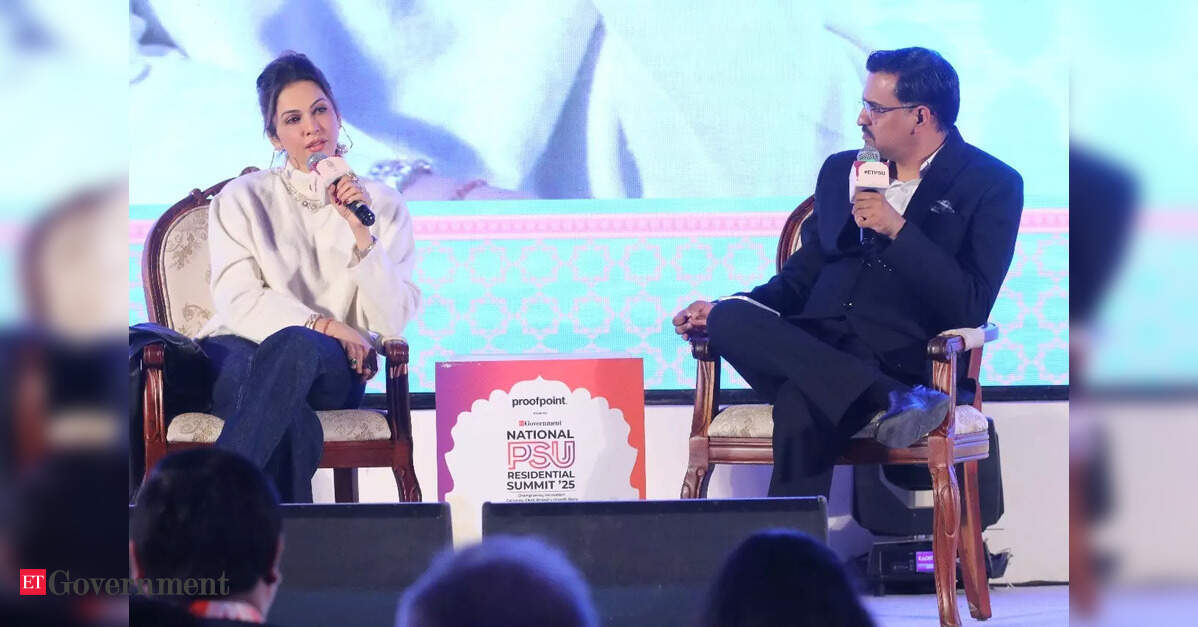
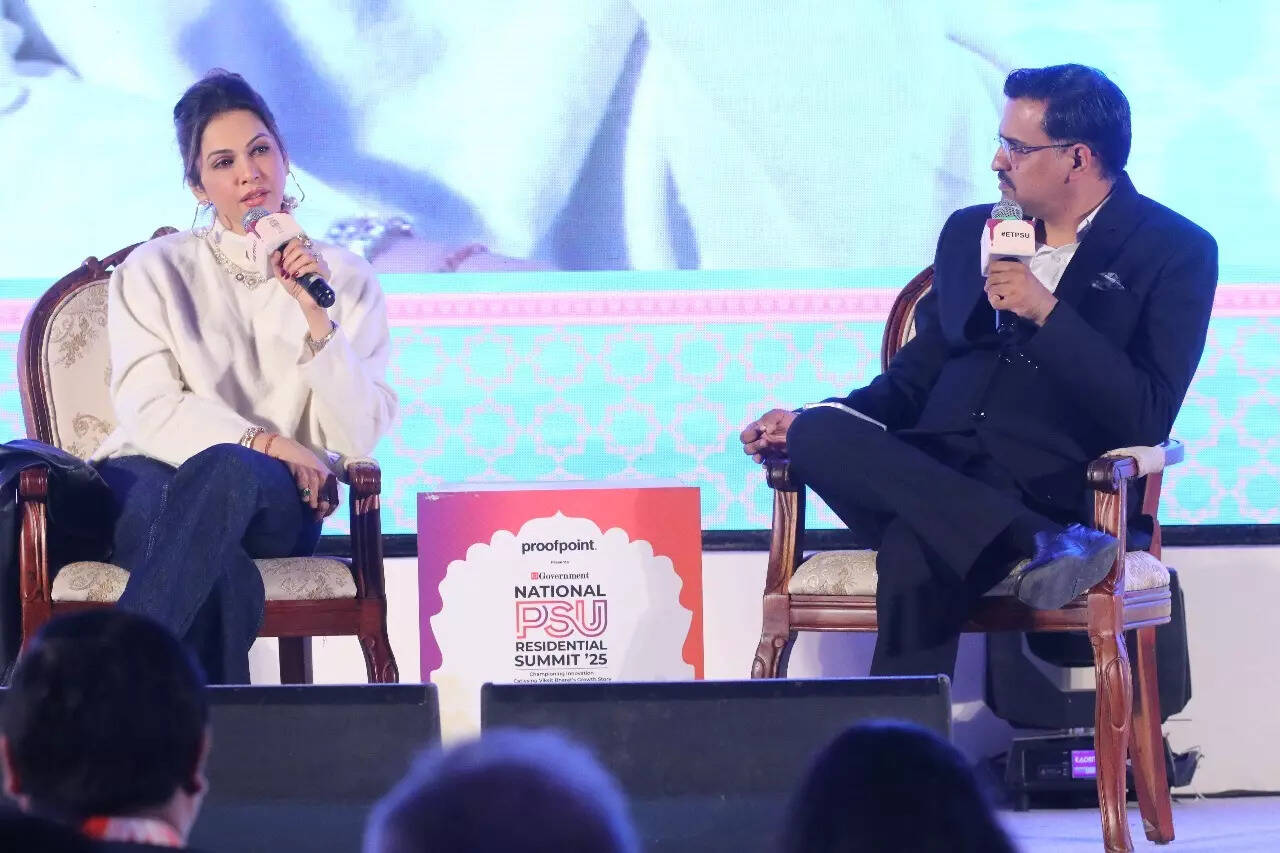
In a candid and deeply reflective fireside conversation, Isha Koppikar spoke not just as an actor with an eclectic body of work, but as a thinking citizen who believes that storytelling, responsibility and belief together can shape a stronger nation.
Tracing her journey across films as diverse as Khallas Girl, Krishna Cottage, Don, ET and recent OTT narratives, Koppikar said her choices have always been guided by one principle: the woman must have a voice.
For her, representation in cinema is not mere entertainment; it is empowerment. When audiences repeatedly see women as decision-makers, protectors, leaders and professionals, that imagination quietly travels into real life. Cinema, she said, mirrors society but also nudges it forward.
Reflecting on the changing entertainment landscape, Koppikar underlined how OTT platforms have accelerated nuanced storytelling. The shift from ornamental roles to layered female characters did not happen overnight, she noted, but through years of persistence and evolving social consciousness.
Today’s narratives reflect a more confident, progressive India—one where women lead investigations, run institutions and shoulder responsibility with authority.
The conversation moved seamlessly from cinema to citizenship. Koppikar stressed that nation-building cannot rest on governments alone. True progress, she said, comes when individuals take responsibility in their own spheres—whether in boardrooms, classrooms, studios or homes.
She expressed a strong desire to work with institutions, including PSUs, on social causes close to her heart: women’s safety, women’s health, nutrition, self-reliance and youth awareness.
At the core of her philosophy lies consistency. Success, she said, is never a long jump; it is a staircase. Dreams must be intimidatingly large, but steps should be reassuringly small. One must believe deeply, act steadily and avoid being distracted by external noise. Drawing from her experience working with industry icons, she highlighted discipline, professionalism and self-belief as non-negotiables.
Koppikar spoke passionately about reclaiming India’s civilisational confidence. Long before the modern world “discovered” India, she said, the country led in medicine, science, architecture, arts and spirituality.
What invasions took away was not just material wealth but self-belief. Educating the youth about this legacy, she argued, is essential to building pride and responsibility. Without confidence in indigenous knowledge and capabilities, true self-reliance remains incomplete.
On women empowerment, her views were firm yet nuanced. Financial independence, she said, is essential—but independence should not be confused with domination or loss of femininity. Empowerment lies in choice, balance and self-respect.
A woman who values her time, health and boundaries teaches others to do the same. Pressure, she reminded the audience, is often self-created; learning when to say no is an act of strength, not weakness.
If given the opportunity to partner on social initiatives, Koppikar said she would use her public voice to amplify causes for women and children, not just in cities but across villages and smaller towns. Educate one woman, she said, and you educate an entire family—sometimes an entire community.
The fireside chat closed on a note that summed up her worldview: believe fiercely, act responsibly, move steadily. In an age of instant success and constant noise, Isha Koppikar’s message was refreshingly grounded—nation-building begins with personal accountability, and big dreams are realised only through small, consistent steps.