

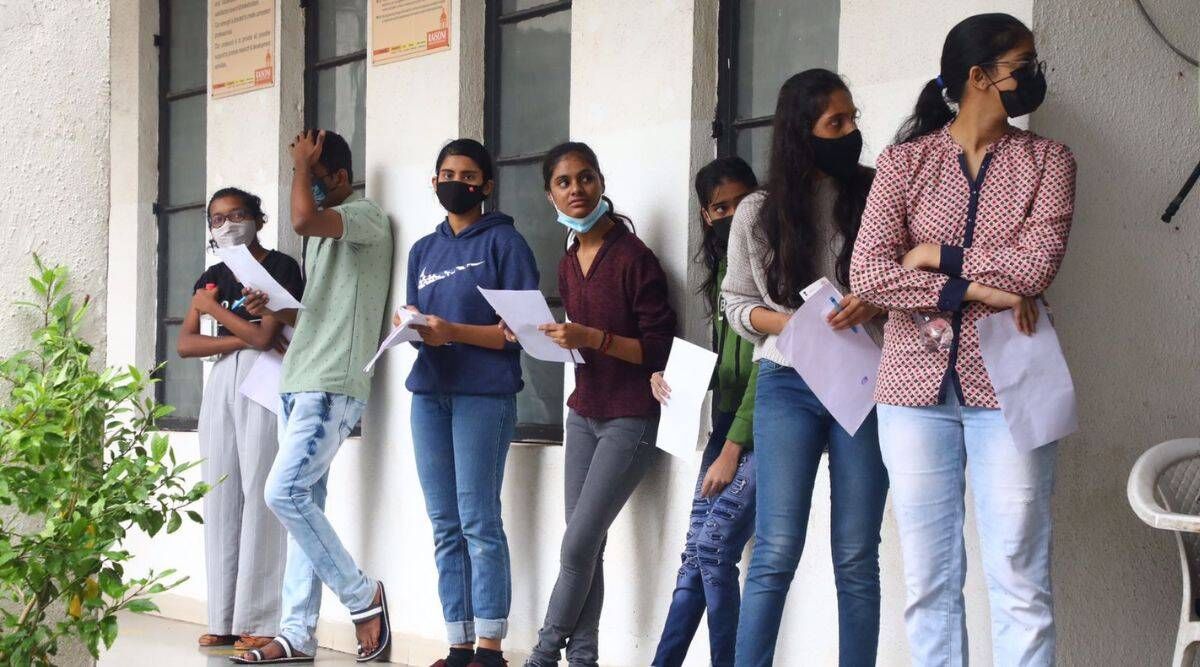
The National Testing Agency (NTA) “has not inspired much confidence”, should quickly get its act together, and use the surplus of Rs. 448 crore it has collected in the past six years to build its capabilities and conduct tests itself, the Parliamentary Standing Committee on Education has noted in a report presented to Parliament Monday.
The committee’s report was on the ‘Review of Autonomous Bodies and Institutions – NTA, NAAC, Draft UGC Regulations, ICHR, ICPR, ICSSR, IIAS (Shimla) and Auroville Foundation under the Department of Higher Education’

The committee, headed by Rajya Sabha MP and Congress leader Digvijaya Singh, noted that NTA did not declare the results of the Common University Entrance Test (CUET) in time in the last few years.
“Such a delay is a cause of major concern as it not only delays the admission process but also delays the start of the academic session by the on-boarded universities, which ultimately puts unnecessary pressure on the students. The Committee emphasises that NTA should not only conduct the examinations within time but also declare the results in a time-bound manner,” it stated in its report.
Referring to 14 competitive examinations conducted by NTA in 2024, the committee observed that at least five faced major issues – UGC-NET, CSIR-NET, and NEET-PG were postponed, NEET-UG saw paper leaks, and CUET results were postponed.
In the JEE Main exam held in January 2025, at least 12 questions had to be withdrawn due to errors in the final answer key, the committee’s report noted. “The Committee observed that such instances do not inspire confidence of the examinees in the system. The Committee therefore recommends that NTA need to quickly get their act together so that such instances, which otherwise are fully avoidable, do not occur in future.”
Of the Rs. 3,512.98 crore that the NTA collected, it has spent Rs. 3,064.77 crore, with a surplus of Rs. 448 crore in the past six years, the report stated, recommending that this corpus be used to build the NTA’s capabilities to conduct tests itself, or to strengthen regulatory and monitoring capabilities for its vendors.
Story continues below this ad
Between pen-and-paper and computer-based exams, the committee supported a focus on pen-and-paper exams, citing such exams, like the CBSE and UPSC exams, which have been “leak-proof for several years.”
Draft UGC regulations
The committee looked into the Draft UGC (Minimum Qualifications for Appointment and Promotion of Teachers and Academic Staff in Universities and Colleges and Measures for the Maintenance of Standards in Higher Education) Regulations, 2025, which was released for feedback in January this year, and ran into opposition for giving greater control to the chancellor/visitor (usually the Governor in sstate universities) in the appointment of vice-chancellors
UGC has told the committee that it received 15,066 pieces of feedback on the draft regulations, including those from 10 state governments, 92 associations/federations/societies, 52 universities/colleges, National Commission for Minorities, All India Council for Technical Education (AICTE), and Indian Council of Agricultural Research (ICAR), which are being analysed, and considered before the regulations are finalised.
The committee has recommended that UGC should discuss the draft regulations with the Central Advisory Board of Education (CABE) to ensure all stakeholders are involved in the consultation process. The panel also noted that the UGC chairperson’s position has been vacant since April 2025, and has said that a new chairperson should be appointed as soon as possible.
Story continues below this ad
The report has also flagged the delay in finalising the draft UGC (Promotion of Equity in Higher Education Institutions) Regulations 2025, which replace the 2012 regulations. The draft was made public for feedback in February this year.
The committee has recommended that this draft should include the harassment of students and other stakeholders from Other Backward Classes (OBCs) in its definition of caste-based harassment, that it should include disability as an axis of discrimination, and that it should identify instances of discrimination, without which it will be left to the discretion of the institute to decide whether a complaint is genuine or false.
The committee includes MPs Sunetra Ajit Pawar, Rekha Sharma, Ghanshyam Tiwari, Sambit Patra, Ravi Shankar Prasad, and Bansuri Swaraj.
