As India targets becoming a $30 trillion economy by 2047, innovation is expected to shape the country’s transition from a scale-driven to an innovation-led growth model.
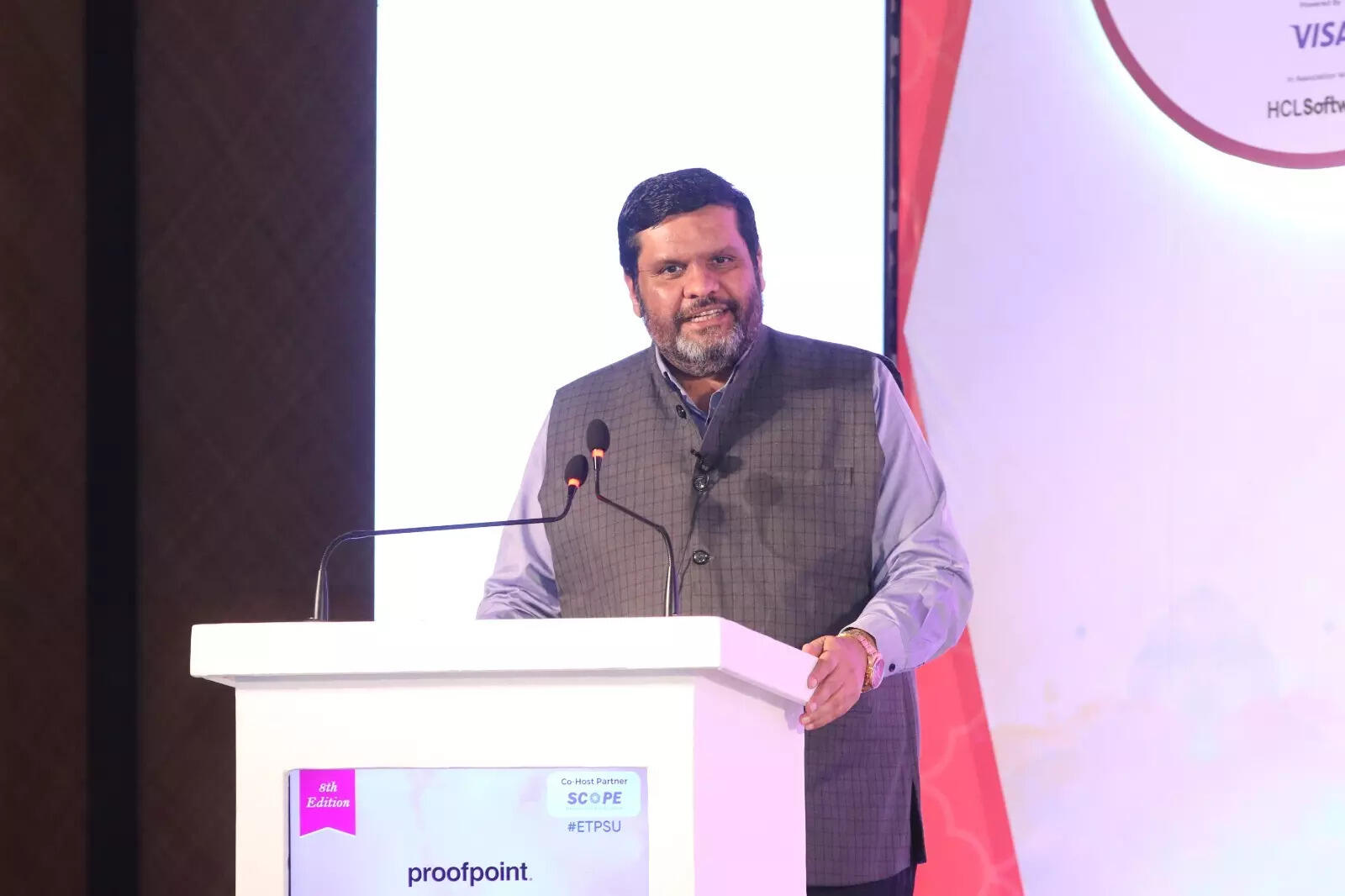
Gourav Vallabh, Member of the Prime Minister’s Economic Advisory Council (PM-EAC), believes that India must focus on building its national capability rooted in innovation.
Speaking at the ETGovernment PSU Residential Summit 2025, being organised in Udaipur, Rajasthan on December 13-14, he identified four areas where India remains externally dependent: imported energy, imported components, imported digital infrastructure and imported defence systems. The safeguard, he argued, lies in building national capability.
“The insurance is having our own industrial and digital capability,” Vallabh said, positioning this as the foundation of India’s innovation agenda.
The current global sentiment is characterised by volatility. Recent assessments, he noted, show that “more than 90 per cent of global leaders feel that the next two years — 2026 and 2027 — will bring more instability and a moderate to high risk of catastrophe.”
Climate disruptions, rising protectionism and intensifying geo-economic confrontation — particularly around technology and critical resources — will strain supply chains, restrict access to advanced capabilities and raise new vulnerabilities. “All these challenges are going to threaten global supply chains and access to critical technologies and resources,” he said.
Roadmap for PSU innovation
Turning to the public sector, he highlighted the macroeconomic weight of central public sector enterprises (CPSEs). Overall net profits, he noted, have risen sharply to around ₹3.22 lakh crore in FY24, reflecting strong performance across major enterprises. CPSEs contributed a value addition of nearly ₹9 lakh crore, while their combined gross revenues stand at levels comparable in scale to the Union Budget.
Several CPSEs today generate more than ₹1 trillion in annual revenue. “They are macro-relevant — huge revenues, huge capex, huge profits, huge market caps,” he said. Yet R&D spending remains a structural weakness, with CPSEs investing only about 0.3 per cent of their topline — far below private-sector and global benchmarks. “That is the weakness,” he noted.
Vallabh outlined five strategic domains where PSUs can shape national capability: Industry 4.0 and digital twins, defence manufacturing, renewables and green hydrogen, Production-Linked Incentive (PLI) schemes and the National AI Mission. While progress is visible — particularly in defence — he said outcomes must scale faster, and PSUs must utilise programmes like PLI far more effectively.
Suggesting a five-point roadmap for PSU transformation, he said, first, there should be a shift from pilots to full-scale deployment: “Link innovation spending with profits — not scattered pilot projects.”
“Second, prioritise strategic investments in AI, green hydrogen, semiconductors, digital twins and advanced materials. Third, build in-house Centres of Excellence as nobody can teach you your business better than yourself. Fourth, expand domestic procurement and fifth, strengthen collaboration across PSUs and with academia to accelerate joint R&D and technology diffusion, he explained.
“Challenges are there — but the solution is our own capability,” he said, adding that innovation should not be seen as a choice but as a national responsibility.