


One area Australian and New Zealand employers are investing in is AI PCs, which provide a powerful hardware foundation equipped with neural processing units (NPUs). These NPUs provide the processing power needed to allow AI tasks to run locally on the PC, including more comprehensive proactive IT support, without slowing down core apps.
AI PCs allow IT teams to move beyond reactive failure-based IT support and toward dynamically responding to individuals’ different working styles and role requirements.
The revenue impact of employee experience
The clear link between user satisfaction and revenue bottom line suggests that IT strategy is no longer just a cost centre conversation but a direct driver of business growth.
High-skilled workers, in particular, want an environment that removes friction rather than adding to it.
Generative AI tools have the potential to improve skilled workers’ performance by up to 40 per cent, but if held back by generic support protocols or unoptimised software environments, employees can become frustrated by slowed productivity.
Traditional IT management tools monitor devices, not experiences. They might report that a laptop is functioning within normal parameters, while the user struggles with software latency or configuration issues that hamper their workflow.
PC makers like Lenovo are recommending a shift away from simply managing assets to managing human experience.
Moving from reactive to predictive operations
Lenovo addresses this gap with its Care of One platform, a solution designed to hyper-personalise the digital workplace. This platform uses AI to analyse vast amounts of data regarding user personas, critical functions, and specific needs.
Rather than waiting for a help desk ticket to be logged, the system uses the intelligence gleaned to predict both potential failures and performance bottlenecks. By processing information continuously, it can identify and deliver remediation needed to improve uptime before the user is even aware of a problem.
This approach fundamentally changes the role of IT support. It moves the organisation away from a break-fix model towards a continuous optimisation model, the platform gets to know employees’ work patterns and can deliver a personalised level of support that was previously impossible to scale across a large enterprise,”
Tangible outcomes for the modern enterprise
The operational benefits of this intelligence-driven approach are measurable. By auto-resolving employee requests and providing end-to-end visibility of system crashes, Lenovo’s data shows organisations can see up to 40 per cent of issues proactively resolved without human intervention.
This reduction in ticket volume has a direct impact on operational costs. Companies utilising this hyper-personalised approach can lower end-user support costs by up to 30 per cent, according to Lenovo research. It frees up IT teams to focus on strategic initiatives rather than routine maintenance, while simultaneously improving the user experience score.
Real-world applications include smart self-service AI assistants that guide employees to solutions instantly, rather than requiring them to wait in an IT queue.
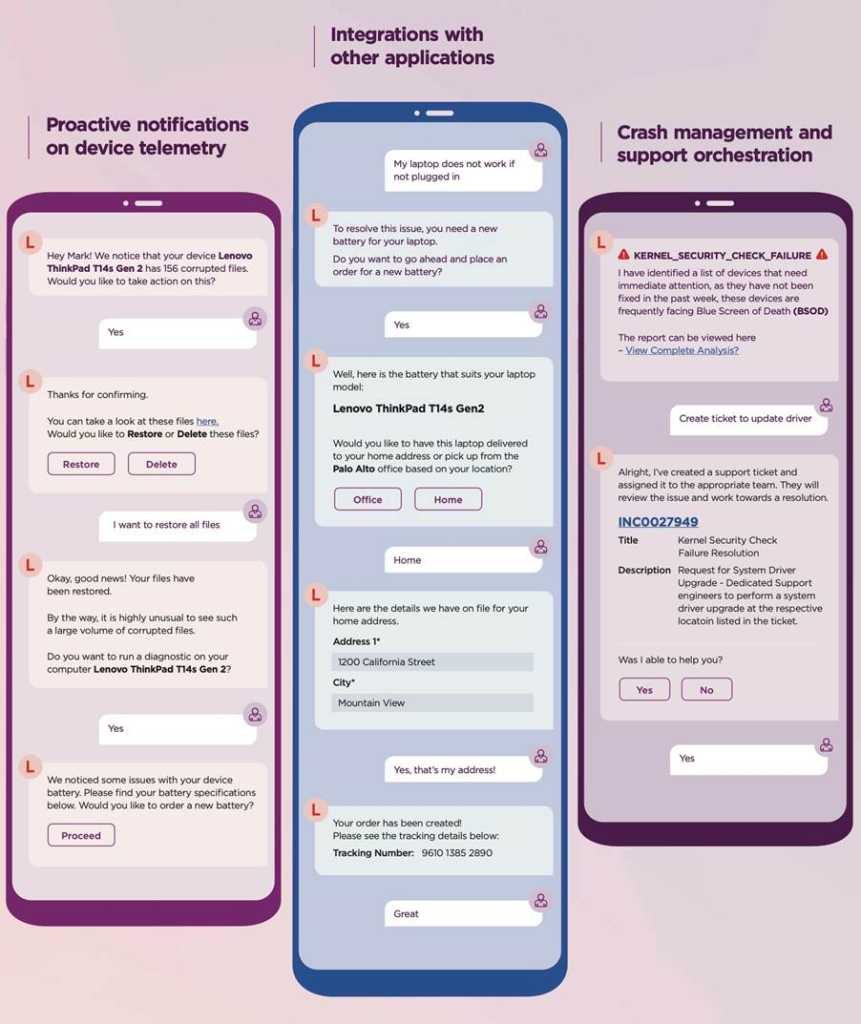
The platform also provides proactive reporting on asset utilisation, offering recurring recommendations to optimise workstations based on actual usage patterns rather than theoretical lifecycles.
See Lenovo Care of One in action and find out more about how it can transform your digital workplace.
