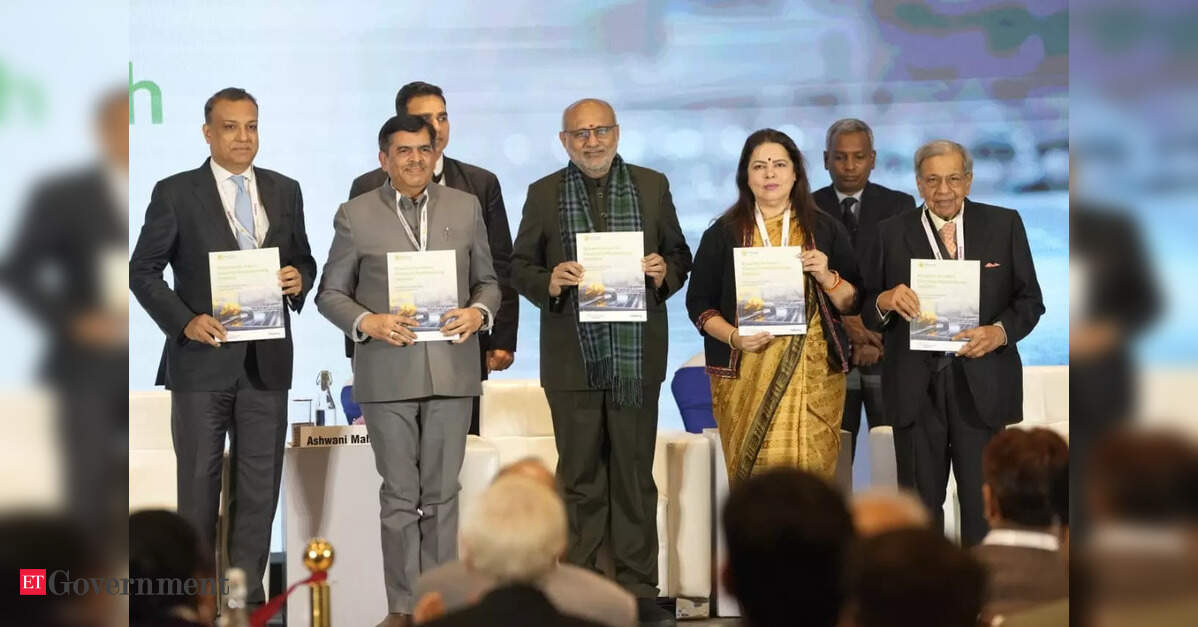
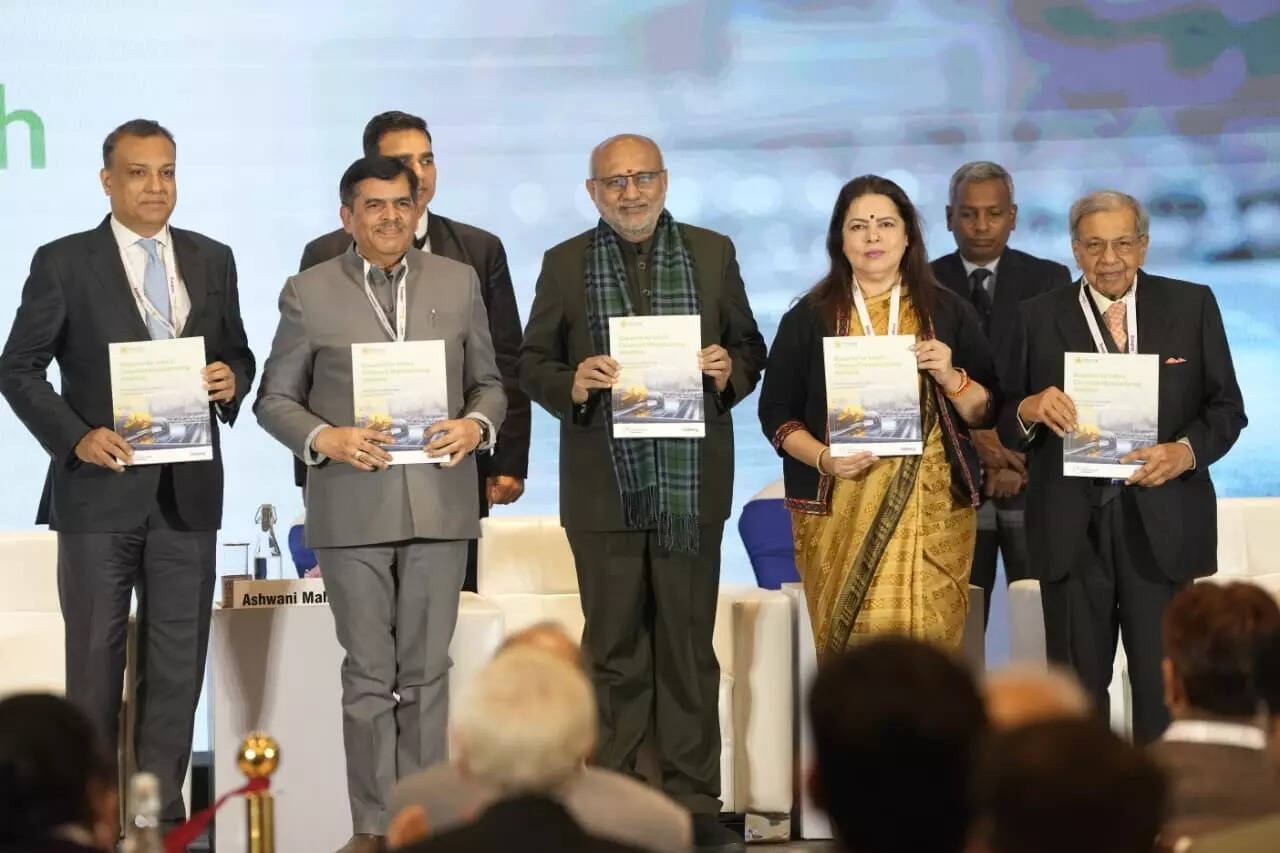
The Vice-President of India, C. P. Radhakrishnan, delivered an insightful address, on January 9, at the Bharat Climate Forum 2026 in New Delhi, framing climate action not as a developmental constraint but as a strategic opportunity for India’s economic transformation, energy security, and long-term resilience.
“Climate action is not a constraint on India’s development; it is an opportunity to accelerate inclusive growth, strengthen energy security and build a future-ready economy,” the Vice-President said, setting the tone for a forum that seeks to align climate ambition with national economic priorities.
He commended the Council for International Economic Understanding for developing the Forum into a credible national platform for serious reflection and purposeful action.
Anchoring his remarks in India’s civilisational worldview, the Vice-President underscored that sustainability is not a borrowed idea but an intrinsic part of India’s historical and philosophical traditions.
Long before climate change became a contemporary policy concern, he noted, Indian society emphasised harmony between human activity and nature—visible in traditional water conservation systems, sustainable agricultural practices, biodiversity preservation, and ethical principles such as Prakriti and Aparigraha. India’s present-day climate actions, he argued, flow organically from this civilisational inheritance.
Reflecting on India’s development trajectory over the past decade, the Vice-President highlighted the country’s effort to balance growth with equity, and immediate needs with future responsibility. Under the leadership of Narendra Modi, he said, India has fundamentally redefined how a developing nation approaches climate responsibility—without compromising its developmental priorities.
Referring to the Panchamrit commitments announced at COP-26, he observed that India’s pathway towards net-zero emissions by 2070 is both ambitious and realistic, reaffirming responsibility towards future generations.
A central theme of the address was the strategic importance of domestic clean-technology manufacturing. “A developed India cannot be built on imported technologies or fragile supply chains alone,” the Vice-President cautioned. “It must rest on homegrown clean technologies, resilient manufacturing and a future-ready workforce.”
He pointed to India’s growing capabilities across renewable energy, energy storage, green hydrogen, electric mobility, sustainable materials, climate-smart agriculture, and digital climate solutions—describing this evolution as a shift from Make in India to Make in India for the world.
He noted that Indian companies are making significant investments in solar module manufacturing, batteries, electric-vehicle components, electrolyzers, and green fuels, while start-ups are driving innovation in climate data, energy efficiency, and waste management. Together, these trends signal the emergence of a robust domestic ecosystem capable of supporting India’s decarbonisation goals while serving global markets.
The event also featured the keynote address by Manohar Lal Khattar, Union Minister of Housing and Urban Affairs. In his remarks, Khattar reflected on India’s long-standing cultural tradition of environmental stewardship, situating contemporary climate policy within a broader civilisational ethic that emphasises restraint, balance, and responsibility towards nature—values that continue to inform India’s urbanisation and infrastructure strategies.
On global cooperation, the Vice-President stressed that climate change is a shared challenge requiring collective action, but emphasised that India’s approach is one of collaboration without dependence. He highlighted India’s leadership in the International Solar Alliance, which has mobilised countries of the Global South around affordable and scalable solar solutions, and the Coalition for Disaster Resilient Infrastructure, which focuses on strengthening infrastructure systems against climate-induced shocks.
The address was delivered in the presence of a distinguished gathering that included N. K. Singh, Chairman of the Bharat Climate Forum; Meenakshi Lekhi, Convenor of the Forum; Sumant Sinha, Co-Chair of the Forum; and Ashwani Mahajan, President of the Bharat Climate Forum, along with policymakers, industry leaders, diplomats, academics, and experts from India and abroad.
Taken together, the Vice-President’s address positioned climate action as a core pillar of India’s development strategy—rooted in civilisational values, strengthened by domestic manufacturing and innovation, and advanced through confident, globally engaged leadership.