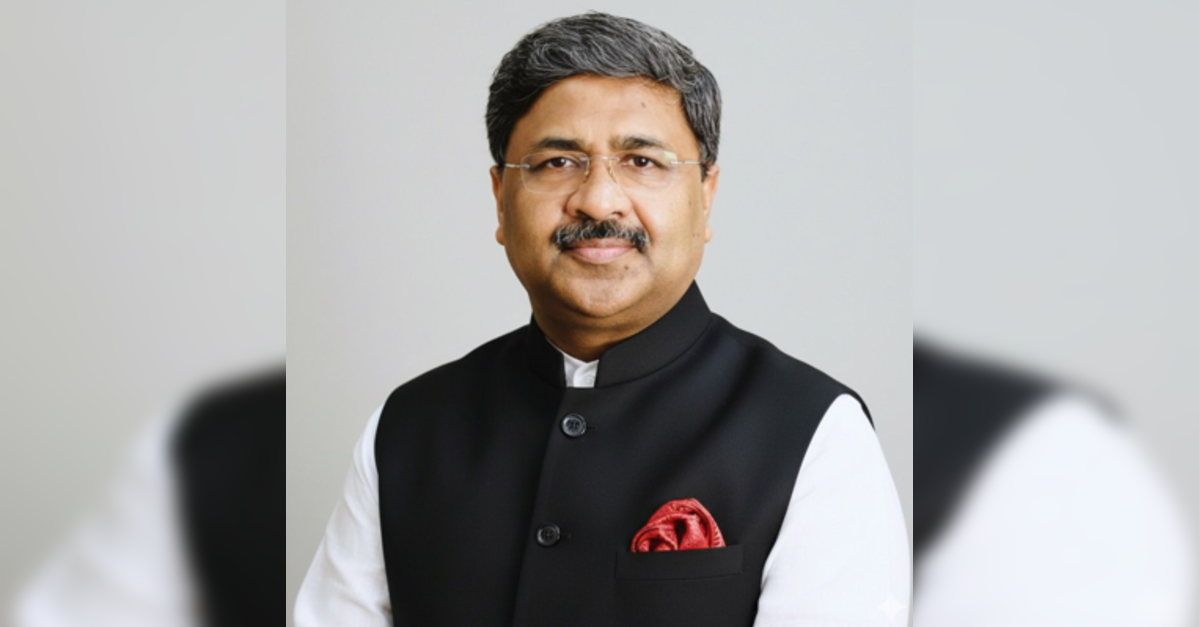
By Kunwar Shekhar Vijendra
India’s idea of education has never been transactional. From the gurukul tradition to the great centres of learning such as Takshashila and Nalanda, education was seen as a civilisational responsibility, an intimate process of shaping intellect, ethics, and social consciousness. Knowledge was pursued not merely for advancement, but for balance: between skill and wisdom, inquiry and restraint, individual growth and collective good. As artificial intelligence enters India’s higher education system, this inheritance offers a necessary lens through which change must be examined.
India’s start-up ecosystem has expanded rapidly, from about 500 start-ups in 2016 to over 1.59 lakh recognised by the Department for Promotion of Industry and Internal Trade (DPIIT) in 2025, making the country the world’s third-largest start-up ecosystem. As of October 31, 2024, DPIIT-recognised start-ups had generated more than 16.6 lakh direct jobs across sectors, with over 94,000 of these in education. Within this momentum, AI-led start-ups are emerging as influential actors in higher education.
Their role is often described as disruptive, but in practice it is more measured. Most are responding to persistent structural challenges: scale, diversity of learners, faculty constraints, and the need for relevance in a rapidly evolving economy. With one of the world’s largest student populations, India cannot rely on pedagogical models designed for far smaller systems. Used with discernment, AI offers ways to manage this complexity.
One of the most significant shifts is in personalised learning. AI-enabled systems can track how students learn, where they struggle, and how they progress. Online AI-based chatbots and visual search tools now offer round-the-clock academic support. Instruction can adapt accordingly, creating differentiated pathways within a shared academic framework. For first-generation learners, often without strong academic support at home, this responsiveness can be transformative. Personalisation at scale, once impossible, is now feasible through content tailored to a learner’s pace, performance, and learning style, even as concerns around equitable access persist. AI is also enabling live translation, voice-to-text conversion, and learning content in regional languages, widening participation.Assessment and academic administration are undergoing a parallel transformation. Tools for attendance management, automated evaluation, and AI-generated quizzes provide quicker feedback and reduce the time faculty spend on repetitive, administrative tasks. This shift allows educators to reclaim their most essential role: guiding inquiry, mentoring students, and cultivating critical and ethical reasoning. In a quiet but meaningful way, technology is enabling a return to the classical idea of the teacher as a guide rather than merely a grader.
Curriculum design, too, is being reshaped. AI-driven analysis of labour markets, technological change, and emerging skill demands is helping institutions reassess what they teach and how often curricula are updated. This is particularly relevant in India, where curricular inertia has often weakened the link between education and employability. Modular learning, micro-credentials, and interdisciplinary programmes are becoming easier to design and deliver without compromising academic depth. In STEM education, AI combined with augmented and virtual reality is enabling experiential learning that bridges theory and practice.
Beyond pedagogy, AI is influencing institutional governance. Predictive analytics are helping universities identify students at risk, plan admissions more realistically, allocate faculty resources, and improve operational efficiency. For large, multi-campus institutions, such data-informed governance can strengthen transparency and long-term planning provided it complements, rather than replaces, human judgement.
From a national perspective, AI start-ups are emerging as important intermediaries between education and the economy. They bring speed, technical expertise, and responsiveness; academic institutions contribute scholarship, continuity, and public responsibility. When these strengths align, higher education begins to fulfil its deeper purpose, not merely producing degrees or workforce numbers, but nurturing capability, character, and innovation aligned with national priorities.
This transition, however, carries risks that demand careful policy attention. AI systems are not neutral. They reflect the data they are trained on and the values embedded in their design. Issues of data privacy, algorithmic bias, uneven digital access, and excessive automation are not peripheral; they go to the moral foundations of education itself. A system driven solely by efficiency metrics risks eroding trust and deepening exclusion.
India does not face a binary choice between tradition and technology. The real challenge lies in integration, using AI to enhance access, quality, and relevance while safeguarding the human core of education. Technology can inform decisions, but it cannot replace ethical judgement. It can support learning, but it cannot define purpose.
Ultimately, the success of AI in India’s higher education system will depend less on the speed of adoption and more on the maturity of governance. Policy must ensure that innovation serves learning outcomes, empowers teachers, protects students, and remains accountable to the public good. Only then can artificial intelligence become a quiet ally in India’s long educational journey, strengthening institutions without diminishing their soul.
Kunwar Shekhar Vijendra is the ASSOCHAM National Education Council Chair & Co-Founder and Chancellor, Shobhit University.
DISCLAIMER: The views expressed are solely of the author and ETEDUCATION does not necessarily subscribe to it. ETEDUCATION will not be responsible for any damage caused to any person or organisation directly or indirectly.