

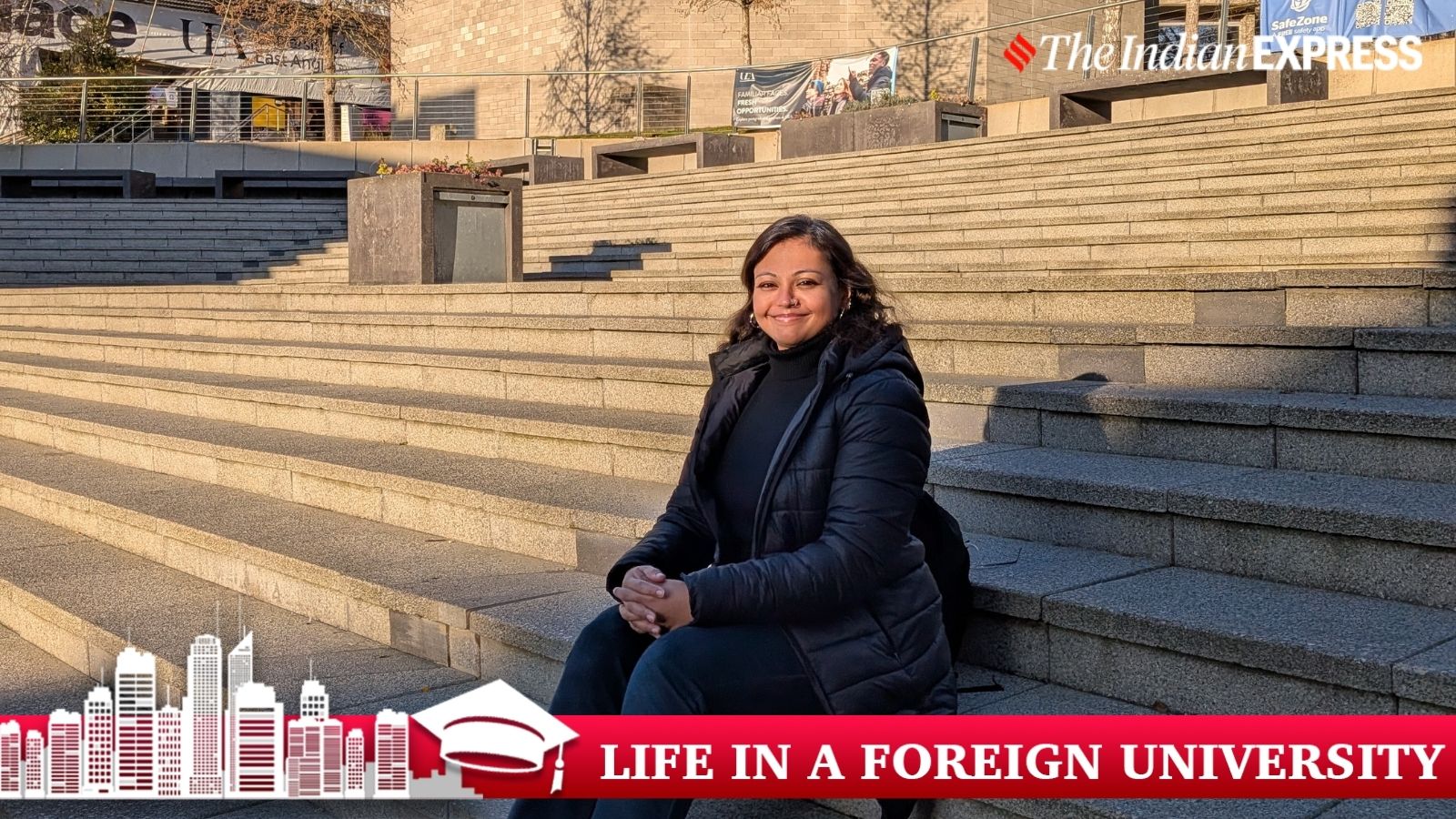
I was born and raised in Delhi, which I consider my hometown in every sense of the word. I completed my schooling — from nursery to Class 12 — at The Mother’s International School in New Delhi. After school, I pursued a BA in English (Honours) from Miranda House, University of Delhi, graduating in 2010. I went on to complete my MA in English from the same university. Academically, my years in India were deeply fulfilling and formative.
My family background played a quiet but important role in shaping my outlook. My father was a marketing professional and passed away in 2012, the same year I completed my Master’s degree. My mother taught sociology at Maitreyi College, DU, and retired earlier this year. Growing up in a household where education and intellectual engagement were a part of everyday life meant that learning never felt like an obligation. It felt natural.
I am 36 years old now. After completing my first master’s degree, I worked as a journalist, then moved into content marketing, and later transitioned into book publishing. Over the years, I progressed to become a senior editor. Despite having a stable professional life, I felt a growing need to return to writing fiction — something I had been interested in for a long time but wanted to pursue more seriously. My decision to study abroad was not driven by a desire to move countries or seek exposure for its own sake. It was driven by a very specific academic need – to become a better writer in an environment known for nurturing storytellers.
Choosing UEA and the admission process
The decision to apply to the University of East Anglia was entirely course-driven. I had heard about UEA’s MA in Creative Writing (Prose Fiction) from people I trusted and admired, and the programme’s reputation for producing strong writers was well known. I did not consider universities in the US, Australia, or elsewhere, because the decision was never about geography. It was about finding the right institution and the course for what I wanted to do.
Read | 500-year-old Scottish university opens campus in Mumbai; admissions not via JEE and CUET
I applied only to UEA. I was clear that this was the programme I wanted, and I did not feel the need to hedge my bets elsewhere. The admission process itself was very convenient and user-friendly, and I handled the entire application independently without the help of a counsellor.
Story continues below this ad
What mattered most was having the correct documentation in place – academic transcripts, degree certificates, and a personal statement that was genuinely reflective of who I am. Authenticity was crucial; this was not something that could be outsourced or artificially generated. As part of the application, I also submitted what I considered the strongest writing sample I had.
In addition to academic documents, I needed a TB screening certificate, which was also required for my UK Student Route visa. Financial proof was another essential requirement, demonstrating that I could support myself for the duration of the course. This could be in the form of bank statements or education loan documents, depending on how one chooses to finance their studies.
Scholarships, financing, and arrival in the UK
I did not apply for any scholarships because I was a relatively late applicant, and none were available at the time I applied. However, I did receive an automatic PGT merit scholarship of £6,500, which was awarded based on my performance in my BA degree and adjusted against my tuition fee. I am financing the remainder of the course through an education loan.
My arrival in the UK was both exciting and disorienting. The first week at UEA felt overwhelming in the way most major transitions do, but the university organises a dedicated Welcome Week for international students before domestic students arrive. This proved immensely helpful. Sessions were addressing visa-related questions, budgeting, and practical aspects of living in the UK, alongside social mixers, craft sessions, and sales for essential items like kitchenware.
Story continues below this ad
The staff were welcoming and extremely helpful, especially when it came to information that someone new to the country needs in order to function — everything from monthly budgeting to traffic rules. While the move itself was unsettling, these structures helped me feel grounded and supported during the initial days.
Also read | From grocery runs to self-discipline: How studying in the UK taught me independence | Life in a Foreign University
I live on campus at the International Study Centre, and my experience with accommodation has been positive. The facilities are excellent, the location is central, and having a 24-hour reception has been reassuring. All my classes are within walking distance, which has made settling into university life significantly easier.
Daily life, accommodation, and campus experience
My daily life at UEA is fairly structured and quiet. I live in an en-suite room with a shared kitchen. Most mornings begin with a simple breakfast in my room, followed by lectures or workshops. After class, I often spend time unwinding with classmates at one of the on-campus bars or food outlets. On days without lectures, I walk to the UEA Broad – a peaceful lake near campus – where I spend time writing or reading, weather permitting.
Story continues below this ad
The campus library, which is open 24 hours, has become one of my most frequented spaces. It is calm, well-equipped, and conducive to focused work.
On some days, I take a bus to the city centre to watch a movie or attend a play. Grocery shopping is a weekly routine, and I usually batch-cook every other day to manage time and expenses efficiently.
Groceries are easy to access, with several stores within walking distance of campus. Public transport is reliable, and buses run frequently to and from the city centre, including on weekends. While part-time jobs can be challenging to secure, especially long-term ones, there are opportunities in retail and hospitality. Temporary or seasonal roles are easier to find, and I would recommend them as a way to earn some money and gain UK work experience.
Academics, faculty, and looking ahead
Academically, my experience at UEA has been positive. My education in India – both at school and university – was excellent, and my time here has matched that standard differently. The faculty are highly accomplished, and my peers are equally engaged and talented. The course structure is thoughtfully designed, and the facilities – both physical and digital – function smoothly.
Story continues below this ad
For my course in particular, learning from teachers who are accomplished writers themselves has been invaluable. They bring practical wisdom, real-world publishing experience, and insights into creative processes that go beyond theory. Listening to them talk about their own journeys as writers and learning from their hands-on experience has been a privilege.
Outside academics, the campus offers a wide range of social, cultural, and sporting events. I particularly enjoy spending time at campus cafés — Ziggy’s hot chocolate is a personal favourite – and the meals at my accommodation, which offers varied vegetarian and non-vegetarian options daily.
As for the future, this degree was always something I chose to do for myself. The intention is to become a better writer by learning from brilliant writers and inspiring minds, and then return to my life and continue writing. It was never about making things easier—it was about doing the work, deliberately and honestly.
(This letter is part of a series by The Indian Express where we bring to you the experiences of students at different foreign universities. From scholarships and loans to food and cultural experiences — students tell us how life is different in those countries and things they are learning other than academics)
