As India accelerates its push to become self-reliant in high-value healthcare manufacturing, Uttar Pradesh is positioning itself at the centre of the country’s medical device growth story.
The state government’s decision to develop a dedicated Medical Device Park at Sector 28 of the Yamuna Expressway Industrial Development Authority (YEIDA) marks a significant step towards reducing import dependence, lowering manufacturing costs and strengthening India’s medtech supply chain.
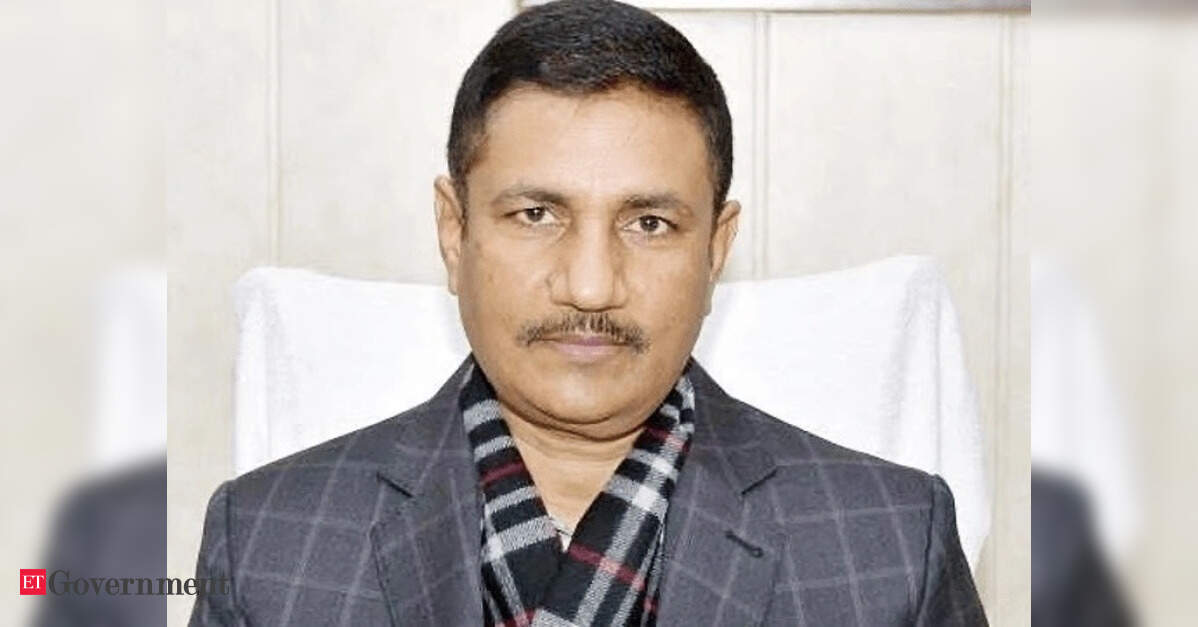
In an interview with ETGovernment’s Arpit Gupta, Rakesh Kumar Singh, CEO, YEIDA, said, “We are seeing strong and encouraging interest from leading pharmaceutical and medical technology companies, including Wipro GE, Philips, Siemens and Panacea, among others, to explore investments in Uttar Pradesh.” He further outlines how the project is being designed to support Make in India, attract foreign investment and create a globally competitive manufacturing ecosystem.
Edited excerpts:
The Government of Uttar Pradesh has envisaged a dedicated Medical Device Park at Sector 28, YEIDA. What strategic gap does this project aim to address?
India’s medical device sector has been growing rapidly, but manufacturers have long faced challenges such as high input costs, fragmented infrastructure, and limited access to advanced testing and certification facilities. The Medical Device Park at Sector 28, YEIDA, is a strategic intervention to address these gaps comprehensively.
Spread over 350 acres, this will be North India’s first dedicated medical device manufacturing park, designed as a fully integrated ecosystem—from R&D and prototyping to large-scale manufacturing and global exports. The objective is to significantly reduce manufacturing costs, enhance product quality, and make Indian medical device manufacturers globally competitive, in line with the vision of Atmanirbhar Bharat.
How does this initiative align with national priorities such as Make in India and boosting FDI in healthcare manufacturing?
The Medical Device Park is strongly aligned with the Make in India campaign and India’s ambition to emerge as a global medtech manufacturing hub. The Government of India has approved the project under its central scheme, with a total project cost of ₹439.49 crore, including a ₹100 crore grant from the Centre.
By offering plug-and-play infrastructure, fast-track approvals, and a robust incentive framework, we are creating a highly conducive environment for greenfield, brownfield, and strategic investments, including foreign direct investment. YEIDA has been nominated as the State Implementing Agency, ensuring seamless coordination between industry and government.
What kind of infrastructure and common facilities will distinguish this park from conventional industrial clusters?
One of the park’s biggest differentiators is its focus on shared scientific and testing infrastructure, which is often prohibitively expensive for individual manufacturers. The park will host Common Scientific Facilities such as rapid prototyping labs, bio-material testing facilities, IoMT and AI/ML labs, electronic system design and assembly units, and a gamma irradiation facility.
These shared resources will not only lower capital expenditure for companies but also accelerate product development cycles and ensure compliance with global quality and regulatory standards. This is critical for both domestic adoption and exports.
What is the current status of development and investor response so far?
Infrastructure development is over 90% complete, and approximately 50% of the land has already been allotted. To date, 101 plots have been allotted, translating into committed investments of around ₹1,291 crore. Several companies have already commenced construction at the site.
We are witnessing strong interest across key segments such as cancer care devices, radiology and imaging equipment, in-vitro diagnostics, implants, and cardio-respiratory devices. Notably, the park has also attracted FDI participation, reflecting growing global confidence in Uttar Pradesh as a manufacturing destination.
There has been growing interest from large global and domestic players in the medical devices space. How is industry response shaping up, and what steps is YEIDA taking to strengthen testing and regulatory capabilities in Uttar Pradesh?
We are seeing strong and encouraging interest from leading pharmaceutical and medical technology companies, including Wipro GE, Philips, Siemens and Panacea, among others, to explore investments in Uttar Pradesh. This reflects growing confidence in the state’s policy framework, infrastructure readiness and long-term vision for healthcare manufacturing.
To further strengthen the ecosystem, YEIDA is actively working towards establishing an ASCA-accredited medical device testing laboratory within the state to provide end-to-end medical device testing and certification support within the state. This facility will offer comprehensive, globally benchmarked testing and validation services, significantly reducing dependence on out-of-state or overseas labs. The objective is to shorten product development timelines, lower compliance costs and help manufacturers—especially MSMEs—bring high-quality, certified medical devices to market faster.
Connectivity often determines the success of manufacturing hubs. How does YEIDA score on this front?
Connectivity is one of YEIDA’s strongest advantages. The Medical Device Park is located just 5 minutes from the upcoming Noida International Airport, providing direct access to global cargo and passenger networks. It is seamlessly connected via the Yamuna Expressway, Eastern Peripheral Expressway, Dedicated Freight Corridors, and proposed rail and rapid transit systems. This multimodal connectivity significantly reduces logistics costs and turnaround times, making the park highly attractive for export-oriented manufacturers.
Could you elaborate on the incentives being offered to manufacturers setting up operations in the park?
The Government of Uttar Pradesh has rolled out a holistic and highly competitive incentive regime. This includes SGST reimbursement of up to 70% for 10 years, capital interest subsidy, EPF reimbursement linked to employment generation, skill development incentives, and quality certification support.
Additionally, the park offers some of the most subsidized industrial land rates in the region, especially for medical device manufacturers and eligible FDI projects. These incentives substantially improve project viability and lower entry barriers, particularly for MSMEs and first-time investors.
How do you see the Medical Device Park contributing to India’s healthcare ecosystem in the long term?
In the long run, this park will play a transformative role in making high-quality medical devices more affordable and accessible, both in India and globally. By strengthening domestic manufacturing capabilities, we reduce import dependence and enhance supply chain resilience. More importantly, the park is envisioned as a globally recognized nucleus of innovation and excellence, supporting India’s transition from being a net importer to a net exporter of medical devices. This is not just an industrial project—it is a strategic healthcare and economic initiative with national impact.