

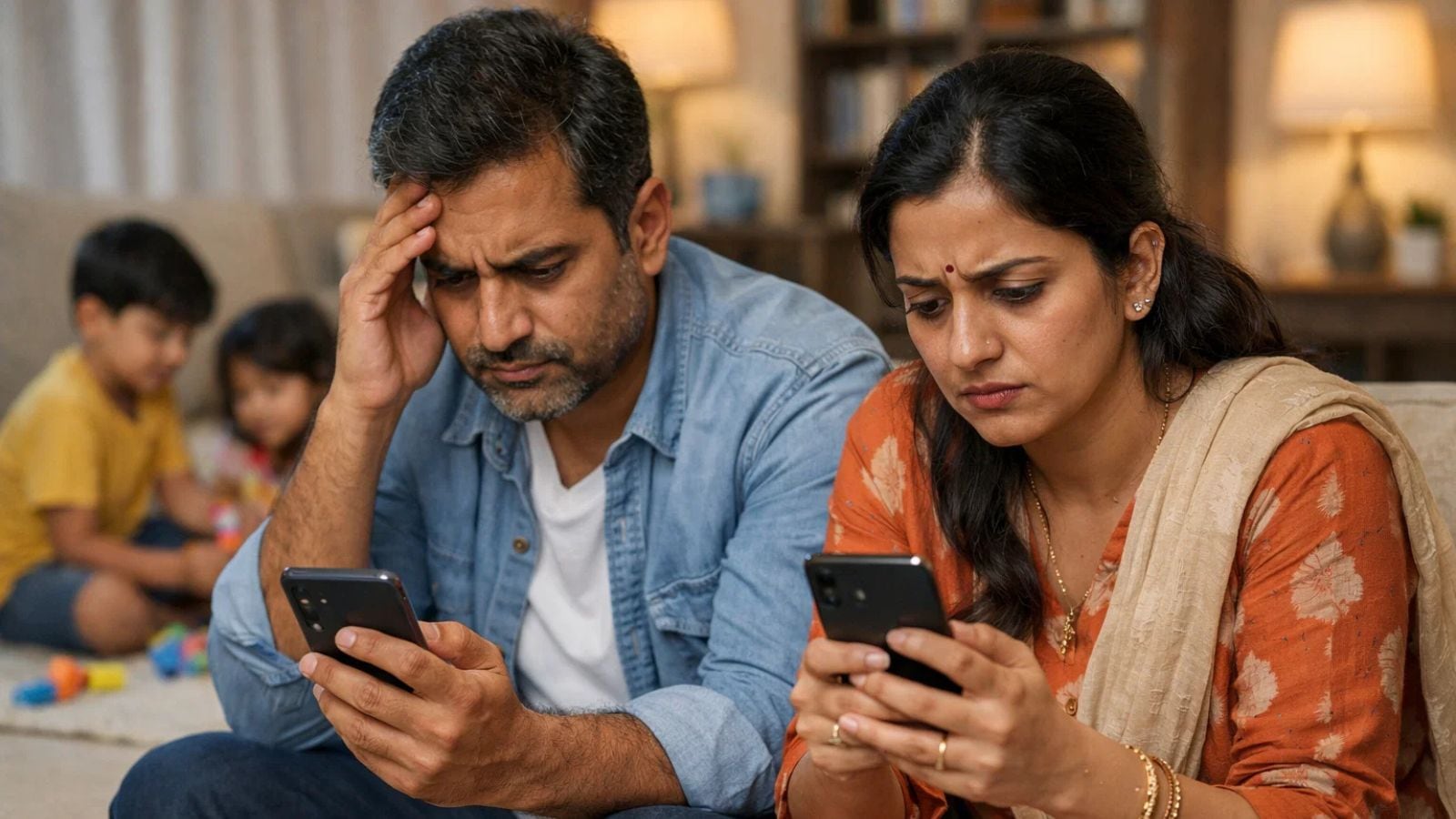
As the cold wave tightens its grip on North India, schools across Delhi-NCR have remained closed for most of December-January, with classes shifting sporadically between online, hybrid, or being cancelled altogether. Dense fog, biting temperatures, and rising pollution levels have forced authorities to prioritise safety, but the prolonged closures are taking a toll on families.
Parents — whether working professionals or homemakers — say they are exhausted and frustrated, as children struggle to maintain discipline, routine, and focus on studies. They tell indianexpress.com how they struggle with their everyday challenges, from juggling work commitments to managing restless students at home, and voice concerns about the long-term impact on learning.

‘Change the academic calendar’
 Aparjita Gautam, Delhi Parents Association President
“Every morning feels uncertain because we don’t know whether our child will have school, online classes, or no classes at all. There is absolutely no clarity on what the schedule or timings will be tomorrow, and this constant confusion is affecting both students and parents,” said Aparjita Gautam, adding that because of this, children are losing their rhythm of study, while parents — whether working or not — are struggling to manage their routines around these sudden changes.
“This has become a yearly ritual in January, with schools shutting down due to pollution, dense fog, or extreme cold. The government should seriously consider revising the academic calendar so that exams and teaching schedules are not disrupted every winter. It’s time to acknowledge that this is no longer an exception but a recurring problem. The government can revise it in a way that students get winter vacations in January, and maybe in December, they can complete the schedule,” said Gautam.
‘Proper guidelines needed for these days’
 Pankaj Gupta is a businessman and the owner of North East Delhi Parents Association
“There is no clarity from the government’s side. Opening for just one day doesn’t help at all. This is just troubling the parents and affecting the children’s studies. If they have to study from home, then they should just close the schools completely and let everyone study from home,” said Pankaj, adding that regarding pollution, there are no proper guidelines or restrictions. The effects on children, and even on common people, due to pollution are showing that the authorities are proving to be completely incompetent.
“Children themselves are getting troubled. Their exams are coming up, and if the syllabus isn’t finished, how will they prepare? This is especially difficult for students in Classes 9-12, where the course is vast. The younger children can’t sit with masks on for long periods, even if schools are open. Older kids might manage, but it’s hard for the little ones. On the other hand, the hybrid or online mode puts a lot of strain on their eyes. We might prefer the hybrid mode so they stay safe, but both options have their own disadvantages. It’s a real dilemma.”
The government should change the academic calendar and reduce the extra holidays. Instead, adjust those days for this time of winter. For example, they could adjust the summer break or the weekends for schools that are closed on both Saturdays and Sundays. They need to plan better so that the children’s education doesn’t suffer. The government needs to work on this academic planning.”
Story continues below this ad
‘Online classes are just a sham’
 Vikas Sharma is a businessman living in Delhi NCR.
During online classes, there are often as many as 60 students in a class, leaving teachers with little choice but to focus on completing the syllabus rather than explaining concepts in depth. On top of this, frequent government-mandated holidays — due to pollution, cold, heat or rain — mean children are repeatedly unable to attend school.
I spoke to the principal of my ward’s school, who told me that the morning schedule has been pushed back by an hour, from 7.55 am to 8.55 am, with the school day now ending at 2.20 pm instead of 1.55 pm. That’s another half hour of study time lost. While schools may be justified in their decisions, online classes are essentially a sham. What a child can learn sitting in a classroom cannot be replicated online. We are all troubled by such arrangements.
‘Schools end up bearing the brunt’
Jyoti Arora, Principal of Delhi World Public School, Noida Extension, said that communicating sudden changes has become increasingly challenging for schools. “There is a perception that sending a single WhatsApp message is enough, but communication doesn’t end there. Information also has to be updated on e-portals and other platforms. Sudden closures disrupt the entire flow of the week. We have functions, unit tests, assessments, and practice schedules planned in advance, and everything has to be rearranged. Every class and every period is accounted for, so frequent replanning becomes extremely difficult,” she said.
Arora also pointed to the lack of acceptance among some parents. “At times, parents feel schools want to shut down deliberately, or they claim they didn’t see the message or check their email. Ultimately, schools end up bearing the brunt of the situation,” she added.
Story continues below this ad
Highlighting the impact of online classes, she acknowledged that many working parents struggle, some leaving children unsupervised at home. “Younger students need constant supervision, while senior students often spend the entire day online with minimal monitoring. The schedule goes haywire, and when schools reopen, it becomes difficult to bring students back to a physical learning routine as they get settled into their own zones,” she said.
She added that parents frequently complain about changes in timings and question why schools are closed when offices remain open. “Syllabus completion suffers, sports fields remain unused and co-scholastic activities come to a halt, leaving schools without their usual vibrancy,” Arora noted.
Arora further said that pollution-related restrictions and frequent announcements severely disrupt academic schedules, while reorganising bus routes adds another layer of complexity. Traffic congestion and CBSE practical examinations also lead to delays for senior students. Revising the academic calendar, avoiding certain holidays, and giving schools greater flexibility — at least with holidays — could help streamline operations, she suggested.
