

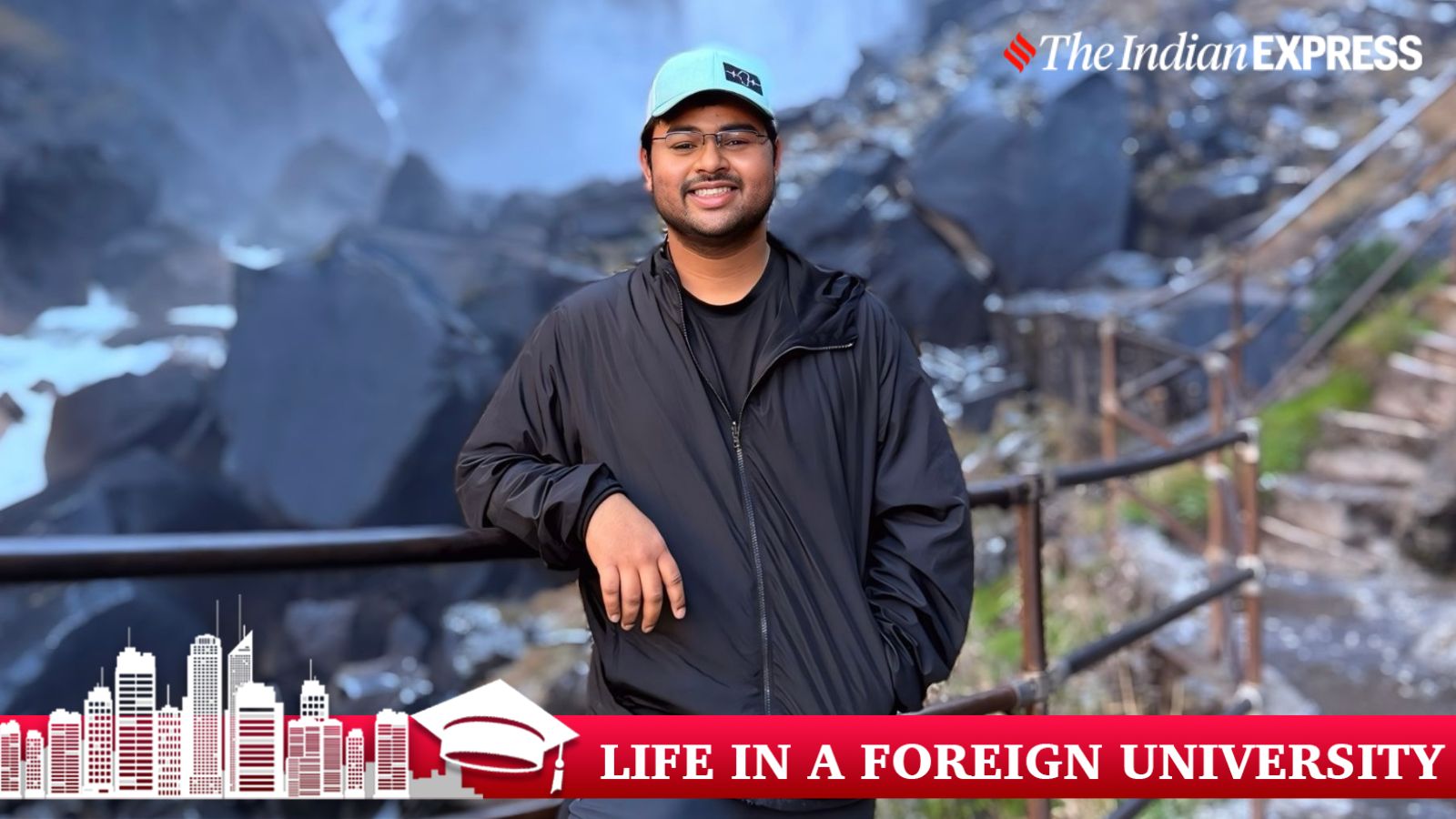
My interest in studying abroad didn’t come from a single moment – it grew gradually, shaped by curiosity, exposure, and a desire to push myself into environments where learning is intense, honest, and fast. I wanted to be in a place where theory is not admired in isolation, but constantly tested against reality.
I completed my Class 10 and 12 in Hyderabad, with a focus on mathematics and science. Hyderabad is home for me – energetic, diverse and quietly ambitious. It is a city that teaches you to move fast without losing depth, and that sensibility has stayed with me.
My parents come from finance, banking, and sales background. What they gave me was not just guidance, but a way of living: stay grounded, aim high, and follow through on what you commit to. My sister has been my sounding board through every transition, and her presence has been a steady anchor through change.
For my undergraduate studies, I pursued a dual degree at BITS Pilani in Computer Science and Economics. That combination gave me strong technical depth alongside economic intuition. Through internships and research during undergrad, I found myself increasingly drawn to quantitative finance. That path led me to work as a quant strategist at Morgan Stanley, where I gained firsthand exposure to how models behave under real market conditions. That experience ultimately shaped how I thought about graduate education.
Why the University of Chicago?
I did consider and applied for programmes in the UK, Europe, and elsewhere. However, I chose the University of Chicago because it matched exactly what I was looking for – deep mathematical rigor combined with structured, real-world application.
From my time in quant strategy, I learned that the real edge isn’t just building models – it’s understanding when they break. The UChicago FinMath programme reinforces that mindset daily. Through its Project Lab, practitioner access via the (Intellectual Property Rights (IPR) programme’s office hours, hands-on workshops, and coursework that demands implementation, the learning is direct and unforgiving in the best way.
Story continues below this ad
Studying abroad, for me, wasn’t about geography. It was about choosing an environment where learning happens fast, focused, and alongside exceptional people.
The application process
I handled the entire process myself. What stood out to me was how different admissions systems value different things. US admissions felt holistic. Academics matter, but essays, recommendations, and demonstrated impact carry real weight. UK and European programmes were more structured, with greater emphasis on prerequisites, course alignment, and work experience.
For FinMath programme, I applied through their portal and submitted my resume, transcripts, written and video statements, and recommendation letters. I used my statements to communicate why this path made sense given my background, not just what I had done. For recommendations, I chose people I worked closely with, so they could speak to specifics rather than generalities.
I did apply for financial support. At FinMath, merit-based funding is automatic – there’s no separate application. The funding decision comes with the admission offer and reflects overall application strength. I financed the degree through a mix of savings, family support, and education financing.
Story continues below this ad
Arrival and first impressions in the US
My first week in the US was energising. The FinMath September Launch is designed to help you ramp up quickly. We began with Probability and Stochastic Processes, alongside workshops, networking sessions, and community events that made it easy to connect beyond the classroom.
What stood out immediately was how proactive and welcoming the student culture is. Introductions happen naturally. Conversations start easily. Collaboration feels like the default. By the end of the week, I already had a strong study circle and friends to explore the city with. The transition felt less like adjustment and more like acceleration.
There were practical differences. Housing logistics, grocery routines, learning the rhythm of a new city. But none of them felt like real barriers. The UChicago community shares information quickly, and asking for help is completely normal. It felt like becoming independent in a new system faster than I expected.
Academic life at UChicago
My education in India gave me a strong foundation in fundamentals. At UChicago, the focus is on turning that foundation into professional execution. In FinMath, I am expected not just to understand theory, but to implement it, test it, and explain it clearly – the way I would in a real team.
Story continues below this ad
Project-based work, especially the Project Lab, pushes this further. I have learned how to frame open-ended problems, work within real constraints, and present results with clarity and accountability. TAs are deeply invested, and their office hours and review sessions make it possible to move fast without cutting corners. The cohort itself is diverse, so discussions constantly pull in perspectives I wouldn’t reach on my own. It’s an environment that actively sharpens how I think.
What I have particularly valued about the faculty is how teaching feels both rigorous and real. Many instructors bring strong industry context, so the classroom naturally bridges theory with what actually works under data, risk, and time constraints. You’re pushed to state assumptions, justify model choices, and explain how you’d validate results and handle failure cases.
One moment that stands out was during a trading-strategy project. Instead of focusing only on performance, the professor walked through the entire decision chain with me – signal design, data leakage checks, transaction costs, regime sensitivity, and stress-testing. That level of structured, technical mentorship has been one of the most defining parts of my experience.
Life beyond the classroom
Outside academics, the university makes it easy to build community through experiences. I’ve tried clubs like fencing, martial arts, sailing, and the Outdoor Adventure Club. A normal week balances deep work with memorable moments.
Story continues below this ad
Some of my most treasured memories are simple — walking across campus with friends almost every day. The ivy-covered gothic buildings make even an ordinary walk feel special, and those walks often turn into unexpectedly deep conversations. It’s a small routine, but one that has become central to my life here.
My daily routine isn’t fixed. Most mornings start on campus with a focused work block in the library. Classes are scattered through the day. Midday is more social — meeting friends, collaborating, grabbing lunch. Evenings are split between project work and enjoying Chicago, whether that’s exploring a neighbourhood, trying a new restaurant, or just walking and talking.
My hobbies change with the seasons. In spring and fall, I’m outdoors as much as possible. Pickleball and tennis are my favourite reset buttons and great ways to meet people outside the programme. During longer breaks, I travel – new cities, hiking, national parks. Winters are more indoors: video games, board and card nights with friends.
On campus, I probably binge on coffee more than anything else. Multiple coffee runs a day have become a ritual – a quick reset, a spontaneous catch-up, and then back to work with a clearer head.
Story continues below this ad
Managing life in the US
To manage living costs, I have worked as a TA and grader during term – around 10 hours a week covering office hours, review sessions, and grading. It’s been genuinely rewarding beyond the pay. Over the summer, I also did a quant research internship, which added another strong layer to my experience.
Studying abroad has definitely changed my outlook. Working closely with classmates from different countries and backgrounds has made me think more clearly, communicate better, and collaborate at a higher level. Traveling across the US, exploring cities, hiking, and visiting national parks has taught me independence, adaptability, and confidence in unfamiliar environments. I have become more intentional and proactive, and that naturally shows up in how I work with others.
Life in Chicago and looking ahead
Chicago feels like the perfect complement to UChicago. It has real big-city energy – the skyline, downtown, culture – but it’s still easy to live in and explore. Lake Michigan genuinely feels like an ocean, with beaches and long walking and cycling paths that reset your mind after intense days.
The architecture, riverwalk, museums, and music scene constantly pull you out of routine. The food is unreal, and the neighbourhoods are what I love most. Each one has its own personality, so the city never feels repetitive. I try something new all the time and still feel like I am just getting started.
Story continues below this ad
Being a student at UChicago has made opportunities feel closer. Practitioner consultations, alumni access, and a culture where reaching out is normal lower the barrier to growth. The biggest shift, though, has been internal – I’ve become more proactive about building relationships and following through.
After my degree, my focus is to keep building depth at the intersection of mathematics, computing, and markets, and to apply that training to problems that matter – stronger risk management, more reliable models, and better decision-making under uncertainty.
I want to continue learning through challenging, high-impact work and keep raising my standards – technically, professionally, and as a teammate. This journey abroad hasn’t just shaped my education; it’s shaped how I think, work, and live.
