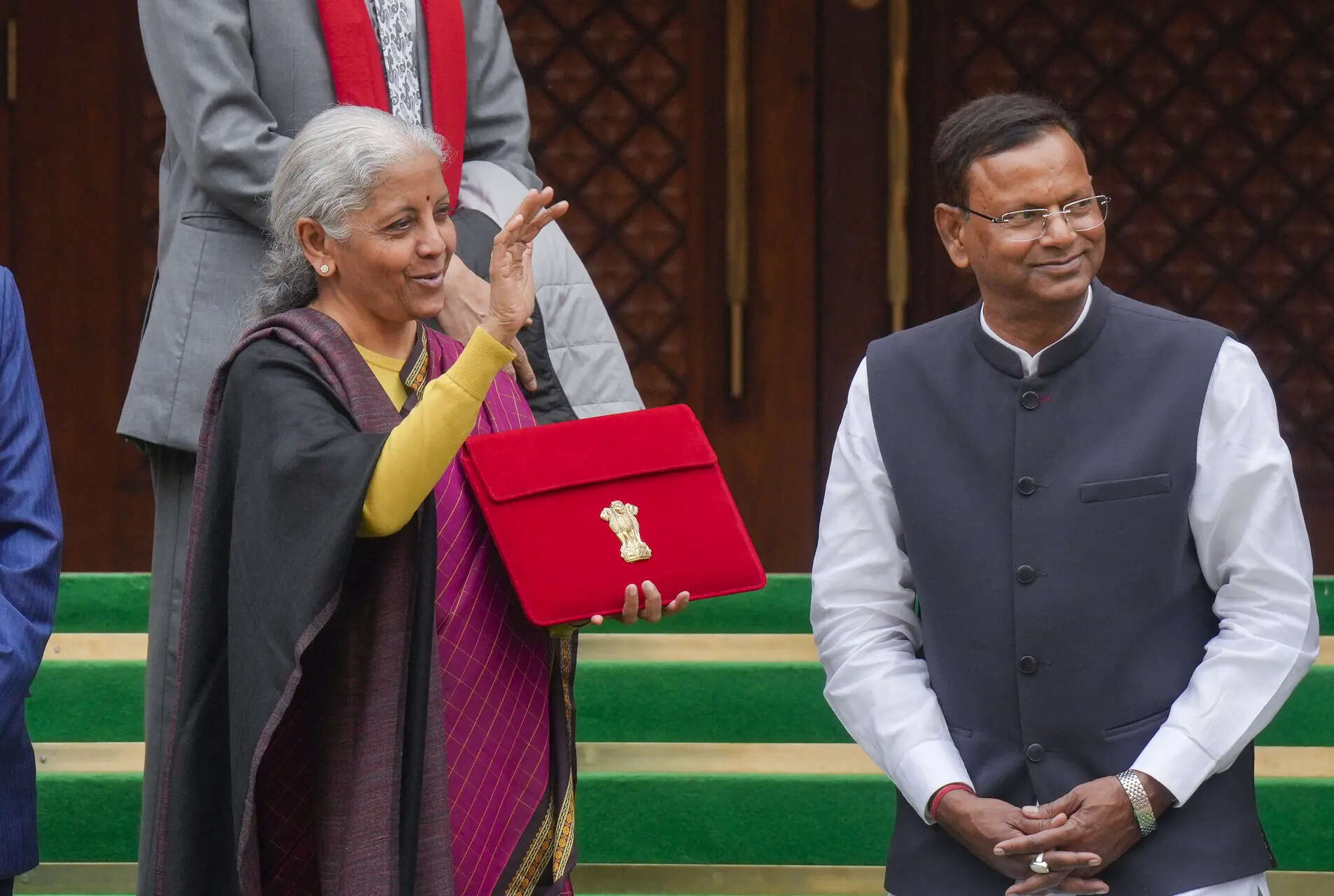
Anchored in fiscal prudence and macroeconomic stability, the Union Budget 2026-27 emerges as a work-in-progress, capacity building budget with a clear focus on infrastructure development, balanced regional growth, and strengthening India’s long-term competitiveness.
The enhanced allocation for government capex at Rs. 12.2 lakh crore signals continued prioritization of infrastructure, a backbone for productivity and long-term growth.
Through a strategic focus on key sectors such as semiconductors, rare earths, biopharma, and manufacturing, and supported by the development of seven high-speed rail corridors and enhanced logistics connectivity, the government is working to put in place the critical building blocks needed for India to emerge as an integral long term player in the global economic architecture.
Notably and rightly so, the budget refrained from offering market-or individual-focused appeasement sops, a conscious shift away from short-term demand management towards fiscal discipline, investment-led growth, and structural reforms aimed at strengthening medium-to-long term economic fundamentals.
With India being the fastest growing economy and real GDP estimated to expand by 7.4% in FY26 and inflation numbers at 2% for FY 26, the nation stands at a critical inflection point in its reform trajectory – one where the success of recently introduced reforms will depend less on policy intent and more on effective execution. Execution is not merely important. It is the principal risk to reform outcomes.
The challenge is particularly salient given that India’s long—term growth trajectory is set to be increasingly urban-led. In light of the fact that cities account for 60% of GDP, they are emerging as the engines of economic growth. Yes, the focus on “Cities as Growth Hubs” in the Union Budget 2025-26, offers an important context for how urban policy has been evolving. India’s rapid urbanization offers a timely opportunity to reimagine cities as well-planned, well-serviced and productive economic hubs.
As the nation aspires to become a Viksit Bharat by 2047, realizing the full potential of agglomeration economies can enhance urban productivity, reduce the risk of urban diseconomies, and play a critical role in avoiding the middle-income trap.
It is key that we take cognizance of the fact that the missing link is urban productivity infrastructure and the Centre, state and local governments need to work hand-in-hand to build integrated green urban-industrial regions. The very purpose of the Rs. 1 lakh crore Urban Challenge Fund is to help transform cities into growth hubs, promote creative redevelopment and urban regeneration, support water supply & sanitation infrastructure, foster sustainable and inclusive urban development.
Cities spanning the length and breadth of the country require focused investment in urban transit systems (metro, suburban rail etc), last-mile logistics for individuals with an eye on minimizing of pollution levels, building digital urban infrastructure (data platforms, smart utilities), and most importantly climate resilient urban services (water, effective and drainage waste management services).
Sustaining the country’s rapid economic growth requires a transition: “To move from infrastructure for movement to infrastructure for economic density”.
While we talk of cities as centres of job creation, it is important that the Union and State budgets enable: City-specific skill ecosystems aligned with local industry clusters, affordable live-able rental housing for migrant workers and workforce mobility within metropolitan regions. The majority of the urban local bodies remain financially weak and are dependent on central and state transfers.
A major reform push on municipal finance is the need of the day. An enabling ecosystem must be created whereby municipal local bodies have access to cities predictable revenue streams, borrowing capacity and professional urban management. Property tax rationalization, municipal bonds with credit enhancement, outcome-linked fiscal transfers can be of help. Growth potential of cities can be fully realized through stronger, more empowered local governments.
Cities must be planned as integrated economic regions, with mixed-use zoning, and not rigid segregation. Metropolitan-region planning rather than project-based urban development is needed.
Equally critical is the need to fundamentally rethink and redesign cities around principles of sustainability and climate resilience. The vagaries of climate change have resulted in the best of cities facing onslaughts of floods, heat stress, water scarcity, air pollution, noise pollution etc. Urban climate adaptation is key and must be supported through dedicated urban climate funds, resilient infrastructure standards and incentives that promote compact, low-carbon urban development.
Growth without resilience will only increase future fiscal and social costs. For “Cities as Growth hubs, the “Creative Redevelopment of Cities” is needed. It is critical that we focus on cities as productive systems and bring about urban governance reforms, metropolitan planning, labour-housing –transport integration. High growth will depend on cities functioning as an integrated economic system.
The allocation of Rs. 5000/- crore for “City Economic Region’ does set the groundwork, but without empowered cities and a coherent urban strategy, macroeconomic constraints will remain.
India’s economic growth drivers have primarily been consumption and investment driven. As cities emerge as growth hubs, urbanization must be leveraged not merely to generate jobs, but to raise productivity per worker through better skills, infrastructure and agglomeration economies. Total factor productivity growth remains modest. Without productivity-led growth, per capita income convergence slows down which could result in being caught in the middle-income trap.
The middle-income trap, which primarily is a skills and innovation trap, warrants that we simultaneously keep a sharp focus on deepening of learning and skills and invest heavily in R&D and building innovation capacity. Cities must be created as engines of innovation, labour market hubs and export platforms. The nation needs to keep a sharp eye on improving productivity levels and not just expansion of gross domestic product.
Fostering innovation-through skills, technology, and urban ecosystems-is critical to achieving long-term growth and avoiding stagnation associated with the middle-income trap.
To be a Viksit Bharat by 2047, the nation must make productivity and not just growth as the policy anchor, treat cities as economic systems, not just infrastructure projects, invest decisively in human capital deepening and innovation, reform urban governance and finance and focus on balanced regional growth with inclusion and resilience.
(Pooja Misra is a Professor in Economics and Area Chair at the Birla Institute of Management Technology; Views expressed are personal)