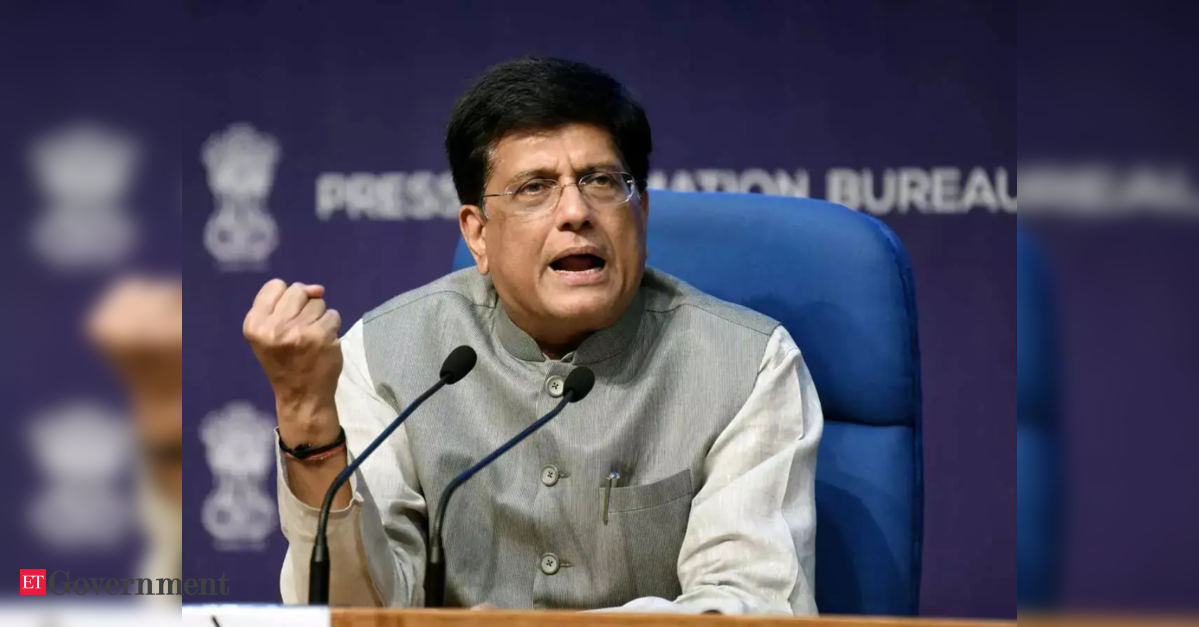
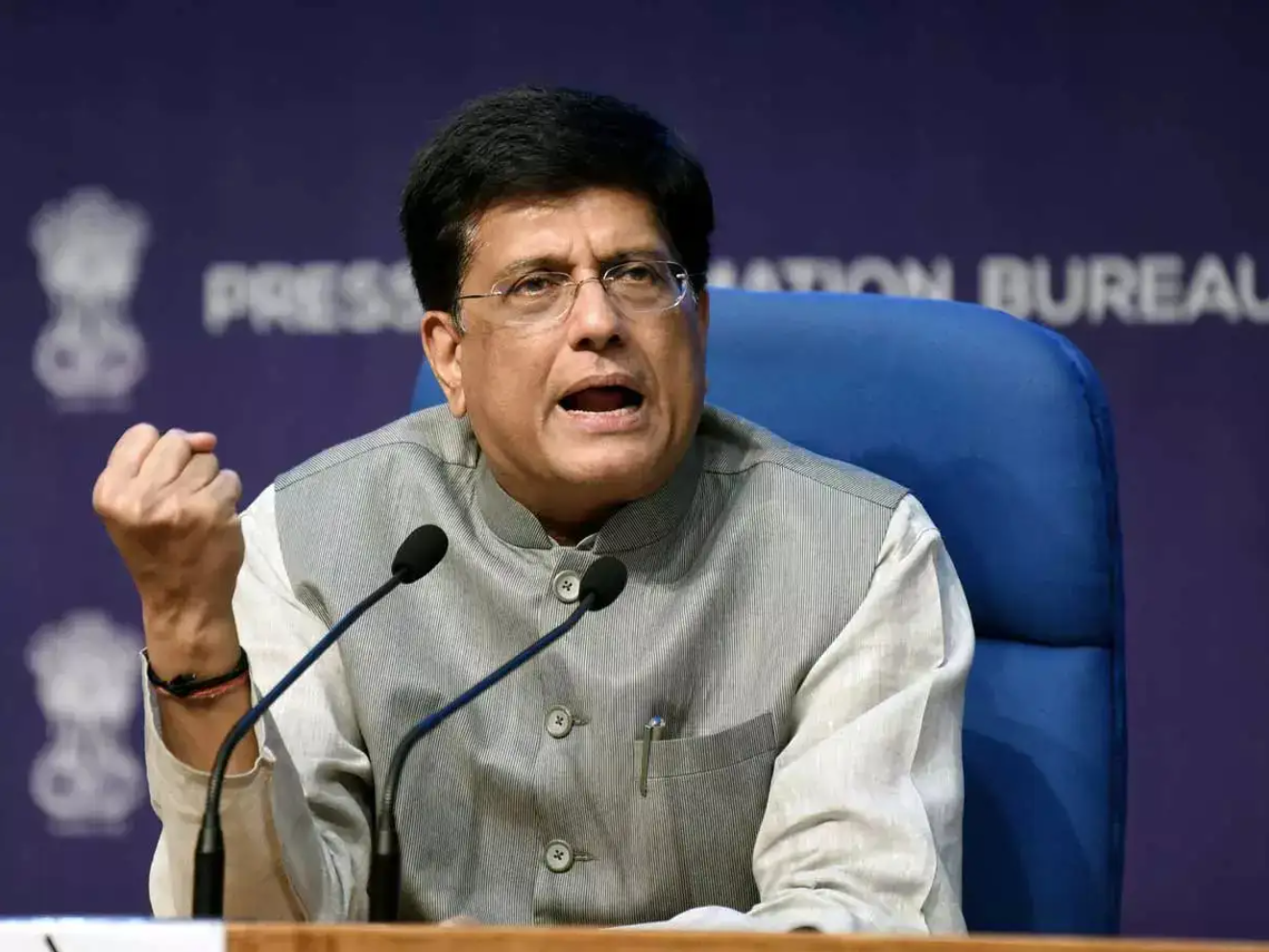
The framework announced under the India–US trade agreement has generated strong enthusiasm across coastal regions and major export hubs, with exporters expecting improved market access and lower tariff barriers in the United States, Union Commerce and Industry Minister Piyush Goyal said on Saturday.
Addressing a press conference on the India–US joint statement, Goyal said that the agreement would provide significant benefits to farmers, MSMEs and labour-intensive manufacturing sectors, while safeguarding sensitive domestic interests.
He said agricultural products from Indian farmers will be exported to the US at zero duty, while no tariff concessions have been granted for agricultural products from US farmers entering the Indian market. The framework also makes it clear that genetically modified food will not be allowed into India, he added.
On tariffs, the minister said that the earlier 50 per cent reciprocal tariff imposed by the US has been reduced to 18 per cent, which is lower than that faced by several neighbouring countries. This, he said, would provide substantial relief to Indian exporters and improve their competitiveness in the US market.
Goyal said the trade deal has brought new hopes and opportunities to India’s growth story, particularly for export-oriented sectors concentrated in coastal states and industrial clusters. Exporters of marine products, seafood, textiles and engineering goods are among those expected to benefit from the improved trade framework.
He said the agreement would give a strong push to MSMEs employing large numbers of women and youth. With exports from labour-intensive sectors such as textiles and apparel, leather and footwear, toys, and gems and jewellery expected to scale up, the deal could lead to the creation of lakhs of jobs while strengthening domestic manufacturing.
Industry body Automotive Component Manufacturers Association of India (ACMA) welcomed the interim trade agreement framework, saying it reflects a shared commitment by India and the US to strengthen bilateral manufacturing cooperation and resilient supply chains.
Vikrampati Singhania, president of ACMA and vice chairman and managing director of JK Fenner (India), said provisions such as preferential tariff rate quotas for automotive parts, removal of Section 232 tariffs on select inputs and a pathway for further tariff rationalisation under the proposed bilateral trade agreement are positive steps for the Indian auto component industry.
“These measures will enhance export competitiveness, deepen technology collaboration and reinforce India’s role as a trusted partner in resilient global automotive supply chains,” Singhania said.
Detailing the tenets of the framework, Goyal said tariffs would go down to zero on a wide range of goods, including generic pharmaceuticals, gems and diamonds, and aircraft parts, enhancing India’s export competitiveness and supporting the Make in India programme.
India will also receive exemptions under Section 232 on aircraft parts, tariff-rate quotas on auto parts and negotiated outcomes on generic pharmaceuticals, which are expected to translate into tangible export gains, he said.
The framework also covers agricultural and food products such as spices, tea, coffee, coconut oil, cashew nuts, and fruits and vegetables including mango, banana, pineapple, avocado and mushrooms, along with select bakery products.
India and the US have agreed on the terms of a framework for an Interim Agreement on reciprocal and mutually beneficial trade. The bilateral trade agreement aims to more than double bilateral trade from $191 billion at present to $500 billion by 2030.