Crisil Foundation was created at a moment of institutional introspection, when one of India’s most influential analytics organisations decided to apply its core strengths to a pressing national challenge.
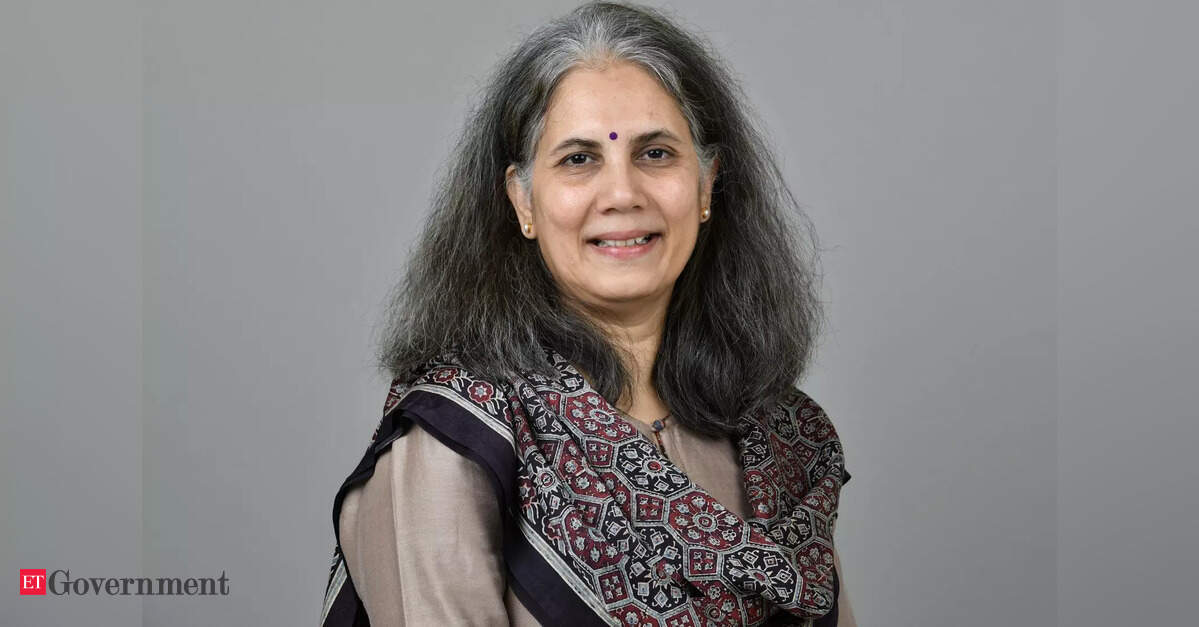
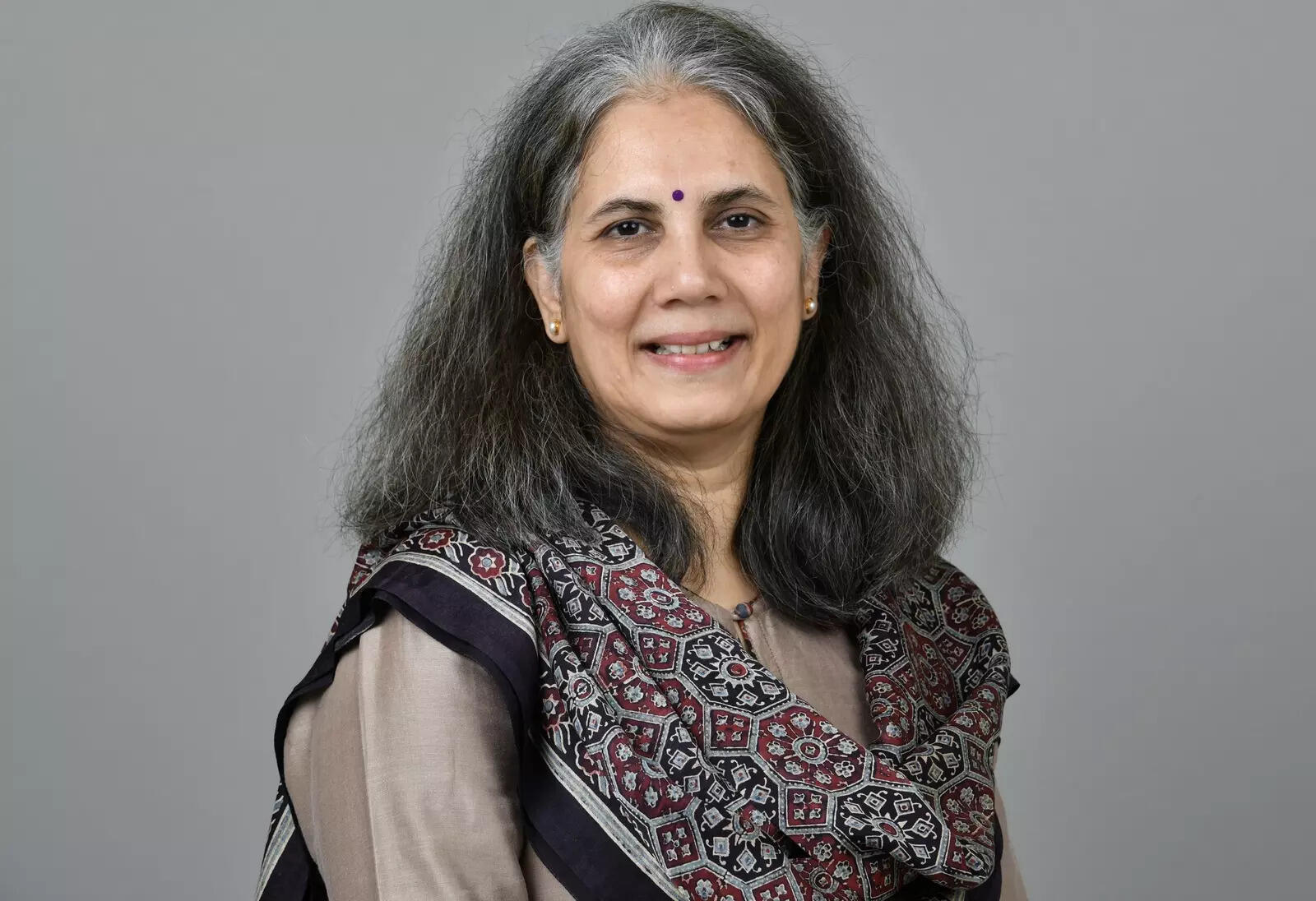
In this conversation with Anoop Verma, conducted on the sidelines of the Global Financial Inclusion Summit organised by ACCESS Development Services, Maya Vengurlekar, Chief Operating Officer of Crisil Foundation, reflects on how data, research, and ground-level engagement have shaped the Foundation’s work in financial inclusion, financial resilience, and environmental sustainability.
From pioneering India’s first Financial Inclusion Index to building women-led last-mile delivery models and managing large-scale financial literacy programmes for the Reserve Bank of India, she outlines how evidence-based social action can translate into durable impact.
Edited excerpts:
Crisil is globally known as an analytics company. What led to the creation of Crisil Foundation, and what was its original purpose?
Crisil Foundation was established in 2013, slightly before the CSR law formally came into effect. The timing was significant because Crisil had just completed its silver jubilee, and there was a strong internal reflection on giving back to the ecosystem in which the organisation had grown and thrived. The leadership felt that since Crisil had benefited so deeply from India’s financial ecosystem, it was important to contribute meaningfully towards strengthening that very ecosystem. That thinking led to the formation of the Foundation, with a clear focus on financial inclusion and financial resilience. For the last twelve years, we have worked very deliberately and in a highly focused manner in this space.
Financial inclusion in India often suffers from a lack of granular data. Given Crisil’s strengths in analytics, how does the Foundation leverage data in its work?
Data is central to how we think and operate, but it is important to clarify how we use it. Crisil is a research- and data-driven organisation, so naturally we rely on data to design programmes and guide decisions.
Our journey in financial inclusion actually began with a data gap. Around 2009–10, well before the launch of the Pradhan Mantri Jan Dhan Yojana, we realised that India still had a long way to go in bridging financial inclusion gaps. What was missing was granular, district-level information that could tell policymakers and practitioners where interventions were most urgently needed.
This led to the creation of India’s first Financial Inclusion Index, the Crisil Inclusix, which Crisil launched in 2013. The index mapped inclusion and exclusion at the district level and provided valuable insights for policy design. It also shaped our own programmatic decisions. For instance, it helped us identify the North East as a priority region, with Assam becoming our first intervention state for CSR. The index highlighted sharp contrasts, such as districts like Pathanamthitta in Kerala achieving a perfect score of 100, while others lagged far behind. This is how Crisil’s research and data DNA is embedded in the Foundation’s work.
Most people associate Crisil with credit ratings for loans and financial instruments. Is there scope for using analytics to help the poorest access credit, especially those without formal documentation?
That question moves into the credit bureau and credit scoring space. Crisil Foundation itself is not involved in this area. However, at a broader ecosystem level, there is growing interest in alternative credit scoring models that can leverage non-traditional data. The Finance Minister has spoken about initiatives such as the Grameen Credit Score in the previous year’s Union Budget, and there may be more clarity on this going forward. These models could potentially help assess repayment capacity even when formal documentation is limited. While this is an important development to watch, it is not an area where the Foundation is directly engaged at present.
One of Crisil Foundation’s flagship initiatives is the Mein Pragati programme, which works through women community workers or Sakhis. How has this programme evolved, and how do you assess its impact?
Over the past decade, the Mein Pragati programme has evolved significantly and has demonstrated strong impact. Today, we work with a cadre of around 5,200 women Sakhis operating across 5,000+ villages in Assam and Rajasthan. These women deliver doorstep services related to financial awareness, banking access, and government welfare entitlements. Importantly, they operate on a service-fee model, charging a small amount for the convenience they provide. This has made them financially self-sustainable.
In terms of outreach, the programme has reached more than 40 lakh rural citizens. Over 25 lakh service linkages have been facilitated by the Sakhis, and collectively, they have earned more than ₹15 crore. Beyond numbers, the programme has also led to significant social outcomes. Many women, despite having no prior political background, have become politically empowered. Some have contested local Panchayat elections and even won. The programme has received the National CSR Award twice, which further validates its impact.
We have leveraged AI/ML tools to conduct a granular psychometric analysis of these 5,200+ Sakhis, thereby categorizing them based on their entrepreneurial potential. This has greatly helped us understand the cadre in a granular manner, thereby being able to provide very specific capacity building and handholding support to specific categories of Sakhis. These insights are being leveraged to also plan our intervention going forward in 2026.
Crisil Foundation also runs MoneyWise Centres for Financial Literacy under an RBI-led initiative. Could you explain the scope of this programme and your experience implementing it?
The MoneyWise Centres for Financial Literacy are part of one of the largest and most ambitious financial literacy initiatives led by the Reserve Bank of India. Under this national framework, multiple implementing agencies manage block-level MoneyWise Centres for Financial Literacy, and Crisil Foundation is among the largest implementing partners.
We currently operate more than 700 centres across 13 states and four Union Territories. Through these centres, trained grassroots staff (handpicked from the local communities) conduct active outreach in villages and communities. They create awareness about financial products, services, and access points, facilitate large linkage camps in collaboration with business correspondents and local banks, and play a critical role in educating citizens about financial frauds and grievance redressal mechanisms.
This programme has allowed us to reach some of the most remote and previously unreached regions of the country, including states like Arunachal Pradesh, Nagaland, and the Andaman and Nicobar Islands and many aspirational districts. It has significantly expanded the Foundation’s geographic footprint and deepened our understanding of ground-level financial vulnerabilities.
You have also launched the GramShakti app to train the Sakhis. How does this digital platform support capacity building?
Continuous training is essential because the financial inclusion space is constantly evolving. Gram Shakti is a mobile-based learning and certification platform designed specifically for our Sakhis. It offers around 30 hours of structured content across 11 modules, progressing from basic to intermediate and advanced levels. After completing all modules, participants take an online assessment, and those who qualify receive formal certification during a convocation ceremony.
I am pleased to share that out of our 5,000 Sakhis, more than 3,600 have already completed this certification. Additionally, under the Bima Sakhi initiative launched by LIC of India and the Government of India, over 1,700 of our Sakhis have qualified by clearing the examination. Their training and capacity building were largely supported through the GramShakti app and our broader learning ecosystem.
Beyond finance, Crisil Foundation has also taken up environmental initiatives. How does an analytics-driven organisation approach environmental sustainability?
Our CSR philosophy at Crisil is to do good using what we are good at. Since we specialise in data and research, we bring the same discipline to our environmental work. We chose the environment because it affects all of us, and as a responsible corporate citizen, we wanted to contribute meaningfully. At the same time, we deliberately kept our environmental focus narrow and simple.
Aligned with the UN Sustainable Development Goal of “Life on Land,” we focus on native afforestation and water conservation. We have planted close to four lakh saplings and place strong emphasis on maintenance to ensure high survival rates. This is where data plays a critical role. We rigorously track plantation survival and do not adopt a “plant and forget” approach. Similarly, in water conservation, we conduct impact studies to assess conditions before and after interventions. Measurement, monitoring, and evidence-based decision-making remain central to our environmental work.