Prime Minister Narendra Modi on Monday inaugurated the India AI Impact Expo 2026 at Bharat Mandapam in New Delhi, setting the tone for what is emerging as one of the most consequential gatherings on artificial intelligence in the Global South.
The Expo, held alongside the India AI Impact Summit 2026, brought together policymakers, technology leaders, multilateral institutions, startups, researchers and students in a demonstration of India’s ambition to shape—not merely adopt—the AI revolution.
Addressing innovators and technology enthusiasts at the inauguration, the Prime Minister underscored that India’s AI journey is anchored in both national transformation and global responsibility. “Being here among innovators, researchers and tech enthusiasts gives a glimpse of the extraordinary potential of AI, Indian talent and innovation.
Together, we will shape solutions not just for India but for the world,” he said in a post following the inauguration. The message was unmistakable: India’s AI strategy is outward-looking, developmental, and civilizational in scope.
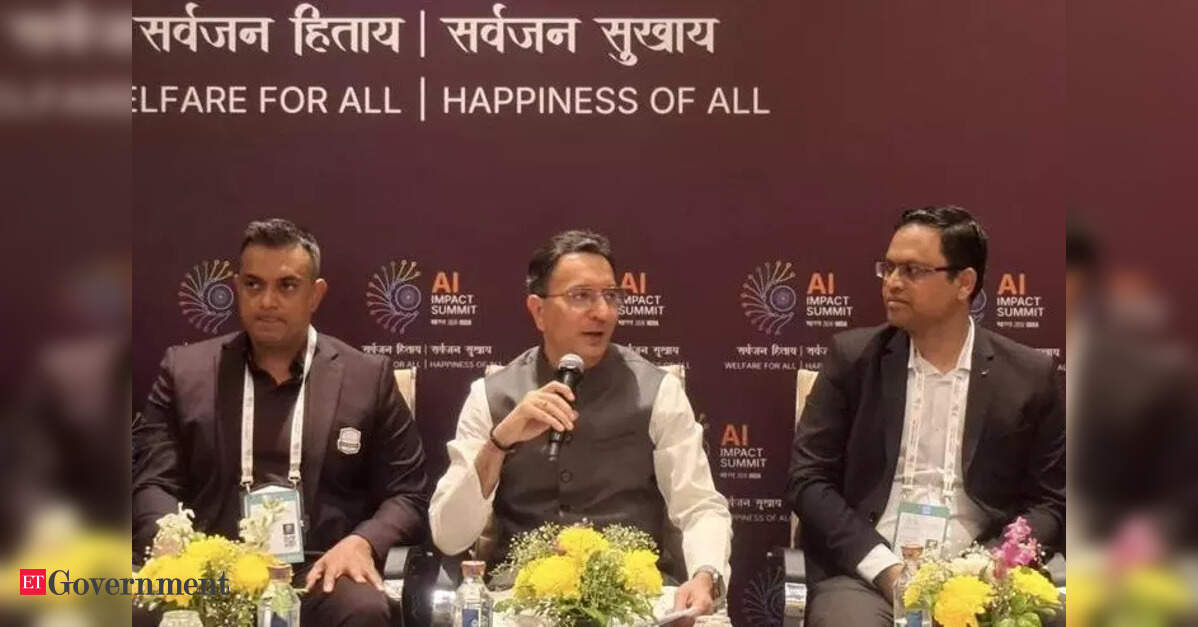
That global orientation was reinforced by Jitin Prasada, Union Minister of State for Electronics and Information Technology and Commerce & Industry, who articulated India’s positioning in direct terms. “It’s AI not only for India, but for the whole world. India will be that service provider for the whole world. We have to contribute to the developing world as well as the Global South in development,” he said, framing AI as an instrument of technological solidarity rather than digital dominance.
If the political messaging set the vision, the policy conversations on Day One of the Summit focused on architecture. The emphasis was clear: India’s AI ambitions must rest on sovereign, accessible and verifiable infrastructure. S. Krishnan, Secretary, Ministry of Electronics and Information Technology, outlined a distinctive public policy approach to AI compute.
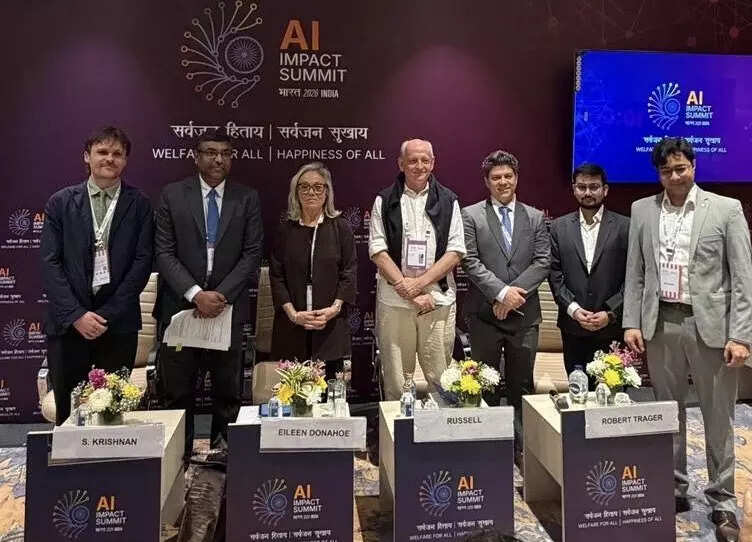
Rather than subsidising capital expenditure for data centres, the government has chosen to subsidise access.
“We have underwritten the market and ensured that researchers, innovators, small and medium enterprises, and students all have access to AI compute at reasonable prices,” he said, noting that AI compute in India is now available at roughly one-third of prevailing global costs. The approach signals a shift from infrastructure ownership to infrastructure democratisation.
This theme of access and inclusion found tangible expression in the India AI Impact Buildathon, a nationwide initiative designed to widen participation in AI creation. The programme spanned 48 workshops across 21 cities, engaged more than 10,000 students in the pre-summit phase, and expanded into a national hackathon drawing 40,000 participants from 100 cities.
From this pool, 850 finalists formed 200 teams, with the top six presenting live solutions to tackle financial and digital fraud. The exercise was less a competition and more a rehearsal for distributed innovation at scale.
Abhishek Singh, Additional Secretary, MeitY; CEO of the IndiaAI Mission; and Director General of NIC, placed the emphasis squarely on societal impact. “The real power and the real strength of India is in all of you who are here to build something impactful, something that can create a difference and touch lives at scale,” he said.
Drawing parallels with India’s digital public infrastructure such as Aadhaar and UPI, he highlighted how DPI has already reshaped governance and payments. In a symbolic extension of that model, foreign delegates at the Summit were enabled to experience UPI through a “One World Wallet,” following approval from the Reserve Bank of India.
Across sessions on trustworthy AI, open-source sovereignty, workforce transformation and open data ecosystems, a common thread emerged. Sovereignty in the AI age extends beyond model ownership. It encompasses compute capacity, semiconductor resilience, governance standards, auditability and institutional capability.
Panels argued that regulatory frameworks must co-evolve with technological innovation, embedding transparency, explainability and human oversight into AI systems from inception rather than as afterthoughts.
Workforce discussions confronted the structural implications of automation, with calls to link skilling initiatives directly to productivity gains and income mobility. AI readiness, participants agreed, must be embedded within national employment strategies, particularly in emerging economies seeking to convert demographic potential into technological advantage.
Equally, conversations on open data underscored the need for “AI-ready” datasets marked by provenance, interoperability and institutional stewardship. Strengthening national statistical systems and ensuring responsible data flows were described as foundational to building trustworthy AI ecosystems.
By the close of Day One, the contours of India’s AI doctrine were visible. It is a model that blends market incentives with public underwriting, sovereignty with openness, and innovation with inclusion. India is positioning itself not merely as a vast consumer market for AI tools, but as a provider of scalable, affordable and ethically grounded AI solutions for the world.
In doing so, it seeks to transform artificial intelligence from a technology of concentration into a platform of collective progress.