
As global capital increasingly searches for stable and scalable markets, India has emerged as one of the most closely watched investment destinations in the world. Strong economic growth, expanding digital public infrastructure, manufacturing incentives, and a large talent base have strengthened the country’s appeal to multinational corporations.
Yet for many foreign investors, India remains a complex market—diverse, highly regulated, and shaped by regional variations that require careful navigation. For global advisory firms that guide companies through market entry and expansion, understanding this complexity has become central to supporting international business in India.
In this context, Baker Tilly International recently launched its report, Doing Business in India, aimed at providing global investors with an overview of the country’s regulatory and operational landscape. The report comes at a time when global supply chains are being reshaped by geopolitics, technology competition, and the search for resilient manufacturing hubs—factors that are placing India more prominently on the map of international investors.
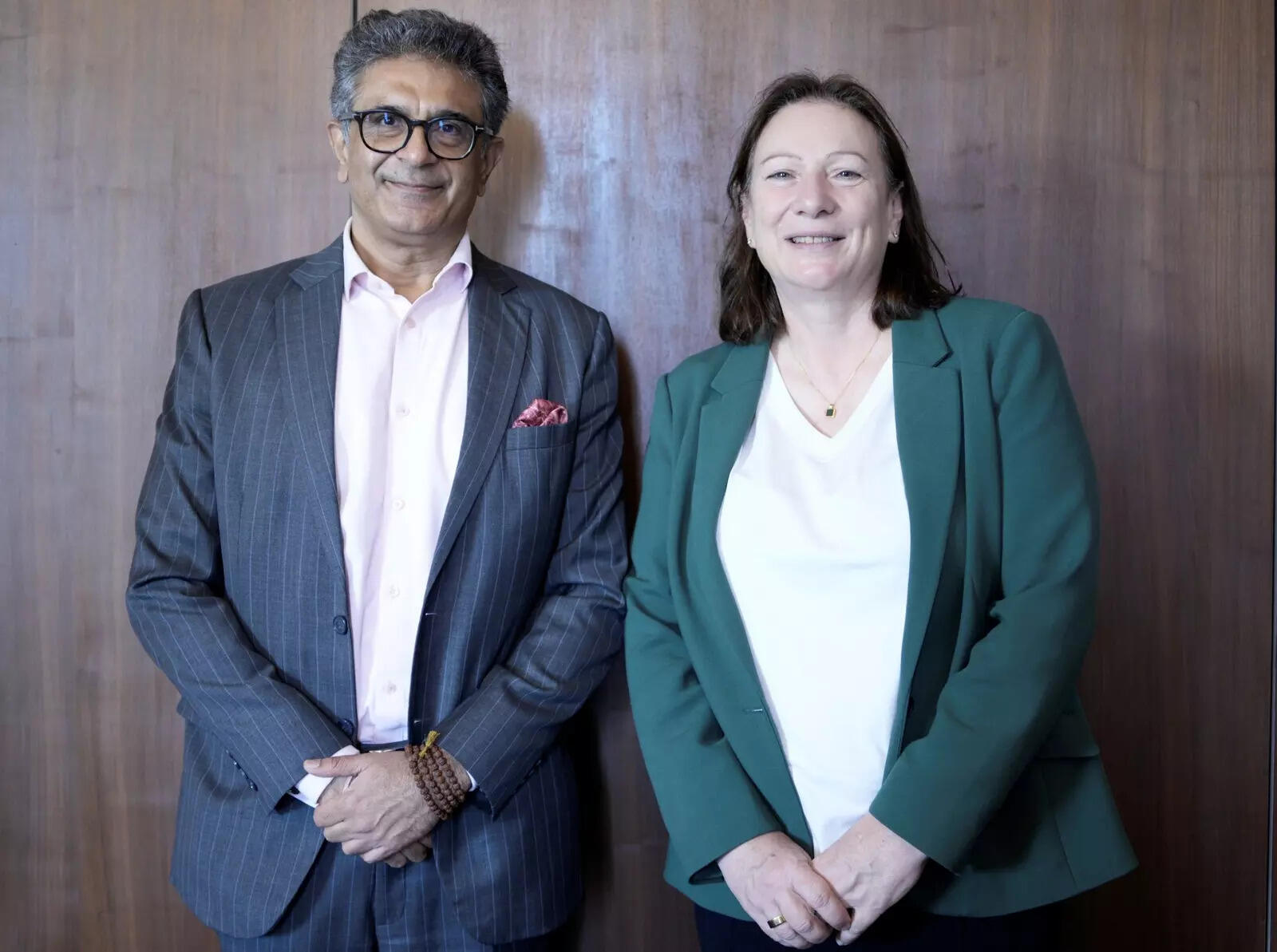
In this interview with Anoop Verma, Francesca Lagerberg, CEO of Baker Tilly International, and Ajay Sethi, Managing Partner of Baker Tilly ASA India, discuss the evolving dynamics of global investment into India, the opportunities emerging in sectors such as manufacturing and technology, and why companies must rethink conventional assumptions when entering the Indian market. They also reflect on the growing role of global capability centres, the impact of India’s digital public infrastructure, and the strategic considerations that multinational companies should keep in mind as they plan their India journey.
Edited excerpts:
Baker Tilly ASA India advises multinational companies and investors across tax, audit and strategic advisory. Could you elaborate on the kind of work your India practice is currently undertaking and how it supports global companies entering the Indian market?
Ajay Sethi: We are fundamentally an accounting and consulting firm that supports companies through the entire lifecycle of their operations in India. When a multinational company first begins exploring India, we help them understand the regulatory environment and the practical realities of doing business here—what works, what does not, and what regulatory considerations will influence their decisions.Once a company decides to enter the market, we assist them with the regulatory and compliance aspects of their operations. This includes areas such as audits, accounting frameworks, taxation, and other statutory requirements. As businesses begin operating, they may encounter challenges—perhaps issues within a joint venture, concerns about financial irregularities, or compliance complexities. In such cases we step in with services such as forensic investigations and specialised advisory.
Our involvement extends across the full spectrum—from planning entry into India, to operational support, and even assisting companies that may eventually decide to exit the market and wind down their operations. Essentially, we support organisations at every stage of their engagement with the Indian economy.
Francesca Lagerberg: That approach reflects what our global network does across markets. When a company enters a new country, it is not only the technical rules and regulations that matter. Understanding how the market works in practice—including cultural and operational nuances—is equally important.
Businesses entering India from Europe or the United States often find the environment quite different from what they are accustomed to. One of the strengths of the report that has just been launched is that it explains complex regulatory areas in relatively simple and practical terms, which can help investors navigate these differences more effectively.
Your flagship report Doing Business in India has just been launched. What are the most important insights or trends that international investors should understand about the Indian market today?
Ajay Sethi: One of the most common mistakes foreign investors make is to view India as a single, uniform market. In reality, India is highly diverse and complex. Consumer preferences, business practices and even product acceptance can vary dramatically between regions.
A product that performs well in North India may not necessarily succeed in the South or the Northeast. Companies therefore need to adopt a much more nuanced and region-specific approach when planning their entry strategy.
Another important aspect relates to regulatory and compliance planning. Many companies focus primarily on financial projections and tax structures during their feasibility studies. However, other elements—such as labour regulations, social security obligations, gratuity payments, and municipal taxes—can significantly affect operating costs if they are not properly factored in from the beginning.
The central message of the report is therefore quite simple: successful market entry requires careful planning and a comprehensive understanding of the regulatory landscape.
Francesca Lagerberg: As the saying goes, if you fail to plan, you plan to fail. The report is designed to help investors prepare thoroughly before entering the market.
In your experience of advising global clients, what are the most common regulatory or operational challenges businesses encounter when establishing operations in India?
Ajay Sethi: Taxation issues are often the most immediate challenges. Indirect taxes such as GST, as well as customs regulations, can create confusion for companies unfamiliar with the system. There are also areas where valuation rules between direct and indirect tax frameworks may not be perfectly aligned, which sometimes complicates compliance.
Another factor is cost expectations. Many investors initially assume India offers significant cost advantages, particularly in labour. However, labour costs are steadily rising, and companies must account for this reality in their business models.
At the same time, companies are often pleasantly surprised by the quality of India’s talent pool—particularly in engineering and technical fields. So while there may be some challenges, there are also significant advantages that companies discover once they begin operating here.
Does the report identify emerging investment clusters in sectors such as electronics, semiconductors, renewable energy or advanced manufacturing?
Ajay Sethi: The report itself is primarily a regulatory guide and does not focus extensively on sectoral analysis, as these sectors evolve very rapidly.
However, several sectors are clearly emerging as major investment areas. Semiconductor manufacturing is one such sector and is expected to drive the development of clusters in states such as Gujarat and Assam. Defence manufacturing is another area attracting strong interest, particularly from France, Israel and the United States.
Aerospace, electric vehicles, and renewable energy are also gaining momentum as strategic sectors for future growth.
Francesca Lagerberg: More broadly, we are seeing strong investor interest in manufacturing across a wide range of industries. At the same time, technology-driven sectors remain particularly attractive, especially as Asia continues to play an increasingly influential role in shaping the next generation of technological innovation.
Global capital flows are increasingly influenced by geopolitics, technology competition and supply-chain resilience. How do you see these forces shaping investment into India over the next decade?
Francesca Lagerberg: At the moment the global environment is extremely fluid. Events in the Middle East and other regions are evolving rapidly, and it is difficult to predict what might happen even in the short term. However, if we take a longer view—say ten years—the outlook for India is very positive. The country has strong talent, a large and educated workforce, and an increasingly stable economic environment. Those fundamentals place India in a strong position within the global economy. In many ways, while short-term uncertainty may remain, the long-term trajectory for India appears highly promising.
Ajay Sethi: Energy prices—particularly oil—will continue to influence the region because Asia remains dependent on imports. But historically, businesses adapt to geopolitical disruptions. Certain sectors, such as defence manufacturing, may expand during periods of geopolitical tension. Ultimately, the broader trajectory of economic activity continues, even as global events reshape the investment landscape.
How important are global capability centres and knowledge-driven service hubs in the next phase of India’s integration into the global economy?
Ajay Sethi: Global Capability Centres (GCCs) have evolved significantly over the years. Earlier, many of them focused primarily on back-office functions such as accounting processes, data processing, or routine administrative work.
Today, however, a new generation of GCCs is emerging that focuses on research and development, engineering design, and high-value knowledge work. Companies increasingly realise that they do not need to relocate Indian engineers to high-cost jurisdictions to undertake advanced technical work.
If these professionals are given the right infrastructure and working environment within India, they are capable of delivering world-class innovation and design. As a result, GCCs are now entering a new phase of expansion focused on high-value intellectual and technological output.
As Baker Tilly expands its footprint in India, what strategic priorities guide the firm’s India practice in the coming years?
Francesca Lagerberg: One of the key strengths of our global network is the emphasis on relationships. Strong relationships with clients, employees and member firms across the network are essential to maintaining consistent service quality worldwide. India plays an extremely important role in the global economy and within the Asia-Pacific region. Having a strong and capable member firm in India is therefore critical for our network, and we are delighted to see the progress that has already been made.
Ajay Sethi: For us, the strategic focus is on supporting small and medium-sized enterprises that operate across borders. Baker Tilly globally has a strong focus on this segment, and we see tremendous opportunity in helping both international SMEs entering India and Indian companies expanding abroad. Our objective is to ensure that businesses moving across markets have access to trusted advisors who understand both the regulatory environment and the practical realities of operating internationally.
India is pursuing ambitious initiatives in digital public infrastructure, manufacturing incentives and semiconductor development. How are these policies influencing global investor confidence?
Ajay Sethi: Policy reforms and regulatory improvements over the past decade have significantly increased investor interest in India. Even if these changes do not always show up immediately in global rankings, companies evaluating the market recognise that the regulatory environment is gradually improving.
India’s digital public infrastructure is also a major differentiator. Many international visitors are surprised to see how seamlessly digital payments operate in India. Transactions that would normally require cash can be completed instantly using mobile payment systems such as UPI.
Similarly, initiatives in semiconductor design and manufacturing signal a strategic shift in India’s industrial policy. The country is not only focusing on assembly and manufacturing but also on high-value design capabilities. With thousands of engineers already working in chip design globally, India has the talent base needed to move up the value chain.
For companies still evaluating entry into India, what would be your most important strategic advice today?
Ajay Sethi: My most important advice would be to avoid treating India as a single homogeneous market. Businesses must undertake careful market research to understand regional demand patterns before launching their products nationwide. A company may conduct a successful market study in one region and assume the same product will perform equally well across the entire country. In reality, regional differences can significantly influence market outcomes. A well-designed market entry strategy must therefore account for these variations from the very beginning.
If you had to summarise the message of the Doing Business in India report in one line for global investors, what would it be?
Francesca Lagerberg: Use the report to gain an overview of the Indian market—and then seek good advice tailored to your business.
Ajay Sethi: The report is intended to present practical guidance in clear language. It does not attempt to glorify or prescribe decisions. Instead, it provides an honest overview of the regulatory environment so that investors can make informed choices.