As India accelerates its push in emerging technologies such as artificial intelligence, semiconductors and quantum computing, universities are expected to play a critical role in building the country’s research and innovation ecosystem.
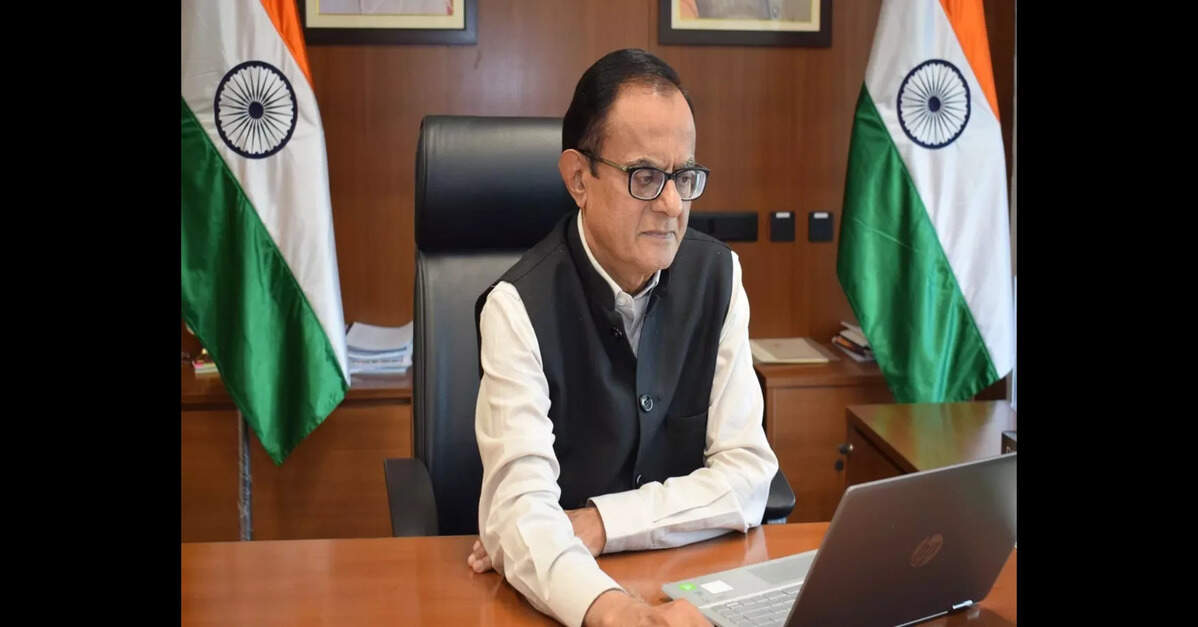
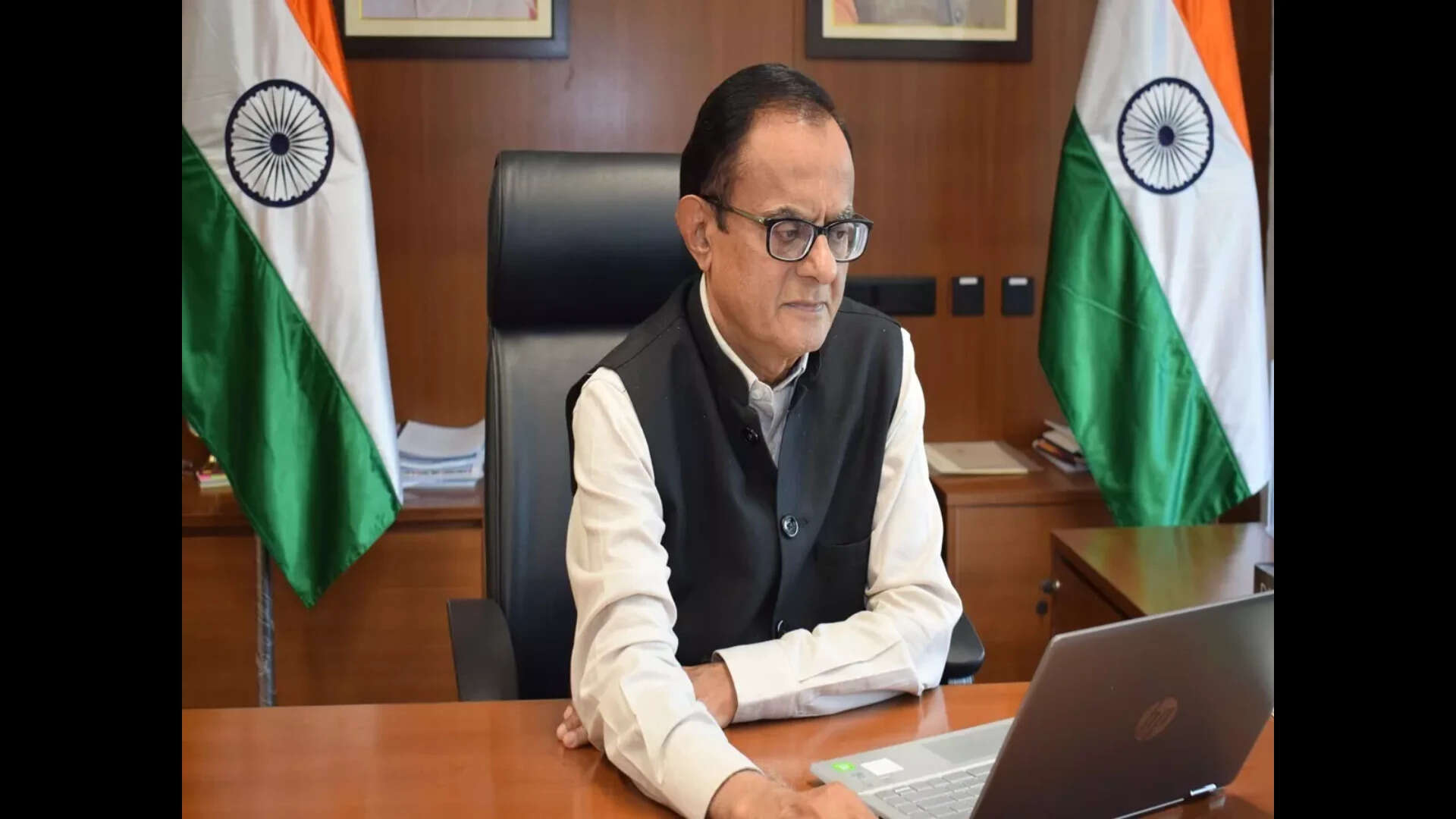
In an exclusive conversation with ETEducation, Ajay Sood explains how national missions, new funding mechanisms under the Anusandhan National Research Foundation, and programmes linking academia, industry and startups are shaping the next phase of India’s science and technology landscape.
Q: How does the Office of the Principal Scientific Adviser translate the Prime Minister’s vision for a knowledge-driven economy into concrete reforms in higher education and research ecosystems?
Prof Ajay Sood: In the Office of the Principal Scientific Adviser (PSA), we have the Prime Minister’s Science, Technology and Innovation Advisory Council (PM-STIAC). The responsibility of this council, which is chaired by the PSA, is to examine the state of different science and technology fields, understand the challenges, suggest solutions and prepare a roadmap for the country that can guide the government.
This involves a consultative process across ministries and experts. Once this process is completed, we identify areas where the country should adopt a mission-mode approach, especially in contemporary or futuristic technologies.
For example, the National Quantum Mission involves multiple ministries and is implemented primarily through the Department of Science and Technology, with participation from agencies such as the Department of Space, Ministry of Defence and others. The mission has several verticals, including building a future-ready workforce and bringing young people into emerging areas through education and research.
Another example is the IndiaAI Mission, implemented by the Ministry of Electronics and Information Technology, with an outlay of about ₹10,400 crore. The mission aims to support the training of 500 PhD scholars, 5,000 postgraduate students and 8,000 undergraduate students in AI-related fields through universities and centres of excellence.
There are also programmes to train 10 lakh youth and small entrepreneurs in AI through national skilling initiatives.
Similarly, the National Green Hydrogen Mission includes a strong skilling component for young professionals and reskilling initiatives for people working in related sectors.
Another programme under our office is Manthan, which serves as a collaborative platform connecting industry, academia, national laboratories and startups. The idea is to bring together the demand side, where organisations have problem statements, and the supply side, where research institutions and startups can develop solutions.
In about three and a half years, projects with commitments of nearly ₹9,000 crore have been facilitated under Manthan, with about ₹1,500 crore worth of projects already underway.
Q: India has announced missions in AI, semiconductors and deep tech. How are universities and research institutions being aligned to support these priorities?
Prof Ajay Sood: India produces around 15 lakh engineering graduates every year, and about 43% of STEM students are women, which is an encouraging sign for gender participation in science and technology.
Universities are being aligned with national priorities through centres of excellence, specialised curricula and mission-driven programmes.
For instance, under the Semicon India Programme, the country is building semiconductor manufacturing and packaging capabilities. With facilities coming up, including investments from companies like Micron Technology, there will be a significant demand for skilled professionals.
To support this, institutions such as IITs and universities, along with the All India Council for Technical Education, are developing specialised curricula and training programmes in semiconductor technology.
We also noticed through the Manthan platform that many research problem statements were being addressed primarily by Tier-1 institutions such as IITs and the Indian Institute of Science, while Tier-2 and Tier-3 institutions were not participating as much.
To address this, we launched a programme called UTTHAN, aimed at strengthening research capabilities in these institutions so they can participate more actively in national innovation programmes.
Another initiative under the AI mission is SOAR – Skill for AI Readiness, which targets school students from Classes 6 to 12. The programme includes a 15-hour learning module for students and a 45-hour training module for teachers, helping build early exposure to AI technologies.
Q: Funding for science and research has increased, but concerns remain about continuity and access for young researchers. What structural steps are being taken?
Prof Ajay Sood: The government launched the Anusandhan National Research Foundation about a year and a half ago, which is an additional funding mechanism for strengthening research. One of the important schemes under ANRF is the Prime Minister’s Early Career Research Grant (PMECRG), which supports young faculty within the first three years of joining an institution.
The first call has already been completed and more than 800 researchers have been supported. The number of applications was nearly ten times higher, so the success rate is around 10%. Another programme is the Advanced Research Grant (ARG), which focuses on principal investigator–led individual research rather than mission-mode projects.
Apart from academic funding, the startup ecosystem is also being supported. For example, the Department for Promotion of Industry and Internal Trade recently announced a ₹10,000-crore Fund of Funds for deep-tech startups. Another initiative is the Research, Development and Innovation (RDI) Fund, which supports private-sector-driven R&D with strong academic collaboration.
So if you look at the ecosystem, ANRF supports academia-led research, while initiatives like the RDI fund encourage industry-led innovation, and together they strengthen the overall research ecosystem.
Q: The National Education Policy emphasises multidisciplinary universities. How is India progressing in integrating research with undergraduate and postgraduate education?
Prof Ajay Sood: Education and research have to go together. For some time they became somewhat separated, but policies are now bringing them back together.
The four-year undergraduate programme introduced under the National Education Policy 2020 includes a research component in the final year, which is a significant change from earlier structures.
We also have initiatives such as PM-USHA, which provides substantial funding to strengthen higher education institutions.
Reforms such as multiple exit options, credit transfer systems and dual-degree opportunities are also being introduced. These are major systemic changes and their impact will become clearer over the next few years.
Q: What role should premier institutions and emerging universities play in building a stronger national research pipeline?
Prof Ajay Sood: Under ANRF, we launched a programme called PAIR — Partnerships for Accelerated Innovation and Research.
In this model, Tier-1 institutions such as IITs or IISc act as hubs, while other universities participate as spokes. Each hub can partner with six or seven spoke institutions, and funding can go up to ₹100 crore per hub. Importantly, about 70% of the funding is directed toward the spoke institutions so that their research capacity can be strengthened.
Another initiative is the Prime Minister’s Professorships programme, where accomplished scientists who may have recently retired but are still active are encouraged to join Tier-2 and Tier-3 institutions to build research groups.
Q: How can India nurture and retain scientific talent while also attracting global researchers?
Prof Ajay Sood: Building a strong research ecosystem is essential. Programmes such as the Prime Minister’s Early Career Research Grant, Advanced Research Grants, and various mission-mode initiatives help create the right environment for young researchers.
To strengthen global collaboration, the VAIBHAV Fellowship run by DST brings accomplished members of the Indian scientific diaspora to collaborate with institutions in India.
We are also working on a new initiative called VAIBHAV Connect, which will create a networking platform linking researchers in India with the global diaspora.
The goal is to facilitate stronger collaboration and ensure that scientists working in India can conduct internationally competitive research.