


4 min readMumbaiMar 17, 2026 06:33 AM IST
Alarmingly low student enrolment at Mumbai University’s sub-centres in Ratnagiri, Kalyan and Sindhudurg has raised concerns over the effective use of infrastructure created to expand access to higher education. Data from the past three years shows that the centres are functioning at far below their capacity, prompting questions about planning and outreach by the university.
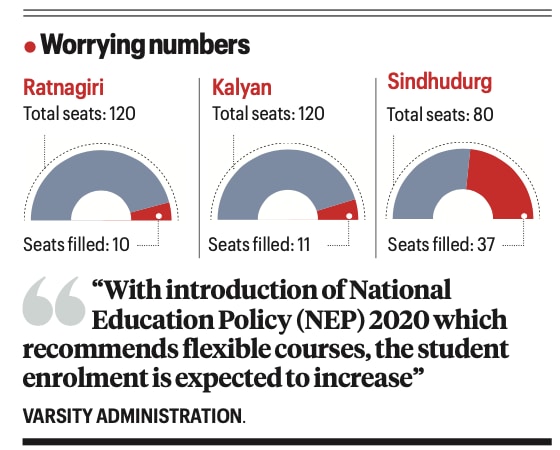
The issue was raised during Mumbai University’s Senate meeting held on March 14. As per the data presented during the Senate, at Ratnagiri campus only 10 out of total 120 seats across courses were filled in academic year 2024-25. The numbers show steady decline over the past three years – from 53 admissions in 2022-23 to just 13 in 2023-24 which further reduced to just 10 admissions in 2024-25.

Ratnagiri is the oldest sub-centre of Mumbai University which was established in the year 1989. But it began offering academic courses only after the academic year 2004-05.
The data was presented by Senate member Milind Satam who is elected from the graduate constituency and represents Yuva Sena. Stating that his purpose behind collating the data was to present the real picture of existing courses before the university introduces any new courses, Satam said, “The varsity really needs to increase its outreach to attract more students. Otherwise it is just a waste of resources.”
The data further shows that at Kalyan sub-centre which has a total intake of 120 seats across all courses, in academic year 2024-25, there were only 11 admissions, which is higher than past two academic years when this centre recorded 10 and 9 admissions in academic years 2023-24 and 2022-23 respectively.
Mumbai University established Kalyan sub-centre in 2019 and began offering courses in the same year. The nearby Thane sub-centre of MU, the university noted, has adequate student enrolment.
At the Sindhudurg sub-centre, the student enrolment is slightly better but not satisfactory. In academic year 2024-25, only 37 admissions were confirmed against the total intake capacity of 80 seats, across two courses offered there – Masters in Social Work (MSW) and M.Sc. IT. But only MSW is attracting students as per the data from earlier years.
Story continues below this ad
In the academic year 2023-24, a total of 27 students enrolled, 21 were in MSW and only six in M Sc IT. Whereas in academic year 2022-23, which saw admissions on only 29 seats, all were in MSW, which has an intake capacity of 60 seats. But the M Sc IT course, which offers 20 seats, recorded zero admissions. Sindhudurg sub-centre, which is the latest, was started in 2021 and immediately began offering courses.
Satam said that the university should either close these courses or attach with local colleges to ensure better student enrolment. “If varsity is unable to ensure effective outreach programmes to attract students, they should consider offering these courses in completely online mode which can lead to increased enrolment. This will be in line with varsity’s idea of expanding access. And in case of limitations in doing so, varsity should collaborate with local colleges to ensure increased enrolment. But running these courses with the number of admissions which is less than half of the total intake is sheer waste of expenditure incurred on these resources,” said Satam.
Responding to the concerns raised by Satam, the MU administration said that courses having recorded low enrolment have already been closed. “However with introduction of National Education Policy (NEP) 2020 which recommends flexible courses, the student enrolment is expected to increase,” said the official further adding that continuous review will be undertaken to ensure steady student enrolment.

© The Indian Express Pvt Ltd
