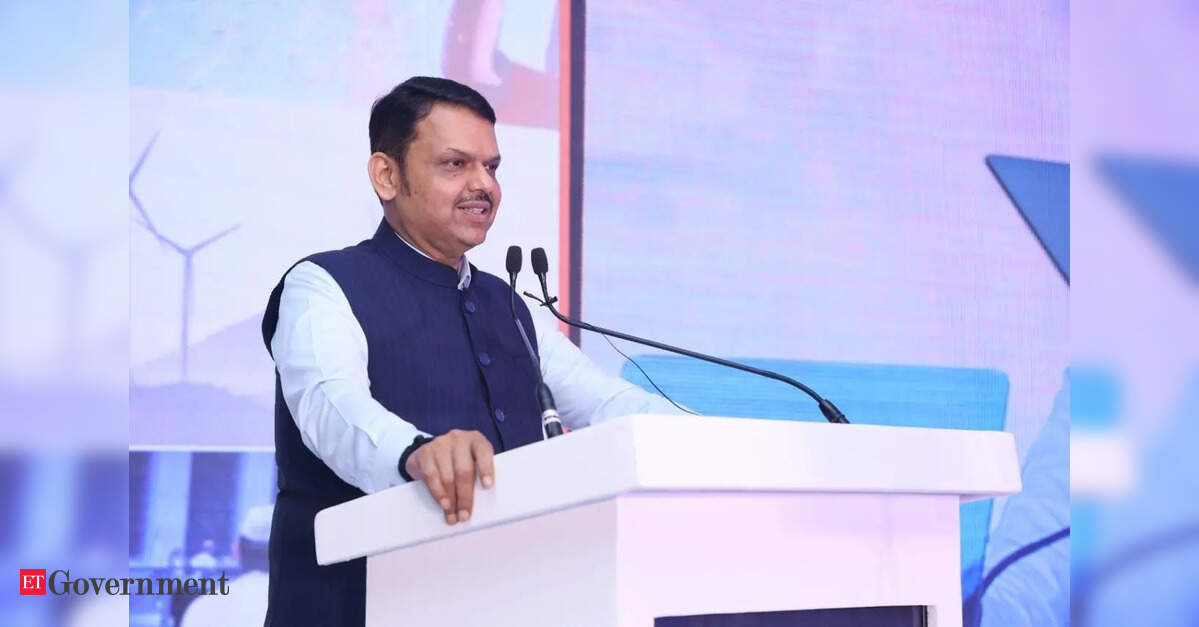
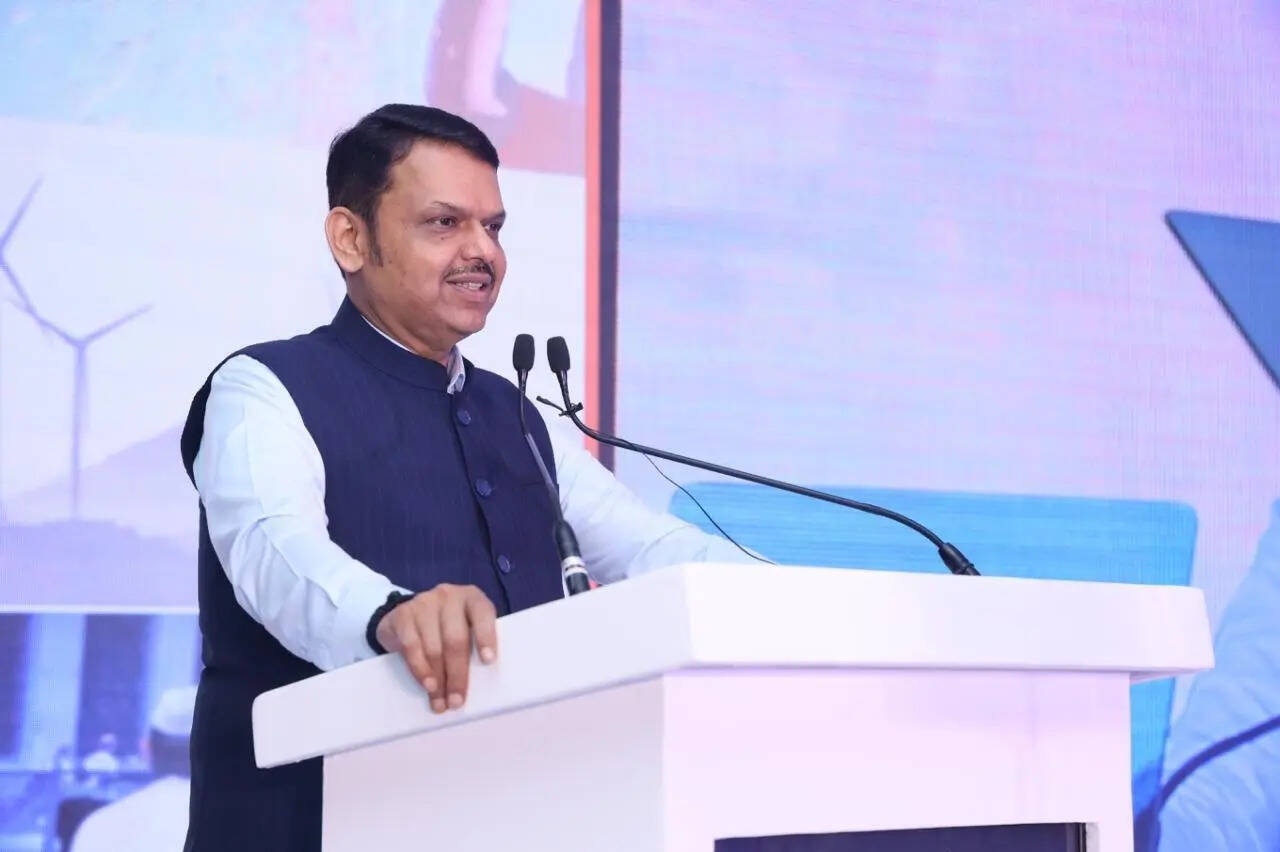
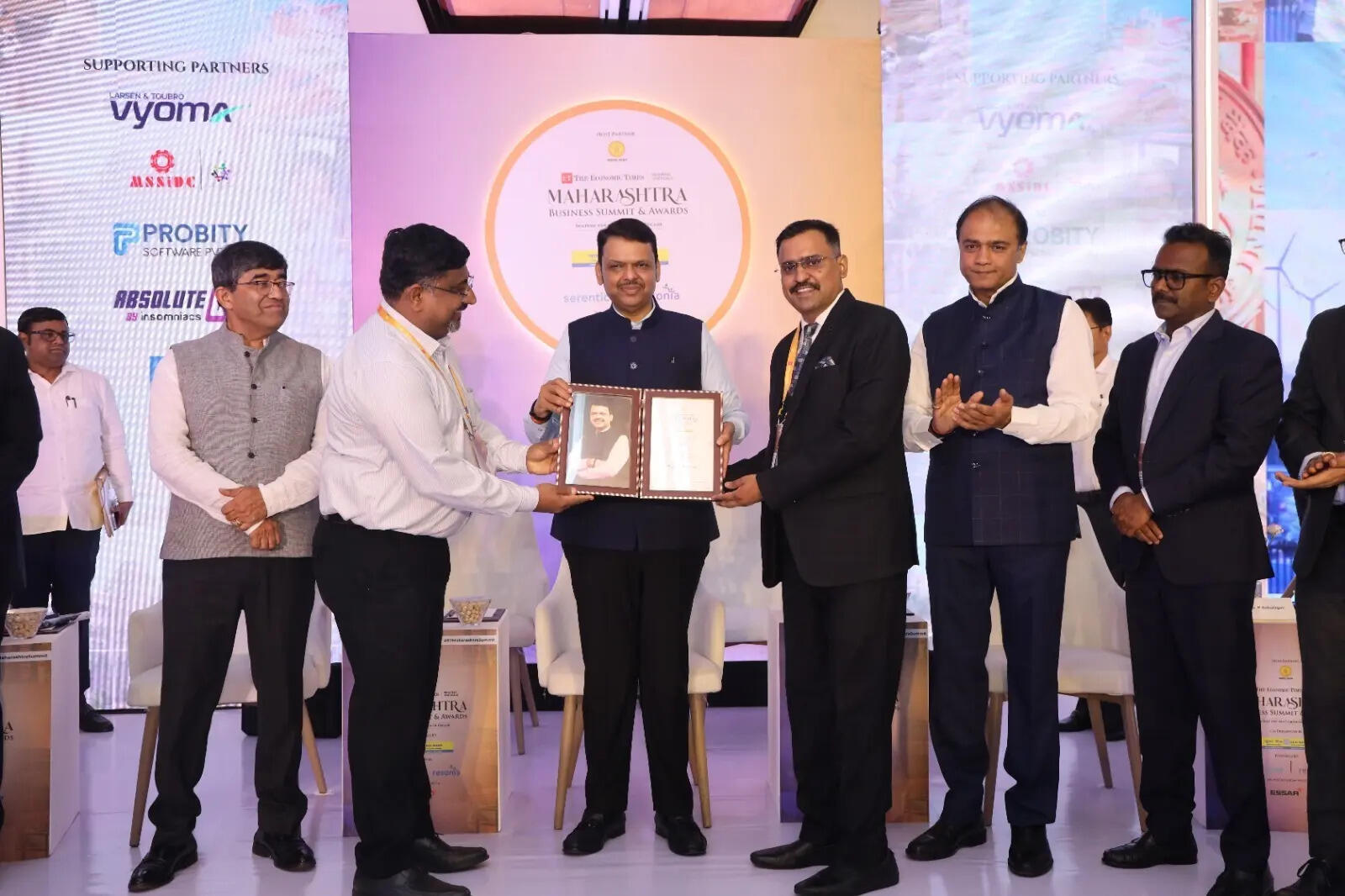
As Maharashtra positions itself as India’s principal engine of economic expansion, Chief Minister Devendra Fadnavis used the inaugural platform of Maharashtra Business Summit & Awards 2026, organised by ETGovernment on April 23 in Mumbai, to outline an ambitious blueprint that links infrastructure expansion, industrial decentralisation, digital capacity and governance reforms into a single economic vision.His central argument was clear: infrastructure can no longer be viewed through the narrow prism of public works. Roads, ports, energy systems and digital assets, he argued, must function as instruments of structural economic transformation.
“We are building roads which are not just roads, but they are economic corridors,” Fadnavis said, encapsulating what has become a defining theme of Maharashtra’s development strategy.
The statement reflected a broader shift in how the state government is approaching infrastructure planning. Rather than treating highways merely as transport assets, the administration is attempting to use connectivity networks to reshape Maharashtra’s industrial geography by dispersing economic activity beyond its traditional urban centres of Mumbai, Pune and the Mumbai Metropolitan Region.
Fadnavis cited the Nagpur-Mumbai Samruddhi Expressway as a prime example of this approach. The expressway, he argued, is designed not only to reduce travel time between two major cities but also to create new industrial nodes, improve logistics efficiency and enhance access to ports. According to the Chief Minister, this model is already driving the emergence of new growth centres such as Nashik, Palghar, Raigad, Chhatrapati Sambhajinagar, Nagpur and Gadchiroli.
The broader objective is to reduce the overconcentration of economic activity in a handful of metropolitan regions while creating a more geographically distributed growth model—an approach increasingly relevant as rapid urbanisation places immense pressure on legacy infrastructure in established cities.
Port-led growth and Maharashtra’s global trade ambitions
A major pillar of this vision is maritime infrastructure.Fadnavis highlighted the strategic significance of Vadhvan Port, describing it as one of the most consequential infrastructure projects for the state’s long-term economic future.
“The next powerhouse is Vadhvan Port,” he said.
His remarks underscored a larger recognition that India’s export ambitions and manufacturing aspirations will require significantly expanded port capacity. As global supply chains continue to diversify and India attempts to position itself as an alternative manufacturing destination, efficient maritime logistics infrastructure has become increasingly critical.
For Maharashtra, which already occupies a dominant position in India’s industrial ecosystem, Vadhvan Port is being projected as a strategic asset that could strengthen its role in global trade, manufacturing and logistics.
₹30 lakh crore investment pipeline
The Chief Minister also used the summit to highlight the scale of investment commitments secured by the state government.
Referring to agreements signed during the World Economic Forum Annual Meeting in Davos, Fadnavis said Maharashtra had attracted investment commitments worth nearly ₹30 lakh crore.
Importantly, he sought to distinguish these commitments from ceremonial announcements that often fail to materialise.
“These are not mere MoUs. Every single MoU is tracked,” he said.
The remark reflected the state government’s attempt to project administrative seriousness at a time when states are increasingly competing for capital by promising both policy stability and execution efficiency.
Fadnavis noted that Maharashtra has introduced nearly two dozen sector-specific policies after consultations with industry stakeholders. He specifically pointed to the state’s Global Capability Centre strategy, which aims to attract multinational corporations seeking to expand their back-office, research and innovation operations in India.
Building “Third Mumbai”
One of the most ambitious announcements in the speech was the concept of “Third Mumbai,” envisioned as a major urban expansion corridor between the Atal Setu and the upcoming Navi Mumbai International Airport.
Fadnavis said the region is being conceptualised as a future-ready urban ecosystem that could host global universities, healthcare institutions, innovation clusters and global capability centres.
The announcement reflects a growing recognition that India’s next generation of economic growth will require entirely new urban ecosystems rather than incremental expansion of already congested metropolitan centres.
Betting on data centres and clean energy
The Chief Minister also highlighted Maharashtra’s ambition to become a major hub for digital infrastructure.
As artificial intelligence adoption expands and cloud demand rises globally, data centres are becoming strategic economic assets. Fadnavis said Maharashtra is preparing for this transition by ensuring adequate electricity supply while simultaneously increasing the share of renewable energy in the state’s power mix.
This linkage between clean energy and digital infrastructure is particularly significant. Global technology companies are increasingly seeking regions that can provide reliable power alongside sustainability commitments.
By positioning itself as a destination for clean-energy-backed digital infrastructure, Maharashtra is attempting to align itself with emerging global investment trends.
Governance reform as competitive advantage
Beyond physical infrastructure, Fadnavis repeatedly returned to governance efficiency as a critical determinant of economic competitiveness.
“Our aim is to move towards zero bureaucracy,” he said.
The Chief Minister revealed that the state has already prepared a Maharashtra 2047 vision document that includes short-, medium- and long-term development benchmarks.
His larger message was that Maharashtra’s ambitions are no longer confined to outperforming other Indian states.
The state, he argued, must benchmark itself against global economies.
That framing aligns with his claim that Maharashtra has already emerged as one of the world’s top 30 economies by size—a reflection of both the state’s scale and its increasingly global economic aspirations.
The speech ultimately presented a coherent economic doctrine: infrastructure must create industrial corridors, ports must drive exports, clean energy must power digital growth, and governance must reduce friction.
For Maharashtra, the challenge now lies not in announcing ambitious projects—but in executing them at the speed required by an increasingly competitive global economy.