The Gokula Education Foundation (Medical) has launched the Ramaiah Institute of Science and Management (RISM), a new Bengaluru-based STEM and management university in partnership with the University at Albany, State University of New York (SUNY Albany).The institution will begin academic operations in August 2026 with programmes in AI, aerospace engineering, electrical sciences and management.
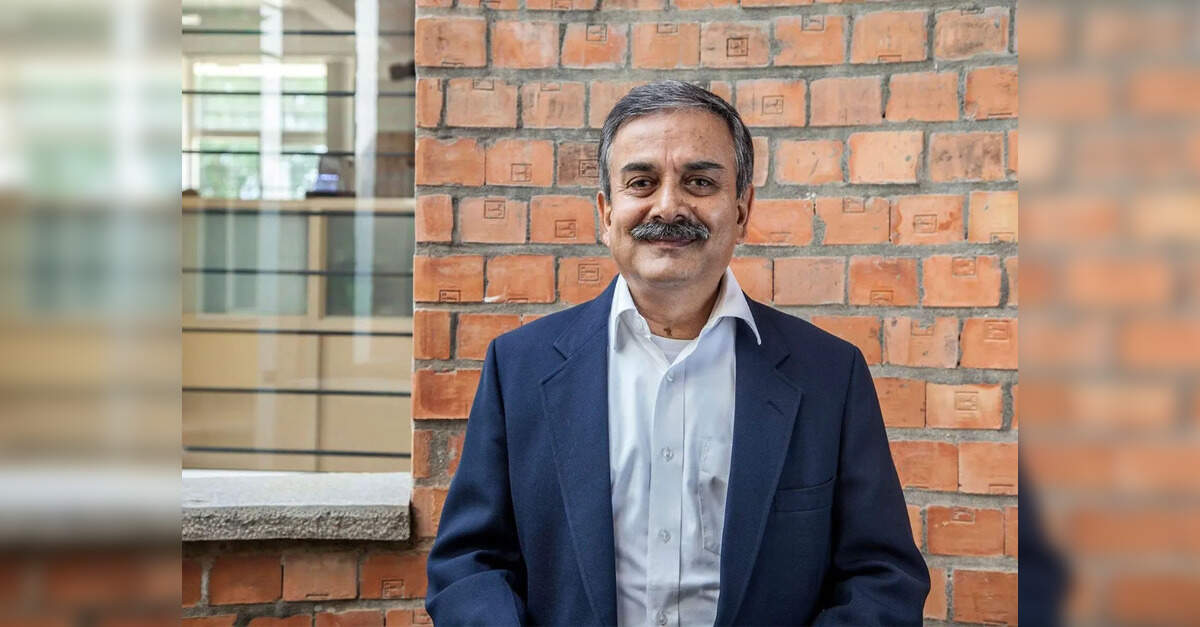
In an exclusive interaction with ET Education, Gurucharan Gollerkeri, Executive Director and Chief Strategy Officer, Gokula Education Foundation (Medical), spoke about the vision behind RISM, AI-led education, industry integration and the future of interdisciplinary learning in India.
Q. What gap in India’s higher education landscape is RISM aiming to address?
Gurucharan Gollerkeri: India’s higher education system is at an inflection point. We are operating in a fast-changing global environment where the boundaries between disciplines, industries and geographies are dissolving rapidly. Traditional education models are no longer sufficient.
RISM is being designed to address three major gaps. The first is the disconnect between academia and industry.
The second is the shortage of skilled talent in emerging sectors such as AI, semiconductors, quantum technologies and electric mobility. The third is the need for translational research that moves beyond publications and creates real-world impact. That is why we are building RISM as a globally benchmarked, industry-embedded STEM and management university with strong emphasis on applied learning and interdisciplinary education.
Our partnership with the University at Albany (SUNY) will support joint curriculum development, research collaboration and global academic pathways.
Q. How will RISM differentiate itself from traditional engineering and management institutions?
Gurucharan Gollerkeri: One of the biggest differentiators will be the depth of industry integration. We are not looking at industry engagement through standalone MoUs. Companies will be involved in curriculum co-design, co-teaching, embedded laboratories and live industry projects.
We expect nearly 30 to 35 per cent of the teaching ecosystem to involve professors of practice and senior industry professionals. Students will also work on live problem statements and capstone projects much earlier in their academic journey.
We are also building flexibility into the academic structure through common foundational courses and interdisciplinary learning pathways.
Q. Where do you see the biggest skill gap today, especially in areas like AI and aerospace?
Gurucharan Gollerkeri: The biggest disruption today is AI. Traditional computer science education is being transformed because AI is automating many functions that earlier required manual programming and systems work.
The real challenge today is not just technological, but epistemic — how knowledge is generated and understood. The biggest gaps are in critical thinking, analytical ability and the ability to use AI effectively. Our approach is to shift from treating a student as the product of a degree to a process of learning.
We see AI evolving across four stages in a student’s journey: as a tutor in the first year, a toolbox in the second year, a collaborator in the third year, and a subordinate in the fourth year under the supervision of the student.
Q. How important is the campus location and proximity to industry?
Gurucharan Gollerkeri: It is extremely important. Our campus is located close to major industrial ecosystems spanning IT, automotive, semiconductors and electric vehicles.
This gives students access to internships and enables stronger industry partnerships.The university will follow a fully residential model for students and faculty, with transportation support for industry engagement. We are beginning with around 400 students across four programmes and plan to invest nearly ₹850 crore over the next six to seven years.
Q. RISM is entering a highly competitive higher education market. Why did the Foundation decide to launch a new institution now?
Gurucharan Gollerkeri: Our first institution was actually an engineering college before we expanded into medicine, so we have always been a multidisciplinary education group. Over the years, we have seen widening skill gaps in India, particularly in future-focused sectors.
There is also growing concern around graduate employability and the need for stronger integration between academic learning and industry expectations. That created the opportunity to build a new-age STEM university focused on future-ready and industry-aligned education models.
Q. With NEP 2020 pushing for flexibility and globalization, what regulatory or policy changes are still needed?
Gurucharan Gollerkeri: NEP 2020 is a progressive framework that supports flexibility, interdisciplinarity and academic mobility. However, some regulatory alignment is still needed. For example, foreign universities continue to face operational constraints linked to FEMA and FERA regulations.
Similarly, for dual-degree programmes, the requirement that one-third of credits must be completed abroad can become restrictive given the scale of Indian students. These are areas where policy reforms can further strengthen global collaboration.
Q. What are the biggest challenges in implementing interdisciplinary and AI-enabled education models in India?
Gurucharan Gollerkeri: The first challenge is mindset. Many parents still prefer traditional degree structures and may not fully understand interdisciplinary learning models.
The second challenge is faculty readiness. Teaching methods need to evolve from lecture-based delivery towards problem-based and AI-enabled learning.
To support this transition, we are establishing a dedicated Teaching and Learning Center focused on faculty development and modern pedagogical approaches. We believe institutions like RISM can play an important role in aligning higher education with India’s future skill and development needs.
According to the Foundation, the university’s main campus near Devanahalli is expected to become operational by September 2027, while academic operations will begin from the transit campus in August 2026.