As climate volatility, geopolitical conflict and economic fragmentation reshape the global development landscape, the future of rural economies has emerged as one of the defining policy challenges of the 21st century. From food security and agricultural sustainability to migration, livelihoods and climate resilience, the condition of rural communities now carries implications far beyond the farm sector.
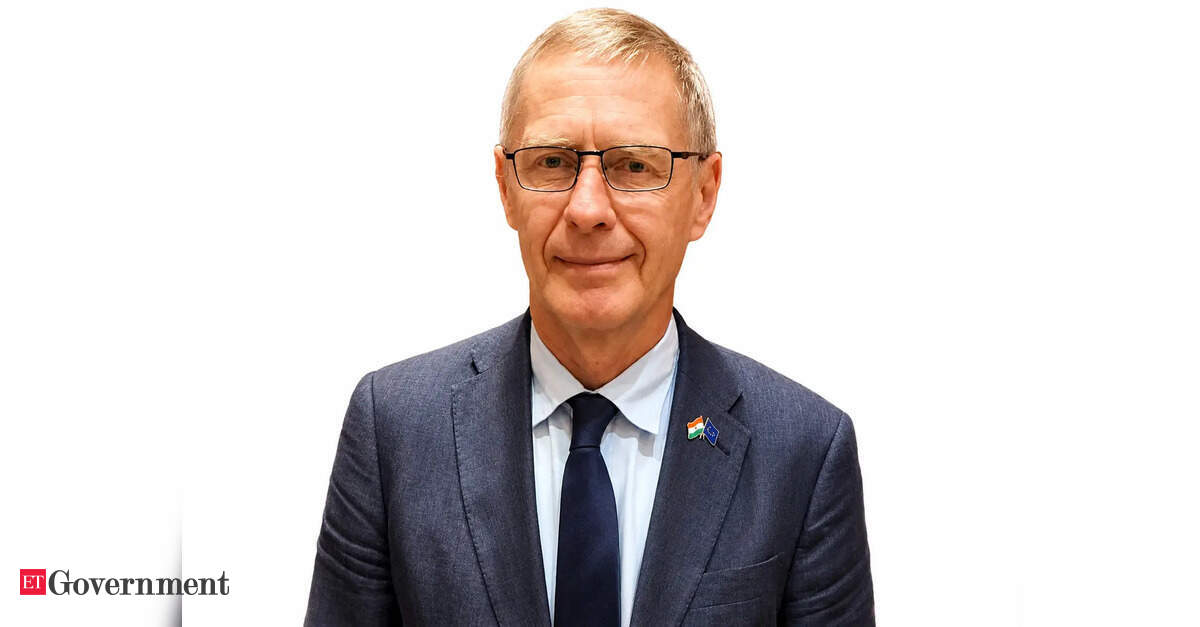
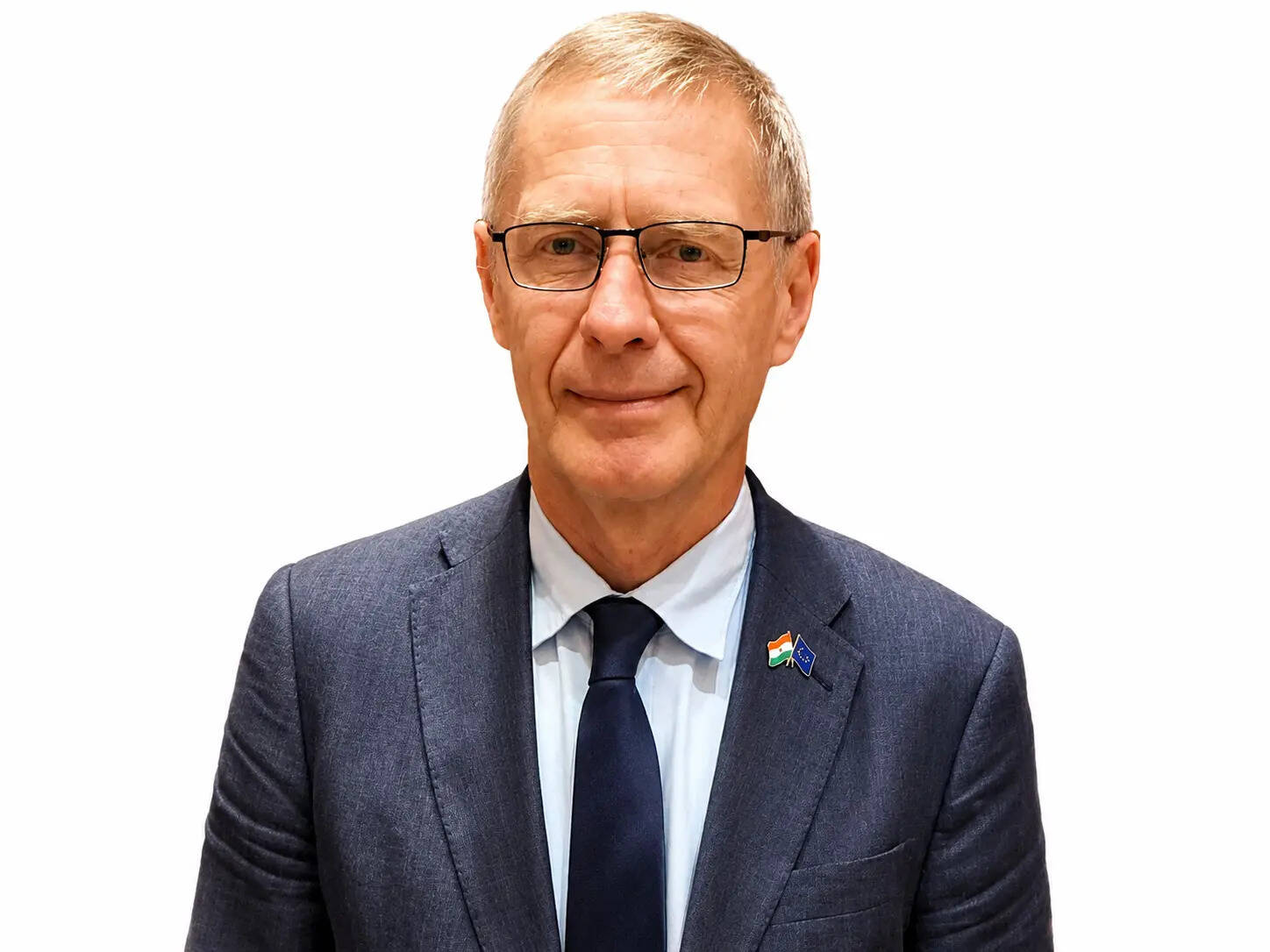
In this context, Donal Brown, Associate Vice President of Country Operations, IFAD, occupies a significant position in global rural development policy. IFAD, a specialised agency of the United Nations, has worked in India for nearly five decades and remains deeply involved in strengthening rural livelihoods, sustainable agriculture and community institutions across some of the country’s most vulnerable regions.
In this conversation with Anoop Verma, Brown reflects on IFAD’s long partnership with India, the evolution of rural development from poverty alleviation to prosperity creation, and the growing importance of climate resilience in agricultural systems.
Edited excerpts:
IFAD has had a long association with India. Can you give us an overview of the organisation’s work in the country?
India has been one of IFAD’s most important partners globally. Our first project in India began in 1978, so we are now approaching nearly five decades of partnership with the country. Over this period, IFAD has invested well over US$1 billion in India. Our current active portfolio is around US$357 million, but IFAD works as what we call an “assembler of finance,” meaning that our investments also mobilise financing from governments and other development partners. As a result, the total value of the current project portfolio is approximately US$1.2 billion.
At present, we have five active projects in India. Our work is primarily focused on some of the poorest and most remote rural regions, especially in the northeastern states and along the Himalayan belt. IFAD’s mandate globally is to work with poor rural communities and small farmers, and that remains our focus in India as well. Part of my current visit is to assess potential new pipeline projects. That is why I am travelling to Meghalaya and Assam, where we are exploring two new initiatives focused on rural livelihoods and resilience.
Looking back at IFAD’s work in India over the years, what do you consider the organisation’s key achievements?
One of the most important achievements has been the scale of outreach. In the last five to six years alone, we have reached nearly three million people. We have significantly improved incomes in rural communities, while also helping small farmers adopt more sustainable and resilient farming systems.
A major focus has been on agroecological practices and soil health. Small farmers often cannot afford expensive inorganic fertilisers, especially during periods of global crisis and price volatility. What we have demonstrated is that productivity can also be improved through natural soil restoration methods, organic inputs and sustainable farming techniques.
Over the last 50 years, our partnership with the Government of India has evolved considerably. Initially, the focus was on reducing extreme rural poverty, especially among tribal and ethnic minority communities in remote regions. But today, India has made major progress in reducing extreme poverty. The conversation has shifted from survival to prosperity.
Our work now focuses on how rural communities can become economically prosperous, how they can be linked to markets and national development programmes, how they can become resilient to climate and economic shocks, and how the private sector can view rural India as an attractive investment destination.
How has your experience been in working with the Government of India and state governments?
We have always had a very strong partnership with the Government of India, across different administrations over nearly 50 years. One thing that has remained consistent is the strong political commitment to rural development and rural prosperity. India has often been ahead of its time in terms of rural social protection. Even when I first visited India in 2000, the country already had a guaranteed rural employment programme that provided an important safety net for vulnerable families. Over time, this system has evolved and expanded further.
The Government of India has also invested significantly in rural infrastructure, digital connectivity and access systems, which has greatly strengthened the environment in which IFAD operates. Our role is to support government-led programmes by bringing international experience, technical expertise and lessons from other parts of the world. Given the size and diversity of India, it makes more sense for IFAD to work at the state level rather than through a centralised national model. We work closely with state governments to address their specific rural development challenges while ensuring convergence with national programmes.
One important aspect of our approach is that successful experiences from one state can be adapted and replicated in others. If a particular intervention works effectively in one region, we work with government partners to scale those lessons elsewhere. The challenge in some of the remote states is that administrative and institutional capacities can be limited. Therefore, we also invest heavily in capacity building, including project implementation, monitoring and evaluation systems.
How do you assess the evolving challenge of rural poverty in the context of climate change, geopolitical conflict and economic fragmentation?
The global environment has become far more complex and uncertain. In the last few years alone, the world has faced COVID-19, the Ukraine conflict, instability in West Asia and accelerating climate change. These crises have enormous implications for rural communities. This is why resilience has become absolutely central. You cannot build rural prosperity without building resilience at the same time. Rural communities must be able to withstand economic shocks, climate disruptions and supply-chain disruptions.
India faces unique challenges because it is one of the world’s largest importers of energy and fertilisers. Global instability directly affects input costs, food systems and rural livelihoods. At the same time, there are reasons for optimism. India’s push toward digital infrastructure in rural areas has tremendous transformative potential. We discussed today how integrated digital platforms can connect farmers to government schemes, financial services, advisory support and market information through a single interface.
Digital technologies can also strengthen climate adaptation. For example, India has been piloting highly localised weather forecasting systems. Traditionally, weather forecasts are generated at the national or regional level, but with advances in AI and data modelling, forecasting can now be tailored at the village level. This allows farmers to receive highly specific information about rainfall, planting cycles or harvesting windows, which can significantly improve climate resilience.
India is heavily dependent on imported fertilisers and energy. How serious is this challenge for global agriculture?
It is a major challenge globally. There are growing concerns about food insecurity and supply disruptions. But interestingly, small farmers are sometimes less affected than large industrial farming systems because many small farmers simply cannot afford large quantities of inorganic fertilisers in the first place.
That is why IFAD strongly promotes agroecological approaches, organic farming practices and more sustainable agricultural systems. Resilience comes from reducing dependence on volatile external inputs. The current global food production system is not sustainable. Excessive use of inorganic fertilisers is damaging soil health in many parts of the world. We need a more balanced and sustainable system of agriculture.
Digital technologies can also improve fertiliser efficiency. In many places, farmers use generic fertilisers even when soil deficiencies may relate to only one nutrient. Through proper soil mapping and digital advisory systems, fertiliser application can become much more precise and cost-effective, even for small farmers.
Small farmers produce a substantial share of the world’s food. What structural barriers still prevent them from integrating into larger value chains?
Small farmers face several structural barriers. One major issue is insecure land ownership or weak land titling systems. Without proper land titles, farmers struggle to access formal finance because they lack collateral. Infrastructure deficits are another major problem. Without reliable roads, transport systems and communication networks, farmers cannot efficiently access markets, schools, healthcare or financial services.
In one project area I visited in Odisha, villagers told me they had to climb a hill simply to get mobile connectivity and check market prices for their crops. That illustrates how basic infrastructure gaps continue to affect rural economies. Small farmers also suffer from weak bargaining power. Individually, a farmer selling five kilograms of produce has almost no negotiating leverage. But when farmers organise collectively through cooperatives or farmer producer organisations, they can negotiate far better prices and gain stronger market access.
This is why strong rural institutions are absolutely essential. Governments must also create enabling conditions for greater private sector investment in rural areas because long-term sustainability ultimately depends on functioning rural markets and economic ecosystems.
Global hunger continues to rise despite advances in agricultural production. What kind of structural rethink is required to address this crisis?
A large part of the problem is linked to conflict and climate change. Rising hunger today is not simply a production issue. In many regions, farmers cannot cultivate because of war, instability or displacement. If you look at countries experiencing severe hunger crises today, conflict is often the primary driver. Farmers abandon their land, supply chains collapse and food systems disintegrate. Climate change is another major factor, especially in rain-fed agricultural regions where weather patterns are becoming increasingly unpredictable.
The world needs far greater investment in climate adaptation and mitigation. At the same time, agriculture itself must adapt. In many climate-stressed regions, we are still promoting crops like rice, wheat and maize in areas where they are becoming increasingly unsustainable. We need to revive more climate-resilient crops such as millets and sorghum. India’s International Year of Millets initiative was extremely important in this regard. These crops are highly resilient, nutritionally valuable and better suited for dryland farming systems.
Rural economies across Asia are changing rapidly due to urbanisation and technology adoption. How is IFAD adapting to these transitions?
India has transformed enormously over the last three decades, but rural economies remain critically important. Agriculture still employs roughly 45 percent of India’s population and contributes significantly to GDP. The danger is that rural regions get left behind while urban economies expand rapidly. That creates social instability, migration pressures and widening inequality.
Rural areas must become economically attractive, especially for young people. Young people today want modern infrastructure, electricity, connectivity and entrepreneurial opportunities. Agriculture can no longer be viewed simply as manual labour in fields. It must become a modern business ecosystem. Digital technology plays a very important role in making agriculture more efficient, profitable and attractive to younger generations. Without youth participation, the future of food production itself becomes uncertain.
What lessons from India’s rural transformation can be replicated in other regions such as Africa and Latin America?
One major lesson is the importance of strong government leadership and long-term policy commitment. Sustainable transformation at scale requires supportive public policy and institutional continuity. Another very important lesson is the role of grassroots rural institutions. Village savings groups, women’s organisations, farmer cooperatives and producer organisations are essential for linking rural communities to markets, finance and government programmes. India has demonstrated how strong community institutions can operate at scale and create lasting economic transformation. That is one of the most valuable lessons that other developing regions can learn from India’s experience.