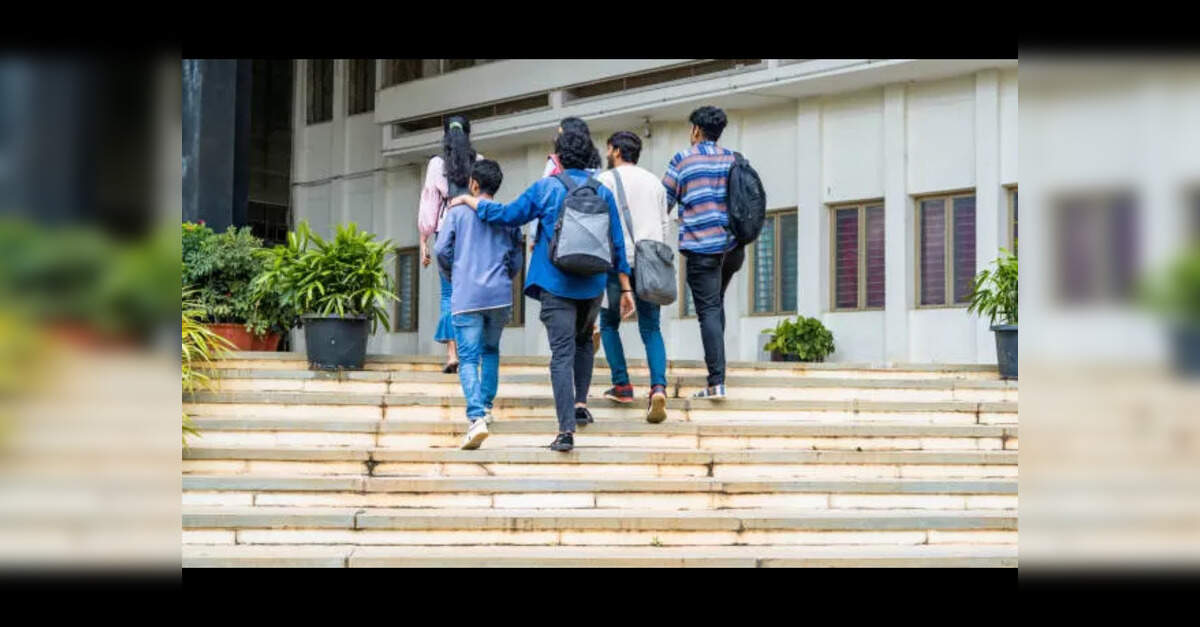
Students who once automatically gravitated toward Delhi, Mumbai, Bengaluru, Pune or overseas universities are increasingly choosing cities like Coimbatore, Gandhinagar, Jaipur, Indore, Bhubaneswar and Chandigarh instead. What was earlier seen as a second preference is now becoming a deliberate choice for many students and families looking for affordability, strong placements and future-ready programmes. Universities located in these emerging education corridors say they are witnessing sharp growth in applications from across India, stronger demand for AI, semiconductor and analytics-focused programmes, deeper industry partnerships, and even rising interest from faculty and students who earlier preferred metro campuses or foreign universities.The shift reflects a deeper transformation in India’s higher-education landscape. Affordability, startup ecosystems, research infrastructure, employability outcomes and quality of life are beginning to matter more than the traditional appeal associated with metro campuses. Institutions including IIT Gandhinagar, Amrita Vishwa Vidyapeetham, JK Lakshmipat University, Medicaps University, Birla Global University and Chandigarh University Online say students today are evaluating universities less by geography and more by opportunities for innovation, interdisciplinary learning, entrepreneurship and career mobility.For decades, cities such as Delhi, Mumbai, Bengaluru and Pune dominated the country’s academic imagination , attracting students, faculty, recruiters, startups and research investments. But a new generation of education hubs is steadily rising beyond the metros.
From Coimbatore and Indore to Jaipur, Gandhinagar and Bhubaneswar, Tier-2 cities are increasingly positioning themselves as serious destinations for quality higher education, research, innovation and employability. Universities located in these cities say they are witnessing a sharp rise in applications from across the country, growing interest in future-focused programmes, stronger industry linkages, and even a reversal of the long-held migration trend toward metros and overseas destinations.
The transformation is being driven by a combination of affordability, improving infrastructure, regional industrial growth, startup ecosystems, policy support under the National Education Policy (NEP) 2020, and the rise of multidisciplinary private universities and research institutions.
Education leaders believe the next decade of Indian higher education may no longer be defined only by metro dominance. Instead, they see multiple regional knowledge hubs emerging across the country, each backed by its own industry strengths, research ecosystem and student base.
Students are moving beyond the metros
One of the clearest indicators of this shift is the changing student demographic profile at universities located in Tier-2 cities. According to the All India Survey on Higher Education (AISHE), India’s higher-education enrolment has crossed 4.33 crore students, with universities saying much of the next phase of growth is increasingly coming from Tier-2 and Tier-3 India. Institutions across Coimbatore, Gandhinagar, Jaipur, Bhubaneswar, Indore and Chandigarh report a wider geographic spread of applicants and a noticeable change in student aspirations over the past five years.
At IIT Gandhinagar, Director Prof Rajat Moona said students are now increasingly coming from Tier-2 and Tier-3 cities across the country, reflecting how access to quality higher education is expanding beyond traditional urban centres. The institute says students are showing growing interest in interdisciplinary learning, research opportunities, startups and emerging sectors such as semiconductors and advanced electronics. A similar trend is visible at Amrita Vishwa Vidyapeetham in Coimbatore, where Vice Chancellor Dr P Venkat Rangan said students are now looking beyond conventional degrees and prioritising research exposure, employability, entrepreneurship, global mobility and social impact.
At Chandigarh University Online, admissions have grown fourfold between FY24 and FY26, with learners now coming from 51 states and more than 900 cities across India. The university says states such as Uttar Pradesh, Bihar and Maharashtra together contributed nearly 20% of its learner base over the last three years, while cities such as Ludhiana, Karnal, Amritsar, Patna and Panipat together accounted for nearly one in every ten admissions. Similar diversification trends are visible at Jaipur-based JK Lakshmipat University, Medicaps University in Indore and Birla Global University in Bhubaneswar, all of which say they are attracting students from newer geographies including the Northeast, South India and non-traditional higher-education markets.
According to the All India Survey on Higher Education (AISHE), India’s higher-education enrolment crossed 4.33 crore students, while the national Gross Enrolment Ratio (GER) reached 28.4%. Universities say much of the next wave of growth is now emerging from Tier-2 and Tier-3 India.
At Chandigarh University Online, admissions have grown fourfold between FY24 and FY26, with learners now coming from 51 states and over 900 cities. According to Raviraja N Seetharam, Vice Chancellor of Chandigarh University Online, the expansion is increasingly being driven by Tier-2 and Tier-3 India. “Learners today are no longer viewing higher education only through the lens of a conventional degree. They are looking for flexible, career-linked and skill-oriented learning pathways that can help them remain competitive in a rapidly evolving economy,” he said.
The university noted that states such as Uttar Pradesh, Bihar and Maharashtra together contributed nearly 20% of its learner base over the last three years, while cities like Ludhiana, Karnal, Amritsar, Patna and Panipat together accounted for nearly one in every ten admissions.
At Jaipur-based JK Lakshmipat University (JKLU), Vice Chancellor Prof Vijaysekhar Chellaboina said the institution has seen a major increase in applications from Telangana, Andhra Pradesh and the Northeastern states. “Students are no longer satisfied with just earning a degree. They want semester exchange opportunities, industry experiences, funding support, study abroad exposure and strong placement outcomes,” he said.
Similarly, Medicaps University in Indore says its student base has expanded beyond Madhya Pradesh and Rajasthan to include students from West Bengal, the Northeast, Tamil Nadu, Telangana and Jammu & Kashmir. “The shift has been quite visible,” said Dr Dilip Kumar Patnaik, Vice-Chancellor of Medicaps University. “Today’s student walks in asking about startups, internships abroad, research fellowships , not just a job after graduation.”
At IIT Gandhinagar, Director Prof Rajat Moona said students are now increasingly coming from Tier-2 and Tier-3 cities across India. “It reflects how access to quality higher education is expanding beyond the traditional urban centres, with talented students from all parts of India looking for institutions that offer strong academics, research opportunities, and an innovative learning environment,” he said.
In Bhubaneswar, Prof Kulbhushan Balooni, Vice Chancellor of Birla Global University (BGU), said the institution has transformed from being “Odisha-centric” into a university drawing applicants from Rajasthan, Uttar Pradesh, Madhya Pradesh, Punjab, Gujarat and South India.
The trend is equally visible at Coimbatore-based Amrita Vishwa Vidyapeetham. “Students are not just choosing universities for a qualification anymore,” said Dr P Venkat Rangan, Vice Chancellor of Amrita Vishwa Vidyapeetham. “They are looking for research exposure, employability, entrepreneurship, global mobility and social impact.”
AI, semiconductors, design and analytics become new academic priorities
The changing geography of students is accompanied by a sharp shift in programme preferences. Traditional engineering and management degrees continue to attract students, but universities say the strongest growth is happening in interdisciplinary and technology-driven programmes.
At Chandigarh University Online, enrolments have surged in AI/ML, Data Science, Cybersecurity, Cloud Computing, FinTech, Business Analytics and Digital Marketing.
JKLU says students are increasingly gravitating toward artificial intelligence, cybersecurity, data science and VLSI design, aligned with India’s growing semiconductor ambitions.
“What we have witnessed is a growing enthusiasm among students about Bachelor of Design programmes primarily due to increased awareness about the transformative potential of design education and the career opportunities it offers,” said Prof Chellaboina.
At IIT Gandhinagar, interest in semiconductors and advanced electronics has increased significantly. The institute is expanding capabilities in chip design and manufacturing training through Project SAMARTH, while also focusing on hands-on learning through initiatives such as the Tinkerers’ Lab and Maker Bhavan.
Meanwhile, Prof Kulbhushan Balooni of Birla Global University said programmes in Business Analytics, FinTech, Data Science, Digital Media, MCA, BCA and Computer Science have seen strong growth as students increasingly seek “future economy” skills.
Amrita Vishwa Vidyapeetham also points to growing demand in AI, biotechnology, sustainability, health sciences, cybersecurity and business analytics.
The broader national context supports this trend. India’s Gross Enrolment Ratio (GER) in higher education stands at 28.4%, while Tamil Nadu’s GER is estimated at around 47%, significantly above the national average , highlighting the growing importance of regional education ecosystems.
Why the metro monopoly is weakening
Education leaders say Tier-2 cities today offer a combination of affordability, accessibility, quality of life and expansion opportunities that metros increasingly struggle to provide.
“Metros struggle more and more to offer what Tier-2 cities can: scale with intimacy,” said Dr Rangan of Amrita.
Universities point to lower living costs, easier campus expansion, stronger community engagement, cleaner environments and reduced congestion as key advantages. For families facing rising education costs, affordability has become a major factor.
“The cost of education and living here is a fraction of what a student pays in Pune or Bengaluru, and that matters enormously to middle-class families,” said Dr Patnaik of Medicaps University.
He described Indore as a city with a “deeply commercial, entrepreneurial character”, where industries are far more accessible to academic institutions. “Industries are accessible, not distant. A faculty member can bring a plant head into a classroom without a six-month coordination cycle,” he said.
IIT Gandhinagar also believes Tier-2 cities provide a calmer and more focused academic environment. “Compared to big metros, they are more affordable, less crowded, and offer a better quality of life for students and faculty,” said Prof Moona.
In Bhubaneswar, Prof Balooni, Vice Chancellor of BGU, said the city offers a “balanced and sustainable setting” where universities can innovate without the space and cost limitations associated with metros.
Education experts believe these cities are no longer operating as “alternatives” to metros , but are emerging as independent academic ecosystems with their own strengths.
Startups, semiconductors and industry are reshaping campuses
Another major factor behind the rise of Tier-2 education hubs is the growing integration between universities and regional industry ecosystems. Institutions across cities say collaborations with local industries, startups, incubators and technology companies are directly strengthening internships, placements, entrepreneurship and research opportunities.
At Chandigarh University Online, partnerships with organisations including Microsoft, PwC India, PMI, Harvard and Internshala are helping create industry-aligned curriculum pathways. The university says project-based learning, industry masterclasses and career-focused certifications are helping bridge the employability gap.
Amrita Vishwa Vidyapeetham says its Technology Business Incubator (TBI) has incubated more than 208 startups and mentored over 500 startup ideas. “Our approach has been to view industry not as a placement destination, but as a co-creator of learning,” said Dr Rangan.
At JKLU, the Atal Incubation Centre has supported over 200 startups, while students work with industries, NGOs, transport organisations and public policy institutions through live projects and systems design programmes. The university’s Institute of Design recently received the international Don Norman Design Award 2025.
Birla Global University says students have launched more than 550 practice ventures through its incubation and entrepreneurship initiatives. The university collaborates with Start-up Odisha, Software Technology Parks of India (STPI), the Wadhwani Foundation, Syracuse University and regional startups across logistics, media, sustainability and fintech sectors.
At IIT Gandhinagar, collaborations span semiconductors, manufacturing, AI, cybersecurity, sustainability and healthcare technologies. “We encourage industry-linked projects, collaborative research, internships and hands-on learning, which has improved opportunities for both internships and placements,” said Prof Moona.
The metro and overseas pull is weakening
Perhaps the most significant trend universities are observing is the gradual weakening of the traditional “metro or overseas” aspiration. Institutions say both students and faculty are increasingly evaluating universities based on academic quality, research infrastructure, affordability, placements, quality of life and institutional culture , rather than geography alone.
The shift accelerated after the pandemic, when families began reassessing the cost-benefit equation of expensive metro and overseas education. “There is a visible shift in learner behaviour,” said Chandigarh University Online’s Raviraja N Seetharam. He pointed to global factors such as Canada’s study permit caps, UK dependent visa restrictions, currency pressures and the widening cost gap between Indian and overseas education. “The institution is a beneficiary of a structural shift,” he said.
At Medicaps University, Dr Patnaik said the pandemic triggered a rethink that “hasn’t reversed.” “Families started questioning whether paying three times more in a metro actually guarantees better outcomes,” he said.
Universities also say faculty preferences are evolving. “More and more academics want institutions where they can do serious research, work across disciplines and see social impact,” said Amrita’s Dr Rangan. He argued that cities like Coimbatore offer “professional seriousness without metropolitan exhaustion.”
Prof Balooni also noted that faculty are increasingly looking for academic freedom, better work-life balance and the opportunity to contribute meaningfully to institution building.
Policy, infrastructure and economic growth are reshaping education geography
Education leaders believe state policy support, infrastructure development and regional industrial growth are playing a decisive role in strengthening Tier-2 education ecosystems. Tamil Nadu’s investments in education, skilling and industry development have helped cities like Coimbatore evolve into integrated “knowledge regions”, according to Amrita University.
In Gujarat, the rapid growth of semiconductors, electronics manufacturing, renewable energy and digital infrastructure is creating stronger academia-industry linkages. “Policy support, industry growth and academic institutions coming together naturally help cities evolve into strong hubs for education, research and innovation,” said IIT Gandhinagar’s Prof Moona.
In Rajasthan, JKLU pointed to the sharp rise in women’s participation in higher education. According to the university, female enrolment in higher education in the state has risen from 1.63 lakh in 2008 to over 7 lakh in 2026.
The state’s i-Start initiative and focus on startup ecosystems, research and digital infrastructure are also helping Jaipur emerge as a strong education destination.
Meanwhile, Bhubaneswar’s rise is closely linked to Odisha’s Smart City Mission, semiconductor investments, IT expansion and the proposed Bhubaneswar-Cuttack-Puri-Paradeep Economic Region. Prof. Kulbhushan Balooni said Bhubaneswar’s growing fintech ambitions and industrial expansion are opening up opportunities in AI, advanced manufacturing and digital technologies.
In Madhya Pradesh, Medicaps University credited infrastructure upgrades, improved connectivity and industrial investments under initiatives like Invest MP for strengthening Indore’s higher-education ecosystem. “Indore isn’t trying to become Bengaluru,” said Dr Patnaik. “It’s building its own identity as a clean, affordable, economically active city where serious education happens.”
India’s next knowledge corridors
Snapshot: How Tier-2 institutions are building national visibility
Rankings and reputation are becoming less metro-centric
The rise of Tier-2 institutions is also becoming visible in national and global rankings. Amrita Vishwa Vidyapeetham was ranked 8th among Indian universities in NIRF 2025 and 17th overall, while also featuring among the country’s leading research institutions.
Institutions outside traditional metros are increasingly building reputations around interdisciplinary learning, sustainability, startup incubation, AI research and industry integration rather than relying solely on legacy location advantages. Education leaders say this marks a broader decentralisation of India’s higher-education ecosystem, where research infrastructure, employability outcomes and innovation ecosystems are becoming more important than a metro address alone.
The emergence of Tier-2 education hubs reflects a larger structural transformation in Indian higher education. As the country attempts to expand access, improve employability, strengthen research and reduce geographic concentration, cities beyond the traditional metros are increasingly becoming central to that story.
What is emerging across cities like Coimbatore, Jaipur, Gandhinagar, Bhubaneswar and Indore is not merely an expansion of campuses , but the creation of interconnected ecosystems where universities, industries, startups, infrastructure and policy support reinforce each other.
For universities, the opportunity is no longer about replicating metro models. Instead, the focus is shifting toward building regionally rooted but globally competitive institutions that combine affordability with innovation, research with industry integration, and accessibility with quality.
If the current momentum continues, India’s next major knowledge corridors may well emerge not from its crowded metros, but from rapidly evolving Tier-2 cities redefining the country’s higher-education future.