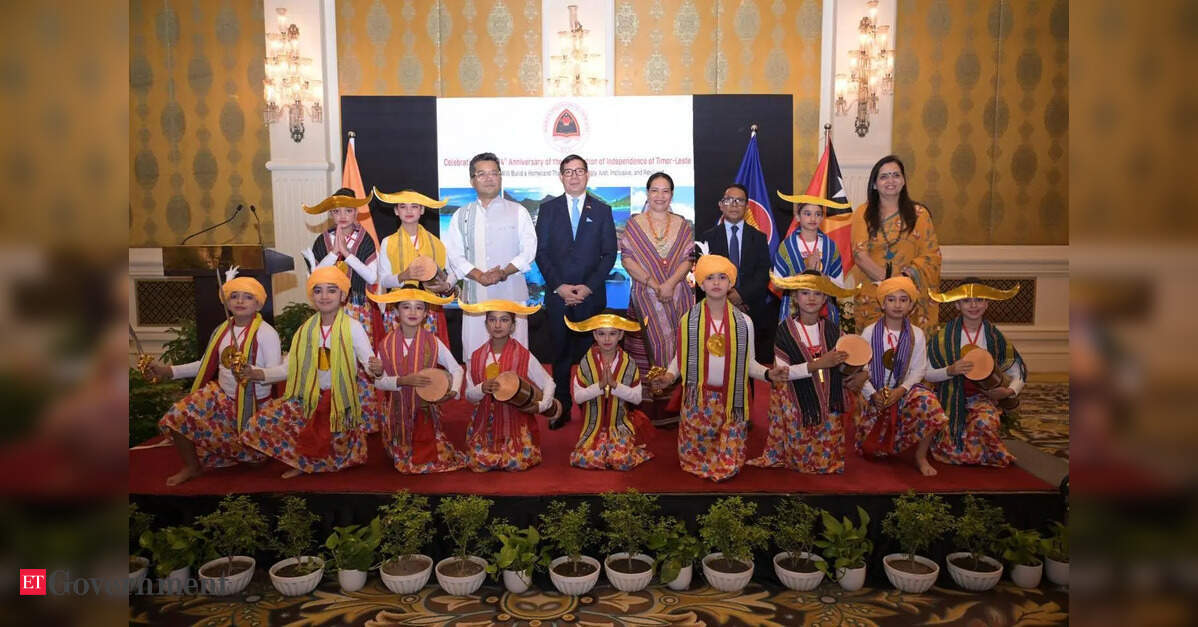
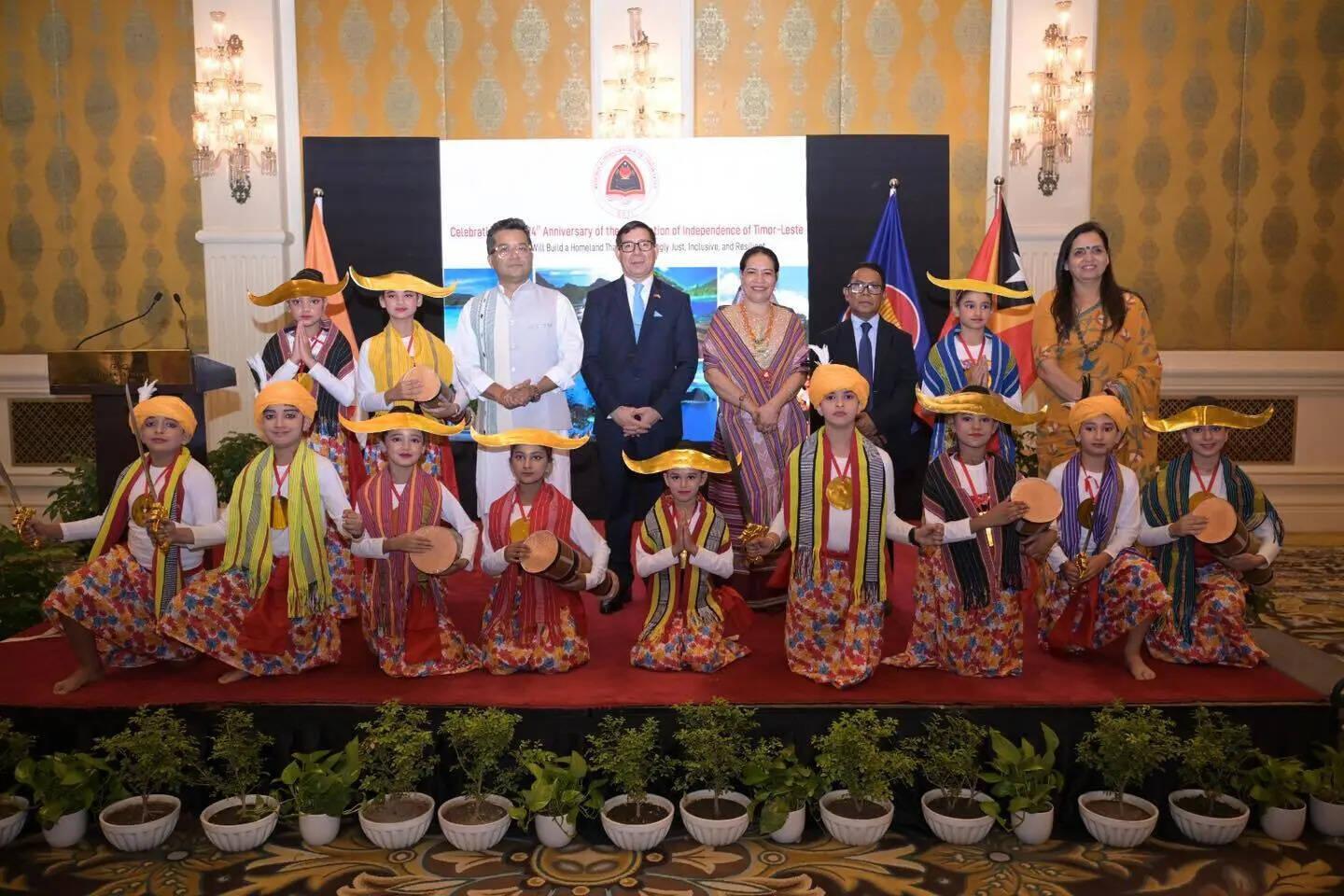
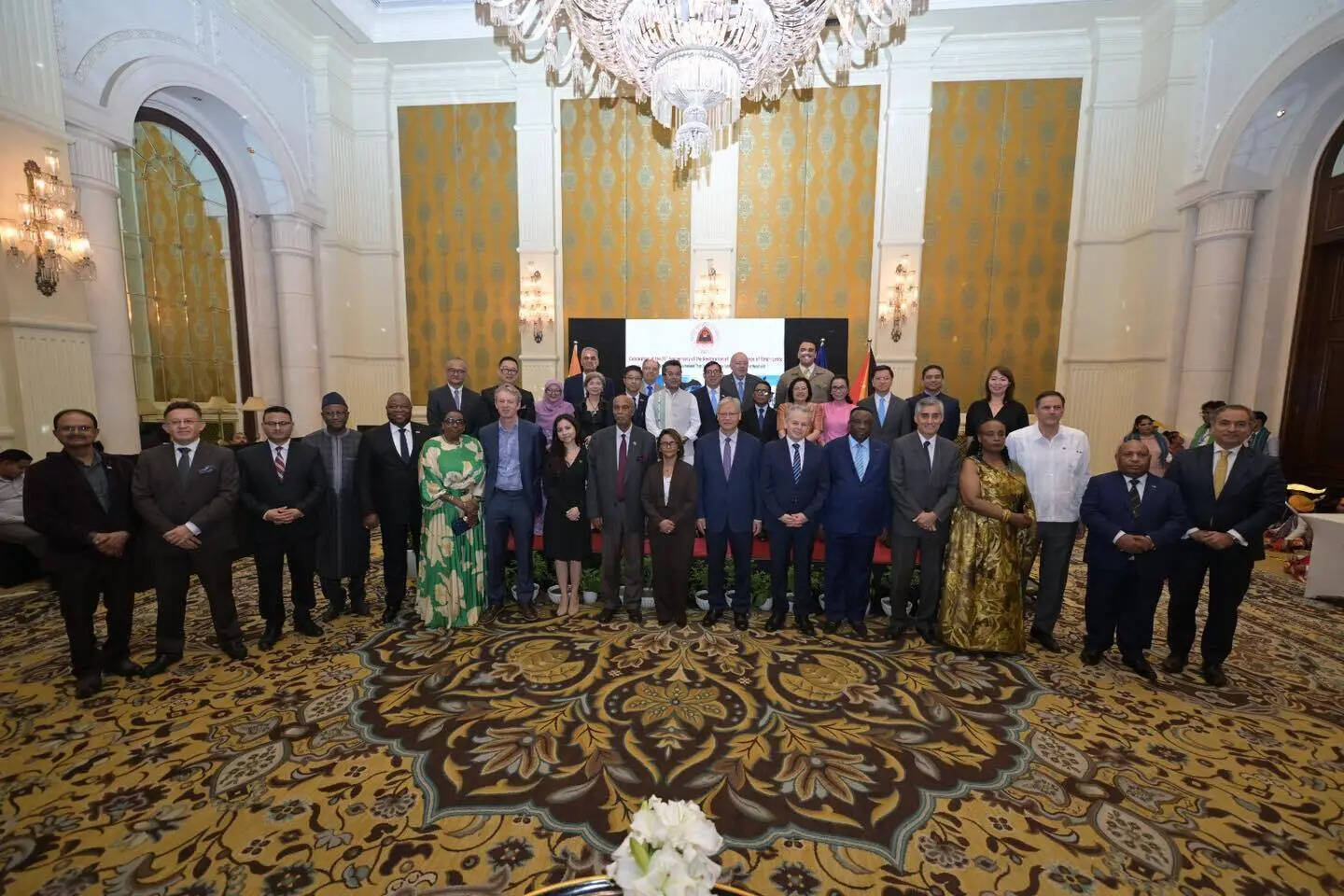
On a warm evening in New Delhi, as diplomats from ASEAN, the Global South, Lusophone nations, and strategic partners gathered to celebrate the 24th Anniversary of the Restoration of Independence of Timor-Leste, the occasion carried a significance that extended far beyond ceremonial diplomacy.
It was not merely a national day reception. It was a reminder of how a small island nation at the edge of Southeast Asia is steadily emerging as an important node in the Indo-Pacific imagination of the twenty-first century — and how India’s relationship with Timor-Leste is evolving from historical goodwill into a strategically consequential partnership.
Hosted for the first time ever in India by the Embassy of the Democratic Republic of Timor-Leste, the celebration on May 20, 2026, reflected the growing maturity of ties between New Delhi and Dili. The presence of Pabitra Margherita, Minister of State for External Affairs and Textiles, as Chief Guest, alongside Antónito de Araujo, representative of Timor-Leste’s Minister of Foreign Affairs and Cooperation, underscored the diplomatic importance both countries now attach to the relationship.
Yet the intellectual and political centrepiece of the evening was the expansive address delivered by Timor-Leste’s Ambassador to India, Karlito Nunes, whose speech moved seamlessly across history, geopolitics, economics, democracy, multilateralism, and the moral vocabulary of the Global South.
The ambassador situated Timor-Leste’s national story within the larger history of decolonisation and international law. Recalling the difficult struggle that culminated in the restoration of independence on May 20, 2002, he described Timor-Leste as “one of the success stories of United Nations involvement in realizing the principle of the right to self-determination and transition to full independence.”
That observation carried a deeper resonance in an age marked by geopolitical fragmentation and weakening multilateral institutions. For Timor-Leste, multilateralism is not an abstract diplomatic doctrine but a lived historical experience.
The country’s transition to independence was shaped by successive UN missions, international peacekeeping efforts, and negotiated reconciliation processes. Ambassador Nunes pointed to the 2018 Permanent Maritime Boundary Treaty with Australia as evidence that “international mechanisms” and peaceful negotiations can still deliver “mutually beneficial resolutions to disputes.”
In many ways, Timor-Leste’s worldview mirrors India’s own long-standing diplomatic philosophy: strategic autonomy anchored in international law, dialogue, and sovereign equality. It is therefore unsurprising that the relationship between the two countries has acquired an unusually warm and values-driven character despite the absence of large-scale trade volumes or major military alliances.
Ambassador Nunes traced the roots of bilateral ties back nearly five centuries, observing that “Indian merchants travelled to the island of Timor to trade in sandalwood,” especially through connections between Goa and Portuguese Timor. This historical recollection was more than a cultural anecdote. It framed India–Timor-Leste relations as part of a longer Indian Ocean civilisational network that predates the modern nation-state.
Such references are increasingly important in Indo-Pacific diplomacy, where historical connectivity has become a strategic language. For India, which has sought to revive maritime and cultural linkages through initiatives such as SAGAR and the Indo-Pacific Oceans Initiative, Timor-Leste occupies a geographically and symbolically significant position.
The modern diplomatic relationship gained institutional momentum after India became among the first countries to establish diplomatic ties with Timor-Leste following independence. Ambassador Nunes recalled that India was represented at Timor-Leste’s first independence celebrations in 2002 by a high-level delegation led by then Minister of State for External Affairs Omar Abdullah. Formal diplomatic relations were established in 2003.
What distinguishes the contemporary phase of engagement is the speed at which bilateral mechanisms are being institutionalised. The ambassador highlighted the landmark state visit of President Droupadi Murmu to Timor-Leste in August 2024 — the first-ever visit by an Indian President to the country — alongside the opening of resident embassies in Dili and New Delhi later that year.
These developments indicate that the relationship is moving beyond symbolic solidarity toward sustained diplomatic architecture. Agreements on visa waivers for diplomatic and service passport holders, cultural exchanges, and media cooperation between RTTL and Prasar Bharati reveal an expanding ecosystem of state-to-state engagement.
Economically, the relationship remains modest in scale but increasingly strategic in orientation. Bilateral trade in 2024 stood at approximately US$48.30 million, with India exporting agro-products, pharmaceuticals, and related goods. Timor-Leste imports substantial quantities of rice from India, reinforcing food-security linkages between the two countries.
More significant than present trade volumes, however, is the emerging strategic geography of Timor-Leste. Ambassador Nunes repeatedly emphasised his country’s location “between the Indian and Pacific Oceans” and described it as a “potential logistics hub” and “maritime gateway” to ASEAN and Australian markets.
This is where the India–Timor-Leste relationship intersects with larger Indo-Pacific calculations. Timor-Leste sits near critical sea lanes connecting Southeast Asia, Australia, and the broader Pacific. As India seeks deeper engagement with ASEAN and greater strategic presence in maritime Asia, Timor-Leste offers both diplomatic access and logistical relevance.
Its accession to ASEAN in 2025 further amplifies this significance. For India, which has consistently supported Timor-Leste’s ASEAN aspirations, the country’s entry into the regional bloc creates new avenues for economic integration, connectivity, and political coordination. Ambassador Nunes explicitly acknowledged India’s support for Timor-Leste’s ASEAN membership and described New Delhi as an important ASEAN Dialogue Partner.
The ambassador’s remarks also revealed a sophisticated understanding of the emerging architecture of the Global South. He praised India’s “remarkable progress” and its “leadership in the Global South — from the Non-Aligned Movement to today’s multipolar world.”
That statement is particularly important because it reflects how many smaller states increasingly view India: not merely as a regional power, but as a balancing force capable of articulating alternative developmental and geopolitical pathways in a world marked by great-power rivalry.
Timor-Leste’s own diplomatic positioning reinforces this alignment. The country has consistently supported India’s candidature for permanent membership of the UN Security Council and co-sponsored the UN General Assembly resolution on Yoga in 2014. These gestures reflect a broader convergence on multilateral reform and post-colonial internationalism.
Equally notable was the ambassador’s explicit condemnation of the April 2025 terrorist attack in Pahalgam, Jammu and Kashmir. Timor-Leste, he said, “strongly condemns” terrorism and extremism and stands in solidarity with India. In diplomatic terms, such statements from smaller nations often carry symbolic value far beyond their immediate strategic weight, especially in the context of India’s campaign to build wider global consensus against cross-border terrorism.
The speech also highlighted an increasingly underappreciated dimension of India’s foreign policy: capacity building. From 2023 to early 2026, India trained 27 Timorese diplomats at the Sushma Swaraj Institute of Foreign Service and provided technical and professional training to dozens more officials under the ITEC programme.
India’s assistance in establishing a Centre of Excellence in Information Technology at the National University of Timor Lorosa’e represents another example of developmental diplomacy rooted not in extractive economics but in institution-building.
Interestingly, Ambassador Nunes also noted the growing presence of Indian MBBS students in Timor-Leste, currently numbering around 600. This educational corridor is gradually creating a human bridge between the two societies and demonstrates how smaller nations are becoming integrated into India’s broader educational and professional networks.
Perhaps the most intellectually compelling aspect of the ambassador’s speech was its moral and philosophical tone. Toward the end of his address, he invoked Mahatma Gandhi and quoted the famous line: “Be the change that you wish to see in the world.” He then added, “Today, India is becoming that change, an inspiration not only to its own people, but also to the world we all aspire to build together.”
Diplomatic speeches often rely on ceremonial rhetoric. But Ambassador Nunes’s remarks revealed something more substantive: a small nation attempting to define its place in a rapidly changing world while identifying India as a partner in that journey.
For New Delhi, the strategic importance of Timor-Leste lies not merely in trade statistics or symbolic diplomacy, but in what the country represents within the evolving Indo-Pacific and Global South order. It is a democratic state situated at a maritime crossroads, newly integrated into ASEAN, connected to the Lusophone world, committed to multilateralism, and increasingly open to investment and strategic partnerships.
As India expands its regional footprint from the Indian Ocean to the Pacific, relationships with countries like Timor-Leste will become increasingly consequential. In the twenty-first century, influence in Asia will not be determined only by military power or economic size, but also by the ability to build trust across emerging regions, support institutional development, and cultivate partnerships rooted in mutual respect.
The celebration in New Delhi was therefore more than a commemoration of independence. It was a quiet but unmistakable signal that India and Timor-Leste are entering a new phase of strategic engagement — one shaped by history, maritime geography, democratic values, and the shared aspiration for a more balanced multipolar order.