As India deepens its strategic engagement with Europe, Eurasia, and emerging connectivity corridors, Georgia is increasingly positioning itself as a crucial geopolitical and economic bridge linking Europe, the Black Sea region, Central Asia, and Asia.
Located at the crossroads of major trade and transit routes, Georgia has emerged as an important partner for countries seeking diversified supply chains, new logistics pathways, and expanded access to regional markets.
At the same time, India–Georgia relations have witnessed steady growth across trade, tourism, education, connectivity, and people-to-people exchanges. The sharp rise in Indian tourists and students in Georgia, growing business interest in sectors such as renewable energy, logistics, pharmaceuticals, and digital technologies, and the expanding diplomatic engagement between New Delhi and Tbilisi reflect the broadening scope of the bilateral partnership.
In this interview with Anoop Verma, His Excellency Vakhtang Jaoshvili, Ambassador of Georgia to India, discusses the evolving strategic significance of Georgia in the Eurasian landscape, the future of India–Georgia economic cooperation, the role of connectivity corridors such as the Middle Corridor and the International North-South Transport Corridor, prospects for Indian investments, and the growing cultural and educational ties between the two countries.
Edited excerpts:
India and Georgia have steadily expanded their economic engagement, with discussions around a possible Free Trade Agreement remaining on the table for several years. In the current global environment of supply chain diversification and regional trade realignments, what sectors do you believe hold the greatest untapped potential for India–Georgia economic cooperation?
India and Georgia have built a strong foundation of economic cooperation over the years, but I believe we are still only beginning to tap the full potential of our partnership. In the current global environment, where countries are actively diversifying supply chains and seeking dependable partners, Georgia and India naturally complement one another.
Several sectors stand out in this context. First is logistics and transportation. Georgia’s strategic position connecting Europe, the Black Sea region, Central Asia, and beyond gives it significant importance. Renewable energy is another promising area where Georgia’s hydropower potential and India’s growing expertise in clean energy technologies can create meaningful synergies.
We also see considerable opportunities in pharmaceuticals, IT and digital services, agro-processing, tourism, education, and healthcare cooperation. Indian companies are globally competitive in innovation-driven sectors, while Georgia offers an open business environment, strategic access to markets, and a highly developed trade network.
Additionally, cooperation in food processing, wine production, cultural industries, fintech, and light manufacturing could become important pillars of our future economic engagement. In this context, we believe discussions on a Free Trade Agreement between Georgia and India should move forward with urgency. The present moment of supply chain diversification creates a window of opportunity that may not remain open indefinitely.
Georgia is increasingly positioning itself as a strategic transit and logistics hub connecting Europe, Central Asia, and the Black Sea region. How do you see India leveraging Georgia’s geographic location within emerging connectivity frameworks such as the Middle Corridor and the International North-South Transport Corridor?
Georgia’s geographical location is one of its greatest strategic advantages. We are positioned at the crossroads of Europe and Asia, and increasingly becoming an important component of emerging connectivity frameworks, including the Middle Corridor and the International North-South Transport Corridor.
For India, Georgia can serve as a reliable and efficient gateway towards the Black Sea region, Eastern Europe, and Central Asia. As global trade routes evolve, diversified and secure transit corridors are becoming increasingly important, and Georgia offers stability and connectivity.
Georgia has free trade arrangements with the European Union, neighbouring countries, and China, giving access to a market of nearly 2.5 billion consumers. In this context, deeper cooperation between Indian logistics companies, shipping firms, and Georgian transit infrastructure can significantly strengthen regional commercial connectivity. We encourage Indian companies to view Georgia not merely as a waypoint, but as a base of operations within this emerging corridor architecture.
India and Georgia held the eighth round of Foreign Office Consultations in Tbilisi in December 2025, where both sides reviewed political, economic, cultural, and strategic cooperation. What concrete outcomes or new areas of collaboration emerged from these discussions?
The eighth round of Foreign Office Consultations held in Tbilisi in December last year was highly productive and covered political dialogue, trade and investment, connectivity, education, culture, tourism, and multilateral cooperation.
One important outcome was the mutual commitment to intensify economic engagement and encourage greater business-to-business interaction. Both sides also discussed expanding cooperation in digital technology, innovation, and people-to-people exchanges. Tourism and educational cooperation received particular attention, especially considering the rapidly growing number of Indian visitors and students in Georgia. There was also a shared understanding that regular institutional dialogue and stronger private sector engagement are essential for unlocking the full potential of the partnership.
Georgia has free trade access to several major markets, including the European Union through the Deep and Comprehensive Free Trade Area agreement. Do you see Georgia becoming a gateway for Indian companies seeking greater access to European markets, particularly in manufacturing, pharmaceuticals, IT services, and agro-processing?
Georgia is uniquely positioned to serve as a gateway for Indian companies seeking access to European and regional markets. Through the Deep and Comprehensive Free Trade Area agreement with the European Union, along with several other free trade arrangements, companies operating in Georgia can benefit from preferential market access to approximately 2.5 billion consumers.
For Indian companies, establishing operations in Georgia offers a dual advantage: access to the Georgian domestic market and a production base aligned with European standards for exports to Europe and beyond.
Georgia offers several advantages including strategic geography, competitive operating costs, ease of doing business, political openness, and connectivity to both Europe and Asia. We believe Georgia can become a platform for Indian businesses not only to export products, but also to establish regional production, logistics, and innovation hubs.
Bilateral trade between India and Georgia remains modest compared to the strategic potential of the relationship. What are the key structural or policy bottlenecks that currently limit trade expansion, and what measures are being discussed to address them?
While bilateral trade has grown steadily, it still remains below its true potential. There are several structural challenges that both sides recognize.
One issue is limited awareness among businesses regarding the opportunities available in each other’s markets. Trade and logistics connectivity also require further strengthening, including more efficient transportation and shipping links. At the same time, we are actively working to improve institutional and business engagement. Business forums, trade delegations, sector-specific partnerships, and stronger chamber-to-chamber cooperation can all contribute to increasing commercial interaction.
We also believe that discussions on trade facilitation mechanisms and clearer economic frameworks can help create a more dynamic bilateral trade environment.
In recent years, India has significantly deepened its engagement with Europe and Eurasia. How does Georgia view India’s growing strategic and economic footprint in these regions, and where can Tbilisi and New Delhi align more closely geopolitically?
Georgia views India as an increasingly influential global actor and sees enormous value in strengthening cooperation with a country that plays such an important role in global technology, innovation, and connectivity.
Georgia and India share a strong commitment to sovereignty, international law, regional stability, and constructive cooperation. As India expands its engagement across Europe and Eurasia, Georgia can become a trusted and reliable partner within these broader strategic frameworks. We also value India’s balanced and constructive role in international affairs.
Our relationship is not merely geopolitical; it is also civilizational, rooted in shared democratic values and a preference for open and cooperative systems.
Georgia has emerged as a popular destination for Indian tourists and students due to easier visa processes, connectivity, and affordability. What steps is the Georgian government taking to further expand tourism ties with India, especially in areas such as wellness tourism, film tourism, adventure travel, and aviation connectivity?
The numbers speak for themselves: last year, we hosted nearly 150,000 Indian visitors. India has become one of the most important and fastest-growing tourism and education markets for Georgia.
The Georgian government continues promotional activities in the Indian market. We see strong potential in wellness tourism, adventure tourism, winter tourism, cultural tourism, and film tourism. Georgia’s diverse landscapes, historic heritage, hospitality, and affordability make it an attractive destination for Indian travelers. We are also working closely with tourism stakeholders and airlines to improve connectivity and travel convenience.
On the education front, Georgia remains an attractive destination for international students, including many from India. It gives me particular pleasure to know that more than 30,000 Indian students have chosen Georgia for higher education. We are proud that Georgia has become a second home for many young Indians who, after completing their studies, will contribute to India’s future while carrying warm memories and lasting affection for Georgia.
Given the geopolitical tensions in the wider Black Sea and Eurasian region, how does Georgia balance its strategic partnerships with Europe, the United States, and other global powers while simultaneously strengthening ties with countries like India?
Georgia pursues a balanced, pragmatic, and principled foreign policy. Our strategic aspiration towards European and Euro-Atlantic integration remains clear, while at the same time we seek constructive and mutually beneficial relations with partners across the world.
India is an important global partner with whom Georgia shares friendly and respectful relations. We believe cooperation between our countries should be based on mutual respect, international law, economic partnership, and dialogue.
We do not see our relationship with India through the prism of any single power equation. India’s strategic autonomy and independent foreign policy are deeply respected in Georgia. Building stronger ties with India is not a tactical move for us; it is a long-term investment in a world where sovereign nations cooperate while respecting one another’s development paths.
Indian companies have already made investments in sectors such as infrastructure, steel, energy, and services in Georgia. What new opportunities do you see emerging for Indian investors, particularly in renewable energy, digital technologies, logistics, fintech, and smart infrastructure?
Indian companies have already demonstrated strong interest in Georgia, and we welcome this trend.
Our young and talented population, combined with its business-friendly environment, makes it an attractive destination for Indian investors. Large-scale infrastructure initiatives, including Black Sea connectivity projects and airport development, also create significant opportunities for Indian infrastructure players.
Georgia offers low taxes, unrestricted profit repatriation, and a transparent investment regime — conditions that Indian companies operating in more complex environments will find highly attractive.
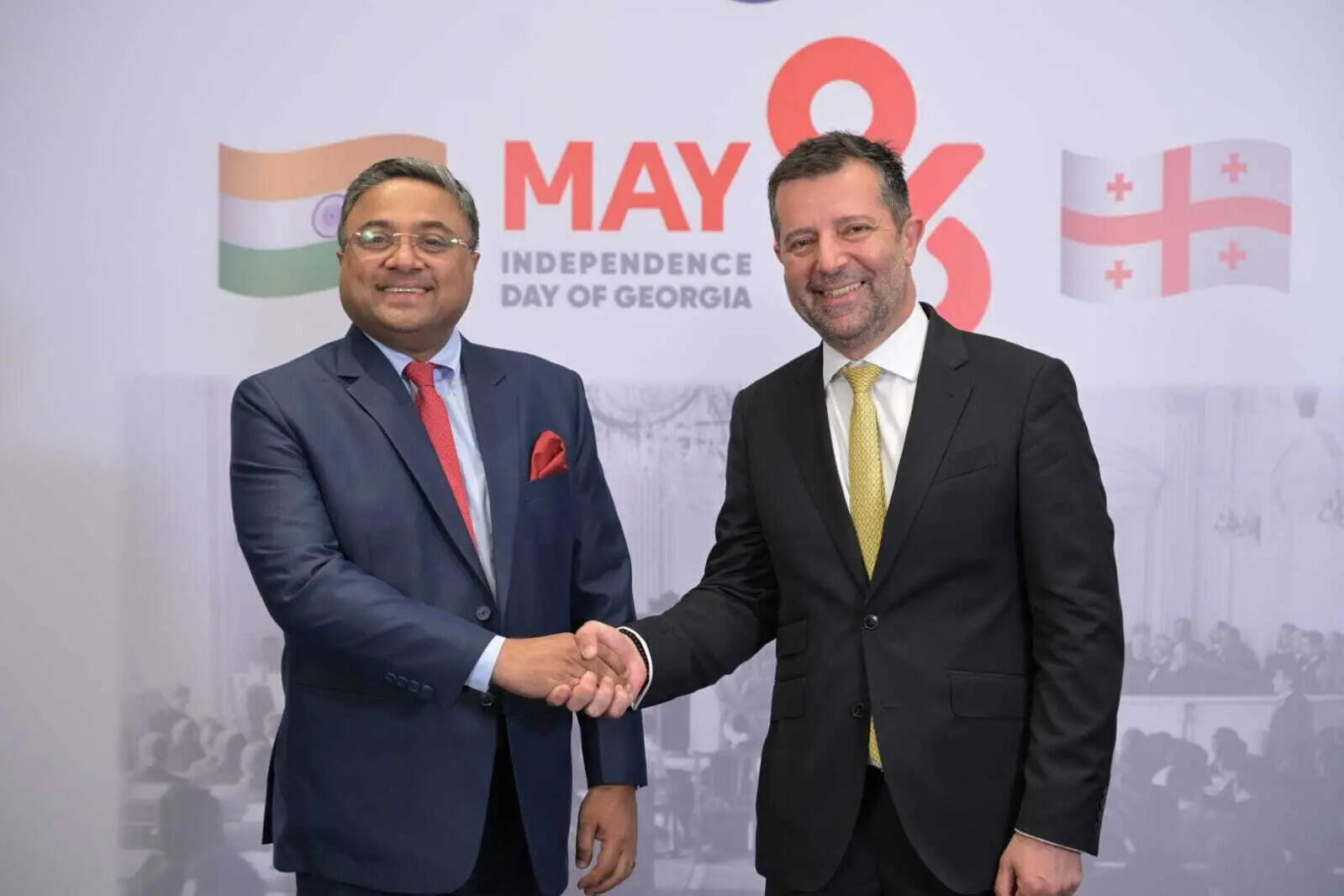
The Embassy of Georgia celebrated Georgia’s National Day in New Delhi on May 26. In your address at the celebration, what message did you convey about the future of India–Georgia relations?
Georgia’s National Day is a deeply important occasion for us, and it was a great pleasure to celebrate our Independence Day in New Delhi with our Indian friends and partners. In my address, I emphasised the importance of further strengthening the friendship, cooperation, and strategic partnership between Georgia and India.
Our relationship is built on strong foundations, including shared democratic values, mutual respect, and growing people-to-people connections. I spoke about expanding cooperation across sectors such as trade, connectivity, tourism, education, culture, and investment. For me, one of the most important dimensions of India–Georgia relations is the growing human connection between our societies. A large number of Indians have already visited Georgia or are planning to do so. They are discovering Georgian culture, cuisine, wine, hospitality, and heritage, and this creates a strong emotional and cultural bridge between our countries.
My constant endeavour is to bring more Georgia to India and more India to Georgia, and I believe the future of our bilateral relationship is extremely promising.