


Many sources of randomness are biased. For example, coins or dice tend to favor one side. “Even modern random number generators, which are based on quantum mechanical effects like the reflection of photons from beam splitters, are not entirely immune to such a systematic error or ‘bias’,” said Andreas Wallraff, one of the leaders of the research team at ETH Zurich.
Similar biases can be found in purely software-based pseudo-random number generators. This has led to security problems in IoT devices and WhatsApp, among other applications.
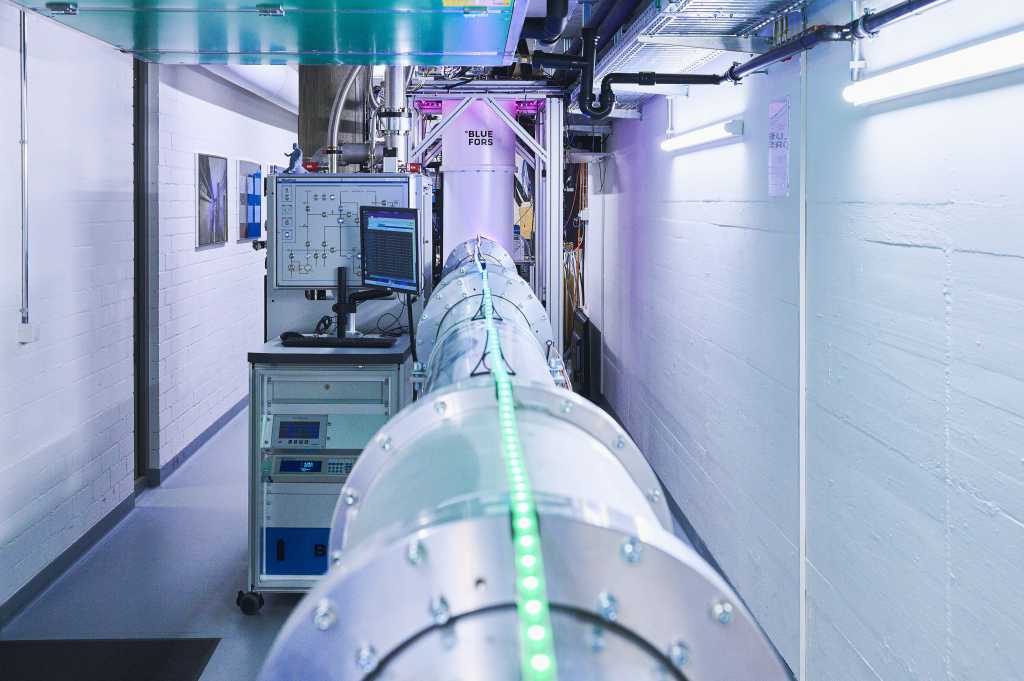
To get around that, the researchers set up of two supercomputing chips, each representing one qubit, cooled to near absolute zero. The chips are connected by a 30-meter-long microwave guide, similarly cooled, and the microwave photons flying between them create a situation of quantum entanglement.
The results produced by this process are then transformed via a special algorithm to generate perfect randomness. “The resulting sequence of zeros and ones is now really perfectly random, and we can even certify that,” said Renato Renner, the other team leader. “The technical improvements allowed us to create random numbers that will remain perfectly random for all eternity.”
