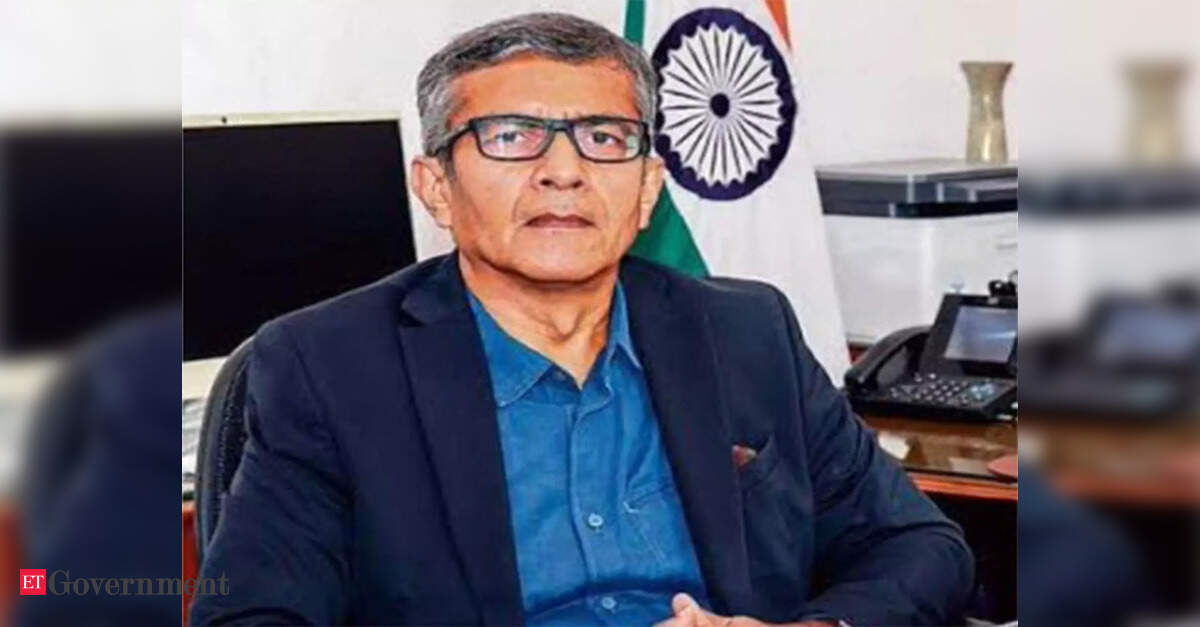
The Government of India’s decision to entrust Defence Secretary Rajesh Kumar Singh with the additional charge of Secretary, Department of Defence Research and Development, and Chairman of the Defence Research and Development Organisation (DRDO) marks an important moment for the country’s defence ecosystem.
The appointment follows the completion of the tenure of Dr. Samir V. Kamat on May 31, 2026, and will remain in force until a regular incumbent is appointed or until further orders are issued.
While the arrangement is temporary, the timing of the transition is significant. India’s defence sector is undergoing a profound transformation driven by the twin imperatives of strategic autonomy and military modernisation.
Defence production has crossed ₹1.5 lakh crore, exports have reached record levels, and the armed forces are increasingly seeking indigenous capabilities in emerging domains such as artificial intelligence, autonomous systems, cyber warfare, electronic warfare, quantum technologies, advanced materials, and space-based military applications.
Against this backdrop, the leadership change at DRDO is more than a routine bureaucratic development. It comes at a time when India is attempting to build a defence innovation ecosystem capable of translating scientific research into battlefield-ready capabilities and globally competitive products.
Rajesh Kumar Singh brings a unique blend of administrative and industrial policy experience to the role. A 1989-batch Indian Administrative Service officer of the Kerala cadre, he assumed office as the Defence Secretary in November 2024 after serving in several key positions, including Secretary in the Department for Promotion of Industry and Internal Trade (DPIIT). During his tenure at DPIIT, he was closely associated with efforts to strengthen manufacturing, attract investment, improve industrial competitiveness, and advance the government’s broader economic agenda.
These experiences may prove particularly relevant to one of the most persistent challenges confronting India’s defence research establishment: the transition from innovation to production.
Over the decades, DRDO has been instrumental in building India’s strategic and technological capabilities. The organisation has delivered major achievements in missile systems, air defence technologies, electronic warfare platforms, radars, naval systems, combat aviation technologies, and strategic deterrence. Programmes such as the Agni and Prithvi missile families, the Akash air defence system, the Astra beyond-visual-range missile, and numerous indigenous sensors and weapon systems have significantly reduced India’s dependence on foreign suppliers.
Yet the organisation has also faced criticism over delays, project overruns, prolonged development cycles, and difficulties in moving technologies from laboratories to large-scale production. Several programmes have taken years longer than originally envisaged, while others have struggled to achieve the desired level of industry participation.
The challenge facing DRDO today is not merely technological. It is increasingly institutional.
Modern defence innovation is no longer driven solely by government laboratories. Across the world, successful defence ecosystems are characterised by close collaboration between military users, research institutions, start-ups, private industry, venture capital, academia, and government agencies. The rapid evolution of military technologies has made traditional development models increasingly difficult to sustain.
The lessons emerging from recent conflicts are particularly instructive. The Russia-Ukraine war has demonstrated how drones, autonomous systems, electronic warfare tools, precision-guided munitions, satellite-enabled communications, and AI-assisted battlefield intelligence can reshape military operations. Developments in the Middle East have similarly highlighted the growing importance of integrated air defence, missile interception technologies, and unmanned systems.
The pace of technological change is accelerating. What once took decades to mature can now become operationally decisive within a few years.
India therefore faces a dual challenge. It must continue investing in complex strategic programmes such as missiles, aerospace systems, underwater platforms, and next-generation combat technologies, while simultaneously creating mechanisms that allow rapid experimentation, testing, procurement, and deployment of emerging technologies.
This is where Rajesh Kumar Singh’s experience could assume importance. As Defence Secretary, he already oversees key aspects of defence policy, procurement, industrial development, and institutional reform. By additionally heading DRDO, even temporarily, he occupies a position that spans the entire chain—from research and development to acquisition and manufacturing.
The arrangement could facilitate closer alignment between defence research priorities, military requirements, and industrial capabilities. Historically, one of the major gaps in India’s defence ecosystem has been the disconnect between technology development and production readiness. Promising technologies often struggle to transition into mass production because of procurement bottlenecks, certification challenges, manufacturing constraints, or inadequate industry participation.
A leadership structure that brings together defence administration and defence research may help address some of these challenges by promoting greater coordination across institutions.
The opportunity is particularly relevant as India seeks to strengthen its defence manufacturing base under the broader vision of Aatmanirbhar Bharat. Indigenous defence production is no longer viewed solely through the lens of import substitution. Increasingly, it is being seen as a strategic industry capable of generating exports, creating high-skilled employment, attracting investment, and positioning India as a credible supplier in global defence markets.
However, leadership changes alone cannot address the structural challenges facing the sector.
The next phase of India’s defence modernisation will require deeper partnerships between DRDO and private industry, faster technology transfer mechanisms, greater integration with start-ups, more agile procurement processes, and stronger collaboration with universities and research institutions. The organisation will also need to accelerate work in critical areas such as artificial intelligence, autonomous systems, semiconductors, cyber security, quantum technologies, advanced propulsion, directed-energy weapons, and space technologies.
Equally important will be the question of talent. As competition for scientists, engineers, and technology specialists intensifies globally, India’s defence innovation ecosystem must find ways to attract and retain some of the country’s best minds.
The transition also comes at a time when India is positioning itself as a major defence exporter. Export success requires more than technological competence. It demands cost competitiveness, manufacturing scale, quality assurance, supply-chain resilience, after-sales support, and the ability to continuously upgrade products. This will require much closer collaboration between designers, manufacturers, and end users than has traditionally been the case.
Dr. Samir V. Kamat leaves behind an organisation that has made important advances in indigenous defence technologies and has increasingly embraced collaboration with industry and start-ups. The next chapter will likely be defined by the ability to accelerate innovation cycles, improve technology absorption, and deliver operational capabilities at greater speed.
It is also important to recognise that the current arrangement is transitional. The government’s order makes it clear that Rajesh Kumar Singh’s additional charge will continue until the appointment of a regular incumbent or until further orders.
This suggests that the government is likely to undertake a search and evaluation process before selecting a full-time Secretary, Defence Research and Development, and Chairman of DRDO. Given the growing strategic importance of defence innovation, emerging technologies, and military modernisation, the eventual appointment will be closely watched across the armed forces, industry, academia, and the strategic community.
For now, Rajesh Kumar Singh’s appointment provides continuity at a critical juncture. His experience in both defence administration and industrial policy offers an opportunity to strengthen the linkage between research, manufacturing, procurement, and military requirements. The temporary convergence of these responsibilities may help advance one of India’s most important strategic objectives: transforming defence innovation into defence capability at scale.
As warfare becomes increasingly technology-driven and geopolitical competition intensifies, India’s ability to innovate rapidly, manufacture efficiently, and deploy indigenous systems at speed will become a decisive factor in its national security. The leadership transition at DRDO therefore represents not merely a change of office, but a reminder of the larger task that lies ahead—building a defence innovation ecosystem capable of powering India’s rise as a major military and technological power.