 “>
“>New Delhi, June 3: India and the Lao People’s Democratic Republic (Lao PDR) have reaffirmed their commitment to expanding trade, investment and business partnerships, with leaders from both countries calling for stronger private-sector engagement to complement the longstanding diplomatic and cultural ties between the two nations.
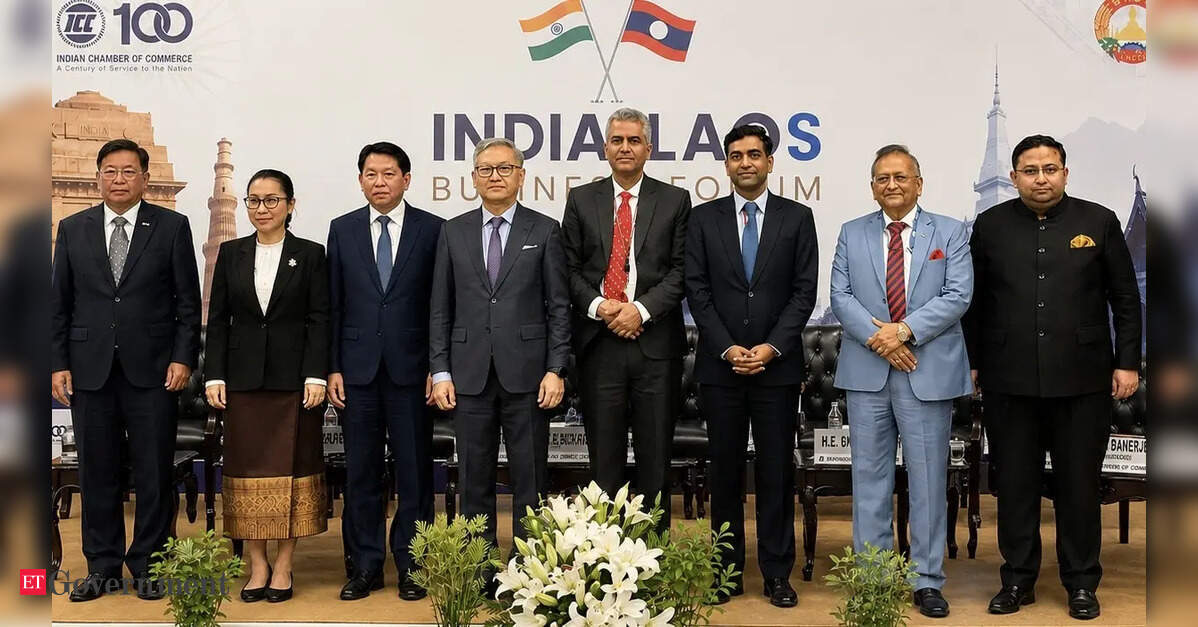
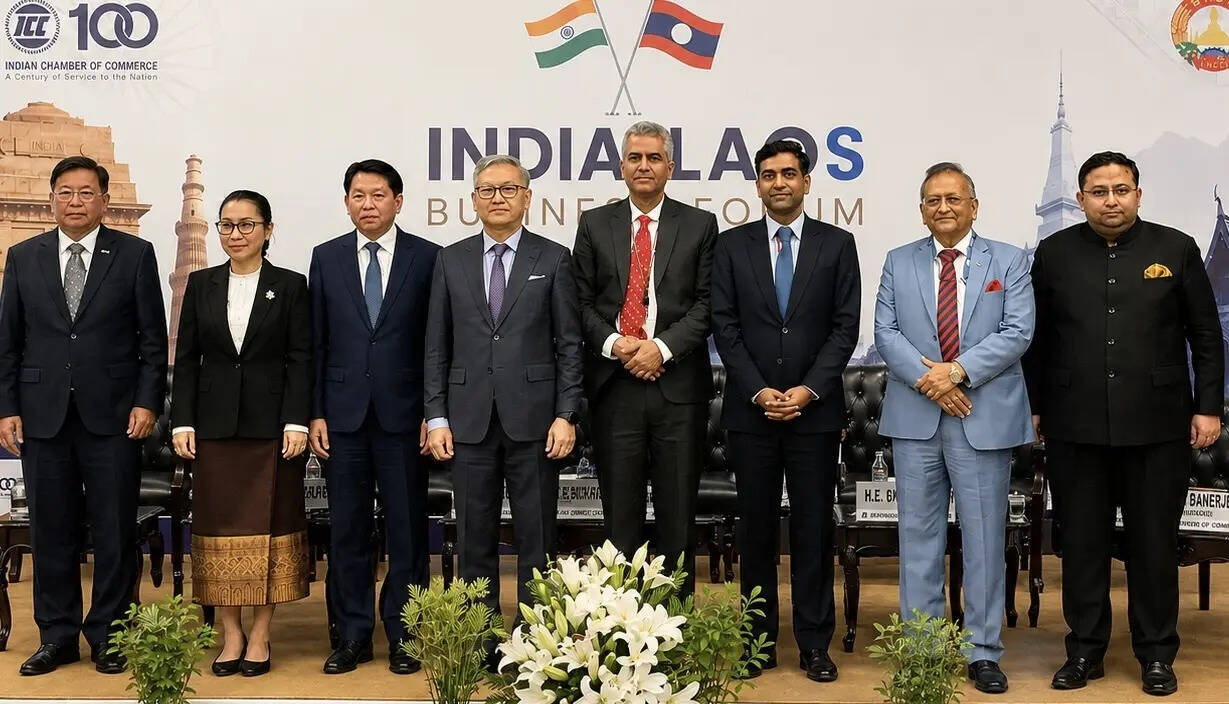
The second India–Lao PDR Business Forum, organised jointly by the Indian Chamber of Commerce (ICC) and the Lao National Chamber of Commerce and Industry (LNCCI), was held in New Delhi during the visit of Thongsavanh Phomvihane, Deputy Prime Minister and Minister of Foreign Affairs of Lao PDR. The event forms part of the celebrations marking 70 years of diplomatic relations between India and Lao PDR.
Delivering the keynote address, Thongsavanh Phomvihane said that the relationship between the two countries had evolved from strong political ties into a growing economic partnership. He noted that bilateral trade crossed USD 82 million in 2024 and stressed that the current level of commerce represented only a fraction of the untapped potential between the two countries.
The Deputy Prime Minister highlighted Lao PDR’s strategic advantages for investors, describing it as one of the most politically stable countries in the region and a gateway to the Mekong sub-region. He pointed to the country’s location at the heart of Southeast Asia, sharing borders with major regional economies, and said that the Laos–China Railway had transformed regional logistics, reduced transportation costs and strengthened supply chain connectivity.
He also emphasised Lao PDR’s focus on green growth and digital transformation, supported by abundant renewable energy resources and a young workforce. The government, he said, is prioritising the development of economic zones, agro-processing industries, logistics services and tourism infrastructure while introducing reforms to improve the business environment through investment promotion measures, digital public services and investor incentives.
“We do not just look for investors, but for strategic partners,” Phomvihane said, inviting Indian companies to participate in sectors such as clean agriculture, renewable energy, information and communications technology, advanced logistics, pharmaceuticals, tourism, finance and manufacturing.
The Deputy Prime Minister also underlined the importance of building resilient regional and international supply chains and called for greater collaboration between businesses in both countries to create sustainable and long-term economic value.
Speaking at the forum, Dr. Subhash Goyal, Chairman of the National Aviation and Tourism Committee of the Indian Chamber of Commerce and Founder of STIC Travel Group, described the visit as a potentially transformative moment in India–Lao economic relations.
He said there was considerable scope for expanding tourism flows between the two countries, noting that while millions of Indians travel annually to destinations such as Thailand, Singapore and Malaysia, only a small number currently visit Lao PDR. Goyal pledged support from the Indian Chamber of Commerce in promoting investment, tourism and business linkages and proposed greater engagement through business outreach programmes and virtual industry interactions across India.
Prashant Agrawal, Additional Secretary (South), Ministry of External Affairs, Government of India, described Lao PDR as a key partner in India’s Act East Policy and noted that the two countries are connected by centuries-old civilisational links rooted in Buddhism and shared cultural traditions.
Drawing attention to the economic opportunities available to Indian businesses, Agrawal highlighted India’s Duty-Free Tariff Preference scheme, under which products manufactured in Lao PDR can enter the Indian market at zero tariff. He also noted that businesses operating in Lao PDR’s Special Economic Zones enjoy preferential access to wider ASEAN markets.
He encouraged Indian industry to explore opportunities in agro-processing, automotive components, mining, tourism, pharmaceuticals and manufacturing, while also highlighting the importance of cooperation in areas such as food security, energy security and supply chain resilience.
Yogeshwar Sangwan, Ambassador of India to Lao PDR, said bilateral trade, currently estimated at around USD 100 million, has significant room for growth. He identified sectors such as rare earth minerals, hydropower, solar and wind energy, manufacturing, automobiles and information technology as promising areas for collaboration.
Sangwan also referred to the review of the ASEAN–India Trade in Goods Agreement and said stronger economic integration, combined with increased connectivity and high-level exchanges, could help unlock new opportunities for businesses on both sides.
Representing the Lao private sector, Thanongsinh Kanlagna, Vice President of the Lao National Chamber of Commerce and Industry, said the relationship between the two countries is built on decades of trust, cultural affinity and development cooperation.
He noted that LNCCI represents more than 5,000 businesses across all 17 provinces of Lao PDR and expressed the chamber’s readiness to facilitate partnerships with Indian companies. Kanlagna identified agro-processing, renewable energy, digital technologies, healthcare, pharmaceuticals and tourism as priority sectors for future cooperation.
Highlighting Lao PDR’s transformation from a landlocked country to a “land-linked” economy, he said improved regional connectivity was creating new opportunities for trade and investment. He also proposed the establishment of a dedicated Lao–India Business Council and regular business forums to ensure continuity in commercial engagement.
The forum also featured a presentation by Dr. Vilaty Keomahavong, Director of Division and Assistant to the Investment Promotion and Management Committee of Lao PDR, who outlined investment opportunities, regulatory reforms and incentives available to foreign investors. A business perspective was provided by Soukthavy Chowdhury, Chairman of the HSMM Group of Companies, who shared his experience of operating in Lao PDR as an entrepreneur.
Participants highlighted the broader foundations of the bilateral relationship, including India’s development assistance through the Indian Technical and Economic Cooperation (ITEC) programme, SME training initiatives, agricultural cooperation projects and concessional financing support. Shared Buddhist heritage and the influence of Pali and Sanskrit on the Lao language were also cited as enduring cultural bonds.
The forum concluded with a networking session and a call for deeper institutional engagement between businesses in both countries. The vote of thanks was delivered by Debmalya Banerjee, Regional Director, Indian Chamber of Commerce, who thanked the dignitaries, delegates and industry representatives for their participation and reaffirmed ICC’s commitment to strengthening India–Lao economic cooperation.