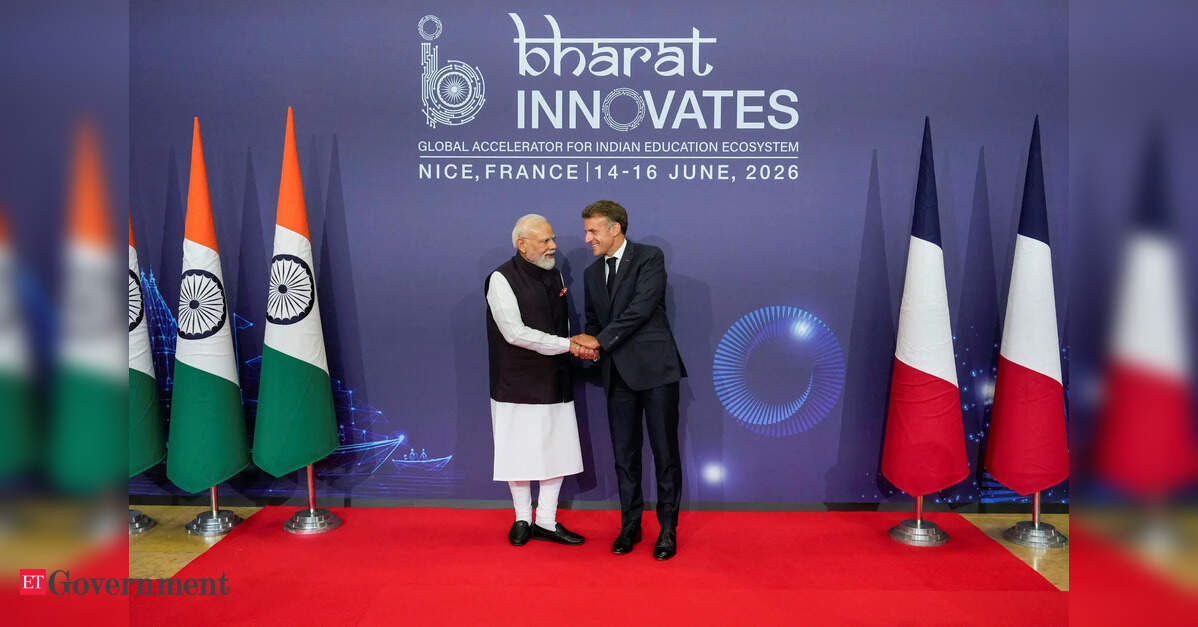
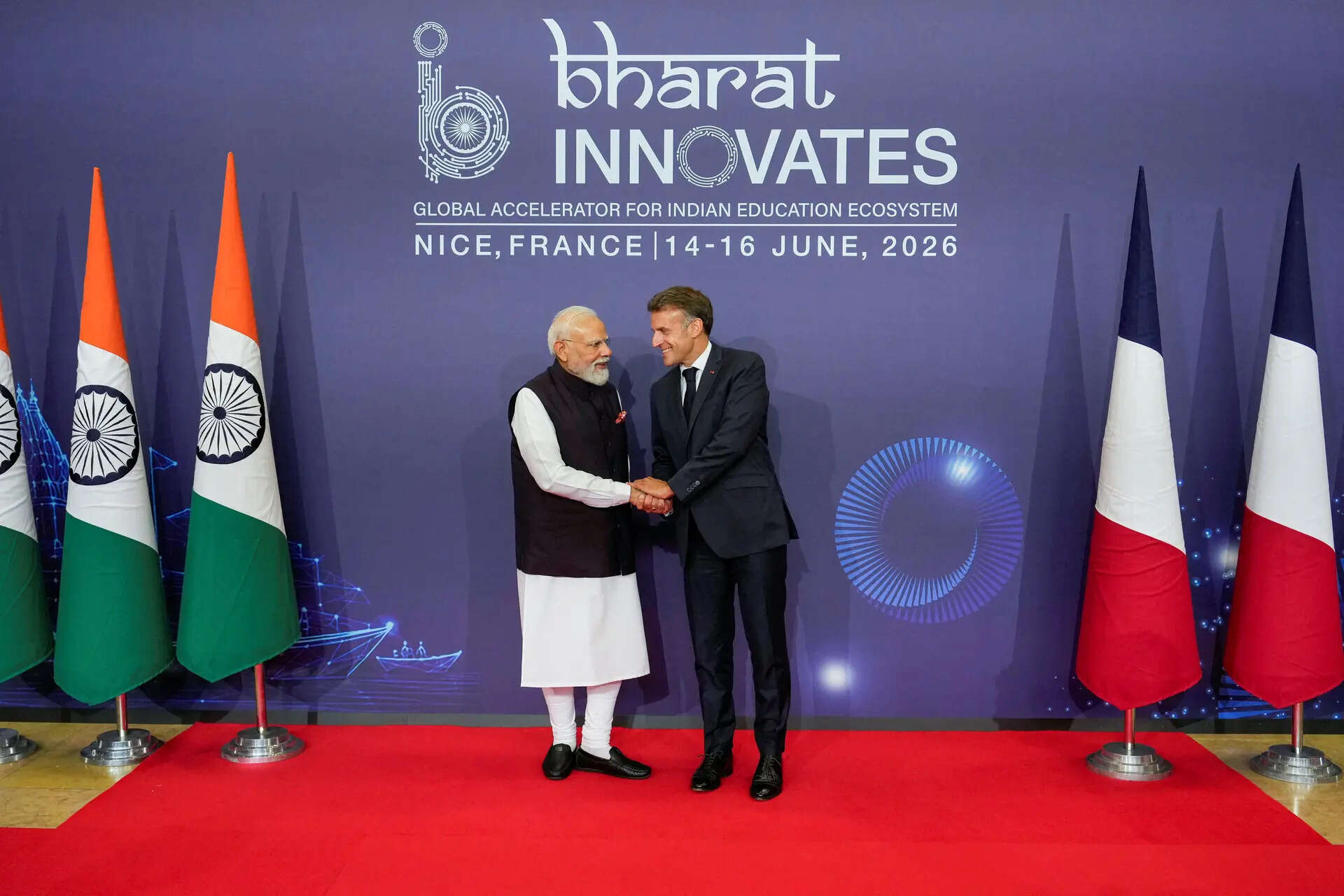
Prime Minister Narendra Modi’s participation in Bharat Innovates 2026 in Nice, France, marked far more than the inauguration of another international technology event. It represented a strategic attempt to position India as a global centre of innovation, deep technology and entrepreneurship at a time when nations are increasingly competing for technological leadership.
Jointly inaugurated by Prime Minister Modi and French President Emmanuel Macron, the event brought together startups, investors, researchers, universities, policymakers and industry leaders from across the world, placing the India-France innovation partnership at the centre of discussions on the future of technology.
The significance of Bharat Innovates lies not merely in its scale but in its timing. As geopolitical competition increasingly revolves around artificial intelligence, semiconductors, quantum technologies, space systems, biotechnology and clean energy, nations are seeking trusted partners to build resilient innovation ecosystems.
India and France have steadily expanded their strategic partnership over the last decade, and Bharat Innovates demonstrated that technology and innovation are now becoming as important to bilateral ties as defence, space and civil nuclear cooperation.
Addressing the gathering, Prime Minister Modi presented a confident picture of India’s technological transformation. One of the most striking lines from his speech was his assertion that “innovation is in India’s DNA.” The statement was more than a rhetorical flourish. It reflected the government’s effort to project India as a nation that is moving beyond being merely a large consumer market to becoming a producer of cutting-edge technologies and globally relevant solutions.
The Prime Minister highlighted how India’s startup ecosystem has expanded dramatically over the last decade and emphasised that innovation is no longer confined to a few metropolitan centres. Instead, it is increasingly emerging from smaller cities, educational institutions and young entrepreneurs who are addressing challenges in healthcare, agriculture, finance, mobility and sustainability.
By showcasing Indian startups before global investors and technology leaders in France, Bharat Innovates sought to bridge the gap between Indian innovation and international capital.
A central theme of Modi’s address was the idea that the future of economic power will be determined by a nation’s ability to innovate. India, he argued, is creating the conditions necessary for innovation-driven growth through digital public infrastructure, research support, startup-friendly policies and a rapidly expanding talent base. His message was clear: India is not seeking a place in the technological order of the future—it intends to help shape that order.
French President Emmanuel Macron echoed this sentiment, describing India as “a country of innovation” and stressing that the two nations share a genuine partnership in critical sectors ranging from artificial intelligence to climate technologies. His remarks reflected France’s growing recognition of India as a strategic technology partner at a time when Europe is seeking diversified innovation relationships beyond traditional transatlantic frameworks.
The event itself underscored the scale of India’s ambitions. More than 120 Indian deep-tech startups, along with leading universities, research institutions and venture capital firms, participated in the three-day programme. The focus areas included artificial intelligence, semiconductors, defence technologies, space systems, biotechnology and advanced manufacturing—sectors that increasingly define national competitiveness in the twenty-first century.
Beyond the public event, Prime Minister Modi’s interactions with French leaders carried substantial diplomatic significance. His engagement with President Macron reinforced what has become one of India’s closest strategic partnerships in Europe. The two leaders have cultivated an unusually warm relationship over the years, and Bharat Innovates provided another platform to advance cooperation in emerging technologies, research and innovation ecosystems.
The joint inauguration itself reflected the political importance both governments attach to technology-led collaboration.
Prime Minister Modi also interacted with French Prime Minister François Bayrou and other senior dignitaries attending the event and associated engagements in Nice. Discussions focused on strengthening economic cooperation, innovation partnerships, startup exchanges, research collaboration and investment opportunities.
The meetings reflected a broader understanding that the India-France relationship is entering a new phase in which technology, innovation and industrial cooperation will increasingly complement the traditional pillars of defence and strategic affairs.
What makes Bharat Innovates particularly noteworthy is that it represents India’s attempt to internationalise its startup ecosystem. For years, Indian startups have focused primarily on domestic opportunities. Bharat Innovates signals a shift towards globalisation, encouraging Indian innovators to access international markets, attract foreign investment and collaborate with leading research institutions abroad.
France, with its strong technological base, advanced research infrastructure and growing startup ecosystem, provides a natural partner for this effort.
The event also carried an important geopolitical message. In an era marked by supply-chain disruptions, technological fragmentation and strategic competition among major powers, India and France are presenting themselves as advocates of open innovation and trusted partnerships. Their collaboration in areas such as artificial intelligence, space technology, climate solutions and advanced manufacturing reflects a shared belief that technological progress should be built on cooperation rather than exclusion.
For India, the optics were equally important. Hosting a major Indian innovation showcase in Europe demonstrated growing international confidence in the country’s technological capabilities. It allowed Indian entrepreneurs to present themselves not merely as participants in the global technology ecosystem but as creators of solutions with worldwide relevance.
The presence of President Macron alongside Prime Minister Modi sent a powerful signal to investors and technology leaders that both governments are committed to creating an enduring innovation bridge between India and France.
Bharat Innovates 2026 may ultimately be remembered not only as a startup exhibition or diplomatic event, but as a milestone in India’s effort to transform its international image. For decades, India was viewed primarily as a source of talent and a large consumer market. The message emerging from Nice was different. India wants to be recognised as a centre of innovation, a developer of frontier technologies and a partner in shaping the global technological future.
If the momentum generated in France translates into sustained research partnerships, startup investments and technology collaborations, Bharat Innovates could become an important chapter in the evolution of the India-France strategic partnership and in India’s larger journey towards becoming a global innovation power.