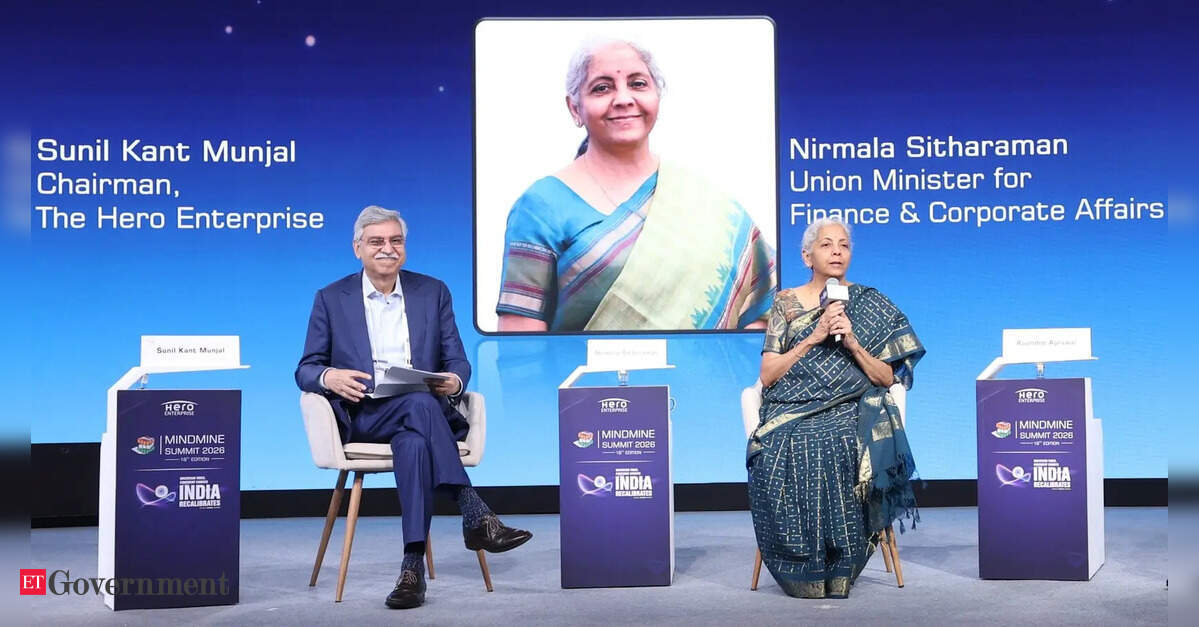
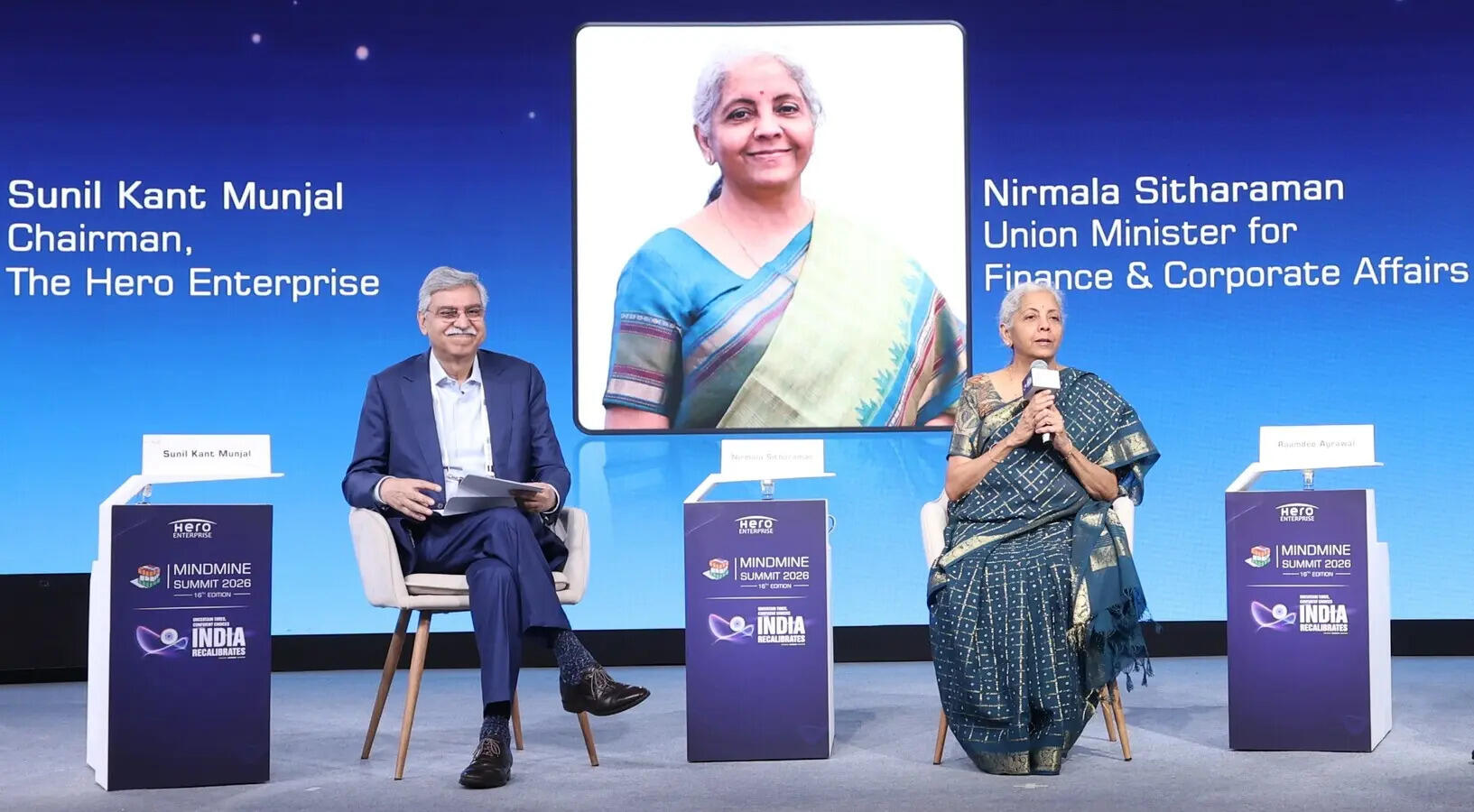
For sixteen years, the Mindmine Summit has served as a platform where policymakers, business leaders, academics, diplomats and civil society representatives come together to discuss the forces shaping India’s future.
At a time when geopolitical conflicts, technological disruption, energy insecurity and economic uncertainty are redefining the global order, the 2026 edition of the summit adopted the theme, “Uncertain Times, Confident Choices: India Recalibrates,” which reflects the challenges confronting India as well as the opportunities available to the world’s fastest-growing major economy.
At the centre of this initiative is Sunil Kant Munjal, Chairman of Hero Enterprise and the driving force behind the Mindmine Institute. Over the years, he has championed the idea that meaningful dialogue between government, industry, academia and society is essential for informed decision-making and long-term national development.
On the sidelines of the 16th Mindmine Summit, Munjal spoke to Anoop Verma about India’s economic resilience amid global turbulence, the country’s preparedness to navigate geopolitical shocks, the need to strengthen research and innovation, the importance of investing in people in the age of artificial intelligence, and how India’s aspirations have evolved over the past two decades.
Edited excerpts:
The theme of this year’s Mindmine Summit is “Uncertain Times, Confident Choices: India Recalibrates.” What are the most important choices India must make over the next five years to sustain its growth momentum amid global uncertainty?
We are living in a world that is increasingly fractured and pulling itself apart, and that creates multiple complications. As a large importer of energy, India has directly felt the impact through higher energy costs, inflationary pressures, foreign exchange fluctuations, disruptions in logistics, and supply chain challenges. Our priority must therefore be to find ways to hedge ourselves better against such shocks in the future.At the same time, we must continue building India with confidence. One of the remarkable achievements of the last decade and a half is that India has simultaneously built digital infrastructure and physical infrastructure. No major economy—not the United States, Europe, or China—has done both at the same time and at this scale. We have made substantial progress, though there is still room for growth. The challenge now is to continue this momentum while strengthening our resilience against global disruptions.
You have described the Mindmine Institute as a platform for meaningful dialogue. In an age of information overload, polarization, and geopolitical tensions, how can institutions like Mindmine improve the quality of public and policy discourse?
That is actually the very purpose of the Mindmine Institute. Our focus is on India, Indians, the Indian economy, and India’s global relationships. We bring together leaders from all walks of life and encourage conversations rather than speeches.
In fact, we discourage prepared presentations. While speeches do occasionally take place, our emphasis is on genuine dialogue about issues that matter. The insights that emerge are then fed back into policymakers, industry leaders, and other stakeholders.
What makes Mindmine unique is the diversity of voices in the room. Alongside business leaders and policymakers, we bring together academics, students, farmers, civil society representatives, and many others. We ask participants not to arrive with scripted remarks but to share what they are truly thinking and feeling. That allows us to capture authentic feedback, which can then contribute meaningfully to decision-making and public discourse.
Geopolitical tensions, technological disruptions, and economic uncertainty continue to reshape the global landscape. Do you believe India is adequately prepared to capitalize on these shifts?
One positive development today is the temporary reprieve we are witnessing as Iran and the United States engage in discussions aimed at reaching a longer-term arrangement. The immediate impact can already be seen in stock markets, oil prices, foreign exchange rates, and broader investor sentiment. That said, India had already begun equipping itself to manage these challenges even while the crisis was ongoing. In fact, these were among the issues we discussed with the Finance Minister during the summit’s opening session.
India certainly faces vulnerabilities because of its dependence on energy imports. However, if you look at the broader picture, the country has done a reasonably good job of managing these pressures. Growth has continued, capital markets remain accessible, and infrastructure development and social support programs have maintained their pace. We have handled the situation fairly well, though there are still significant challenges ahead, and that is where our attention must now be focused.
As Chairman of Hero Enterprise, how do you assess the current investment climate in India? Are Indian businesses becoming more willing to invest in long-term innovation and research and development?
Research and development remains one of India’s long-standing challenges. Historically, Indian businesses have relied heavily on research conducted overseas. While we have strong research institutions, industry itself has invested relatively little in R&D.
However, we are beginning to see a shift. Whether it is pharmaceuticals, automotive manufacturing, electronics hardware, or several other sectors, businesses are increasingly recognizing the importance of innovation. The progress is gradual but encouraging.
I believe we need mechanisms to accelerate this trend. Incentives through taxation, for example, could encourage faster investments in innovation. Equally important is stronger collaboration between industry, academia, and research institutions. Pure research remains valuable, but for a country like India, applied research has become especially critical. These three stakeholders must work together to develop, test, and commercialize new ideas more effectively.
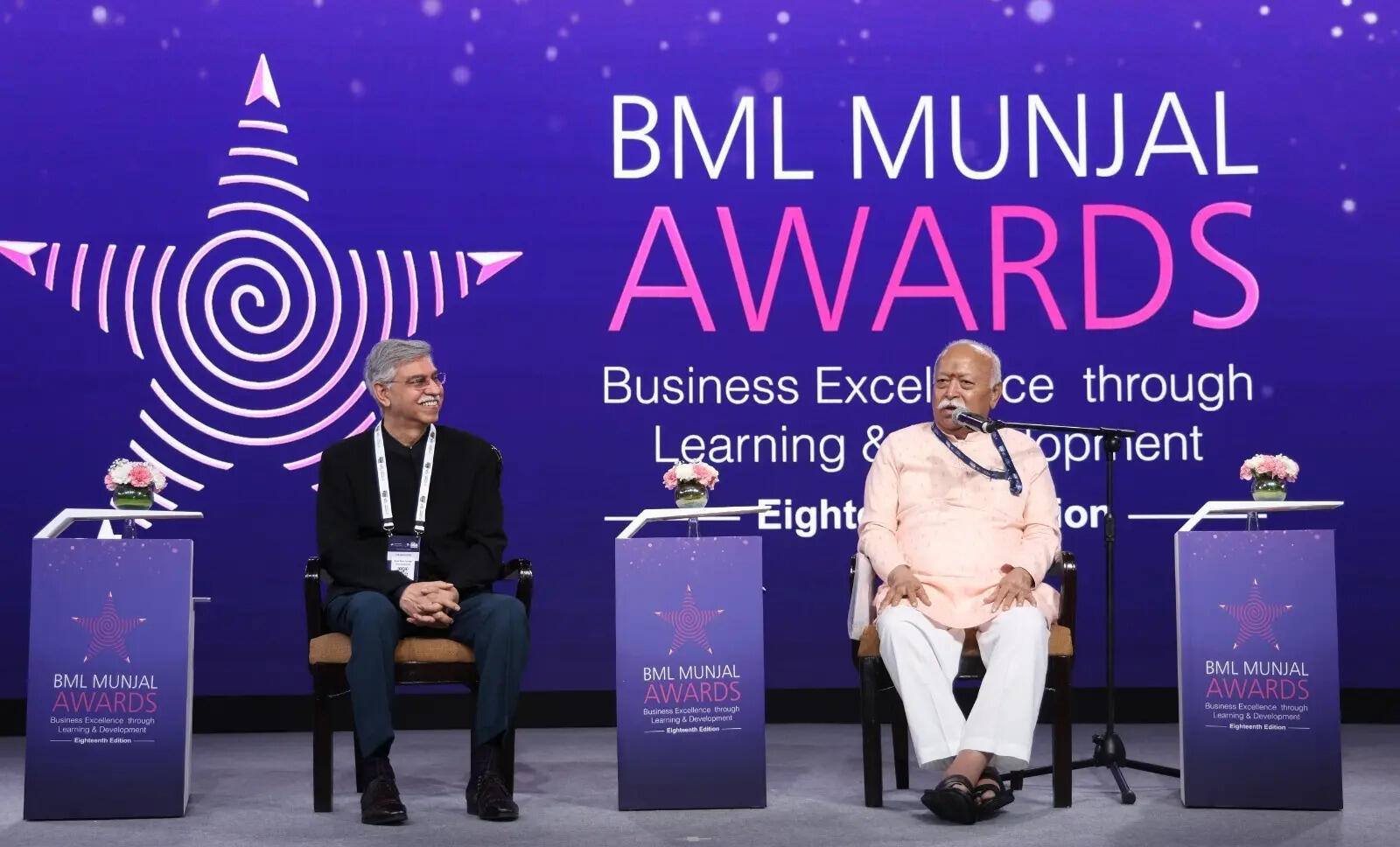
The Mindmine Summit concludes with the BML Munjal Awards, which recognize excellence in learning and development. In an age of rapid technological change, what distinguishes organizations that continuously learn and reinvent themselves?
The purpose of these awards has always been to recognize organizations that place people at the center of their strategy and derive business success from that focus. There are many awards that celebrate growth, profitability, or market share, but very few recognize investment in people.
Technology will continue to evolve at a rapid pace. Yet people remain the only asset within an organization that appreciates over time through experience, exposure, and learning. Today, with artificial intelligence and generative AI transforming workplaces, organizations will need to constantly reskill and upskill their workforce.
The future belongs to organizations that understand that human capability and technology must work in tandem. Those that successfully combine the two will remain competitive and resilient.
This is the 16th edition of the Mindmine Summit. Looking back, what has changed most in the questions India asks itself, and what challenges have remained remarkably unchanged?
What has changed dramatically is India’s outlook. Twenty years ago, India was far more inward-looking. We did not have technologies like the iPhone or digital public infrastructure such as UPI. Millions of Indians did not have bank accounts. The country was only beginning to open up and integrate with the global economy.
As a result, the questions we asked then were very different. We were still focused largely on protection and preservation. Today, the conversation revolves around global competitiveness, sustaining growth despite multiple global crises, integrating advanced technologies into every aspect of work, building future-ready urban infrastructure, and creating a diversified rural economy that extends beyond agriculture.
These are, in many ways, good problems to have because they reflect progress. India possesses tremendous positive energy. It is the fastest-growing large economy in the world and has demonstrated an ability to sustain that growth despite challenges both at home and abroad.
That is why the Mindmine Summit remains relevant. It continually asks new questions about what is happening today and where India is headed tomorrow.
If you were advising both policymakers and business leaders on one strategic priority that should unite India over the next decade, what would it be?
India is already united in many ways through its extraordinary diversity. The beauty of this country is that every region, state, community, and social group is different, yet despite these differences, we remain one nation.
If there is one goal that should unite us over the next decade, it is the ambition to build a better India than we have seen in the last one, two, or even three centuries. We should aspire to become one of the world’s leading nations in innovation, infrastructure, public service, and opportunity creation.
Most importantly, we must create an environment where every individual has the opportunity to become the best version of themselves. That, ultimately, should be the shared national mission.