 “>
“>India’s space sector is undergoing a period of significant transition. A series of policy reforms over the last few years have opened the sector to greater private participation, encouraged startup activity and created new opportunities in satellite communications, launch services, Earth observation and downstream applications.
At the same time, the government has set ambitious targets for expanding India’s presence in the global space economy. As the sector evolves, important questions remain about the pace of commercialisation, the role of private industry, investment in research and development, satellite infrastructure requirements and India’s ability to compete with established global players.
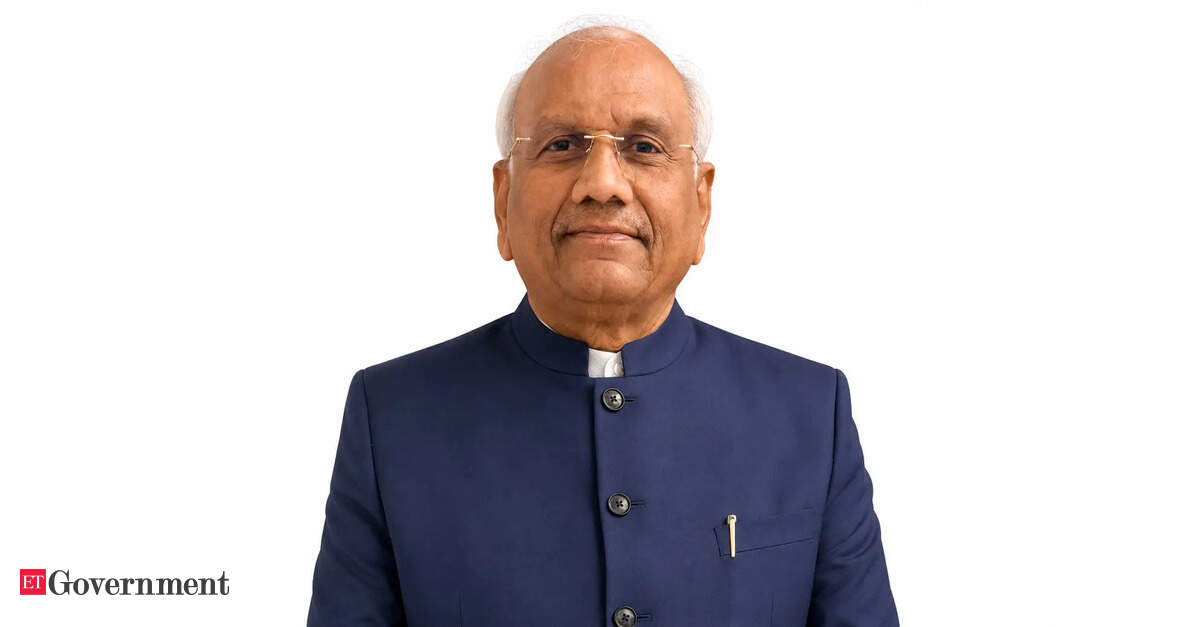
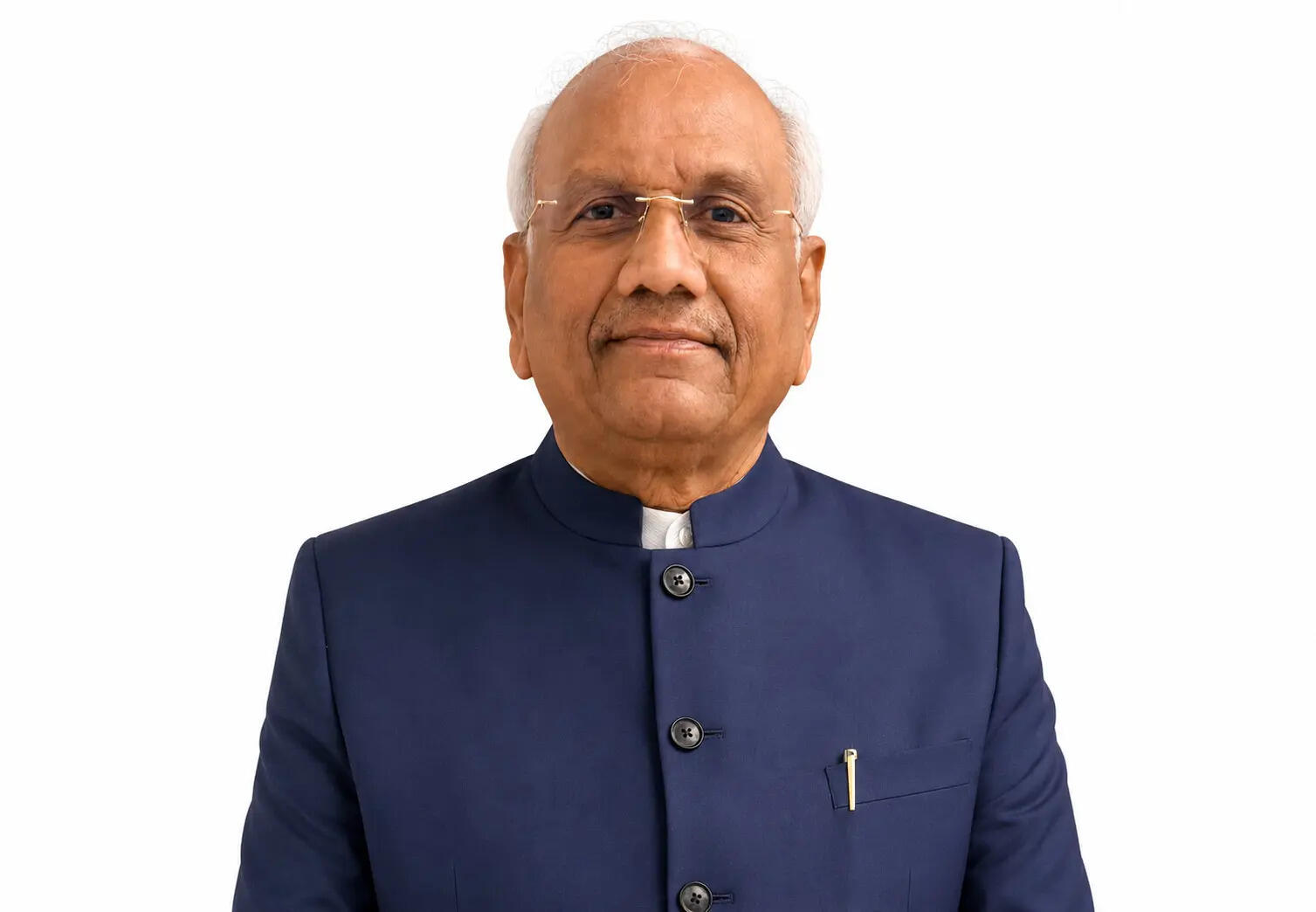
Dr. Subba Rao Pavuluri, Chairman of Ananth Technologies and President of the Space Industry Association of India (SIA-India), has been closely associated with the Indian space ecosystem for more than three decades. Ananth Technologies has contributed to several ISRO programmes, including satellite and launch vehicle missions.
On the sidelines of India Space Congress 2026, Anoop Verma spoke with Dr. Pavuluri about the opportunities and challenges facing India’s space sector, the lessons from the rise of companies such as SpaceX, the growing importance of satellite communications, the future of drones, the state of research and development in India, and the policy measures needed to support the industry’s next phase of growth.
Edited excerpts:
SIA-India has emerged as an important industry platform for the space sector. What is the broader agenda behind the association, and what are you seeking to achieve through initiatives such as the India Space Congress?
SIA-India was established several years ago, well before the recent reforms in India’s space sector. The objective was to create a common platform where stakeholders from industry, government, academia, startups and international partners could come together to discuss issues related to the growth of the space ecosystem.
The India Space Congress has now completed several successful editions and has evolved into a major platform for dialogue and collaboration. This year’s theme, “Reimagining Space, Reinventing Collaboration, Realising the Next Era of Space,” reflects the need for deeper cooperation between industries, countries and institutions. The future of the space economy will be driven by collaboration, and our objective is to facilitate that process by bringing together all relevant stakeholders under one roof.
Companies such as SpaceX have demonstrated how private space enterprises can create enormous value. What lessons can the Indian space sector draw from such examples? Are we making sufficient progress towards the government’s vision of a multi-billion-dollar space economy?
The most important lesson is that space should be viewed not merely as a scientific endeavour but as a critical component of national infrastructure. India is a vast country with significant communication requirements, and satellites have an important role to play in bridging connectivity gaps.
India has the capability to build satellite constellations that can serve both domestic and international markets. Satellites are global assets; they are not limited to one geography. If India invests in satellite infrastructure in the same way it invests in airports, highways and other strategic infrastructure, the opportunities will be enormous.
We have consistently urged the government to encourage greater private-sector participation in this area. If Indian companies are enabled to build and operate large-scale satellite systems, they can not only serve India but also compete globally. The opportunity exists for India to become a major player in the international space economy.
Ananth Technologies has been a significant contributor to several ISRO programmes, including Chandrayaan missions. What has your journey been like, and where do you see the company over the next five years?
We started Ananth Technologies in 1992, at a time when India was liberalising several sectors of the economy. I had expected the space sector to undergo liberalisation as well, but that happened much later.
Over the past three decades, we have worked closely with ISRO and contributed to more than 100 satellites and nearly 90 launch vehicle missions. We have participated in Chandrayaan, Mars missions and several scientific programmes. This experience enabled us to build deep expertise in satellite and launch vehicle technologies.
Today, we have dedicated facilities in Hyderabad and Bengaluru for satellite manufacturing. Our infrastructure allows us to build 25 to 30 small satellites per month, and we are expanding our capabilities for larger satellite platforms as well.
The reforms introduced in the space sector have opened up new opportunities. For the first time, private companies have been given opportunities to build and operate communication satellites. We intend to leverage our experience to become a major player in satellite manufacturing and services, both in India and internationally.
How important are satellite communications for India’s development priorities?
Satellite communications are essential for a country of India’s size and diversity. We still have a significant digital divide between urban and rural regions, and satellites can help bridge that gap.
Whether it is education, healthcare, governance or financial inclusion, satellite connectivity can ensure that services reach remote and geographically challenging areas. A student in a remote village should have access to the same educational opportunities as a student in a major city. Similarly, telemedicine can connect specialist doctors with patients in underserved regions.
Satellites can play a transformative role in ensuring equitable access to services and opportunities across the country.
India continues to face challenges in research and development and technology dependence in several sectors. What more should be done to encourage indigenous innovation?
The Government of India has already initiated several important programmes to strengthen domestic technological capabilities. The semiconductor mission and production-linked incentive schemes are examples of this effort.
Results in deep-technology sectors do not emerge overnight. Building indigenous capabilities requires sustained investment and patience. I am optimistic that within the next three to four years we will begin to see significant outcomes from the initiatives currently underway.
The space sector itself is fundamentally driven by research and development. I often compare R&D to planting a coconut tree. It takes several years before the tree begins to yield results, but once it does, every part of it becomes valuable. Similarly, investments in R&D may take time to mature, but they create long-term technological and economic value.
The government has launched several programmes to support innovation, startups and technology development. The benefits of these initiatives will become increasingly visible in the coming years.
Your company is also active in the drone sector. How do you view the future of drones in India?
Drones have applications across both civilian and defence domains. In the civilian sector, they can be used for agriculture, logistics, infrastructure monitoring and a variety of other services.
In the defence sector, drones have become indispensable for intelligence, surveillance and reconnaissance operations. Recent conflicts around the world have demonstrated that unmanned systems are increasingly becoming central to military operations because they are effective and cost-efficient.
The drone ecosystem is still evolving, but it has enormous growth potential. We expect drones to become an integral part of both economic and security infrastructure in the years ahead.
What policy measures would you like to see from the government to accelerate the growth of India’s space industry?
Two measures come to mind immediately. First, the government should consider extending Production Linked Incentive (PLI) schemes to the space sector, as it has done for sectors such as electronics and semiconductor manufacturing.
Second, there should be greater emphasis on public-private partnership models. If PPP frameworks are expanded across the space ecosystem, they will significantly accelerate investment, innovation and capacity creation. These two steps alone could substantially strengthen India’s space industry and unlock its full potential.
DRDO has mechanisms for transferring technology to private industry. Is the space sector developing similar arrangements, and are there any challenges in accessing such technologies?
We are not facing any major challenges. Through IN-SPACe and other mechanisms, technologies developed within the national space ecosystem are increasingly being transferred to private companies.
Several technologies developed over the years are now becoming available for commercial applications. These can be utilised for satellite missions, constellations and other space-related programmes. Technology transfer is an important part of building a robust private-sector ecosystem, and positive progress is being made in this direction.
Having witnessed India’s space sector both before and after liberalisation, where do you see the industry in the next five to ten years?
I often compare the current stage of the space sector with what happened in telecommunications after liberalisation. Before reforms, access to telecommunications was extremely limited. Today, India has one of the world’s largest and most advanced telecom markets.
A similar transformation is possible in the space sector. Liberalisation has created opportunities for entrepreneurs, startups and private companies to build satellites, launch services and space-based applications.
India has a strong entrepreneurial culture and a deep pool of technical talent. If the current momentum continues, I believe the next five to ten years will see the emergence of globally competitive Indian space companies and a significantly larger space economy. The opportunities ahead are immense.