

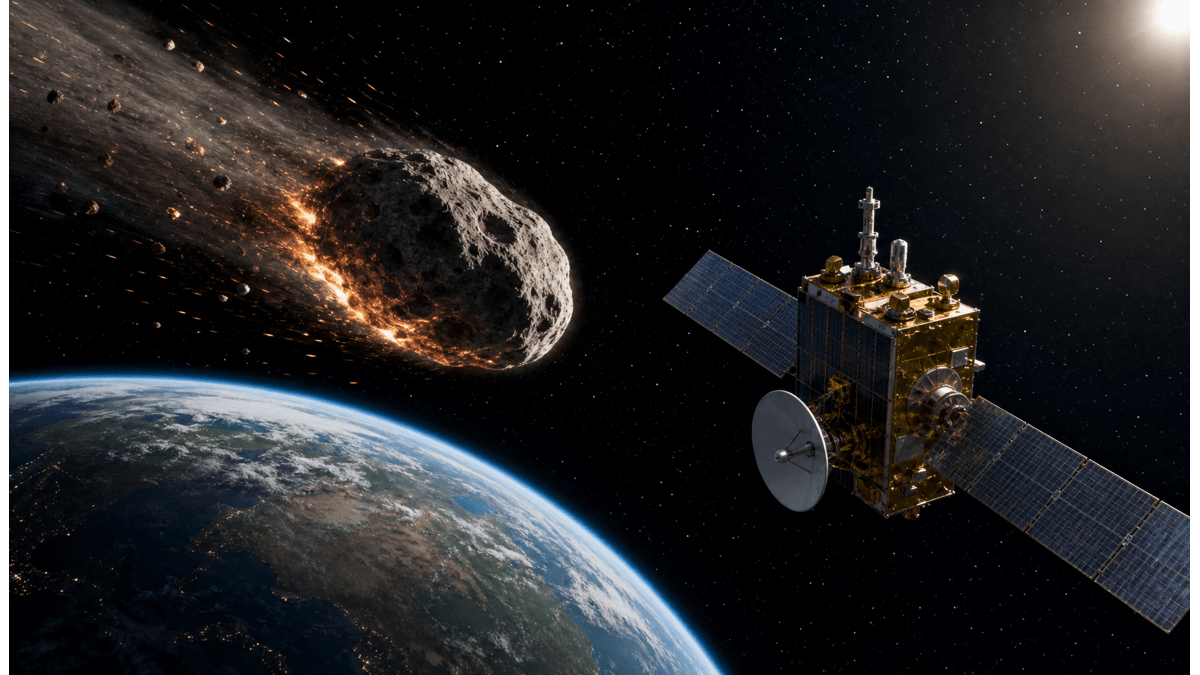
International Asteroid Day occurs every June 30 to raise global awareness. It marks the historic 1908 Tunguska event in Siberia. Today, Indian schools use this day to spark scientific interest. Students learn about space rocks to understand our cosmic history. This event prepares young minds for challenges in planetary science.
Planetary Defence is the term for protecting Earth from asteroid impacts. It is pronounced /’plan-i-ter-ee di-fens/. The Indian Space Research Organisation (ISRO) tracks many Near-Earth Objects (NEO). India also participates in global asteroid monitoring networks. These steps help ensure our planet stays safe from cosmic hazards.

ISRO Outreach and Planetary Defence Education
Many Indian schools now visit local planetariums for special workshops. ISRO provides resources to help students identify different space bodies. For instance, a meteor burns in air but asteroids orbit the Sun. Understanding these differences is vital for any budding space scientist. This learning connects classroom lessons to actual space missions today.
International Asteroid Day Speech and GK Pack
Vikram Sarabhai believed science should solve real-world problems. Dr. A.P.J. Abdul Kalam often encouraged students to dream big. For an assembly speech, focus on curiosity and safety. Start by asking the audience if they know how craters form. Such engaging questions build confidence while improving public speaking skills.
| Question | Answer |
|---|---|
| What is a NEO? | Near-Earth Object |
| Which is the largest asteroid? | Ceres |
| What burns in the atmosphere? | Meteor |
| When was the Tunguska event? | June 30, 1908 |
| Who tracks asteroids in India? | ISRO |
Teachers can show impact craters using a flour-tray experiment. Drop small stones into flour to see the splash patterns. Follow this with a safe evening skywatch session. Use basic binoculars to observe the moon and stars clearly. These activities make space science feel real and exciting for learners.
International Asteroid Day connects young learners to the vast universe. It transforms complex space concepts into fun school activities. By participating in quizzes, students improve their knowledge and critical thinking. India’s growing role in space inspires everyone to look upward. Keep exploring the wonders of our solar system every day.
