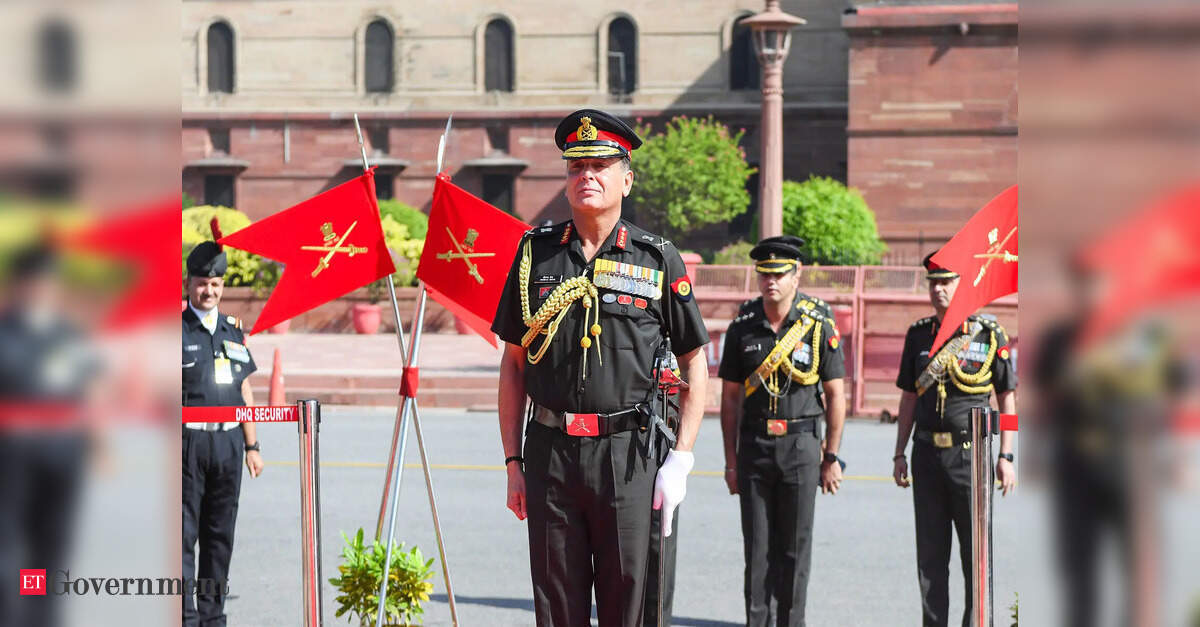
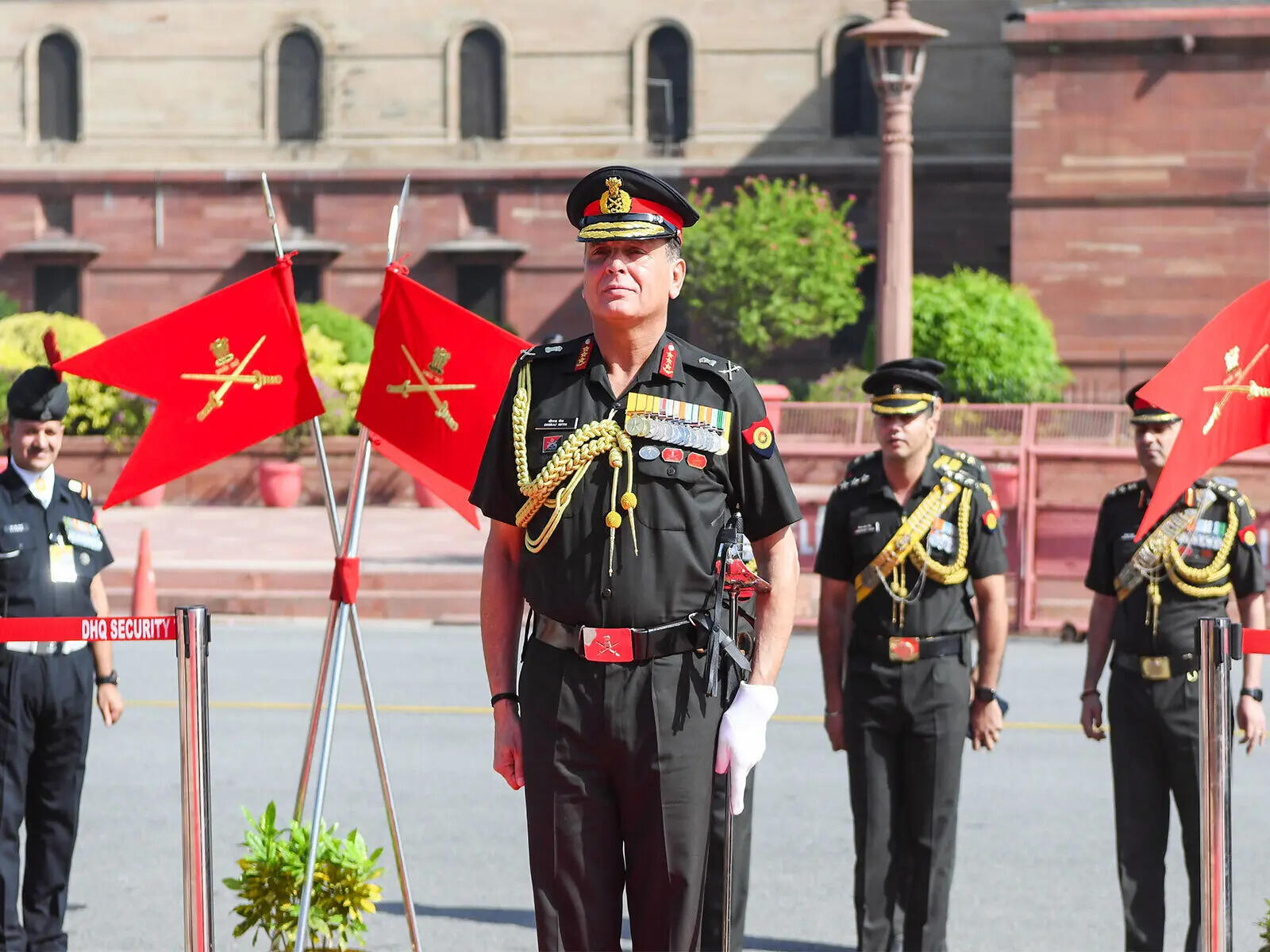
New Delhi, June 30: General Dhiraj Seth on Tuesday formally assumed charge as the 31st Chief of the Army Staff (COAS), succeeding General Upendra Dwivedi, who retired after completing his tenure.
The change of command comes at a critical juncture for the Indian Army as it simultaneously pursues force modernisation, integrated theatre commands, indigenous defence manufacturing and preparedness for an increasingly technology-driven security environment.
General Seth, who served as the Vice Chief of the Army Staff before his elevation, brings nearly four decades of operational, strategic and institutional experience to the country’s largest military service. His appointment also marks the return of an Armoured Corps officer to the Army’s highest office after almost three decades, the last being General Shankar Roy Chowdhary in 1997.
The ceremonial handing over of command reflected continuity as well as change. In his farewell remarks, outgoing Army Chief General Upendra Dwivedi underlined that future conflicts would increasingly be “joint, integrated and theatre-oriented,” signalling that inter-service integration will remain one of the central priorities for the Army’s new leadership.
Operational and Strategic Commands
Commissioned into the Armoured Corps in December 1986, General Seth has served across a wide spectrum of operational, instructional and staff appointments.
During his career, he has commanded an armoured regiment, an independent armoured brigade, the elite XXI Strike Corps (Sudarshan Chakra Corps), South Western Command and later Southern Command before becoming Vice Chief of the Army Staff in April 2026.
His professional education reflects exposure to both Indian and international military institutions. An alumnus of the National Defence Academy, the Indian Military Academy, the Defence Services Staff College, the Army War College and the National Defence College, he has also attended advanced military courses in France and the United States, equipping him with expertise in operational planning, capability development and defence acquisition.
Over the years, General Seth has been decorated with the Param Vishisht Seva Medal (PVSM), Uttam Yudh Seva Medal (UYSM) and Ati Vishisht Seva Medal (AVSM), recognising his distinguished service and operational leadership.
Time of Strategic Change
General Seth assumes office during one of the most consequential phases in the evolution of the Indian Army. The service is simultaneously preparing for conventional military contingencies along both the northern and western borders while adapting to emerging domains such as cyber warfare, artificial intelligence, autonomous systems, space-enabled operations and electronic warfare.
His experience commanding both South Western Command and Southern Command gives him a broad perspective on India’s western operational theatre and strike formations. Defence analysts believe this operational background, combined with his tenure as Vice Chief, positions him well to oversee capability enhancement and force restructuring.
As Vice Chief, General Seth was closely associated with several modernisation initiatives, including acceleration of indigenous procurement, network-centric warfare capabilities, integration of emerging technologies and enhancement of combat readiness. His elevation therefore represents continuity rather than disruption in the Army’s ongoing transformation agenda.
Modernisation and Atmanirbharta Expected to Gather Pace
One of the defining themes of General Seth’s tenure is expected to be the continued expansion of indigenous military capability under the Government’s Atmanirbhar Bharat initiative.
The Army today is replacing legacy equipment with domestically developed artillery systems, armoured platforms, drones, loitering munitions, electronic warfare systems, secure communication networks and battlefield management technologies. Simultaneously, it is integrating artificial intelligence, data-driven decision support systems and autonomous platforms into future operational doctrines.
Industry observers expect General Seth to continue strengthening partnerships between the Army, the Defence Research and Development Organisation (DRDO), defence public sector undertakings and India’s rapidly growing private defence manufacturing ecosystem.
Jointness Will Remain Central
The appointment also comes as India advances its long-term objective of creating integrated theatre commands under the leadership of the Chief of Defence Staff.
General Dwivedi’s final message emphasising joint and theatre-oriented warfare underlines that the Army’s transformation can no longer be viewed in isolation from the Navy and the Air Force. The success of future military operations will increasingly depend upon integrated planning, shared intelligence, common logistics and multi-domain operations.
General Seth is therefore expected to play a pivotal role in aligning Army reforms with broader national military restructuring.
Challenges Ahead
The new Army Chief assumes command amid an increasingly complex strategic environment. Persistent military competition along the Line of Actual Control with China, continued security concerns along the Line of Control with Pakistan, rapid technological change in warfare and the need to sustain high operational readiness across multiple theatres will all shape his tenure.
In addition, the Army faces the parallel challenge of balancing manpower-intensive commitments with investments in advanced technologies, precision strike capabilities, unmanned systems and next-generation battlefield networks.
Managing this transition while maintaining operational preparedness will likely define General Seth’s leadership.