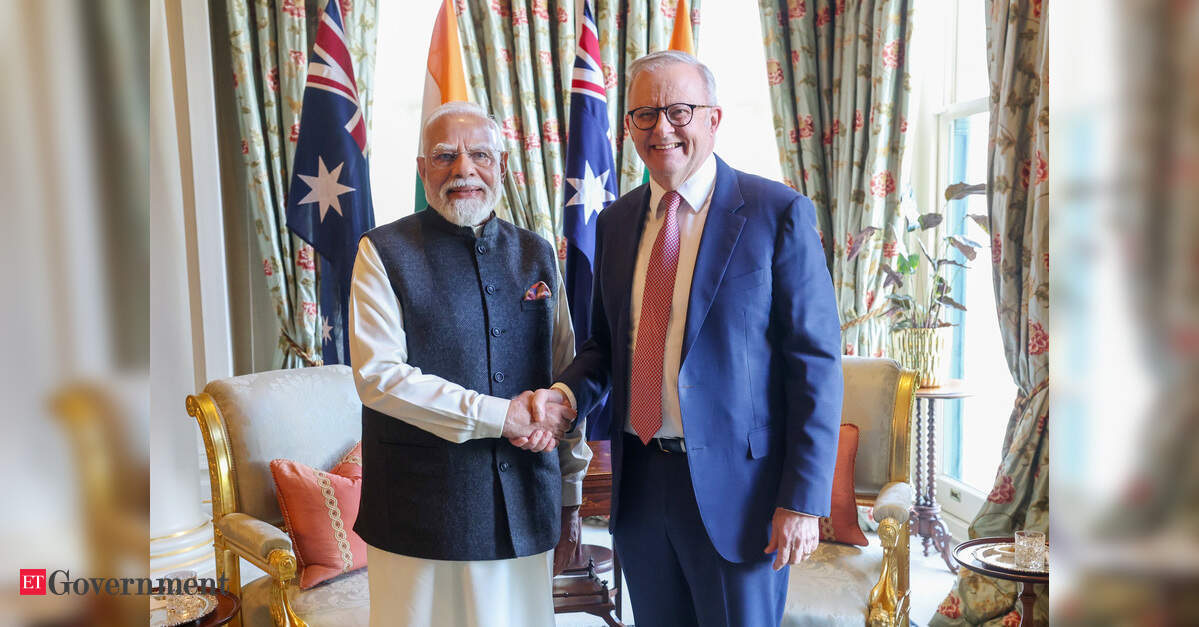
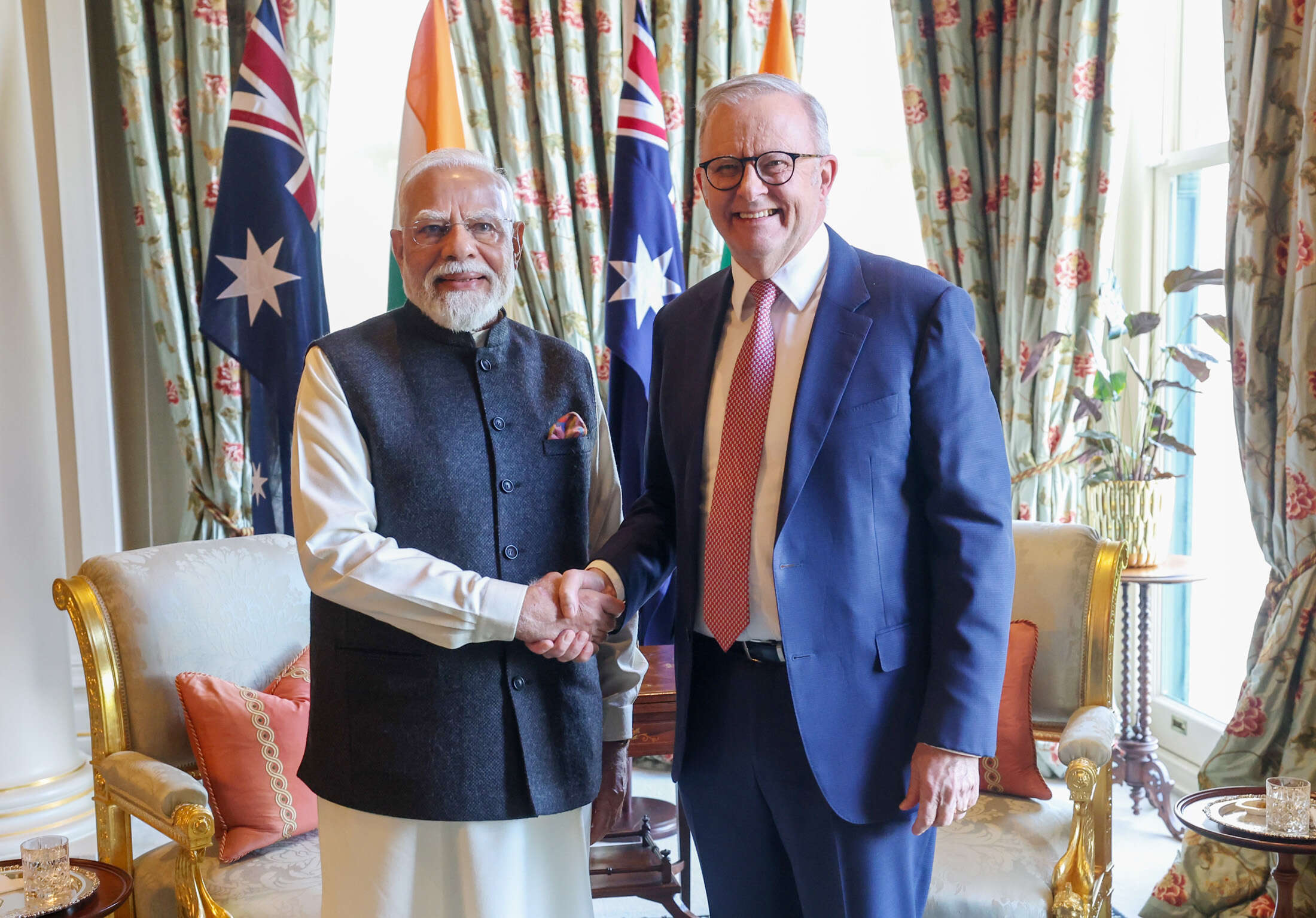
India and Australia have elevated their Comprehensive Strategic Partnership with a package of 18 outcomes spanning defence, maritime security, civil nuclear energy, critical minerals, cyber technologies, resilient supply chains, education and skills—signalling a decisive shift from political convergence to deeper economic and strategic integration.
Prime Minister Narendra Modi and Australian Prime Minister Anthony Albanese unveiled the agreements following the third India–Australia Annual Summit in Melbourne on July 9. Among the most consequential outcomes are a new Joint Declaration on Defence and Security Cooperation, a Maritime Security Collaboration Roadmap, operationalisation of the bilateral civil nuclear agreement to enable Australian uranium supplies to India, and a wide-ranging partnership covering cyber security, critical technologies and strategic supply chains.
The agreements reflect the transformation of India–Australia relations over the past decade. Once driven largely by trade, education and the Indian diaspora, the partnership is increasingly centred on defence interoperability, maritime security, energy resilience, critical technologies and the stability of the Indo-Pacific.
Describing the strategic foundations of the relationship, Prime Minister Modi said India and Australia are “two vibrant democracies, two multicultural societies and two important ocean powers.”
“Our similarities and our common worldview inspire us to move forward continuously with deep mutual trust,” Modi said. “Our Comprehensive Strategic Partnership has made unprecedented progress over the past few years, and today’s third Annual Summit has added several new dimensions to our cooperation.”
Defence Cooperation Moves towards Greater Interoperability
The Joint Declaration on Defence and Security Cooperation is among the most significant outcomes of the visit. It renews and substantially expands the framework established under the 2009 Joint Declaration on Security Cooperation.
The new declaration identifies interoperability between the armed forces, maritime cooperation, defence industrial collaboration, cyber security, emerging technologies, counterterrorism, humanitarian assistance and disaster relief as priority areas. It also establishes a stronger institutional framework for strategic consultations and defence engagement.
The two countries agreed to increase the complexity of bilateral and multilateral military exercises, accelerate information-sharing between their armed forces and explore expanded deployment of aircraft from each other’s territories. Cooperation will also be strengthened in military education, training, joint research, war-gaming and capacity building.
The establishment of an Annual Defence Ministers’ Dialogue is expected to provide greater continuity and political direction to the expanding security partnership. India and Australia have already increased the frequency and complexity of military exercises and operational exchanges under their Mutual Logistics Support Arrangement.
“The Indo-Pacific is not merely the confluence of two oceans. It is also a symbol of the shared aspirations of like-minded democracies such as India and Australia,” Modi said.
“To enhance cooperation in defence and security, we have issued an important Joint Declaration. Through the India–Australia Defence Innovation Corridor, we will work to connect defence startups and industries,” he added.
The proposed innovation framework could become an important bridge between India’s expanding defence manufacturing ecosystem and Australia’s capabilities in advanced materials, autonomous systems, maritime technologies, space, cyber security and defence research.
The two governments are also working towards an agreement covering the provision of defence articles and defence services. The first Australian defence trade mission to India and the Australia–India Defence Industry Roundtable are intended to encourage industrial partnerships, technology collaboration and more resilient defence supply chains.
Australia has also invited an Indian military instructor to serve at the Australian Defence College during 2028–29, reflecting the growing emphasis on institutional exchanges and professional military education.
Maritime Roadmap Strengthens Indo-Pacific Cooperation
The Maritime Security Collaboration Roadmap gives an operational dimension to the two countries’ shared vision of a free, open, stable and rules-based Indo-Pacific.
The roadmap envisages greater information-sharing, capability development, capacity building and operational coordination. A separate MoU between the Indian Coast Guard and Australia’s Maritime Border Command will strengthen cooperation in maritime law enforcement, maritime domain awareness and border protection.
“Our Maritime Security Collaboration Roadmap will give new strength to our shared efforts in the Indo-Pacific,” Modi said. “We will also move forward together in shipbuilding, ship repair and maintenance.”
The focus on maritime cooperation reflects the strategic geography of the partnership. India occupies a central position in the Indian Ocean, while Australia connects the Indian and Pacific Oceans. Both countries depend heavily on secure sea lanes for energy supplies and international trade.
The declaration reaffirms support for freedom of navigation and overflight, respect for sovereignty and territorial integrity, peaceful resolution of disputes and adherence to international law, including the United Nations Convention on the Law of the Sea. It also emphasises cooperation through regional institutions such as the Quad, ASEAN, the Indian Ocean Rim Association and the Pacific Islands Forum.
Without naming any country, the emphasis on opposition to coercion and support for a rules-based maritime order reflects growing concern over strategic competition and military activity across the Indo-Pacific.
Australian Uranium to Support India’s Nuclear Energy Expansion
A major economic and energy outcome is the finalisation of the administrative arrangement under the India–Australia Civil Nuclear Cooperation Agreement signed in 2014.
The arrangement operationalises the agreement and creates a pathway for the supply of Australian uranium to India. Australia possesses some of the world’s largest uranium reserves, while India is seeking to expand nuclear power as a source of reliable, low-carbon electricity.
“In the field of nuclear energy, we have concluded an important agreement. This will open the way for the supply of uranium from Australia to India and provide new strength to our clean-energy objectives,” Modi said.
Addressing Australian business leaders, Modi described the convergence between Australian resources and India’s nuclear ambitions as a “historic opportunity.” He highlighted India’s target of achieving 100 GW of nuclear power capacity by 2047 and said Australia’s uranium reserves could become directly connected with India’s nuclear energy journey.
The agreement has strategic significance beyond uranium trade. It broadens India’s sources of nuclear fuel, contributes to long-term energy security and strengthens the role of nuclear power in the country’s transition towards low-carbon energy.
The two governments also issued a Joint Statement on Energy Security, reaffirming their commitment to building reliable and diversified energy systems amid geopolitical tensions and disruptions in global supply chains.
Critical Minerals and Technology Become Strategic Priorities
The Australia–India Partnership on Cyber, Critical Technologies and Supply Chains, or PACTS, is another major pillar of the summit outcomes.
Replacing the bilateral framework established in 2020, PACTS brings cyber security, artificial intelligence, critical minerals, semiconductors, telecommunications, biotechnology, space technologies, advanced materials and resilient supply chains under a unified strategic framework.
The partnership recognises that technology and supply chains are no longer purely commercial issues. Access to critical minerals, advanced technologies, secure digital infrastructure and trusted technology vendors has become central to economic competitiveness and national security.
“Critical minerals cooperation is important for our strategic security and clean-energy transition,” Modi said. “With this vision, we have launched the Australia–India Partnership on Cyber, Critical Technologies and Supply Chains. We will also work together on a Critical Minerals Corridor.”
Australia is a major producer of lithium and other minerals required for electric vehicles, batteries, renewable-energy systems, electronics and advanced manufacturing. India, meanwhile, offers large-scale manufacturing capacity, technological talent and one of the world’s fastest-growing markets for clean-energy technologies.
The two countries will explore coordinated investments, long-term supply and offtake arrangements, regulatory cooperation, mineral processing, recycling and value addition. The objective is to move beyond a conventional buyer-seller relationship and create integrated supply chains that combine Australian resources with Indian manufacturing capabilities.
PACTS also envisages cooperation to protect semiconductor supply chains, strengthen undersea cable security and develop trusted vendor frameworks. India and Australia will work on standards for safe and trustworthy artificial intelligence while encouraging collaboration between governments, universities, research institutions and technology companies.
The framework could support joint research and commercialisation in AI, quantum technologies, telecommunications, biotechnology, advanced materials and space technologies. It also seeks to strengthen cooperation against cybercrime, malicious cyber activity and threats to critical infrastructure.
Trade Partnership Looks towards CECA
Economic engagement was a major focus of Modi’s visit. The two Prime Ministers called for the early conclusion of an ambitious, balanced and mutually beneficial Comprehensive Economic Cooperation Agreement, or CECA.
The proposed agreement is expected to build on the India–Australia Economic Cooperation and Trade Agreement, which came into force in December 2022. According to Modi, Indian exports to Australia have doubled following the implementation of ECTA, while businesses in both countries have benefited from improved market access.
“We have decided to work rapidly on the Comprehensive Economic Cooperation Agreement, which will be balanced, ambitious and win-win for both countries,” Modi said. “We will also move forward quickly on the Bilateral Investment Treaty.”
The early conclusion of CECA could deepen trade in goods and services while addressing investment, digital trade, professional mobility and regulatory issues. It could also provide greater certainty for Australian institutional investors seeking long-term opportunities in India.
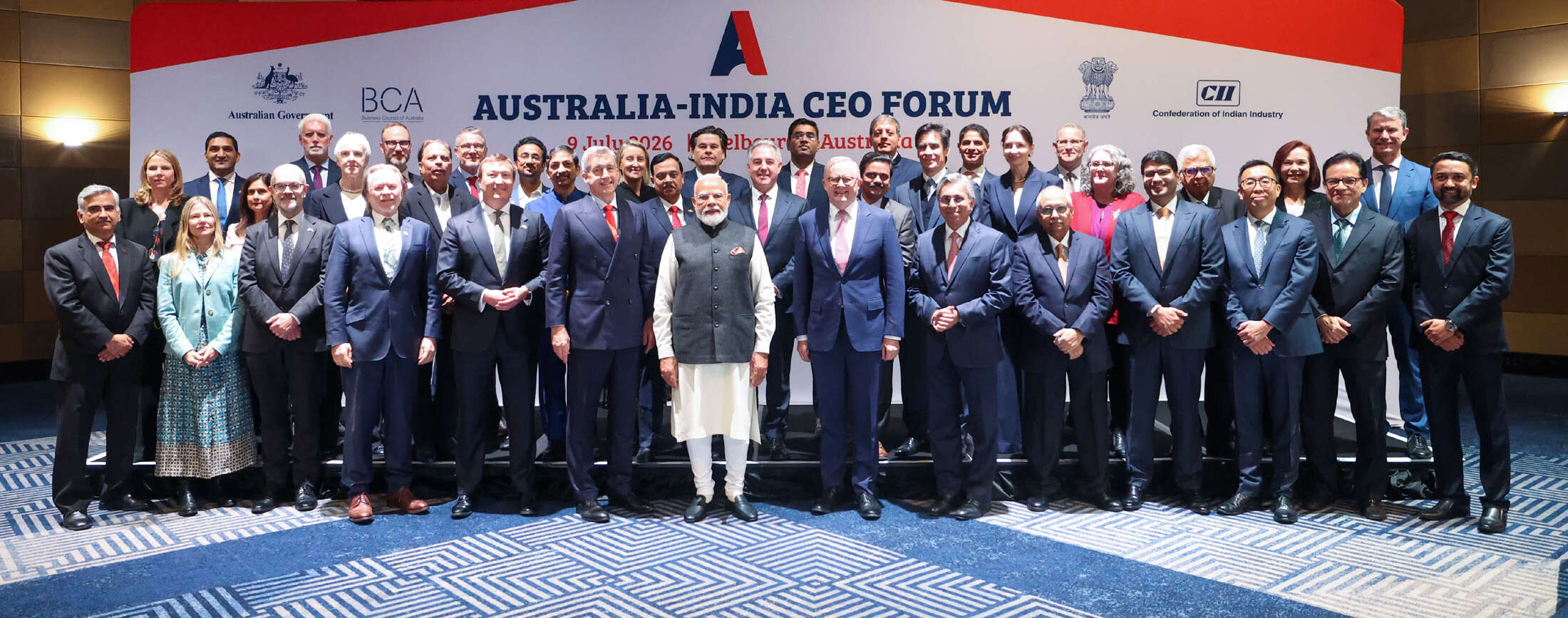
At the Australia–India CEOs Forum and Economic Roadmap Business event, Modi highlighted opportunities in manufacturing, infrastructure, clean energy, mining, critical minerals, aviation, logistics, artificial intelligence, fintech, food processing and the digital economy.
“India’s scale and Australian expertise make for a win-win proposition,” the Prime Minister said.
He also encouraged Australian superannuation funds, which manage assets exceeding $4 trillion, to expand their investments in India’s infrastructure and growth sectors.
“India offers your funds an opportunity for safe, stable and sustainable growth,” Modi told business leaders. “Our effort will be to ensure that your trust grows and your capital grows as well.”
The economic relationship increasingly reflects the complementarities between “Make in India” and Australia’s “Future Made in Australia” strategy. India requires minerals, energy resources, technology and long-term capital, while Australia is seeking access to India’s expanding consumer market, manufacturing base and digital economy.
Education and Skills Partnership Expands
Education continues to be one of the strongest pillars of India–Australia relations. The summit produced several new initiatives aimed at expanding institutional cooperation and creating a future-ready workforce.
Flinders University received a Letter of Intent to establish a campus in Bengaluru, while Victoria University received approval to establish and operate a campus in Gurugram. These institutions will add to the growing presence of Australian universities in India.
“India has been a preferred destination for Australian universities, and the opening of their campuses in India marks a new chapter in our knowledge partnership,” Modi said. “We should transform student mobility into a talent partnership.”
An MoU between India’s Ministry of Skill Development and Entrepreneurship and Technical and Further Education Western Australia will establish a Centre of Excellence in Mining Equipment, Technology and Services at the National Skill Training Institute in Bhubaneswar.
The centre will support training in mining operations, mine safety, mineral processing and mining machinery while enabling exchanges between Indian trainees and institutions in Western Australia.
A separate Letter of Intent between India’s National Council for Vocational Education and Training and the Australian Skills Quality Authority will strengthen quality assurance, regulatory cooperation and the alignment of occupational standards.
Wider Cooperation in Science, Clean Energy and Culture
The summit also expanded cooperation in science, innovation, renewable energy, traditional knowledge and creative industries.
An MoU between the Geological Survey of India and Geoscience Australia will promote advanced mineral exploration techniques, technological modernisation and capacity building. The Council of Scientific and Industrial Research and the University of Melbourne will collaborate in areas including drug-target identification, research training and faculty exchanges.
An agreement will provide IP Australia access to India’s Traditional Knowledge Digital Library, helping patent examiners identify prior knowledge relating to traditional Indian systems and prevent inappropriate intellectual property claims.
The two countries also operationalised a Rooftop Solar Training Academy at Pandit Deendayal Energy University in Gandhinagar. The initiative aims to train 2,000 women and young people as solar technicians, installers and technical assistants.
Cooperation under the Australia–Canada–India Technology and Innovation Partnership will expand trilateral engagement in emerging technologies, while an MoU between the Satyajit Ray Film and Television Institute and Griffith Film School will support joint academic programmes, workshops and film projects.
Australia also agreed to return three historic Indian antiquities originating from Tamil Nadu: an 11th–12th century granite sculpture of Nandi, an 11th century bronze trident bearing an image of Bhadrakali, and a 12th century stone sculpture of the six-headed Karttikeya.
From Strategic Convergence to Institutional Integration
The outcomes of Modi’s Australia visit demonstrate that bilateral ties are moving beyond periodic diplomatic engagement towards long-term institutional integration.
Defence interoperability, maritime coordination and military exchanges are creating a stronger security architecture. Nuclear cooperation, critical-mineral partnerships and clean-energy initiatives are addressing India’s long-term energy requirements. PACTS connects technological innovation with national security and economic resilience, while CECA could provide a broader framework for trade and investment.
The partnership is also increasingly linked to the wider strategic environment. Both countries support a free, open and rules-based Indo-Pacific and seek stronger regional institutions, secure maritime routes, diversified supply chains and trusted technology ecosystems.
“Today, the world is passing through a period of uncertainty, supply-chain disruption and energy crisis,” Modi said. “At such a time, it is both natural and necessary for India and Australia to move forward as natural and trusted partners.”
The long-term impact of the summit will depend on implementation. The uranium supply framework must translate into commercial arrangements; the Critical Minerals Corridor will require viable investments and processing partnerships; CECA negotiations will have to resolve remaining market-access and regulatory issues; and defence cooperation must generate sustained industrial and technological collaboration.
Yet the strategic direction is clear. India and Australia increasingly view each other not merely as trading partners but as long-term partners in economic security, advanced technology, energy transition and Indo-Pacific stability.
As Modi said at the conclusion of the summit: “The India–Australia partnership is not merely a partnership of the present; it is also a partnership of the future.”