India has taken a significant step towards expanding its airborne surveillance capabilities, with the Defence Research and Development Organisation signing two industry contracts for the conversion of six Airbus A321 aircraft and the integration of indigenous mission systems under the Airborne Early Warning and Control Mk-II programme.
The contracts bring together the DRDO’s Centre for Air Borne Systems, AI Engineering Services Limited and Adani Defence Systems and Technologies for different parts of the programme. The initiative is intended to provide the Indian Air Force with aircraft offering longer endurance, extended surveillance coverage, secure communications and improved command-and-control capabilities.
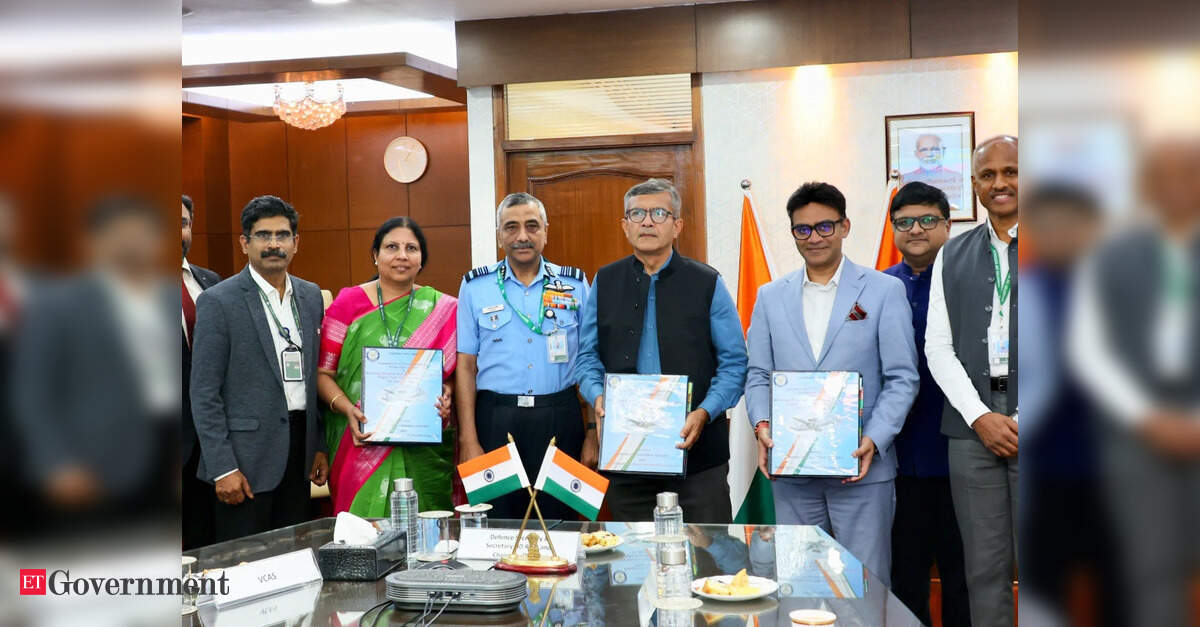
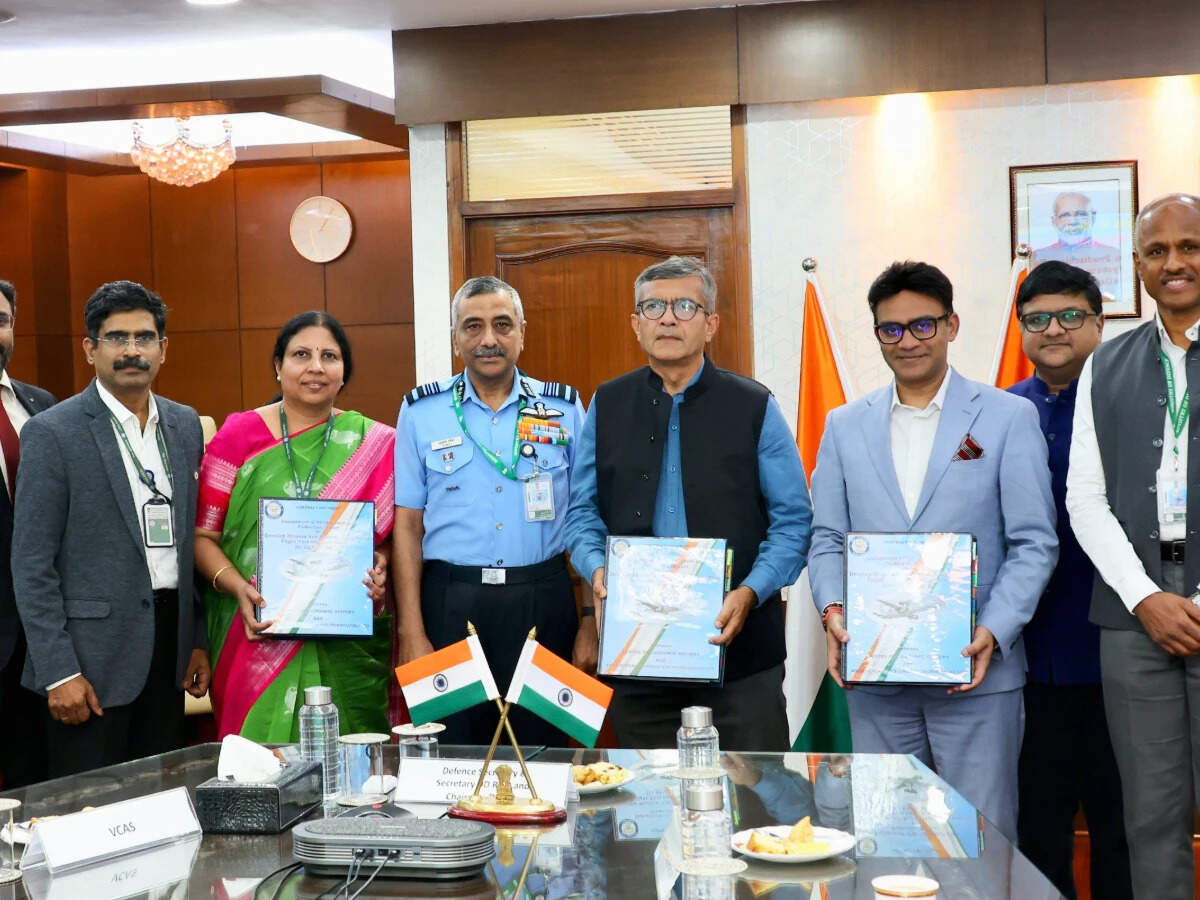
The Centre for Air Borne Systems, or CABS, signed the contracts in New Delhi on July 22 in the presence of Defence Secretary and Secretary, Department of Defence Research and Development, Rajesh Kumar Singh, who also serves as Chairman of the DRDO.
Under the first contract, AI Engineering Services Limited will convert six A321 passenger aircraft from their existing commercial configuration into a “green” configuration suitable for subsequent modification as military surveillance platforms. The conversion will prepare the aircraft for structural changes, installation of specialised equipment and integration of the sensors, communication systems and operator stations required for the AEW&C role.
The second contract appoints Adani Defence Systems and Technologies as the Development-cum-Production Partner for the mission systems designed for the AEW&C Mk-II. The company will work with CABS on the integration of these systems on the modified aircraft supplied through Airbus Defence and Space, the original equipment manufacturer.
CABS and Adani Defence will also participate in flight testing of the aircraft alongside the Indian Air Force. The platforms will have to secure certification from the Centre for Military Airworthiness and Certification and undergo quality assurance oversight by the Directorate General of Aeronautical Quality Assurance before operational induction.
An airborne command centre
Airborne early warning and control aircraft are designed to detect and track aircraft, missiles and other aerial threats at considerable distances. Operating at altitude enables their radars to look beyond the limitations imposed on ground-based systems by terrain and the curvature of the earth.
The aircraft can also share a common operational picture with fighter aircraft, ground-based air defence units and command centres. This makes them more than surveillance platforms: they function as airborne command posts capable of directing combat aircraft, coordinating interceptions and supporting complex air operations.
According to the Ministry of Defence, the AEW&C Mk-II will provide “enhanced endurance, advanced airborne surveillance, secure communication, improved situational awareness and enhanced command and control capabilities.” These capabilities are expected to strengthen India’s ability to identify and respond to threats over extended ranges.
The programme builds upon the experience gained by CABS in developing the Netra AEW&C system, which uses the Embraer ERJ-145 platform. The larger A321 airframe provides more space for mission equipment, crew stations and power-generation systems, while also offering greater endurance. The Mk-II is therefore expected to provide a wider surveillance footprint and remain on station longer than the smaller Netra aircraft.
The exact performance specifications, delivery schedule and financial value of the contracts were not disclosed in the government announcement.
The programme will also remain dependent on the timely completion of aircraft conversion, mission-system integration, flight trials and airworthiness certification. Integrating complex radar and communication equipment into an airliner platform is a demanding process involving structural, aerodynamic, electrical and software modifications.
Expanding the role of domestic industry
The division of responsibilities reflects an important feature of the government’s defence indigenisation strategy. Rather than limiting private companies to the supply of individual components, the Development-cum-Production Partner model brings industry into the programme during the development and integration stages.
The approach can help transfer production knowledge from the DRDO to industry, establish manufacturing capacity and improve the prospects for lifecycle support within the country. For a high-value platform expected to serve for several decades, access to domestic maintenance, upgrades and system integration could reduce dependence on foreign suppliers.
At the same time, the AEW&C Mk-II is not a completely indigenous platform. It uses the Airbus A321 as its base aircraft and will require continued cooperation with the original equipment manufacturer. Its significance lies primarily in the domestic development and integration of mission systems—the radar, electronic, communication and command infrastructure that determines the platform’s operational role.
This distinction is important when assessing self-reliance in defence. Indigenous capability does not necessarily require every component to be produced domestically from the beginning. It can also involve progressively acquiring control over critical technologies, system architecture, integration, software, maintenance and future upgrades.
The wider Make in India defence push
The AEW&C contracts form part of a broader effort to shift India from dependence on imported military equipment towards domestic design and production. The policy framework includes the Defence Acquisition Procedure 2020, Positive Indigenisation Lists, the SRIJAN portal, higher foreign direct investment limits and programmes such as Innovations for Defence Excellence, which connects the armed forces with startups and smaller technology companies.
The government has also reserved procurement categories for Indian vendors and encouraged the services to source equipment from domestic manufacturers. These measures have supported the development of aircraft, helicopters, warships, artillery systems, missiles, radars and electronic warfare equipment within the country.
Official figures indicate that defence production reached a record ₹1.78 lakh crore in 2025–26, up from ₹1.54 lakh crore in the preceding financial year. Defence exports rose to ₹38,424 crore, compared with ₹686 crore in 2013–14. Nearly 65 per cent of India’s defence equipment is now produced domestically, while the private sector accounted for approximately 24 per cent of defence production in 2025–26. The government has set targets of ₹3 lakh crore in annual defence production and ₹50,000 crore in exports by 2029.
However, headline production and export figures do not by themselves establish technological self-sufficiency. India continues to depend on overseas suppliers for several critical subsystems, including certain engines, sensors, specialised materials and high-end electronic components. Programmes such as the AEW&C Mk-II will therefore be judged not only by their indigenous content but also by whether they create durable domestic competence in complex system integration.
For the Indian Air Force, the immediate priority is acquiring sufficient surveillance coverage and ensuring that the new aircraft enter service without avoidable delays. For the domestic defence industry, the programme offers an opportunity to demonstrate its ability to participate in one of the most technically demanding areas of military aviation.