India can no longer view its neighbourhood only through the narrow lens of adjoining land borders.
Its security, prosperity and global influence will increasingly depend on developments across the Indian Ocean, Central Asia, West Asia and the Indo-Pacific, Bihar Governor Lieutenant General Syed Ata Hasnain said while calling for an integrated national strategy combining military preparedness, economic strength, technology, diplomacy and civilisational influence.
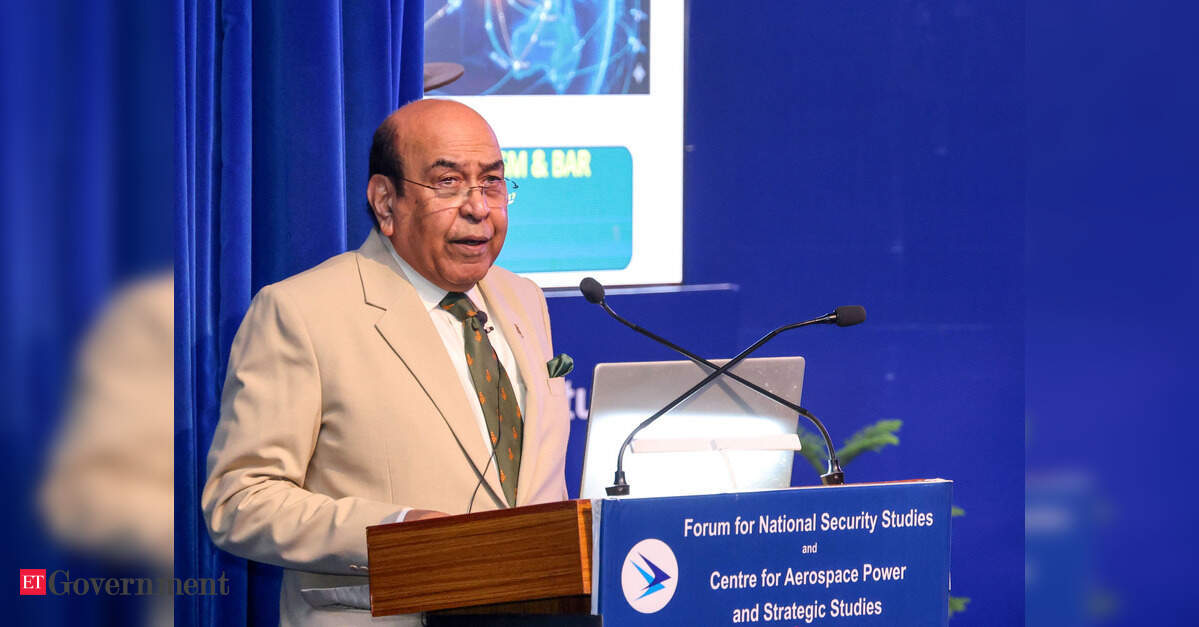
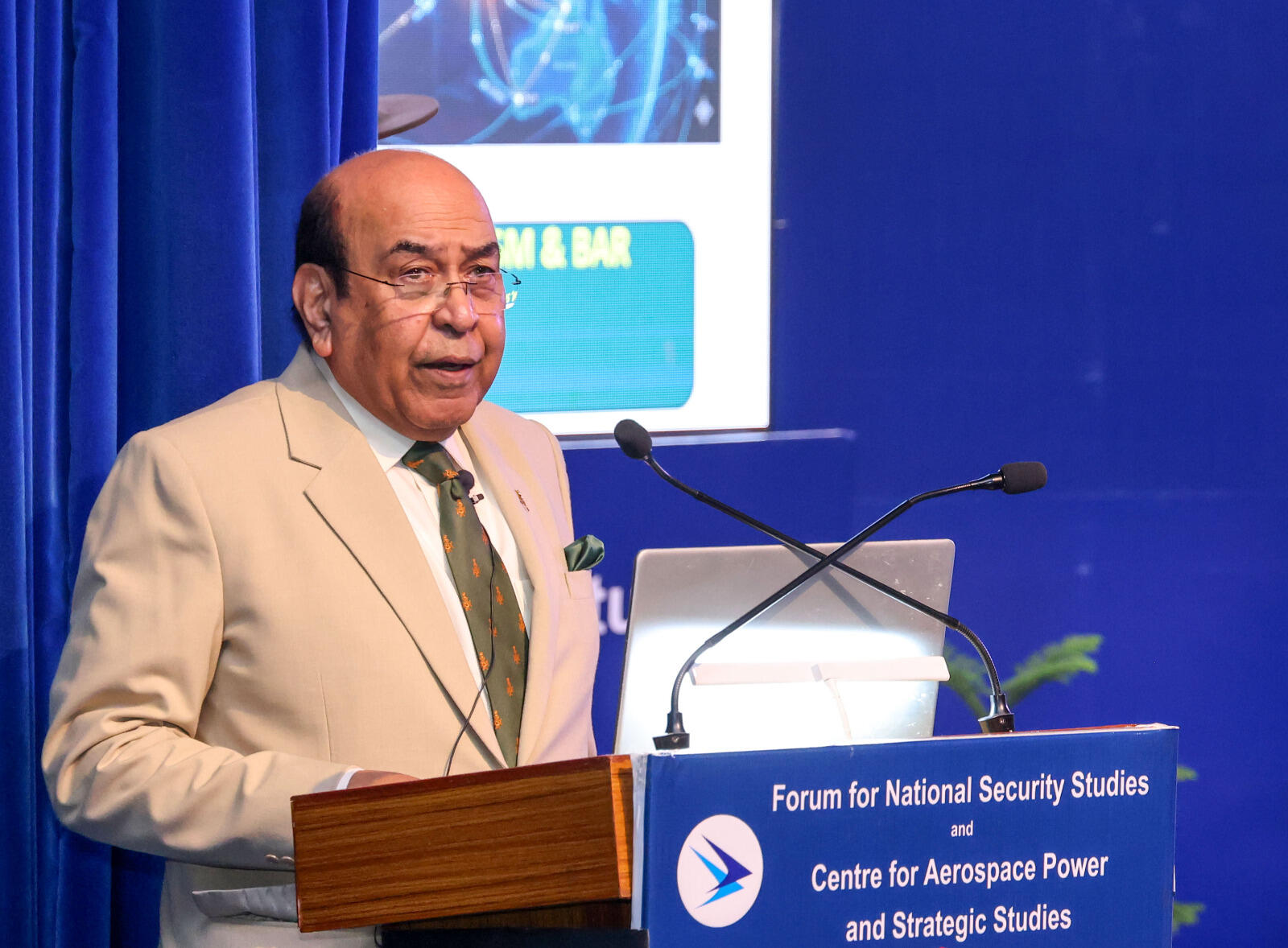
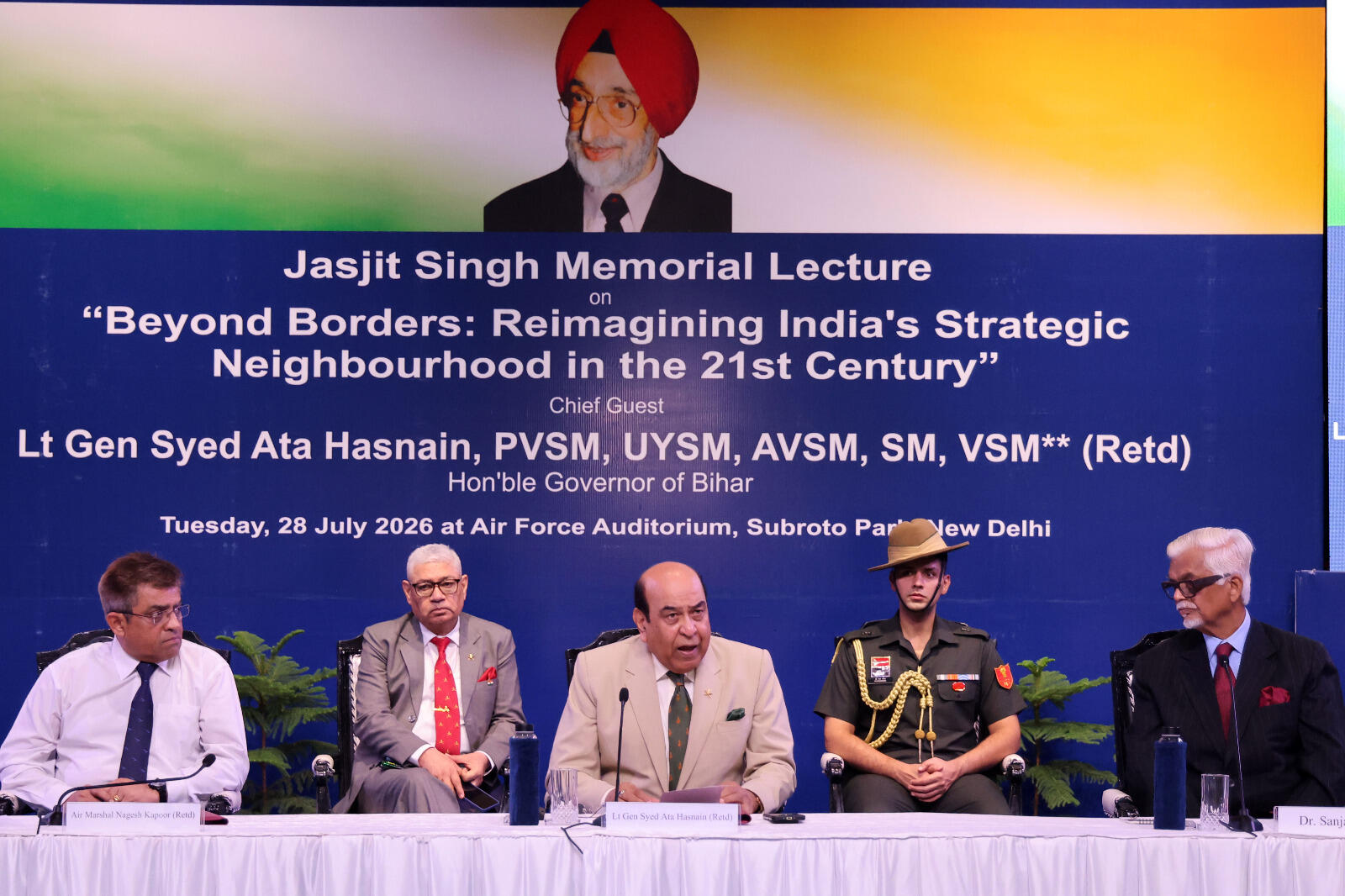
Delivering the 9th Jasjit Singh Memorial Lecture at the Air Force Auditorium in New Delhi on July 28, Lt Gen Hasnain spoke on “India’s Neighbourhood and Security Challenges.” The event was organised by the Centre for Aerospace Power and Strategic Studies (CAPSS).
The programme began with welcome remarks by Air Marshal Nagesh Kapoor, SYSM, PVSM, AVSM, VM (Retd), Director General, CAPSS. Dr Sanjaya Baru, Chairman and Founder Trustee of the Forum for National Security Studies and Distinguished Fellow at CAPSS, delivered the session chair’s remarks and later moderated the question-and-answer session, during which the Governor responded to questions from the audience.
Paying tribute to Air Commodore Jasjit Singh, Lt Gen Hasnain described him as much more than an outstanding officer of the Indian Air Force. He recalled Jasjit Singh as one of the pioneers who brought air power into the mainstream of India’s national security discourse and combined professional experience with scholarship, institution-building and intellectual leadership.
Addressing an audience that included military professionals, strategic experts and participants joining through digital platforms, the Governor said he had consciously avoided an excessively technical approach. His purpose was to make the complexities of geopolitics and national security accessible while encouraging a broader understanding of India’s strategic geography.
The central premise of his address was that India’s neighbourhood has expanded. It is no longer confined to the countries with which India shares a land or maritime boundary. As India’s capabilities and aspirations grow, its strategic interests stretch from the western Pacific to West Asia and Central Asia, covering the wider maritime and continental spaces that influence its security and economic prospects.
“The neighbourhood has expanded,” Lt Gen Hasnain said, stressing that modern security challenges are shaped not only by geography but also by connectivity, technology, cyber operations, information flows, supply chains and geopolitical alignments. India must therefore consider multiple neighbourhoods—the immediate land neighbourhood, the maritime neighbourhood, the extended neighbourhood and the increasingly important virtual domain.
He argued that managing the immediate neighbourhood remains the foundation of India’s rise. Political instability, economic distress, radicalisation, hostile intelligence activity, maritime competition and external intervention in neighbouring countries can directly affect India. The country must prevent the emergence of strategic vacuums in its vicinity by offering credible economic, developmental and security partnerships.
Turning to China, the Governor said Beijing’s activities in India’s neighbourhood could not be understood solely in terms of infrastructure or commercial investments. Ports, roads, connectivity corridors and other projects can serve multiple strategic purposes, enabling China to build influence, apply pressure and shape political choices without necessarily crossing the threshold of conventional warfare.
China’s approach, he observed, includes sustained diplomatic pressure, economic leverage, information operations, technological influence and military preparedness. Periodic crises and calibrated pressure can also be used to influence perceptions within India and reinforce China’s image as Asia’s dominant power.
India’s response must consequently extend beyond military readiness. “India’s response cannot remain confined to the military domain. It must extend across the entire spectrum of national power,” he said. This would require stronger economic resilience, technological superiority, international partnerships, strategic communication and a coordinated approach involving the entire government.
On Pakistan, Lt Gen Hasnain described the country as a persistent security challenge whose geopolitical location has repeatedly allowed it to exercise influence disproportionate to its economic and political strength. Pakistan’s nuclear capability, long-established regional networks and use of asymmetric methods have enabled it to keep India strategically engaged.
However, he cautioned against allowing Pakistan to consume an excessive share of India’s strategic attention. “Pakistan is a permanent tactical distraction; China is India’s defining strategic challenge,” he said, underlining the importance of balancing vigilance on the western front with preparation for the larger, long-term competition with China.
India’s economic transformation, technological modernisation and growing global partnerships should not be derailed by Pakistan’s attempts to impose continuing costs.
Bangladesh, he said, is one of India’s most consequential neighbours because developments there have direct implications for the security, stability and economic prospects of eastern and northeastern India. Geography can create constraints, but it also offers transformative opportunities. Road, rail and waterway connectivity through Bangladesh can significantly improve the Northeast’s access to the rest of India and to regional markets.
India’s policy towards Bangladesh, he suggested, should be based on patience, consultation and sensitivity rather than political partisanship. A stable and prosperous Bangladesh is in India’s interest. The relationship must be continually nurtured, as goodwill cannot simply be inherited from history.
Central Asia was another major focus of the address. Lt Gen Hasnain said India possesses deep civilisational and cultural links with the region but faces the disadvantage of limited direct physical connectivity. Projects such as Chabahar Port and associated transport corridors remain important for overcoming that constraint. He also warned that Central Asia’s large, broadly moderate Muslim population could become a target for extremist influence, making the region’s stability relevant to India’s security.
West Asia, he said, is indispensable to India because of energy dependence, trade, maritime routes, investments, strategic partnerships and the presence of a large Indian diaspora. With the region witnessing recurring conflict and geopolitical realignment, New Delhi will have to preserve its valuable relationships with multiple powers while carefully assessing whether its traditional doctrine of balancing all sides remains sufficient in every circumstance.
The Indo-Pacific, according to the Governor, will have an even greater bearing on India’s future. It is no longer merely a maritime theatre; it is where global trade, emerging technologies, supply chains and geopolitical competition increasingly converge.
“The Indo-Pacific is not about containing any one country. It is about ensuring a free, open and rules-based region in which India’s rise can continue unhindered,” he said. India’s strategy must include naval capability, manufacturing strength, resilient supply chains and deeper partnerships with Japan, South Korea, Australia and other like-minded countries.
One of the most distinctive elements of the address was Lt Gen Hasnain’s emphasis on civilisational power. Drawing upon Bihar’s historic legacy, he referred to Nalanda, Bodh Gaya, Rajgir and Vaishali as centres from which ideas, knowledge and culture travelled across Asia.
He described this as the “Nalanda approach”—the proposition that India’s greatest historical influence in Asia arose not primarily from military conquest but from intellectual leadership and civilisational exchange. “Soft power alone is insufficient, but when complemented by hard power, it becomes a powerful instrument of statecraft,” he said.
India, he concluded, requires a fusion of military, economic, diplomatic, technological and civilisational capabilities, supported by effective strategic communication. Its greatest advantage is the trust it enjoys across much of the extended neighbourhood. India is widely regarded as a partner that seeks development rather than dominance and does not impose extraterritorial conditions.
“The success of India’s neighbourhood policy will be measured not by the number of countries it can influence, but by the number that willingly choose to partner with it,” Lt Gen Hasnain said. India’s challenge is no longer merely to defend its borders, he added, but to shape the strategic environment well beyond them.