India’s defence establishment is undergoing one of its most significant transformations since the Kargil War. Lessons from Operation Sindoor, the Russia-Ukraine conflict and the wars in the Middle East are driving a shift towards artificial intelligence, autonomous systems, long-range precision weapons and faster defence acquisitions.
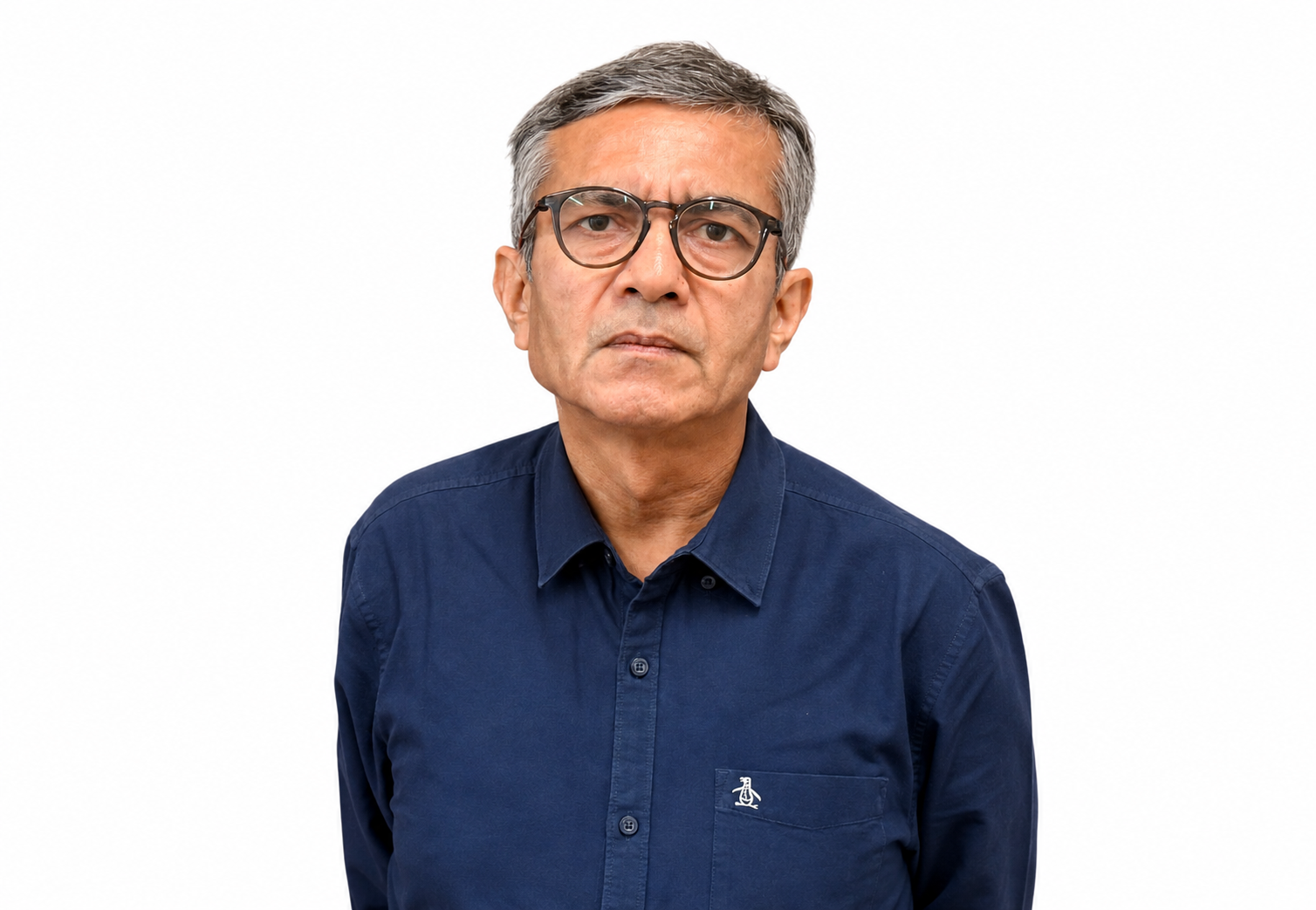
At the same time, the government is accelerating reforms in DRDO, expanding private sector participation and strengthening indigenous defence manufacturing. In this interview with Anoop Verma, Rajesh Kumar Singh, Defence Secretary, Ministry of Defence, and Chairman of the Defence Research and Development Organisation (DRDO), discusses the roadmap for future warfare, technological sovereignty, defence innovation and India’s ambition to emerge as a global defence technology power.
Edited excerpts:
Operation Sindoor is widely regarded as a watershed in India’s response to cross-border terrorism. What are the most important operational and technological lessons the Ministry of Defence has drawn from it?
Operation Sindoor underlined several lessons that we must institutionalise if we are to remain agile in future conflicts. The first is the importance of precision-guided, long-range stand-off weapons, which allow us to engage high-value targets accurately while reducing the exposure of our own platforms. The second is that warfare can no longer be viewed only through the traditional domains of land, sea and air; space and cyber capabilities must be integrated into the larger operational framework.It also reinforced the need for superior situational awareness. When forces employ long-range and multi-domain capabilities, they require a networked intelligence architecture that can continuously provide real-time information to the relevant targeting nodes. Unmanned systems, too, can no longer be treated as supplementary assets; they must become an integral part of the military architecture.
Artificial intelligence will be equally important, particularly in compressing the sensor-to-shooter loop by processing large volumes of battlefield data and enabling faster, more precise decisions. Taken together, these lessons reflect a fundamental change in the character of warfare, and our institutions must be able to adopt, integrate and scale the required technologies quickly.
The wars in Ukraine and the Middle East have changed perceptions of future warfare. Which lessons are most relevant to India, particularly given our borders with Pakistan and China?
These conflicts have validated the growing importance of artificial intelligence, long-range precision strike capabilities and unmanned systems. But one of the most significant lessons is the scale of attrition in a prolonged, high-intensity conflict. Wars are lasting longer than many had anticipated, and that makes industrial depth extremely important. A country must have a defence industrial base capable of sustaining production and replenishing critical equipment and munitions over an extended period.
The conflicts have also exposed the strategic vulnerability created by dependence on external supply chains and imported technologies. In a prolonged confrontation, such dependencies can directly affect combat readiness. This is why technological sovereignty and industrial self-reliance are national-security imperatives, not merely economic goals. Our approach is therefore evolving from ‘Make in India’ to ‘Design and Make in India’.
We must strengthen domestic research, own intellectual property and build manufacturing capacity within the country so that critical technologies and supply chains remain under our control.
Since taking on the additional responsibility of Chairman of DRDO, you have emphasised the need to make the organisation more agile and accountable. How will the revised Delegation of Financial Powers, or DFP-2026, accelerate technology development and induction?
DFP-2026 is part of a broader reform architecture being implemented across the Ministry of Defence. After structural changes in the Department of Defence and the Armed Forces, we are extending important administrative reforms to DRDO. The purpose is to give laboratory and project directors greater financial authority and operational flexibility.
When decision-making is delegated closer to the point of execution, bureaucratic delays are reduced and projects can move with greater speed and continuity. However, faster research and development alone will not be enough. The technologies that emerge from DRDO must also be inducted quickly into the Services. That requires strong and seamless partnerships with defence public sector undertakings as well as the private industry.
The objective is to align our financial and administrative systems with the pace at which contemporary defence technologies must be developed and deployed.
Many experts argue that DRDO should increasingly operate as a technology incubator, while industry takes responsibility for manufacturing. Do you see the organisation moving decisively in that direction?
Yes, that is broadly the direction in which we are moving. DRDO’s primary role should be cutting-edge research, design and technology incubation. Once a prototype is developed and the technology matures, large-scale production should increasingly be undertaken by industry through an effective transfer of technology.
This transition is already visible. In the past, technology transfers were largely confined to defence public sector undertakings. Today, DRDO has more than 200 Development-cum-Production Partnerships with private companies. Industry is also entering sensitive and complex areas that were previously considered highly restricted, including conventional armaments and advanced fighter-aircraft programmes.
The model is producing tangible results: major production contracts based on DRDO technologies have been awarded to private partners for systems such as the Advanced Towed Artillery Gun System and Close Quarter Battle Carbines. Going forward, DRDO should concentrate on advanced innovation, while public and private industry assume a larger role in producing missiles, armoured vehicles and next-generation land systems at scale.
DRDO has built considerable strength in missile systems, including long-range weapons and ballistic missile defence. What should India prioritise in this domain over the next decade?
Missile systems will remain central to India’s strategic deterrence and national-security architecture. DRDO has created a broad portfolio, from tactical short-range weapons to strategic long-range systems, but the next phase must combine continued technological advancement with the ability to manufacture at scale.
Long-range precision-strike capabilities and ballistic missile defence will remain vital, and we must keep improving guidance, survivability and payload-delivery technologies as the threat environment evolves. At the same time, recent conflicts have shown that even the most advanced design has limited value if it cannot be produced in sufficient numbers. India therefore needs larger production capacity and stronger supply chains, with the private sector playing a major role.
DRDO should focus on high-risk research and mature technologies to the appropriate Technology Readiness Level; once operational maturity is achieved, industry should take responsibility for manufacturing, integration and supply-chain management. That division of roles will help us field advanced systems in adequate numbers and within operationally relevant timelines.
Drones are now influencing the battlefield as significantly as tanks and artillery once did. Is India developing an integrated doctrine for surveillance drones, combat platforms, loitering munitions and counter-drone systems?
Headquarters Integrated Defence Staff, working closely with the three Services, is preparing a ten-year Integrated Capability Development Plan. It will include substantial provisions for the induction and integration of unmanned aerial systems across the Armed Forces, including surveillance platforms, combat drones and loitering munitions.
However, the threat environment does not allow us to wait for long-term planning cycles to conclude. After Operation Sindoor, emergency financial powers and fast-track procurement mechanisms were activated to enable the rapid induction of offensive drone platforms as well as counter-unmanned aerial systems. The technology cycle in this field is much shorter than that of conventional military equipment.
Our acquisition system must therefore become equally agile so that the Services can continuously access current capabilities rather than receive technology that has already been overtaken by the time it is inducted.
In your address at an earlier edition of Bharat Defence Conclave, you talked about attracting more foreign direct investment into defence. How do you assess the progress, and what challenges remain?
Defence FDI requires a careful balance. India needs foreign capital and access to advanced technology, which is why the policy permits up to 74 per cent investment through the automatic route and up to 100 per cent with government approval. At the same time, the larger objective is to build a self-reliant domestic defence industry and create Indian companies capable of becoming national—and eventually global—champions.
That is why procurement categories such as Make-I and Make-II require Indian ownership, with at least 51 per cent Indian equity. We recognise that this may discourage some foreign companies, but it is a conscious policy choice intended to encourage foreign original equipment manufacturers to establish meaningful partnerships and joint ventures with Indian firms rather than dominate the domestic market. The framework also retains flexibility where niche or critical technologies are involved.
The C-295 transport-aircraft programme is an example of how capability acquisition can be combined with the creation of manufacturing capacity in India. FDI, therefore, is not simply about bringing capital into the country; it must help embed technology, manufacturing capability and resilient supply chains within India.
India has recorded strong growth in defence production and exports. Which technology domains remain our biggest vulnerabilities, and how are those gaps being addressed?
India has developed considerable capability in missiles, armoured land platforms and modern munitions, but important gaps remain in complex core technologies. Advanced aero-engines are perhaps the most significant. The metallurgy, materials and precision engineering required for high-thrust military engines are among the most closely protected capabilities in the world. We also need stronger domestic capabilities in high-power automotive engines and specialised power packs for heavy armoured platforms.
Another area of dependence is advanced sensors and payloads, including electro-optical and infrared systems used in satellites, unmanned aerial platforms and fighter aircraft. These gaps cannot be closed overnight. In the near term, we are pursuing strategic technology partnerships, targeted foreign investment and co-development arrangements. But these measures must serve as a bridge to the larger objective. Under the ‘Design and Make in India’ approach, India must ultimately acquire sovereign capability in the research, design and full-scale development of these critical technologies.
The Defence Acquisition Council has recently cleared several major proposals. Do these approvals signal a broader change in India’s procurement philosophy?
They are part of a continuing effort to make the procurement system substantially faster. Traditionally, a standard acquisition could take three to four years. Through a series of reforms, that period has already been reduced to roughly two to two-and-a-half years. Our objective is to bring it down further, ideally to about one year.
For technologies such as drones and other unmanned systems, even that may be too slow because product cycles are exceptionally short. Wherever feasible, such acquisitions should be completed within six months. In the present security environment, the speed at which a capability is acquired and inducted can be as important as the capability itself.