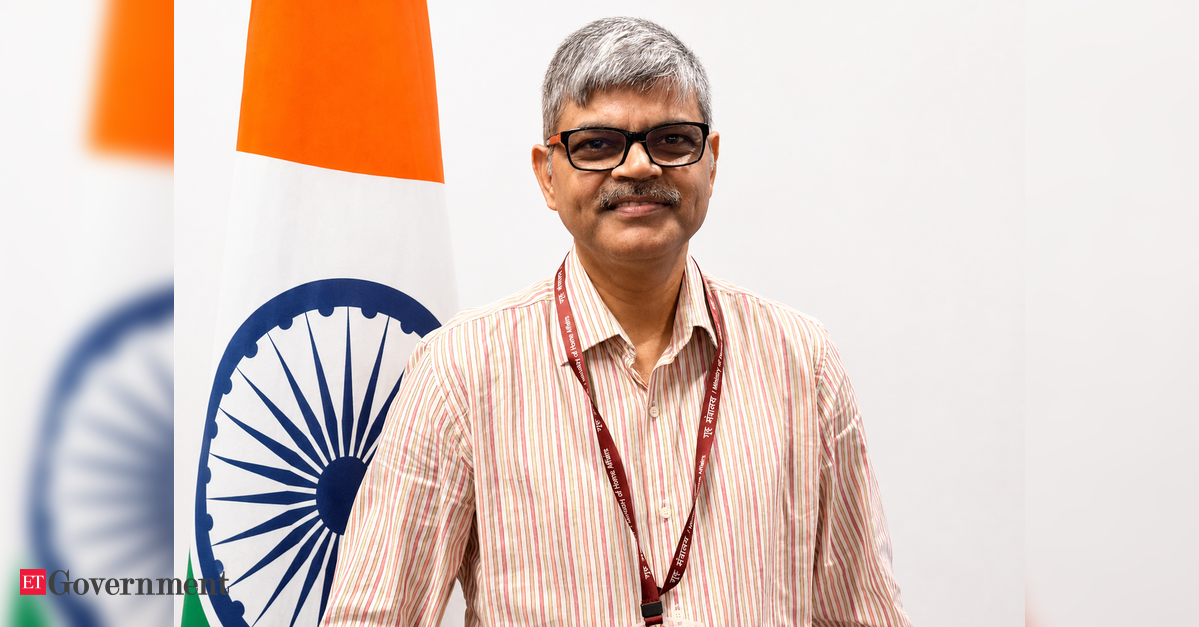

Government e-Marketplace (GeM) has emerged as a central pillar of India’s digital public procurement ecosystem, crossing a cumulative Gross Merchandise Value (GMV) of ₹20 lakh crore, with more than ₹5 lakh crore recorded in FY 2025-26 alone. As the platform enters its second decade, its focus is shifting towards greater scale, wider participation, AI-driven analytics and deeper integration with India’s Digital Public Infrastructure ecosystem.In a conversation with Anoop Verma, Mihir Kumar, CEO, Government e-Marketplace, discusses the factors driving GeM’s growth, the increasing role of AI and machine learning, opportunities for MSMEs, startups and women entrepreneurs, the platform’s engagement with defence procurement, and efforts to expand adoption across states and local bodies. He outlines GeM’s next-generation architecture, including plans for more than 150 integrations, predictive analytics and a platform capable of handling five to ten times its current data and usage.
Edited excerpts:
Government e-Marketplace has completed nearly a decade and emerged as one of the world’s largest digital public procurement platforms. Looking back, what do you consider the three most significant milestones in GeM’s journey?
If I have to look at the ten-year journey of Government e-Marketplace, the first and foremost achievement has been access. Being born as a technology platform, GeM has enabled small sellers as well as Original Equipment Manufacturers (OEMs), irrespective of where they are located in the country, to access the public procurement ecosystem. It has substantially lowered the barriers to entry into government procurement.
The second major contribution has been eliminating information asymmetry. In the earlier days, when DGS&D existed and procurement was undertaken by different organisations, information relating to tenders and items being procured by government departments was scattered and fragmented. There was no common place where sellers could access this information. GeM created that common marketplace and made procurement-related information available to everyone on an equal basis. It created opportunities while ensuring identical treatment for sellers.
The third significant milestone is the marketplace model itself. Electronic procurement systems have existed for some time, where tenders are uploaded on a portal, evaluated and eventually awarded. GeM introduced something fundamentally different—a marketplace for public procurement. It is a distinct model of conducting government procurement, with relatively few parallels globally. I would consider these three among GeM’s most important contributions.
GeM has recorded significant growth in Gross Merchandise Value, including more than ₹5 lakh crore in FY 2025-26. What have been the key drivers of this expansion, and how sustainable is this growth trajectory?
We are continuously improving the bouquet of offerings available to buyers. At the same time, we are reaching out to more buyers across the country.
Today, all states and Union Territories have MoUs with GeM, and we have buyers and sellers from every state and UT. We are continuously engaging with state governments to encourage them to adopt Government e-Marketplace as their first choice for public procurement. Some states, including Uttar Pradesh, Gujarat, Maharashtra, Delhi and Assam, have already adopted GeM in a significant way, and we are encouraging others to expand their usage. At the same time, we are reaching out to seller organisations, industry bodies and other stakeholders to bring more sellers onto the platform.
Increasing the number of buyers and sellers is a continuous journey. Going forward, our focus will be on expanding participation, improving the bouquet of offerings available to buyers and sellers, and, most importantly, maintaining the trust that GeM has developed within India’s public procurement landscape. These are the three key elements for sustaining growth.
Artificial Intelligence, machine learning and advanced analytics are increasingly being integrated into GeM. How do you see AI reshaping public procurement, and what additional AI-driven capabilities can users expect?
GeM has always been an early adopter of technology, including business analytics, advanced analytics, Artificial Intelligence and machine learning. We currently have more than 22 AI and ML use cases.
A major objective is to maintain the sanity and integrity of the marketplace and monitor behavioural patterns among buyers and sellers. GeM is fundamentally a trust-based platform. We trust both buyers and sellers, but at the same time, technology enables us to monitor the ecosystem and identify instances where that trust may be breached. Our AI tools are therefore being used to nudge participants towards appropriate behaviour and maintain trust in the marketplace.
Going forward, we would like to significantly expand the footprint of AI and ML to make it easier for people to buy and sell through GeM. One possibility is creating assisted journeys for sellers as well as buyers. At present, many of our AI and ML applications analyse procurement data and subsequently generate information or alerts. In certain cases involving sellers, action may also be taken, while relevant information is provided to buyers for further examination or investigation.
As technology develops, we want to move from this largely reactive approach towards a much more proactive system—one capable of identifying and preventing undesirable behaviour before it affects the marketplace.
One of GeM’s important achievements has been increasing the participation of MSMEs, startups, women entrepreneurs and SC/ST enterprises. What policy and technological interventions have been most effective in making public procurement more inclusive?
We have incorporated the Government of India’s rules, regulations and guidelines governing public procurement into the platform. Our rule engines are compliant with the General Financial Rules and the manuals governing the purchase of goods and services. These guidelines themselves promote inclusivity and inclusive development.
We have also created dedicated digital storefronts to showcase products offered by women entrepreneurs, artisans, startups and participants under initiatives such as One District One Product. We currently have several such digital stores highlighting different categories of sellers and products. The marketplace also indicates whether a product qualifies under Make in India provisions. Similarly, buyers can use filters to identify micro and small enterprises.
Through these mechanisms, we try to facilitate both buyers and sellers and make procurement from inclusive categories easier.
The government has placed considerable emphasis on Vocal for Local and Aatmanirbhar Bharat. How is GeM helping domestic manufacturers become more competitive, and is the platform evolving into a catalyst for industrial growth?
One of the stated objectives of public procurement is to contribute to economic growth, inclusive growth and sustainable development. GeM is part of that larger ecosystem.
Under government guidelines, preference has to be given to Make in India products wherever applicable. We monitor compliance with these provisions so that buyers and sellers maintain the required discipline. That is one important way in which GeM supports Aatmanirbhar Bharat.
During vendor assessment and the onboarding of sellers and OEMs, we also examine the relevant criteria to ensure that indigenous sellers and manufacturers receive the opportunities envisaged under government policy.
GeM has expanded its outreach through initiatives such as GeM Suvidha Kendras. How important is physical facilitation alongside a digital platform, particularly for rural entrepreneurs and small businesses?
GeM is a digital platform, but we have to recognise that digital literacy varies considerably across different segments of sellers. We have to be realistic about that.
We therefore reach out to prospective sellers to facilitate their registration and, at the same time, handhold them so that they understand how the portal can help them conduct business. This is why we have adopted a hybrid approach. We conduct video conferences with prospective sellers and organise numerous onboarding and outreach programmes in collaboration with state governments, industry bodies and OEM organisations.
Our objective is not merely to increase registrations; we want to increase the number of active sellers. There is an important distinction. Registration is only the first step. Sellers subsequently need to put their products and services on the marketplace and actively participate. At present, around 25 lakh sellers have completed their profiles, while the number of active sellers generally varies between four and five lakh. Naturally, we would like a much larger proportion of those 25 lakh registered sellers to become active participants.
The impact is particularly visible in inclusive procurement. Women entrepreneurs have conducted business worth close to ₹99,000 crore through GeM, while startups have recorded business of around ₹65,000 crore. Micro and small enterprises have accounted for procurement running into several lakh crore. These figures demonstrate the scale of opportunity that public procurement can create.
Defence procurement is an important area for the government, particularly with the focus on indigenous technologies and startups. How is GeM working with the Ministry of Defence and the Armed Forces to simplify procurement while maintaining transparency and security?
We have a dedicated vertical of officers looking after the Ministry of Defence and the Ministry of Home Affairs because the requirements of these two organisations are somewhat unique and different from those of many other buyers.
We also interact with institutions such as DRDO, which are at the frontier of developing new technologies and promoting indigenisation. Recently, I was in Hyderabad discussing with senior DRDO officials how new and frontier technologies, including technologies transferred by DRDO to startups, can be brought into the GeM ecosystem. We are examining how these startups can be engaged and assisted in onboarding onto the platform.
We have also developed functionalities specifically suited to defence and security procurement. For instance, GeM has a confidential tender functionality to ensure that confidentiality is maintained for certain bids. We have also created categories of products and services that are unique to Ministry of Defence and Ministry of Home Affairs buyers. These are some of the ways in which we are enabling defence procurement through GeM while taking into account its specific requirements.
As procurement volumes increase, concerns around quality assurance, vendor verification and contract execution also grow. How is GeM strengthening trust while ensuring speed and efficiency?
In terms of speed and efficiency, GeM has made considerable progress compared with several other procurement platforms. A recent IIT Delhi study compared public procurement through the Karnataka procurement portal with Government e-Marketplace and found GeM to be around 40 to 50 per cent faster.
An earlier Ernst & Young study comparing different state public procurement portals also examined parameters such as turnaround time, price discovery, number of bids and success rates. GeM performed strongly on these parameters. Our median cycle time over the last two years has come down considerably. This demonstrates the improvements in speed and efficiency that have been achieved.
Vendor assessment is also designed to be largely digital. At the first level, we undertake desktop assessment. GeM is integrated with relevant national databases, including Aadhaar, PAN, GST and MCA21. When a seller registers on the platform and provides credentials, these can be cross-verified electronically. Sellers therefore do not have to run around submitting physical documents to establish the validity of their credentials.
For OEM vendor assessment, we use video-based assessment rather than requiring physical visits. Vendors can select an appropriate time for assessment, while technologies such as geotagging help us verify locations and production facilities. It is deliberately designed as a light-touch mechanism because we want to encourage vendors to join the platform and conduct business.
On quality assurance, we have a well-defined Incident Management Policy and an entirely online incident management system. The mechanism covers not only buyer complaints regarding quality but also seller concerns, including delayed payments. If a seller faces a payment issue, an incident can be raised and examined with the buyer so that appropriate action can be taken. Buyer behaviour, including payment behaviour, can therefore also be assessed.
Similarly, when buyers raise quality-related concerns, they are examined through the incident management mechanism. Quality-related complaints currently constitute only around 0.2 per cent of the total orders handled on the platform, which is relatively low.
GeM operates substantially on the principle of self-certification and trust. If a seller declares that a product meets Make in India requirements, for example, we begin from a position of trust. However, if that trust is breached, we intervene. Where violations are established, action can include suspension of sellers and red-flagging. The objective is to maintain trust without making participation unnecessarily cumbersome.
State governments have become major users of GeM. What are the biggest opportunities and challenges in expanding adoption at the state and local-government levels?
We have MoUs with all the states. Some states have issued comprehensive orders governing how Government e-Marketplace should be used for public procurement. Uttar Pradesh, for example, has issued comprehensive procurement guidelines covering the adoption of GeM. Similar initiatives have been taken by some other states, including Assam. We are encouraging other states to move towards comprehensive and unified guidelines. If different departments and urban local bodies are governed by separate and sometimes fragmented instructions, implementation becomes more complicated. A unified framework can make adoption much easier.
The second issue is institutional monitoring. At the Central Government level, we have a mechanism through which Additional Secretaries and Financial Advisers, or Joint Secretaries and Financial Advisers, periodically review procurement by departments and CPSEs under them. We are encouraging states to establish similar institutional mechanisms to regularly monitor procurement through GeM. The third area is information. We provide states with data relating to prices, efficiencies and procurement patterns so that they can better understand the advantages of using the platform. Capacity building is equally important.
Public procurement is fundamentally different from private procurement. In private procurement, a buyer has considerable discretion. Public procurement, however, is governed by rules and regulations. Officials need to understand both the procurement rules and how to operate the GeM platform. Capacity varies considerably across institutions and levels of government. Going forward, we need stronger mechanisms for handholding buyers, particularly at levels such as urban local bodies and Gram Panchayats.
Indians have become increasingly comfortable with digital platforms over the past decade. As GeM enters its second decade, what is your long-term vision? Could it evolve beyond a procurement marketplace into digital public infrastructure and potentially a global model?
GeM can certainly be viewed as part of India’s Digital Public Infrastructure ecosystem. The first principle is scale. GeM operates at population scale and has a footprint across the country, with buyers and sellers from every state and Union Territory.
The second principle is interoperability. Any platform built along DPI principles should be capable of connecting with other systems. GeM is already integrated with several major public digital platforms. On payments, for instance, we have integration with PFMS, while on vendor assessment we are connected with multiple national databases. We are now targeting more than 150 integrations. CPSEs and other organisations have their own ERP and inventory-management systems. Our objective is to build GeM’s capability so that it can integrate seamlessly with these different ERP systems.
We are currently replatforming GeM with DPI principles at the core. The new architecture will be designed for much greater scale and should be capable of handling perhaps five to ten times the current data and usage. We are also developing functionalities around the specific roles that different users perform on the platform. At the same time, the system has to follow a plug-and-play architecture so that it can connect easily with new platforms and systems as they emerge.
Another important element is the development of a smart data lake. As technology evolves, the possibilities for analysing public procurement data are becoming enormous. Public procurement itself will increasingly become granular and evidence-based. GeM has access to valuable information about who is buying, what they are buying and where opportunities exist for demand aggregation. This creates possibilities for predictive analytics and much more sophisticated procurement planning.
That is the ecosystem in which we envisage GeM evolving—as an important component of India’s broader Digital Public Infrastructure stack.