India and Japan have moved to give their defence partnership a sharper operational and industrial edge, with the two countries agreeing to deepen maritime security cooperation, expand the complexity of military exercises, explore joint naval shipbuilding and accelerate collaboration in advanced defence technologies.
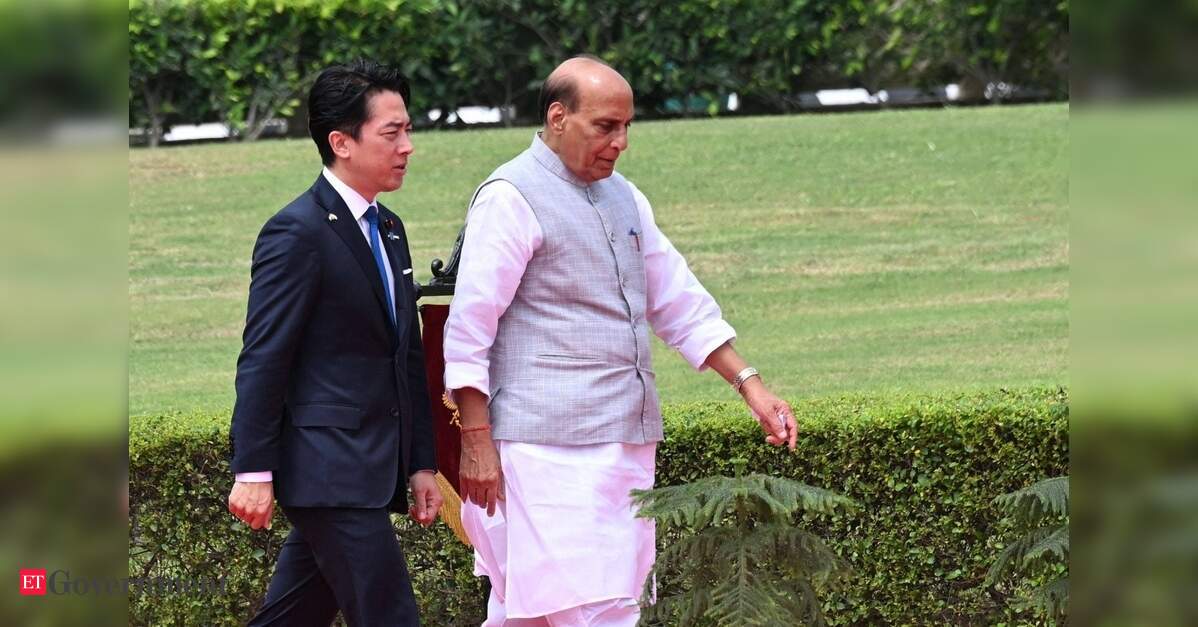
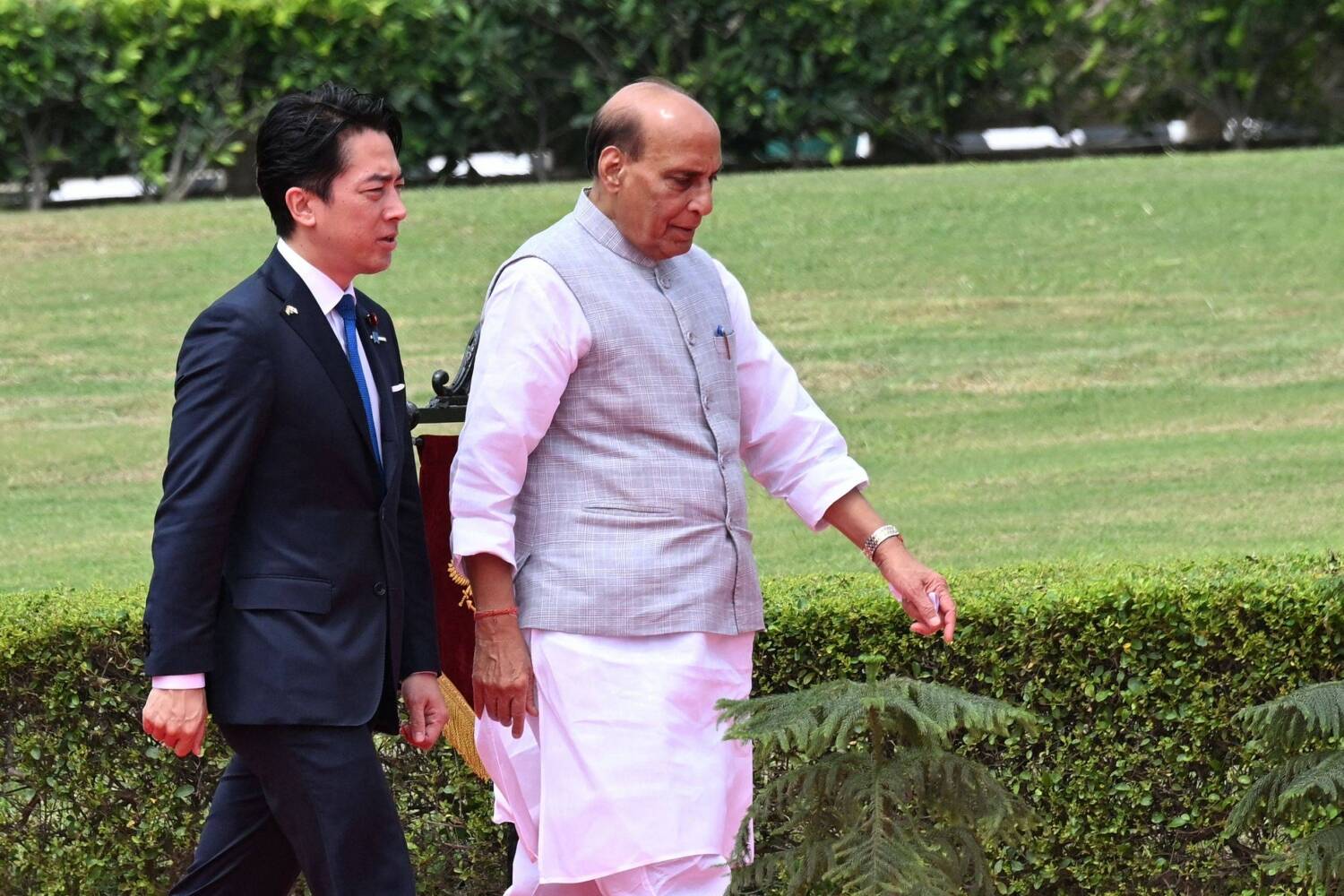
The agreements reached during talks between Defence Minister Rajnath Singh and Japanese Defence Minister Shinjiro Koizumi in New Delhi on August 20 suggest that the relationship is moving beyond strategic convergence and regular military exchanges towards more institutionalised operational cooperation.
The most significant outcome was the signing of a Memorandum of Arrangement on Maritime Security Cooperation, providing a framework for closer coordination between the Indian Navy and the Japan Maritime Self-Defense Force (JMSDF).
The meeting comes against the backdrop of growing strategic uncertainty across the Indo-Pacific, where the security of maritime trade routes, freedom of navigation, military modernisation and competition over critical technologies have become increasingly interconnected.
India and Japan stopped short of identifying any particular country in their statement, but their declaration of “strong opposition” to unilateral actions that impede freedom of navigation and overflight or seek to alter the status quo through force or coercion reflects their broader concerns about the regional security environment.
For India, Japan is emerging as an increasingly important component of its Indo-Pacific security architecture. For Tokyo, India’s geographic position astride the Indian Ocean and major sea lanes gives New Delhi considerable importance in any strategy aimed at maintaining a free and open maritime order.
The relationship has consequently developed from a largely political partnership into one encompassing military exercises, logistics, maritime domain awareness, defence technology and industrial cooperation.
Maritime cooperation moves to centre stage
The new maritime arrangement is arguably the most strategically consequential outcome of the August 20 meeting. It envisages greater information sharing in Maritime Domain Awareness, cooperation in Search and Rescue and Humanitarian Assistance and Disaster Relief, and stronger interaction between the two navies.
More significantly, the ministers agreed to strengthen coordination for protecting Sea Lines of Communications through naval visits, exercises, exchanges of personnel and subject-matter experts, and logistical cooperation involving ports, maintenance and repair facilities.
This emphasis reflects the strategic geography connecting the two countries. Japan, as a major trading economy dependent heavily on maritime commerce and energy imports, has a fundamental interest in secure shipping routes stretching from the western Pacific through Southeast Asia and into the Indian Ocean. India sits close to some of the most important maritime arteries connecting the Persian Gulf and Africa with East Asia.
Maritime cooperation is not entirely new to the relationship. The 2008 India-Japan Joint Declaration on Security Cooperation had already recognised their common interest in the safety of sea lines of communication. What is changing is the level of operational detail now being attached to that strategic principle.
The two sides have also agreed to pursue reciprocal provision of ship repair facilities and work towards concluding a ship-repair arrangement. This could have practical implications for the operational reach of both navies. Japan and India had already been exploring cooperation on maintenance of JMSDF ships in India during their 2024 defence engagements, with Japan noting that such arrangements could improve interoperability and enable more flexible JMSDF operations in the Indian Ocean.
Shipbuilding could become the next frontier
A potentially important new dimension is the decision to explore cooperation in naval shipbuilding and design. The ministers agreed that Japan’s technological expertise could be combined with India’s production capabilities and discussed Japan potentially using Indian manufacturing capacity under the Make in India framework.
This is strategically important because defence ties between India and Japan have historically developed faster at the diplomatic and exercise levels than in defence industrial collaboration. Both possess significant technological and manufacturing capabilities, but converting political alignment into substantial equipment programmes has proved more difficult.
Naval shipbuilding could provide a more promising route. India has an established military shipbuilding ecosystem and is seeking to expand indigenous production while becoming a larger defence exporter. Japan possesses sophisticated naval engineering, sensors, propulsion, communications and ship-design capabilities. Combining Indian manufacturing scale and costs with selected Japanese technologies could potentially create opportunities extending beyond the requirements of their own navies.
The ministers also identified mine countermeasures as an area where synergies should be maximised. Mine warfare receives less public attention than aircraft carriers, submarines or missiles, but the ability to detect and neutralise naval mines is crucial to keeping ports, chokepoints and shipping routes operational during a conflict.
Whether the shipbuilding proposals eventually mature into joint programmes will depend on technology-transfer arrangements, commercial viability, intellectual-property issues and procurement requirements. Nevertheless, their explicit inclusion at ministerial level indicates an attempt to turn defence industrial cooperation into a substantive pillar of the partnership.
UNICORN becomes a test case for technology cooperation
The UNICORN integrated communications antenna system is central to this effort. Singh and Koizumi described the shipborne system as the first defence equipment transfer project between the two countries and committed themselves to its early implementation.
UNICORN, or Unified Complex Radio Antenna, integrates multiple communication antennas into a consolidated structure aboard warships, helping reduce their electromagnetic signature while improving communications functionality. India and Japan signed the implementation arrangement for its transfer in November 2024. Japan’s defence ministry has identified the project as an important product of bilateral defence equipment and technology cooperation.
Its importance extends beyond the system itself. A successful UNICORN programme could demonstrate that India and Japan are capable of navigating the regulatory, technological and commercial complexities involved in defence technology transfers. That could make subsequent projects easier.
The August 20 talks therefore placed considerable emphasis on identifying additional projects based on operational requirements of the respective armed forces. The ministers also agreed to deepen research and development cooperation between India’s Defence Research and Development Organisation and Japan’s Acquisition, Technology & Logistics Agency in advanced defence technologies, while confirming their intention to convene a Defence Industry Forum.
Japan’s evolving policy on defence equipment exports creates additional space for such cooperation. During the July 2026 India-Japan Defence Policy Dialogue, the two sides had already discussed Japan’s revised defence equipment transfer framework and the implementation of the UNICORN project, indicating that defence industrial cooperation was moving steadily higher on the bilateral agenda.
Exercises are becoming more sophisticated
Military exercises form another major pillar of the expanding partnership. Singh and Koizumi welcomed the progress of the Army exercise Dharma Guardian and the bilateral maritime exercise JAIMEX, while highlighting preparations for Veer Guardian 26.
The planned air exercise is particularly significant because Japan Air Self-Defense Force fighter aircraft are expected to visit India for an exercise for the first time. The two ministers also called for bilateral drills to become more complex, incorporate unmanned systems and, where opportunities emerge, be conducted at short notice.
This represents an important evolution. Regular exercises build familiarity; complex and less scripted exercises test whether forces can coordinate effectively in demanding operational environments. Incorporating unmanned platforms is particularly relevant as drones, autonomous systems and networked sensors increasingly shape contemporary warfare.
The proposed exchanges between Indian and Japanese Special Operations Forces add another layer. Equally noteworthy is Japan’s intention to develop cooperation with India’s integrated theatre commands once they are established. This suggests Tokyo is already considering how its military-to-military relationship with India could adapt to the restructuring of India’s higher defence organisation.
From bilateral cooperation to a wider Indo-Pacific network
India and Japan are also expanding their defence relationship beyond a purely bilateral framework. The ministers welcomed the first trilateral naval PASSEX involving India, Japan and Indonesia in February and agreed to pursue further cooperation with third countries through exercises, high-level exchanges and other initiatives.
This fits into a broader pattern in Indo-Pacific security architecture. Instead of relying solely on formal alliances, countries are increasingly constructing overlapping bilateral, trilateral and minilateral arrangements focused on particular capabilities and strategic challenges.
The Indo-Pacific Logistics Network is another example. India and Japan intend to strengthen cooperation under the initiative to support partner countries during natural disasters by facilitating the movement of personnel and relief supplies. A second tabletop exercise is scheduled at Japan’s Ministry of Defense in September.
For New Delhi, such arrangements are compatible with its preference for strategic autonomy because they expand practical cooperation without requiring an alliance commitment. For Tokyo, deeper engagement with India helps extend Japan’s security partnerships westward from the Pacific into the Indian Ocean.
The two countries already participate with the United States and Australia in the Quad, while their armed forces interact through bilateral and multilateral exercises. At the 2024 India-Japan 2+2 meeting, the two governments had emphasised multilateral defence cooperation and agreed that their security relationship should contribute to a free and open Indo-Pacific.
Building an institutional architecture
Perhaps less dramatic but potentially important over the longer term is the decision to establish a Director-General/Joint Secretary-level Working Group covering operational cooperation, intelligence, equipment, technology and industry.
Defence partnerships often produce numerous individual dialogues and initiatives that progress at different speeds. An integrated working group can provide institutional oversight, identify bottlenecks and connect operational requirements with industrial and technological opportunities.
The two ministers also agreed to accelerate preparations for the fourth India-Japan Foreign and Defence Ministerial “2+2” meeting in Tokyo later this year. The 2+2 mechanism has become one of the principal platforms through which the two governments connect foreign policy objectives with defence planning.
The trajectory is notable. The 2008 security declaration established the political foundation; subsequent agreements and military exercises created habits of cooperation; the 2024 2+2 talks pushed defence technology, ship maintenance and more sophisticated exercises higher on the agenda. The August 2026 meeting now points towards a more integrated model encompassing maritime operations, logistics, intelligence, advanced technology and defence manufacturing.
The challenge will be implementation. India-Japan strategic convergence has often been stronger than the pace of defence industrial outcomes. Complex procurement procedures, technology-transfer considerations and different institutional systems can slow ambitious projects.
Yet the direction is increasingly clear. Maritime security is becoming the operational core of the partnership, while defence technology and manufacturing could emerge as its next major frontier. If the UNICORN transfer, ship-repair arrangements and proposed shipbuilding cooperation move from declarations to functioning projects, India-Japan defence ties could enter a qualitatively different phase.
In that sense, the August 20 meeting is significant not because India and Japan announced a military alliance—they did not—but because they are steadily constructing the practical architecture required for two strategically aligned maritime powers to operate, innovate and build capabilities together across the Indo-Pacific.