For decades, India’s relationship with Kuwait was defined primarily by oil, trade and the movement of people across the Arabian Sea.
That equation is now acquiring a harder strategic edge. The inaugural meeting of the India–Kuwait Joint Defence Committee in New Delhi on August 28 signals an attempt by the two countries to transform episodic military contacts into a structured defence partnership—covering training and exercises as well as defence manufacturing, research and technology.
The meeting comes at a consequential moment. West Asia is passing through prolonged geopolitical turbulence, maritime trade routes remain vulnerable to disruption, and Gulf states are increasingly diversifying their strategic and defence relationships. At the same time, India is attempting to translate the expansion of its domestic defence-industrial base into stronger security partnerships and a larger defence-export footprint.
The Joint Defence Committee, or JDC, therefore matters less as another bilateral dialogue mechanism and more as an institutional bridge connecting these two strategic trends.
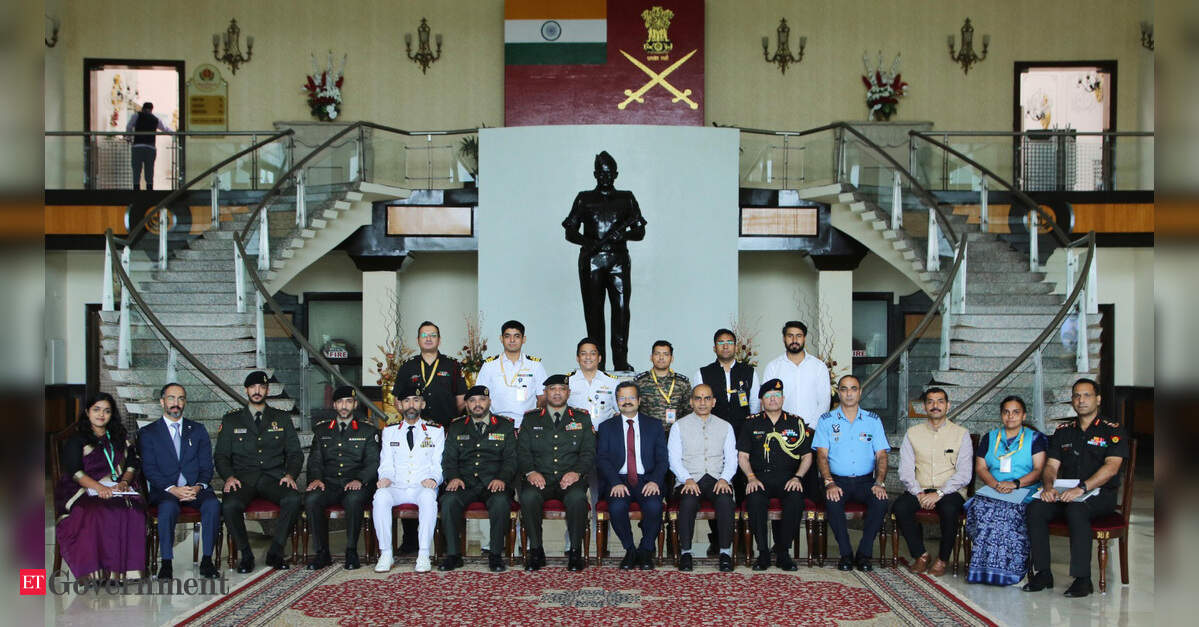
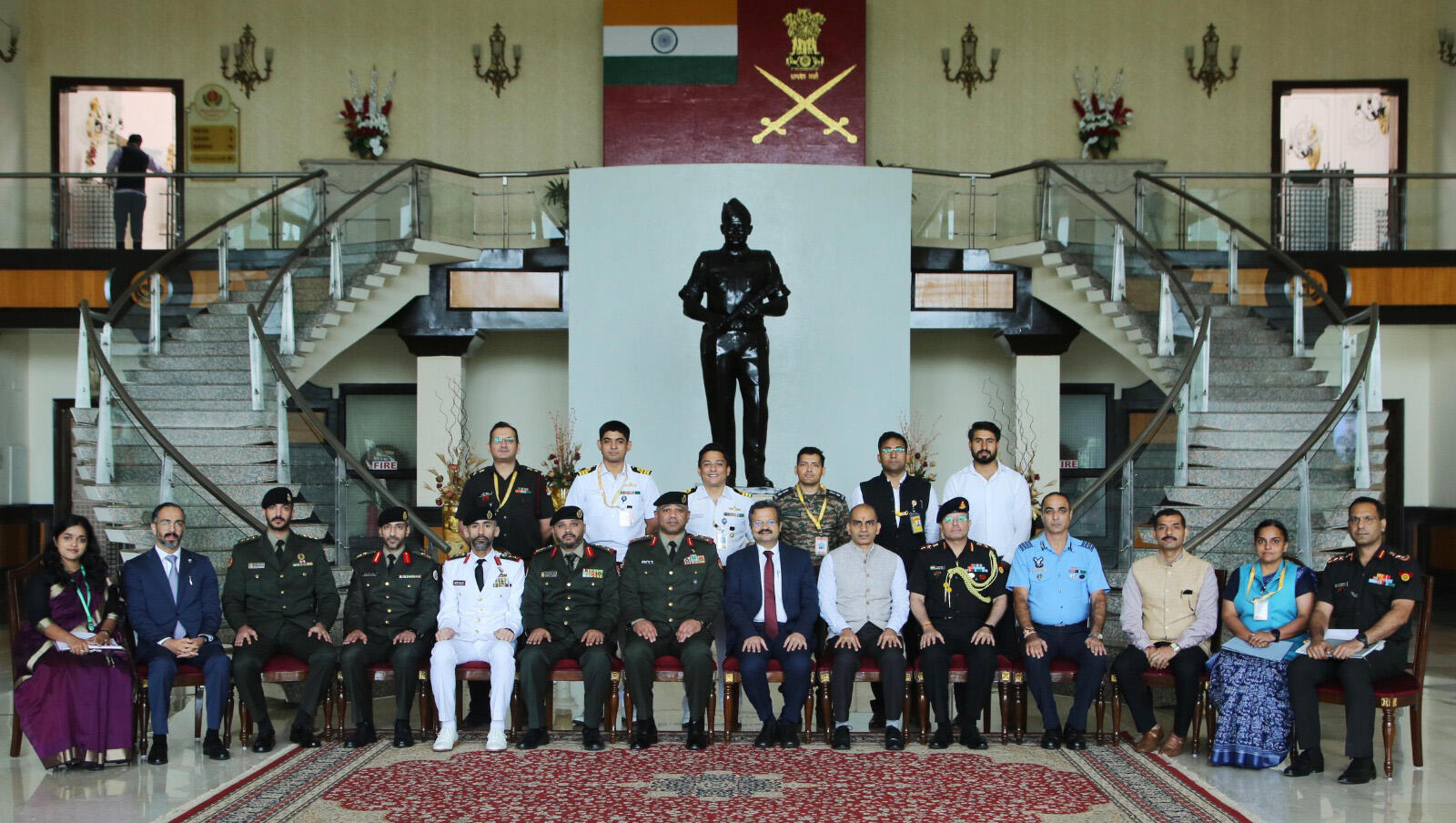
According to the Ministry of Defence, India and Kuwait agreed at the inaugural meeting to strengthen cooperation in “training, military exercises, military medicine, staff talks, defence industry, and Research & Development.” The meeting was co-chaired by Joint Secretary Amitabh Prasad and Brigadier General Raed Alsakran, who headed a five-member Kuwaiti delegation.
Significantly, the composition of the Indian delegation went well beyond diplomatic and military representation. It included officials from the three Services, Department of Defence Production, Defence Research and Development Organisation, Armed Forces Medical Services and Ministry of External Affairs. That breadth suggests that New Delhi envisages the mechanism as potentially encompassing operational cooperation, capacity-building, defence technology and industrial engagement rather than restricting it to military diplomacy.
From strategic declaration to operational architecture
The JDC represents the operational follow-through of Prime Minister Narendra Modi’s landmark visit to Kuwait in December 2024—the first visit by an Indian Prime Minister to the country in 43 years. During the visit, bilateral relations were elevated to a Strategic Partnership and the two governments signed an MoU on defence cooperation.
The 2024 MoU was unusually broad in scope. According to the official list of outcomes, it was designed to institutionalise cooperation encompassing “training, exchange of personnel and experts, joint exercises, cooperation in defence industry, supply of defence equipment, and collaboration in research and development.”
The JDC now provides the institutional machinery through which those objectives can be converted into programmes.
This transition—from declaration to mechanism—is important. Defence relationships mature when they acquire recurring institutional processes: staff talks generate familiarity between military establishments; training creates long-term professional networks; exercises improve interoperability; and industrial and R&D engagements can eventually create commercial and technological interdependence.
The visit itself contained indications that industrial cooperation will receive particular attention. The Kuwaiti delegation visited DPSU Bhawan in New Delhi for discussions with representatives of the Indian defence industry, while a separate industry interaction was scheduled during the delegation’s visit.
A potential market for Indian defence industry
For Indian defence manufacturers, Kuwait presents an interesting, though highly competitive, opportunity.
Kuwait spent about $6.1 billion on its military in 2024, equivalent to around 3.7 per cent of GDP, according to figures cited by the US International Trade Administration. Its military expenditure has grown at an average rate of around five per cent annually since 2012, driven partly by the country’s difficult strategic environment and military-modernisation requirements.
But Kuwait’s defence market has traditionally been dominated by Western suppliers. The United States and France have been among its principal sources of military equipment, alongside countries including Italy, Germany, the UK and Turkey.
Major Kuwaiti acquisitions include Patriot systems, F/A-18 Super Hornets, Eurofighter Typhoons, Apache attack helicopters and M1A2K Abrams tanks. The US government’s commercial assessment identifies missile defence, early-warning systems, command-and-control systems, ISR capabilities and UAVs among prospective areas of demand.
India is unlikely to displace these established suppliers in major platforms in the immediate future. A more realistic entry strategy would involve areas where Indian companies can offer cost-effective systems, maintenance and lifecycle support, electronics, drones and counter-drone technologies, ammunition, naval systems, simulation and training solutions, and selected missile or air-defence technologies where export approvals permit.
The timing is favourable from India’s perspective. Indian defence exports reached ₹38,424 crore—about $4.1 billion—in FY2025-26, an increase of more than 62 per cent over the preceding year. The Kuwait mechanism could therefore become another channel through which New Delhi connects defence diplomacy with its wider objective of establishing India as an increasingly important supplier of military equipment.
Training may deliver faster results than procurement
Yet the most immediate gains may come not from weapons contracts but from training and professional military exchanges.
India possesses a large ecosystem of military training institutions, specialised medical capabilities and experience across conventional warfare, maritime security, counter-terrorism and UN peacekeeping. Kuwait, meanwhile, operates sophisticated Western-origin platforms but has a comparatively small military establishment.
Structured courses for Kuwaiti officers at Indian institutions, exchanges between military medical establishments, subject-matter expert visits and regular staff talks could create the institutional familiarity needed for deeper cooperation later.
There is already a foundation for maritime engagement. Indian Navy’s First Training Squadron, comprising INS Tir, INS Sujata and Coast Guard Ship Sarathi, visited Kuwait in October 2022 for professional engagements and cross-ship interactions.
More recently, Indian Coast Guard Ship Sarthak visited Kuwait following the 2024 defence MoU, with joint activities covering marine pollution response, search and rescue and maritime law enforcement. The Ministry of Defence said such engagement was intended to strengthen “operational synergy” and interoperability.
These areas are strategically relevant because India and Kuwait sit at opposite ends of an energy and commercial corridor running through the Arabian Sea and the Gulf.
Defence cooperation within a larger strategic relationship
Security cooperation also cannot be separated from the substantial economic stakes connecting the two countries.
India–Kuwait bilateral trade stood at about $10.22 billion in FY2024-25. Kuwait was India’s sixth-largest crude supplier and fifth-largest LPG supplier during that period, meeting approximately 3.5 per cent of India’s total energy requirements.
For India, therefore, stability in the Gulf is not an abstract geopolitical objective. Energy flows, shipping routes, commercial interests and the welfare of the large Indian community in Kuwait create direct national-security stakes.
This explains the larger evolution of India’s Gulf policy. New Delhi increasingly views the region not merely as an energy source and expatriate destination but as part of its extended strategic neighbourhood, encompassing maritime security, investment, infrastructure, technology and defence.
The India–Kuwait JDC fits squarely into this transformation.
Its success, however, will depend on whether the two sides move quickly from institutional architecture to measurable outcomes. Regular staff talks, defined training quotas, military exercises, exchanges between medical establishments, joint R&D projects and concrete business-to-business engagements would demonstrate momentum. Defence procurement will inevitably take longer because of Kuwait’s established acquisition relationships and the complexity of military contracting.
The significance of the August 28 meeting, therefore, lies not in any immediate arms deal but in the creation of a durable channel through which such possibilities can be explored.
India and Kuwait have spent decades building a relationship around energy, commerce and people. The Joint Defence Committee adds a new pillar—security and defence technology. If sustained through regular exercises, training, industrial partnerships and research collaboration, it could gradually turn a historically warm relationship into a more consequential strategic partnership across the Arabian Sea.