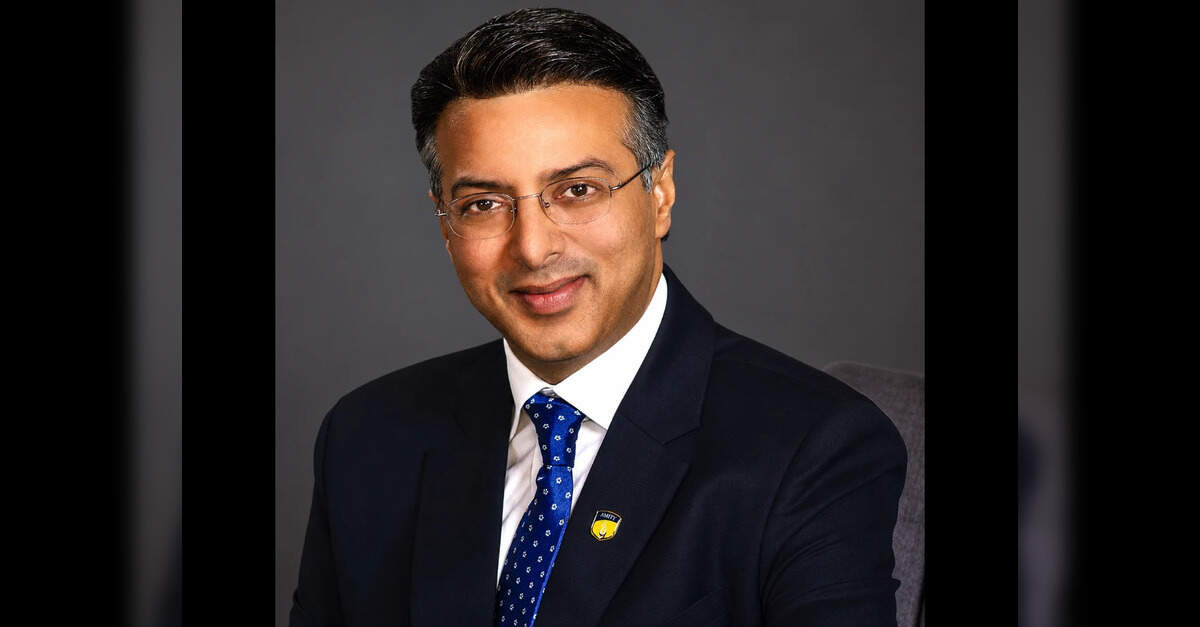
Rapid Fire with Dr Atul Chauhan
| State of Indian higher education, in one word | Tectonic |
| A book/film/idea that changed how he thinks about learning | How Children Fail — children don’t fail for lack of intelligence, but because institutions teach them to fear being wrong |
| Degree or skill — hiring tomorrow? | Degree and the institute |
| One country India should study more closely | Germany, for industry-embedded education |
| AI in the classroom: ban, regulate, or embrace? | Embrace it, but with guardrails |
“You can redesign a curriculum, but you cannot mandate purpose.”Dr Atul Chauhan, Chancellor, Amity University
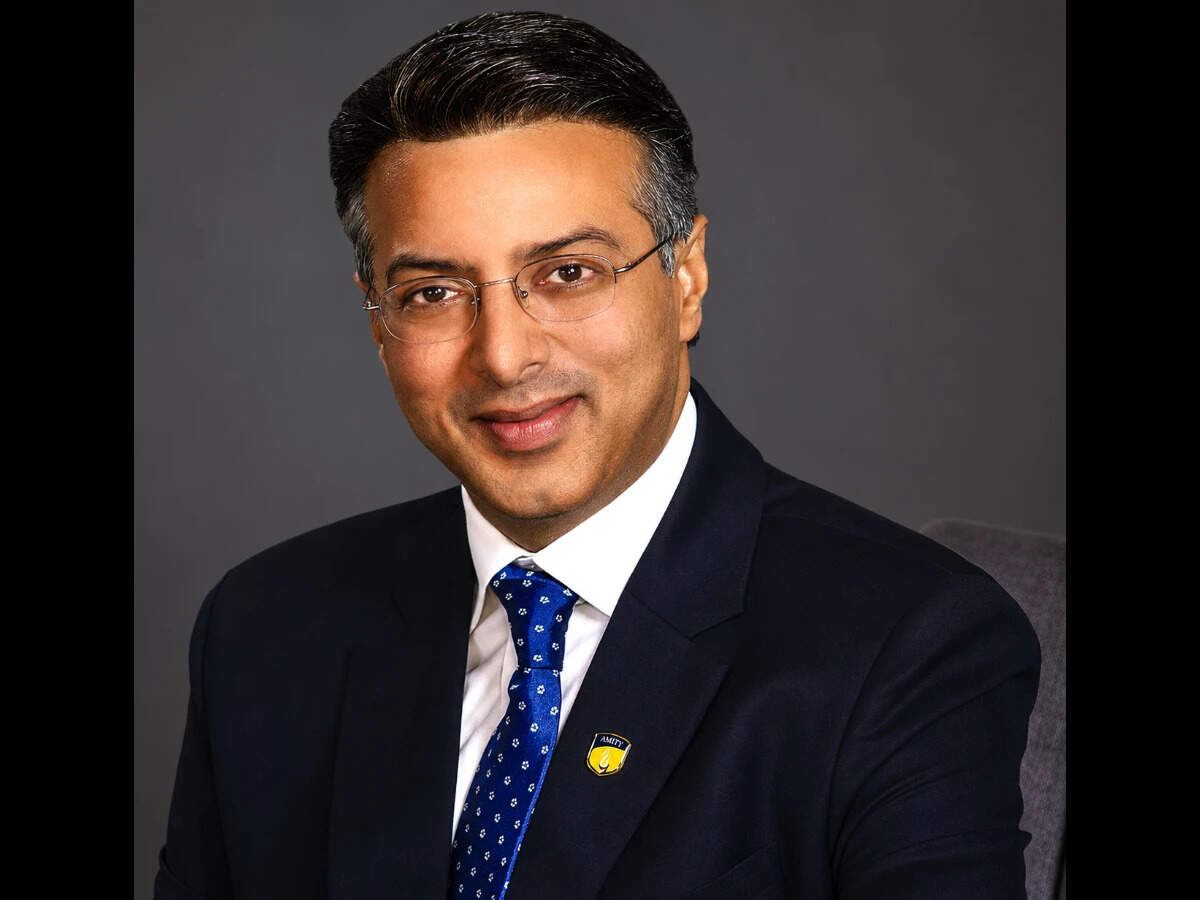
Nearly half of the world’s employers, 48%, according to the WEF’s Future of Jobs Report 2025 now say they’ll use skills assessments in hiring, even as 43% still hold on to the university degree as a requirement. That single, uneasy statistic sits at the heart of a much larger reckoning underway in Indian higher education – one that Dr Atul Chauhan, Chancellor of Amity University, has spent decades watching unfold from the inside.
In a candid conversation with ETEducation, Dr Chauhan moves past the customary talking points on rankings, seats and infrastructure to name what he calls India’s “compliance-driven excellence” an ecosystem, he argues, that has quietly learned to reward the safe answer over the interesting question. The conversation ranges widely: the psychological cost of an achievement-obsessed generation, why most AI labs on campuses today are closer to ribbon-cutting than reform, whether the four-year degree can survive the next fifteen years, and what India’s thousands of international MoUs actually deliver once the signing ceremony is over. It closes with his most unguarded moment of advice to an 18-year-old, offered not as Chancellor, but simply as someone who has spent a lifetime thinking about what education is for.
The ecosystem that rewards compliance over curiosity
Ask any higher education leader what’s broken in the system, and you’ll usually get a version of the same three answers: funding, faculty, employability. Dr Chauhan starts somewhere else entirely. As India strides toward its Viksit Bharat 2047 vision, he says, the higher education ecosystem stands at one of the most defining junctures in its history, with AI reshaping the rules even as institutions cling to old instincts.
The overarching structural problem, in his reading, is the absence of a unified, agile framework to translate that vision into scalable impact and beneath it, something more uncomfortable: “We have built a thriving ecosystem that recognises and rewards compliance more than curiosity.” Leaders lean heavily on infrastructure, rankings, seats and placements, he notes, and while all of that matters, few acknowledge that the incentive structures inside institutions do not actually reward a teacher for taking an intellectual risk, or a student for asking a question that has no marks attached to it.
Regulatory design, assessment patterns, even internal promotion criteria, he argues, are still built on a foundation of distrust as if the only way to guarantee quality is to standardise everything into a checklist. The unintended consequence is that the system produces compliant graduates rather than confident thinkers, a dynamic he calls “compliance-driven excellence,” sustained by regulators, institutions, parents and students alike because it simply feels safer than the alternative.
For a nation aspiring to be a genuine powerhouse of ideas, he insists, optimising for safety cannot be the only way forward India needs institutions with the autonomy to think out of the box, recruit differently, and rapidly redesign curricula in step with industry needs, because the AI era demands institutional agility precisely when much of the ecosystem remains structurally bureaucratic.
The meaning gap beneath the rankings
Pressed on what actually keeps him up at night beyond the employability gap or faculty pipelines that usually dominate these conversations Dr Chauhan reaches for something harder to put a number on. He recalls that in his own formative years, career was always the guiding star, but there was still quality “me-time” for reflection and introspection.
Today’s generation, by contrast, is running extremely fast through exams, internships, certifications and career ladders, often without pausing to ask what any of it is for and that, he says, is what he calls the “meaning gap.” The question that worries him most is whether students are being prepared to succeed in a world that can no longer be predicted, an uncertainty AI is only accelerating as jobs change, disciplines converge, and the skills valuable today morph within a few years of graduation.
That means universities can no longer remain primarily places where students acquire knowledge; they must become places where students learn how to learn, unlearn and relearn. He meets remarkably accomplished young people, he says, who have every credential in place and still feel a quiet, unspoken emptiness, because nobody taught them how to sit with uncertainty or build an inner sense of purpose that doesn’t depend on the next validation technically competent but intellectually hesitant, digitally connected but unable to communicate or collaborate deeply, successful on paper but uncertain about purpose.
Campus mental health struggles, he believes, are downstream of exactly this a symptom, not the root cause. The employability gap, though real, is in some ways the easier problem to solve, “because you can redesign a curriculum, but you cannot mandate purpose.” As educators, he says, the deepest responsibility is not just to make students job-ready but life-ready to help them build the inner architecture of resilience, empathy and self-worth that will carry them through a life that will look nothing like what they imagine at eighteen.
What’s real in the AI rush and what’s for the cameras
Every institution today is racing to announce AI labs, GenAI curricula and smart campuses. Dr Chauhan’s answer to what’s genuinely working versus what’s theatre is unsparing: a university does not become AI-ready because it owns AI infrastructure; it becomes AI-ready when its people, pedagogy, curriculum and culture are ready for an AI-enabled world.
What’s genuinely working, he says, is quieter than the announcements suggest AI helping a struggling student get an extra, patient explanation in the middle of the night; faculty using it to augment literature reviews, simulations and data analysis, freeing up time for the thinking that actually matters; and students from smaller towns gaining access to the same quality of tutoring once reserved for a privileged few, with struggling learners getting simpler explanations and advanced ones getting more challenging material.
What’s performative, in his words, is “the ribbon-cutting culture” – a shiny AI Lab inaugurated for a photograph, disconnected from the actual curriculum, taught by faculty who themselves received no real training, feeding students a handful of tools rather than a way of thinking.
His honest advice to a young student runs against the grain of the current hype cycle: don’t chase AI as a subject to be mastered like a software tool, because that knowledge will be outdated within a couple of years. Go deep into your own discipline instead, and learn to ask sharp, well-formed questions because AI rewards good judgement far more than it rewards good prompts. Learn the ethics of when not to use it, learn to verify rather than blindly trust its output, and protect your own capacity for original, slow thinking, because that is precisely what will not be automated.
What’s being oversold, he says, is the idea that a certificate in “prompt engineering” is a career; what’s underrated is domain depth combined with AI fluency that combination, not AI alone, is where the real advantage will lie, as future employability comes to depend on the ability to question AI outputs, verify information, recognise limitations, and apply human judgement across healthcare, agriculture, finance, manufacturing and public services.
The degree, unbundled
On the industry shift toward rewarding skills over degrees the rise of micro-credentials, bootcamps and stackable certifications Dr Chauhan doesn’t see a threat so much as a course correction that’s overdue. Industry, he says, is right to reward demonstrated skill, and for too long degrees became proxies for competence rather than evidence of it; employers are right to ask what a graduate can actually do.
The World Economic Forum’s Future of Jobs Report 2025 captures the shift starkly 48% of employers surveyed expect to use skills assessments in hiring, while 43% still expect a university degree to remain a requirement which tells him the degree is weakening as a stand-alone signal without becoming irrelevant.
Still, he gently pushes back on the idea that a stackable certificate can replace what a good university offers, because a degree done right is not just a bundle of skills it is four years of learning how to think across disciplines, how to disagree respectfully, how to fail in a room full of peers and get back up, building a judgement and character that no six-week bootcamp can compress into its syllabus.
Over the next fifteen years, he expects a hybridisation: universities becoming platforms that offer stackable, modular, credit-bank-enabled pathways, while still anchoring students to the deeper, humanistic and interdisciplinary formation that a standalone certification cannot provide an unbundling of the degree, where students accumulate credentials and competencies throughout their lives and universities increasingly recognise learning acquired outside the classroom. “The degree will survive,” he says, “but the monopoly of the degree will not. And that is healthy.” The institutions that win, in his view, will be the ones that stop treating flexibility as a threat to rigour and build both into the same design.
Why most global partnerships never leave the file
India’s universities have signed thousands of international partnerships over the years. Dr Chauhan’s test for whether any of them mean anything is refreshingly simple, and slightly uncomfortable for an ecosystem fond of signing ceremonies: a global partnership should be judged not by the number of MoUs a university signs, but by the number of lives and minds it changes. An agreement can be signed in weeks, he says, but the real work begins the morning after the ceremony does a student actually sit in a classroom with students from that university, does a faculty member work with a counterpart on a research problem, does a course change because of something learned from another education system, does a young researcher get access to a lab, dataset or idea that was previously out of reach.
If the answer is yes, the partnership is alive; if not, “it is probably just another document in a file.” A genuine partnership, he argues, is a shared commitment of time, funding and intellectual risk between institutions that actually respect each other’s strengths, built on co-created curriculum rather than exchanged syllabi, sustained two-way mobility rather than one-time photo-op visits, and joint research with shared ownership.
At Amity, he says, the most valuable collaborations are the ones that eventually become part of the university’s academic life rather than an activity managed only by the international office built on academic purpose, with students and faculty as the pivot, and continuity as the thread that holds it together. He’s equally firm that internationalisation shouldn’t be a one-way street of Indian students going abroad to acquire knowledge; India has the talent, research capability and distinct social and economic challenges to offer the world in return, and its collaborations should be built as two-way bridges rather than approached with an inferiority complex.
Foreign campuses in India: Welcome competition with two blind spots
With foreign universities now permitted to establish campuses in India a possibility that seemed distant only a few years ago and is today, since the first campuses opened in 2024-25, a living reality – Dr Chauhan calls this both an opportunity and a healthy challenge. For as long as anyone can remember, he notes, India’s best and brightest have left the country’s shores in search of global quality education; the National Education Policy now making it possible for foreign universities to bring that experience to Indian soil helps keep talent, fees and intellectual capital within the domestic ecosystem, while pushing Indian institutions – including his own – to sharpen their offering rather than rest on scale alone.
He rejects the framing of foreign versus Indian universities as too simplistic; the more exciting possibility, he says, is foreign universities with Indian universities – joint research centres, shared laboratories, faculty collaborating on problems of global relevance, and joint programmes that let students draw on the best of both academic cultures.
India, in his view, has plenty to bring to that table: scale, extraordinary diversity, and young people solving real problems in circumstances very different from the West’s, whether in affordable healthcare, sustainable development, digital public infrastructure, agriculture, climate resilience or education technology – reason enough, he says, not to approach internationalisation with an inferiority complex. But he does think the policy conversation underestimates two risks: geographic concentration, with most campuses likely to cluster in a handful of large cities and deepen the divide with tier-two and tier-three India, exactly where the next wave of talent and ambition is emerging; and the risk of prestige without substance, where a recognisable global name opens a narrow, limited offering in India while marketing it as the full international experience.
The Indian institutions that thrive in this new landscape, he believes, will be the ones that respond to the competition by deepening research and improving faculty quality, not the ones that fear it – using this moment to raise their own bar rather than merely defend market share, and building universities that are globally benchmarked but not culturally disconnected, internationally collaborative but intellectually confident, technologically advanced but human-centred.
To the 18-Year-old on the fence
The interview’s final question asks him to set aside the Chancellor’s chair entirely and speak simply as someone who has spent a lifetime thinking about what education is actually for. It takes him back, he says, to being eighteen himself – a time when the path ahead was largely pre-scripted, unlike today’s youngsters, who find themselves at the crossroads of a world being reshaped by AI and geopolitical tug-of-war every single second. His overarching advice is simple: stop predicting the future. This is an evolving world where set patterns and metrics no longer hold, which only reinforces the need to stay adaptable, accommodating and open to change.
What will matter fifteen years from now, he says, is not the specific degree on a certificate but the ability to keep learning, unlearning and adapting without losing oneself in the process – so choose a field that genuinely pulls at your curiosity rather than one merely trending this year, because curiosity sustains effort long after motivation runs out, and effort compounds over a lifetime in a way no single “right choice” at eighteen ever could.
Build depth and gravitas in something real, he says, but stay porous to other disciplines, cultures and ways of seeing the world – the most interesting, resilient people he has met were never narrowly trained. And above all, don’t let geopolitics or technology convince you that human qualities – empathy, integrity, the ability to sit with someone else’s point of view, the courage to build rather than only consume are somehow less valuable in this new world; if anything, they will be the rarest and most valuable currency of all, precisely because they cannot be automated.
As India works toward the vision of Viksit Bharat 2047, he says, the country doesn’t just need graduates it needs nation builders, people willing to design, make and lead from within the country rather than only aspiring to leave it. His closing advice is unadorned: be patient with yourself, be relentless about learning, and never let a single exam, rejection or ranking define your worth. And dare to dream.