Uttar Pradesh is targeting completion of its rural drinking-water programme ahead of the December 2028 deadline, with the state seeking to move beyond infrastructure creation to ensuring reliable, accountable water supply at the household level. With work underway across nearly 97,000 villages, the state is using phased water-source planning, solar-powered systems, digital monitoring and AI-enabled tools to strengthen delivery and grievance redressal.
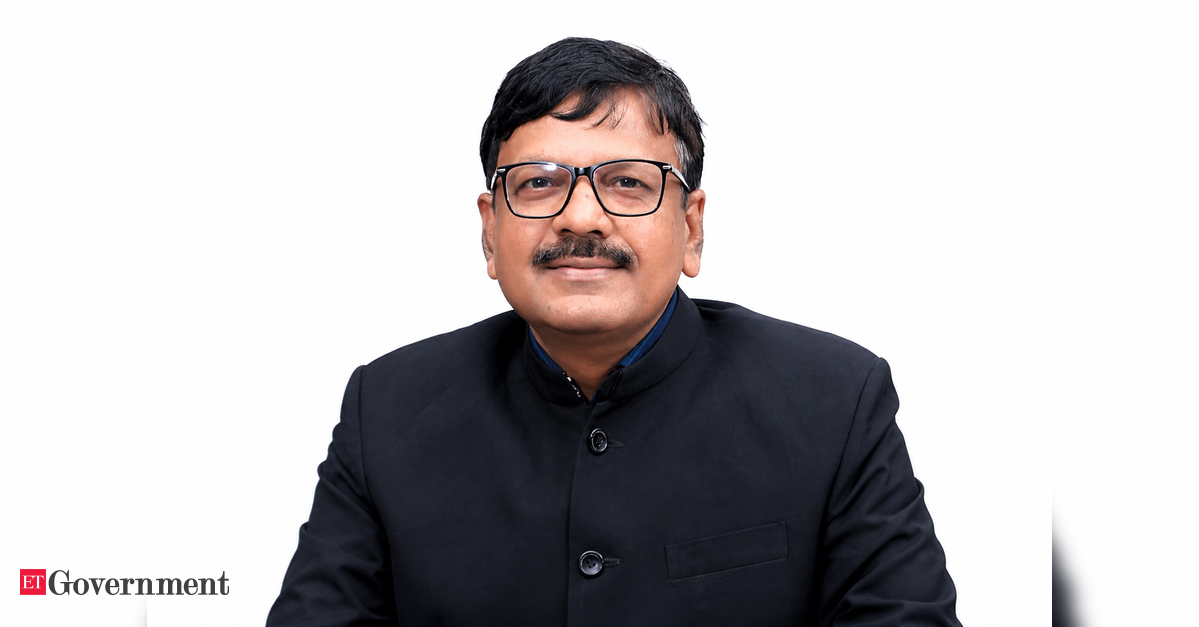
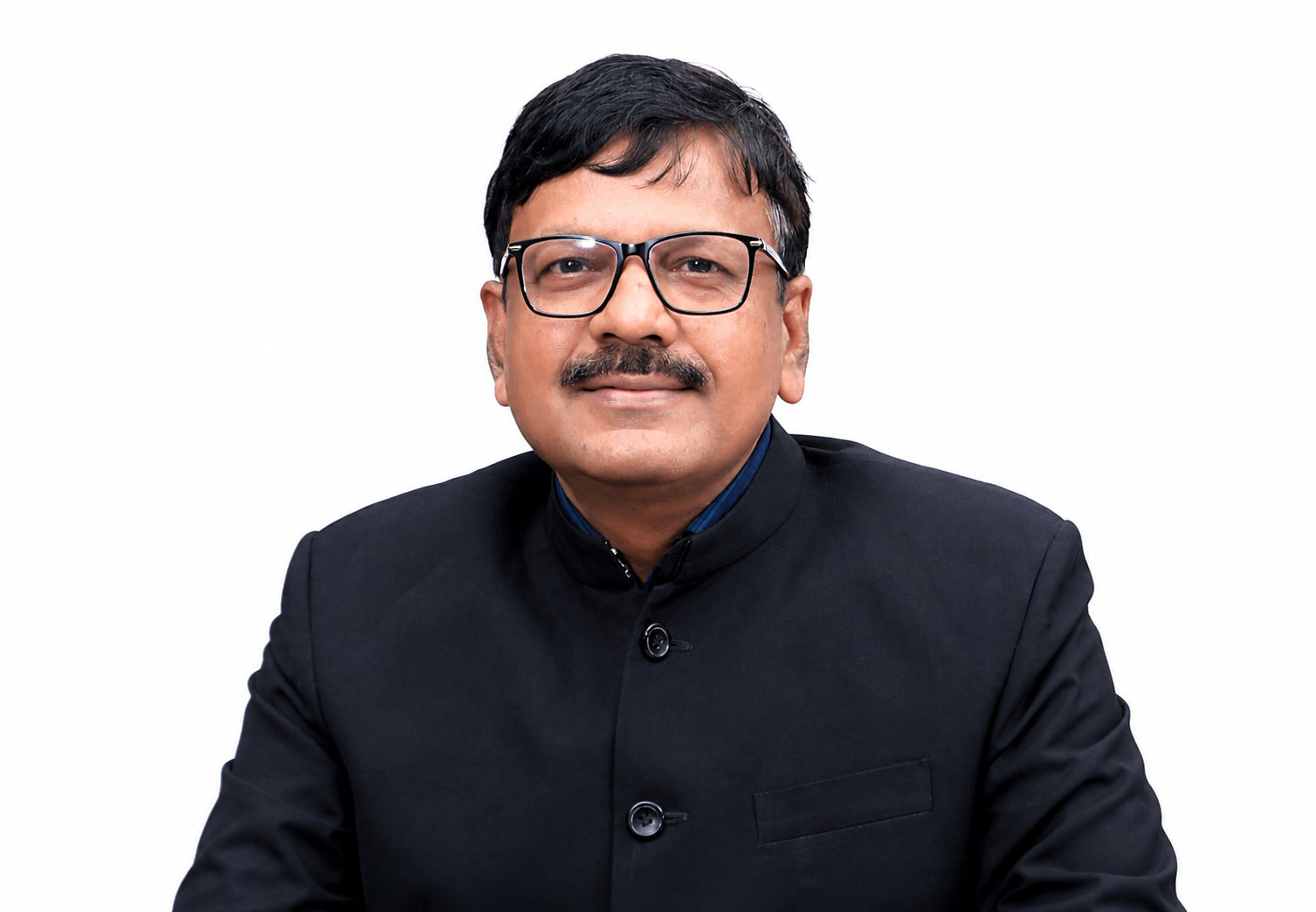
In an interview with ETGovernment’s Arpit Gupta, Anurag Srivastava, Additional Chief Secretary, Namami Gange and Rural Water Supply Department, Government of Uttar Pradesh, discusses the progress of the Jal Arpan initiative, groundwater sustainability and the social impact of piped drinking water.
Edited excerpts:
Jal Arpan is a distinctive initiative of the Uttar Pradesh government. What is the current progress under the programme? How many villages have been covered?
Jal Arpan is an initiative in which we involve the primary stakeholders; the beneficiaries, gram panchayats and households. Once work in a village has been completed, a function is organised in the presence of public representatives, villagers and other stakeholders and the completed scheme is formally handed over to the gram panchayat.
In Uttar Pradesh, work has been taken up in approximately 97,000 villages. Civil and related works have been completed in nearly 37,000 villages, while certification has been completed in around 24,000 villages. Jal Arpan has so far been completed in about 9,000 villages, and the process is continuing. We expect to complete Jal Arpan in a substantially larger number of villages over the next three to four months.
Is there a deadline for achieving 100% coverage across the state?
Completion of the physical infrastructure and achieving full community participation are two different stages. The involvement of beneficiaries is critical both during execution and after completion. The Government of India has set a deadline of December 2028. We are confident that Uttar Pradesh will complete the work, get the villages certified and undertake the Jal Arpan process before that deadline, and hopefully well ahead of it.
What steps are being taken to make beneficiaries aware of their rights and responsibilities under the programme?
During implementation, we work through Implementation Support Agencies (ISAs), including NGOs, which remain in continuous contact with the community. The project is implemented under the guidance and supervision of the gram panchayat, with the support of these agencies. This ensures community participation from the outset.
Local participation is also required during construction; for example, when roads have to be temporarily dismantled for laying pipelines. After completion, the scheme is handed over to the gram panchayat only after all the works have been completed and regular water supply has been ensured for at least three months. This process helps ensure that the infrastructure is functional and that the community is ready to take ownership.
Uttar Pradesh is among the leading states in providing piped drinking water to rural households. What is the current status of the overall programme?
Uttar Pradesh is a very large state, so it was not possible to plan and execute the entire programme in one go. The scheme has therefore been implemented in different phases, based on the availability and quality of water sources. The first phase focused on the Bundelkhand and Vindhya regions, which are among the most challenging areas because groundwater availability is limited and, in several locations, discontinuous. We therefore relied largely on surface-water sources such as rivers, dams and reservoirs.
While planning these schemes, we ensured that withdrawals during the lean season would not exceed 10% of the available water at the source, so that the source remains sustainable. In Bundelkhand and Vindhya, we have now completed almost the entire programme, barring a few remaining works. Regular piped-water supply is being provided across the region, and the remaining works are expected to be completed shortly.
The second and third phases focused largely on the alluvial areas, including the Ganga-Yamuna doab, where groundwater is relatively abundant and of suitable quality. Here, the emphasis was on providing household-level connections while ensuring that operation and maintenance remained sustainable for such a large network. Wherever possible, we have therefore incorporated solar power into these schemes.
The fourth phase covers areas where groundwater is available but its quality is not suitable for drinking. In districts such as Agra, Mathura, Firozabad, Ballia and others, we have planned surface-water-based schemes. The programme is progressing at a good pace, and water is gradually reaching household taps across the state.
There are growing concerns about groundwater depletion. Is expanding piped-water supply likely to put additional pressure on groundwater resources?
Groundwater sustainability is certainly something that needs to be considered, but piped drinking-water supply is not the primary driver of groundwater exploitation. At present, only about 8% of groundwater extraction is for drinking purposes. The bulk of groundwater use is for irrigation and industry.
Moreover, people were already consuming water for drinking before these schemes were implemented. The question is the source from which that water was being drawn. Therefore, the additional burden on groundwater from drinking-water supply is relatively small. That does not mean groundwater sustainability should be ignored. We have to manage and conserve groundwater resources, but rural drinking-water supply is not the principal cause of groundwater depletion.
Artificial intelligence and other emerging technologies are increasingly being used for citizen-centric services. How is your department using AI to monitor water supply and leakages?
We are already using technology and AI-enabled systems in the execution and monitoring of the programme. One important component is our weekly monitoring system, through which we collect feedback from the field, analyse it and track the progress of work. Much of this monitoring data is also available in the public domain.
We are also providing sensors at overhead service tanks (OSTs). Once a scheme is completed, the public will be able to access information on how much water has been supplied from a particular overhead tank and when. This creates transparency and makes it possible to independently verify water availability.
We are also using technology and AI-based mechanisms for tracking distribution within villages and for grievance management. The objective is to ensure that once water reaches the village-level overhead tank, it is properly distributed to households.
How effective has the grievance-redressal mechanism been? Do you have data on the proportion of complaints being resolved?
We are making efforts to ensure that complaints are resolved largely within a month. We have multiple channels for grievance redressal, including a toll-free number, our website and portal. We also have a proactive feedback mechanism under which we directly contact gram panchayats and seek feedback on water supply. So far, we have obtained feedback from nearly 23,000 gram panchayats.
Water scarcity has historically been a major challenge in Bundelkhand. Has the department conducted any independent assessment of how piped-water supply has changed people’s lives?
We have commissioned independent studies in areas where the programme has been implemented. These studies have involved institutions such as IITs, IIMs and university departments.
One of the most significant findings has been an improvement in public health. For example, in several districts of eastern Uttar Pradesh, Japanese encephalitis (JE) and acute encephalitis syndrome (AES) had historically been major public-health concerns. The provision of clean and regular drinking water, along with the efforts of the health department, has contributed to a significant reduction in the incidence of these diseases.
The benefits are not limited to health. We have also seen improvements in children’s education, particularly among girls, because they no longer have to spend significant amounts of time fetching water. The third major impact is an overall improvement in quality of life.
You have received recognition, including the Prime Minister’s Award. Looking back, what would you identify as your key achievements, and what are your immediate priorities?
The most important achievement is not an award. It is completing the projects, ensuring reliable water supply and taking all stakeholders on board. Our objective is to provide regular drinking water to every household and ensure that the system works without complaints.
At present, out of approximately 97,000 villages, regular water supply is being provided in around 60,000 villages. In about 30,000 villages, the required work has been completed and they are at various stages of certification and the Jal Arpan process. The immediate priority is to complete the remaining work, achieve certification and ensure sustainable operation and maintenance.
Our broader vision is that, over the next one to two years, rural Uttar Pradesh should have drinking-water infrastructure and service delivery that is at least as reliable as, and in many respects better than, what is available in urban areas.