The dispute over the Indus Waters Treaty has moved beyond disagreements over dam designs and water flows. It is increasingly becoming a contest over who has the authority to interpret the treaty, whether its obligations can survive a fundamental deterioration in India-Pakistan relations, and how far an international adjudicatory mechanism can constrain a state that rejects its jurisdiction.
That confrontation sharpened on August 31 when the Hague-based Court of Arbitration ruled that the 1960 Indus Waters Treaty remains fully in force despite India’s April 2025 decision to hold it in abeyance. The tribunal also imposed interim restrictions on parts of the construction of the 850-MW Ratle Hydro-Electric Plant on the Chenab in Jammu and Kashmir.
New Delhi’s response was categorical. The Ministry of External Affairs rejected both the award and the authority of the tribunal itself, maintaining that India’s decision to keep the treaty in abeyance remains in force.
“This so-called Court of Arbitration has no jurisdiction whatsoever to pronounce on India’s sovereign decisions,” the MEA said. India has consistently argued that the tribunal was improperly constituted and that its pronouncements have no legal effect on New Delhi.
The result is an unusual situation: the tribunal says the treaty continues to bind India; India says the tribunal has no authority to tell it so.
From water-sharing dispute to jurisdictional confrontation
Signed in 1960 after negotiations facilitated by the World Bank, the Indus Waters Treaty divided rights over the six rivers of the Indus system. India obtained control over the eastern rivers—Ravi, Beas and Sutlej—while Pakistan received unrestricted use of the western rivers—Indus, Jhelum and Chenab—subject to specified Indian uses, including domestic consumption, irrigation and hydroelectric generation.
For decades, the treaty was frequently described as one of the more resilient arrangements between the two neighbours because it survived wars, military crises and prolonged periods of diplomatic hostility.
But the present dispute is qualitatively different.
India placed the treaty in abeyance on April 23, 2025, following the Pahalgam terrorist attack that killed 26 people. The decision effectively connected continued treaty cooperation with the wider security relationship between India and Pakistan.
The Court of Arbitration has now rejected the legal basis for that approach. It unanimously concluded that none of the grounds examined by it justified suspension or termination of the treaty. Consequently, it held that the treaty remains fully operational and that India must continue observing its obligations, including those governing hydroelectric projects on the western rivers.
India rejects that premise at the jurisdictional level itself.
New Delhi maintains that the establishment of the Court of Arbitration violated the treaty because Pakistan sought arbitration over issues India considers technical “differences” properly falling within the jurisdiction of a Neutral Expert.
This disagreement has a long history. In 2016, Pakistan sought establishment of a Court of Arbitration over the designs of the Kishenganga and Ratle projects, while India requested appointment of a Neutral Expert. The World Bank eventually proceeded with both mechanisms, describing its own role as limited and procedural.
That produced precisely the parallel adjudication India had sought to avoid.
Ratle becomes the immediate test
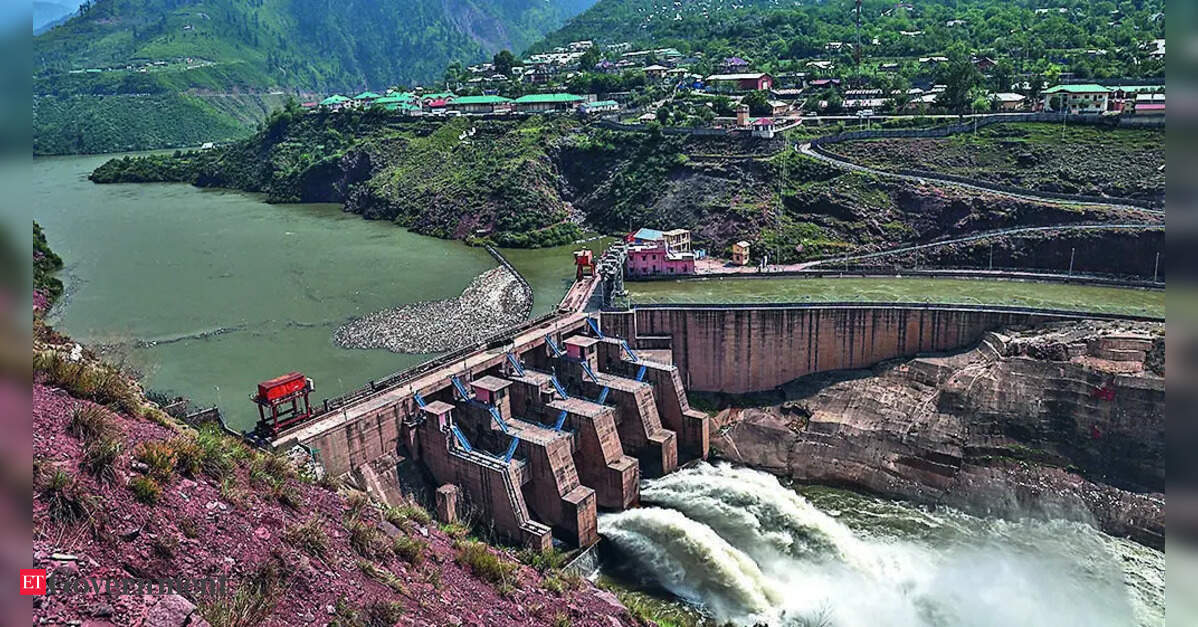
The practical focus of the latest ruling is the Ratle project on the Chenab.
The Court of Arbitration has prohibited India from concreting the Ratle dam wall and power-intake structure above specified levels until 90 days after the Neutral Expert issues his final decision, expected in July 2027. India has also been directed to provide information relating to the project’s construction schedule. The tribunal, however, declined two other interim measures sought by Pakistan.
For India, accepting such restrictions would have implications beyond one hydroelectric project.
The western rivers carry considerable untapped hydropower potential in Jammu and Kashmir. Under the treaty, India is permitted to construct run-of-river hydroelectric projects on these rivers, but subject to detailed technical restrictions. Pakistan has repeatedly challenged Indian projects over issues including pondage, spillway configuration, intake levels and drawdown capability.
The Ratle controversy therefore illustrates a larger Indian concern: whether treaty interpretations can progressively restrict India’s ability to utilise waters that flow through its territory even for uses expressly permitted under the agreement.
That question becomes particularly important as India seeks greater energy security and infrastructure development in Jammu and Kashmir.
The Neutral Expert complicates the picture
There is another layer to the dispute.
The World Bank-appointed Neutral Expert, Michel Lino, ruled in January 2025 that all seven points of difference referred by India concerning Kishenganga and Ratle fell within his competence. India welcomed that decision at the time as vindication of its position that the issues were appropriately dealt with through the Neutral Expert mechanism.
The irony is that India subsequently stopped participating in the Neutral Expert proceedings after placing the treaty in abeyance. The Ministry of Jal Shakti has recorded that, following the April 2025 Cabinet decision, India decided not to participate in the ongoing proceedings.
The expected Neutral Expert decision in 2027 nevertheless remains important because the latest interim restrictions imposed by the Court of Arbitration on Ratle are explicitly linked to it.
The dispute has consequently developed two tracks: the technical question of whether particular Indian hydropower designs comply with treaty specifications, and the much larger political and legal question of whether the treaty itself remains operational following India’s decision to place it in abeyance.
A treaty facing a political reality it was not designed for
For Pakistan, the Indus system is an issue of national water and food security. The treaty therefore provides Islamabad with both predictable water allocations and an international dispute-resolution architecture.
India’s position increasingly reflects a different concern: whether an agreement negotiated more than six decades ago can operate indefinitely without taking account of profound changes in bilateral relations, security conditions, technology, climate pressures and India’s development requirements.
New Delhi had sought modification and review of the treaty even before the Pahalgam attack. In January 2025, the MEA confirmed that India and Pakistan were in contact over modification and review under Article XII(3).
The latest tribunal ruling is unlikely to resolve that fundamental disagreement. It may instead deepen it.
The Court of Arbitration has asserted that the treaty remains legally binding and has attempted to preserve the status quo at Ratle until the technical adjudication progresses. India has responded that neither the tribunal nor its orders will determine New Delhi’s actions.
This creates a widening gap between international adjudication and political implementation.
The next phase of the Indus dispute will therefore be determined not simply by what another tribunal or Neutral Expert says, but by what India actually does with projects on the western rivers, how Pakistan responds, and whether the two governments eventually find a mechanism for renegotiating the rules governing one of the world’s most politically sensitive transboundary river systems.
The Indus Waters Treaty survived decades of India-Pakistan confrontation because both sides continued to treat water cooperation as relatively insulated from their wider disputes. That insulation has now substantially eroded. The central question is no longer merely whether Ratle’s design conforms to the treaty. It is whether the treaty’s institutional architecture can function when one of its two principal parties disputes the authority of the very mechanism seeking to enforce it.